Loading...
Bernard Montgomery vs Gaspard de Coligny
Bernard Montgomery leads by 3.5 pts · 2 figures compared
…

Bernard Montgomery
General · Modern
61.8Total
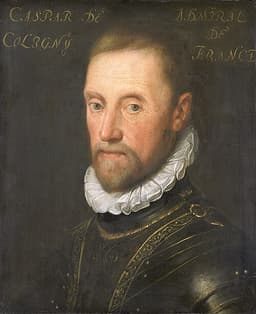
Gaspard de Coligny
General · Modern
58.3Total
Basic Information
Born
1887
1519
Died
1976
1572
Era
Modern
Modern
Nationality
United Kingdom
France
Occupation
General
General
Civilization
Western
Western
Score Comparison
Military (10%)
74.7
47.5
Political (20%)
68.0
68.0
Influence (20%)
65.0
62.0
Legacy (20%)
55.0
52.0
Leadership (15%)
48.8
65.7
Strategy (15%)
68.1
50.0
TOTAL
61.8
58.3
Bernard Montgomery — Complete Timeline
1942 AD
Battle of Alam el HalfaWar◆ Major
Montgomery took command of the British Eighth Army and defeated Rommel's final offensive at Alam el Halfa. The defensive victory halted the Axis advance and allowed Montgomery to prepare for a counteroffensive.
World War IINorth African CampaignDefensive Victory
Impact: regional
Second Battle of El AlameinWar
Montgomery launched a massive offensive against Rommel's Afrika Korps at El Alamein. After 12 days of fighting, the Axis forces were forced to retreat, ending the threat to Egypt and marking a turning point in the North African campaign.
World War IINorth African CampaignTurning Point
Impact: global
1943 AD
Operation HuskyWar◆ Major
Montgomery commanded the British Eighth Army in the invasion of Sicily. His forces landed on the southeastern coast and advanced north, capturing Messina and securing the island. The campaign led to the fall of Mussolini's government.
World War IIItalian CampaignAllied Invasion
Impact: regional
1944 AD
Operation OverlordWar
Montgomery commanded the 21st Army Group during the D-Day landings and the subsequent Battle of Normandy. His forces captured Caen and helped break out of the beachhead, leading to the liberation of Paris.
World War IINormandy CampaignD-Day
Impact: global
Operation Market GardenWar◆ Major
Montgomery planned and executed Operation Market Garden, an airborne assault to capture bridges in the Netherlands. The operation failed to secure the bridge at Arnhem, resulting in heavy Allied casualties and failing to outflank German defenses.
World War IIWestern FrontFailed Offensive
Impact: regionaltragic
Gaspard de Coligny — Complete Timeline
1567 AD
Battle of Saint-DenisWar◆ Major
Gaspard de Coligny commanded Huguenot forces at the Battle of Saint-Denis against the royal army. The battle was indecisive, but the Huguenots failed to capture Paris. Coligny's leadership solidified his position as a key Huguenot military commander.
BattleWars of ReligionHuguenots
Impact: national
1570 AD
Peace of Saint-Germain-en-LayePolitical Action◆ Major
Coligny negotiated the Peace of Saint-Germain-en-Laye, which granted Huguenots limited religious freedom and control of several fortified towns. The peace allowed Coligny to return to court and gain influence over King Charles IX.
Peace TreatyReligious TolerationHuguenots
Impact: nationalconstructive
1572 AD
Assassination attempt on ColignyOther◆ Major
An assassination attempt was made on Gaspard de Coligny in Paris, allegedly ordered by Catherine de Medici and the Guise family. He was shot but survived. This attack set the stage for the St. Bartholomew's Day Massacre two days later.
Assassination AttemptSt. Bartholomew's DayHuguenots
Impact: nationaldestructive
St. Bartholomew's Day MassacreOther
Gaspard de Coligny was killed during the St. Bartholomew's Day Massacre, when Catholic mobs murdered Huguenots in Paris. His body was mutilated and thrown from a window. His death marked a turning point in the Wars of Religion.
MassacreDeathWars of Religion
Impact: nationaltragic
Expert Analysis
Origins
**Bernard Montgomery** was born on November 17, 1887, in London, England, to a clergyman father and a strict mother. He attended the Royal Military College, Sandhurst, graduating in 1908. His early career included service in India and World War I, where he was severely wounded in 1914. This experience shaped his cautious, methodical approach to warfare.
**Gaspard de Coligny** was born on February 16, 1519, in Châtillon-sur-Loing, France, into a noble family. His father was Marshal of France. Coligny received a military education and served in the Italian Wars, becoming a colonel general of infantry by 1547. He converted to Calvinism in the 1550s, which defined his later life.
Rise to Power
Montgomery rose slowly through the ranks, gaining a reputation as a trainer and staff officer. His big break came in August 1942 when he was appointed commander of the British Eighth Army in North Africa, replacing Claude Auchinleck. He immediately revitalized the army's morale and defeated Rommel's Afrika Korps at the Second Battle of El Alamein (October 23 – November 4, 1942), a turning point in the Western Desert Campaign. This victory made him a national hero.
Coligny's rise was tied to his military service and political connections. He became Admiral of France in 1552, but his conversion to Protestantism during the French Wars of Religion made him a leader of the Huguenot cause. After the death of King Henry II in 1559, he emerged as the chief military strategist for the Huguenots, leading them in the first three civil wars. He negotiated the Peace of Saint-Germain-en-Laye (1570), which granted limited toleration to Protestants.
Leadership & Governance
Montgomery's leadership style was meticulous and aggressive in preparation but cautious in execution. He believed in overwhelming force and set-piece battles, famously saying, "I never start an attack until I am ready." He was unpopular with peers due to his arrogance but beloved by his troops for his concern for their welfare. His governance of occupied areas was efficient but rigid.
Coligny led by persuasion and strategic vision. As a Huguenot leader, he balanced military command with political negotiation. He advocated for religious tolerance and sought to strengthen Protestant positions within France. His governance of Huguenot-held towns was pragmatic, focusing on defense and diplomacy. Unlike Montgomery, Coligny operated without formal state authority, relying on charisma and shared faith.
Triumph & Tragedy
Montgomery's greatest triumph was El Alamein, which halted Axis expansion in North Africa and led to the expulsion of Axis forces. He also played a key role in the D-Day landings (June 6, 1944), commanding the 21st Army Group. However, his failure at Operation Market Garden (September 1944) resulted in a costly Allied setback. His total military score is 74.7, reflecting significant victories marred by strategic flaws.
Coligny's triumph was the Peace of Saint-Germain-en-Laye, which secured Huguenot rights. He also survived an assassination attempt in August 1572. His tragedy was the St. Bartholomew's Day Massacre (August 24, 1572), where he was murdered along with thousands of Huguenots. His leadership score of 65.7 shows his effectiveness despite ultimate failure.
Character & Destiny
Montgomery was arrogant, methodical, and self-assured. His personality often clashed with allies, especially American generals like Eisenhower and Patton. This hindered his career but also fueled his determination. His destiny was to be a key figure in defeating Nazi Germany, though his post-war reputation declined due to his memoirs and perceived self-aggrandizement.
Coligny was principled, resilient, and diplomatic. He risked his life for his faith and political goals. His destiny was sealed by the political intrigues of the French court; his death triggered a massacre that changed French history. His influence score of 62.0 reflects his role in shaping religious conflict.
Legacy
Montgomery's legacy is mixed. He is remembered as the victor of El Alamein, but his cautious approach is criticized. His total score of 61.8 ranks him below other WWII commanders. He left no lasting doctrine, but his emphasis on combined arms and logistics influenced British military thinking.
Coligny's legacy is profound in French history. He is a martyr for Protestantism and a symbol of religious tolerance. His death marked a turning point in the Wars of Religion. His influence score of 62.0 and legacy score of 52.0 reflect his enduring impact on French and European history.
Conclusion
Montgomery had a higher total score (61.8 vs. 58.3) and greater military impact, defeating Rommel and contributing to Allied victory in WWII. However, Coligny's impact on religious and political history is more lasting. Montgomery's achievements were tactical and operational, while Coligny's were strategic and ideological. Therefore, despite the score gap, Coligny's longer-term influence on European history gives him a more significant legacy. Montgomery may have won battles, but Coligny helped shape the modern concept of religious freedom.
Rankings
🥇
Bernard MontgomeryLeader
Mil: 74.7Pol: 68.0Inf: 65.0
61.8
🥈
Gaspard de Coligny
Mil: 47.5Pol: 68.0Inf: 62.0
58.3
+3.5 behind
How This Comparison Works
Algorithm
Each figure is scored on 6 dimensions (0—100 scale) based on structured historical data: Military (10%), Political (20%), Influence (20%), Legacy (20%), Leadership (15%), Strategy (15%). The weighted total produces the final ranking.
Data Sources
Scores are computed from structured sub-indicators in the database. Scale factors adjust for era (Ancient ×0.85, Modern ×1.0) and civilization size (Eastern ×1.05, Other ×0.80) to account for differences in population and military scale.
Maximum 3 Figures
Comparisons are limited to 2—3 figures to ensure readability and statistical meaningfulness.
Error Margins
±5 points per dimension — Sub-scores are derived from historical records with inherent uncertainty. Two figures within 5 points on a dimension should be considered roughly equivalent in that area.
Total Score Accuracy
±3 points overall — The weighted combination of 6 dimensions produces a total score with approximately ±3 points of uncertainty. Differences of less than 3 points are not statistically significant— the figures are effectively tied.
Known Limitations
- Historical records are incomplete and uneven across civilizations
- Figures from oral-tradition societies may be underrepresented
- Occupation labels can misclassify multi-role figures
- Scores measure capability and impact, not moral character
- Quantitative scoring is a comparison tool, not absolute truth
Capability Radar
Military (10%) — Battles & Warfare
Battles
75
55
Win Rate
70
50
Expansion
65
30
Political (20%) — Governance & Reform
Reform
40
50
Diplomacy
60
55
Economy
30
30
Influence (20%) — Cultural & Global Reach
Cultural
55
45
Global
65
55
Legacy (20%) — Historical Impact
Historical
70
70
Longevity
60
60
Leadership (15%) — Power & Stability
Tenure
55
45
Stability
50
20
Strategy (15%) — Tactics & Innovation
Strategy
85
65
Tactics
80
60
Reform
60
40
Similar Comparisons
Comments & Discussion
No comments yet. Be the first to share your thoughts!