Loading...
Bhagat Singh vs Giuseppe Mazzini
Giuseppe Mazzini leads by 3.9 pts · 2 figures compared
…
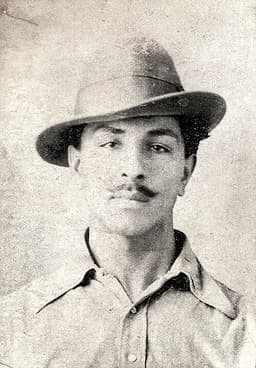
Bhagat Singh
Revolutionary · Modern
46.8Total
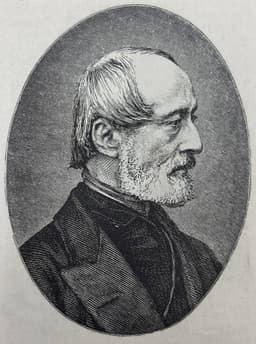
Giuseppe Mazzini
Revolutionary · Modern
50.7Total
Basic Information
Born
1907
1805
Died
1931
1872
Era
Modern
Modern
Nationality
India
Italy
Occupation
Revolutionary
Revolutionary
Civilization
Indian
Western
Score Comparison
Military (10%)
30.0
39.9
Political (20%)
25.0
40.8
Influence (20%)
61.0
60.0
Legacy (20%)
50.0
56.0
Leadership (15%)
65.0
40.9
Strategy (15%)
25.0
54.3
TOTAL
46.8
50.7
Bhagat Singh — Complete Timeline
1928 AD
Killing of John SaundersPolitical Action◆ Major
Bhagat Singh and his associates killed British police officer John Saunders in Lahore, mistaking him for James Scott, who had ordered the lathi charge that killed Lala Lajpat Rai. This act of revenge escalated the revolutionary movement.
AssassinationRevolutionary Action
Impact: national
1929 AD
Central Legislative Assembly BombingPolitical Action◆ Major
Bhagat Singh and Batukeshwar Dutt threw bombs in the Central Legislative Assembly in Delhi to protest the Public Safety Bill and Trade Disputes Act. They were arrested and used the trial to propagate revolutionary ideas.
ProtestRevolutionary Action
Impact: national
Hunger Strike in JailPolitical Action◆ Major
Bhagat Singh and fellow prisoners went on a 116-day hunger strike in Lahore jail demanding better treatment for political prisoners. The strike drew national attention and forced the British to make concessions.
ProtestPrison Reform
Impact: national
1931 AD
Execution by HangingPolitical Action◆ Major
Bhagat Singh was executed by hanging at Lahore jail at age 23, along with Rajguru and Sukhdev. His execution sparked widespread protests and made him a martyr for the Indian independence movement.
ExecutionMartyrdom
Impact: nationaltragic
Giuseppe Mazzini — Complete Timeline
1831 AD
Founding of Young ItalyPolitical Action◆ Major
Mazzini founded the secret society Young Italy (Giovine Italia) in Marseille. The organization aimed to achieve Italian unification through popular insurrection and republican government. It recruited thousands of members and inspired uprisings in the 1830s and 1840s.
UnificationRepublicanismSecret Society
Impact: regionalconstructive
1834 AD
Mazzini's Insurrection in SavoyPolitical Action
Mazzini organized an armed invasion of Savoy from Switzerland, intending to spark a republican revolution. The attempt failed due to poor coordination and betrayal, forcing Mazzini into exile. He was sentenced to death in absentia by Piedmontese authorities.
InsurrectionFailureExile
destructive
1849 AD
Roman Republic of 1849Political Action◆ Major
Mazzini became one of the triumvirs governing the short-lived Roman Republic after the pope fled. He implemented progressive reforms including universal male suffrage and freedom of the press. The republic was crushed by French troops in July 1849, and Mazzini returned to exile.
RepublicRevolutionPapal States
Impact: regionalconstructive
1857 AD
Expedition of the SapriPolitical Action
Mazzini organized an ill-fated expedition led by Carlo Pisacane to spark a revolt in the Kingdom of the Two Sicilies. The rebels were quickly defeated and killed by local peasants and Bourbon troops. The failure discredited Mazzini's insurrectionary strategy.
InsurrectionFailureSouthern Italy
tragic
Expert Analysis
Bhagat Singh vs Giuseppe Mazzini
# The Revolutionary’s Dilemma: Why Bhagat Singh Died Young and Mazzini Lived to See His Dream
On a cold March morning in 1931, a 23-year-old walked calmly to the gallows in Lahore jail, his last words reportedly “Down with British imperialism.” Forty years earlier and six thousand miles away, a graying Italian exile in his sixties died quietly in his bed in Pisa, having outlived most of his enemies. Both men were revolutionaries. Both believed in the power of ideas over armies. But one became a martyr before he could govern, while the other shaped a nation he would never lead. The difference lies not in their courage, but in the worlds they sought to change.
Origins
Bhagat Singh was born in 1907 into a family of Sikh farmers and anti-colonial activists in Punjab, a province simmering with resentment against British rule. His uncle had been jailed for sedition; his father was a supporter of the Ghadar Party, which sought to overthrow British rule through armed revolt. From childhood, Singh breathed the air of resistance. He grew up reading European revolutionary literature alongside the Sikh scriptures, and by his teens he had already decided that non-violent protest was too slow for a generation that might not live to see freedom.
Giuseppe Mazzini, born two years earlier in 1805 in Genoa, came from a different world entirely. His father was a physician, his mother a devout Catholic who instilled in him a sense of moral mission. Italy in the early 19th century was not a country but a “geographical expression”—a patchwork of kingdoms, papal states, and Austrian puppet regimes. Mazzini grew up watching the French Revolution’s ideals spread across Europe, only to be crushed by the conservative powers of the Holy Alliance. Where Singh saw a single oppressor—the British Empire—Mazzini saw a fragmented nation that needed not just liberation but unification.
Rise to Power
Singh’s path was swift and violent. In 1928, he joined Hindustan Socialist Republican Association, a group committed to armed revolution. That same year, British police lathi-charged a protest march in Lahore, killing the elderly leader Lala Lajpat Rai. Singh and his comrades swore revenge. They targeted James Scott, the police superintendent who had ordered the charge, but in a case of mistaken identity killed John Saunders, a junior officer. Singh fled Lahore, evading capture for months while planning his next move.
Mazzini’s rise was slower and more intellectual. In 1831, while still in his twenties, he founded Young Italy (Giovine Italia) in Marseille, a secret society that rejected both the cautious liberalism of the aristocracy and the violent conspiracy of the Carbonari. His strategy was not assassination but education: he wanted to create a generation of Italians who would demand a unified republic. The organization grew rapidly, attracting students, artisans, and professionals who distributed pamphlets and recruited members across the peninsula.
Leadership & Governance
The contrast in their leadership styles is stark. Singh was a man of action who believed that dramatic gestures could awaken a sleeping nation. In 1929, he and Batukeshwar Dutt threw bombs into the Central Legislative Assembly in Delhi—not to kill, but to make a point. They deliberately aimed away from people and shouted “Inquilab Zindabad” (Long Live Revolution) before surrendering. The act was symbolic, designed to protest the repressive Public Safety Bill. In jail, Singh led a 116-day hunger strike demanding better treatment for political prisoners, turning his imprisonment into a national drama.
Mazzini governed, briefly, in the Roman Republic of 1849. When Pope Pius IX fled Rome, Mazzini became one of the triumvirs who ruled the city for five months. He implemented progressive reforms: abolished the death penalty, separated church and state, and guaranteed freedom of the press. But he had no army to match the French forces sent to restore the Pope. The republic fell, and Mazzini returned to exile. He was a visionary administrator, but a poor military strategist—his armed expeditions, like the 1834 invasion of Savoy and the 1857 Expedition of the Sapri, ended in disaster.
Triumph & Tragedy
Singh’s greatest moment was also his final one. After the Assembly bombing, the British government rushed through a special tribunal that sentenced him to death. His execution on March 23, 1931, at age 23, transformed him into a martyr whose image still adorns walls across India. The tragedy is that he died before he could see whether his methods would work. He left behind no blueprint for governance, only a legacy of defiance.
Mazzini’s triumph was more complex. He never saw a unified Italy in his lifetime—that came in 1861 under King Victor Emmanuel II, a monarchy, not the republic Mazzini had dreamed of. But his ideas had penetrated every level of Italian society. Garibaldi called him “the soul of Italy,” and even his rival Cavour admitted that Mazzini had prepared the ground. His tragedy was that he outlived his relevance. By the 1860s, younger nationalists had turned to more practical leaders, and Mazzini, still uncompromising, spent his final years in lonely exile.
Character & Destiny
What drove their different fates? Singh was a product of colonial oppression at its most brutal. British India in the 1920s offered no legal path to change—the Rowlatt Acts allowed imprisonment without trial, and peaceful protesters were shot. Singh concluded that only violence could force the Empire to negotiate. His personality was that of a romantic revolutionary: he read Lenin and Bakunin, wrote essays on atheism, and believed that his death would be more powerful than his life.
Mazzini, by contrast, was a moralist who believed in “the religion of duty.” He saw revolution as a sacred mission, not a class struggle. His God was not the Catholic Church but the nation—a spiritual entity that demanded sacrifice. This made him patient in a way Singh could not afford to be. Mazzini spent forty years in exile, writing, organizing, waiting. Singh had only four years of active political life before the gallows.
Legacy
Today, Bhagat Singh is remembered as a symbol of youthful defiance. Schools, statues, and films celebrate his courage, but his actual political program—socialist revolution—remains unrealized. India’s independence came through non-violence, not his path. Yet his influence is immeasurable: every Indian revolutionary who followed, from Subhas Chandra Bose to the Maoist insurgents, has claimed his mantle.
Mazzini’s legacy is more institutional. He is honored as one of the “fathers of the fatherland” in Italy, but his republicanism was defeated. Italy became a monarchy, then a fascist dictatorship, then a republic—the last, finally, in 1946, seventy-four years after his death. His true impact was on European nationalism itself: he inspired movements in Poland, Germany, and the Balkans, and his ideas of “national self-determination” shaped Woodrow Wilson’s post-World War I settlements.
Conclusion
The revolutionary’s dilemma is always the same: how to destroy without becoming what you destroy. Singh chose the bullet, Mazzini the pamphlet. Singh died believing that violence was the only language the British understood. Mazzini lived long enough to see that even victory could taste bitter—the Italy he helped create was not the Italy he wanted. Perhaps the deepest difference is this: Singh’s India was a colony that needed to expel a foreign ruler; Mazzini’s Italy was a nation that needed to invent itself. One required a martyr, the other a teacher. History gave each what it needed, and left the reckoning to us.
Rankings
🥇
Giuseppe MazziniLeader
Mil: 39.9Pol: 40.8Inf: 60.0
50.7
🥈
Bhagat Singh
Mil: 30.0Pol: 25.0Inf: 61.0
46.8
+3.9 behind
How This Comparison Works
Algorithm
Each figure is scored on 6 dimensions (0—100 scale) based on structured historical data: Military (10%), Political (20%), Influence (20%), Legacy (20%), Leadership (15%), Strategy (15%). The weighted total produces the final ranking.
Data Sources
Scores are computed from structured sub-indicators in the database. Scale factors adjust for era (Ancient ×0.85, Modern ×1.0) and civilization size (Eastern ×1.05, Other ×0.80) to account for differences in population and military scale.
Maximum 3 Figures
Comparisons are limited to 2—3 figures to ensure readability and statistical meaningfulness.
Error Margins
±5 points per dimension — Sub-scores are derived from historical records with inherent uncertainty. Two figures within 5 points on a dimension should be considered roughly equivalent in that area.
Total Score Accuracy
±3 points overall — The weighted combination of 6 dimensions produces a total score with approximately ±3 points of uncertainty. Differences of less than 3 points are not statistically significant— the figures are effectively tied.
Known Limitations
- Historical records are incomplete and uneven across civilizations
- Figures from oral-tradition societies may be underrepresented
- Occupation labels can misclassify multi-role figures
- Scores measure capability and impact, not moral character
- Quantitative scoring is a comparison tool, not absolute truth
Capability Radar
Military (10%) — Battles & Warfare
Battles
0
5
Win Rate
0
5
Expansion
0
5
Political (20%) — Governance & Reform
Reform
15
60
Diplomacy
5
55
Economy
0
10
Influence (20%) — Cultural & Global Reach
Cultural
55
65
Global
50
55
Legacy (20%) — Historical Impact
Historical
60
70
Longevity
55
60
Leadership (15%) — Power & Stability
Tenure
0
20
Stability
0
10
Strategy (15%) — Tactics & Innovation
Strategy
5
10
Tactics
10
5
Reform
0
15
Similar Comparisons
Comments & Discussion
MARTYRMAKER6/16/2026
The analysis glosses over a critical tactical difference: Mazzini was playing the long game across decades while Singh rushed toward the noose. Mazzini spent 30+ years building secret societies (Young Italy founded 1831), networks, and exiled propaganda machines. Singh joined the Hindustan Socialist Republican Association in 1926 and was dead by 1931. That's five years. You can't build a nation-state in five years. Singh’s tragic brilliance was choosing moral clarity over strategic patience—a ch
历史破壁机6/16/2026
把两个死了100年的人放天平上称,作者忘了英国人比奥地利人聪明十倍。奥地利帝国1830年代连意大利语报纸都封不干净,英国在印度有完整的警察、间谍、铁路系统。马志尼能从马赛寄传单回意大利不被截获,辛格连在拉合尔印传单都被盯梢。不是谁更聪明,是英国殖民机器比特朗皇家官僚先进两百年。辛格23岁上绞架不是策略失败,是对方武器太强。
CYPHER_COUNTER6/16/2026
The real divergence here is information asymmetry. Mazzini operated in a fragmented, pre-industrial Italian peninsula where communication was slow and government surveillance was laughable by modern standards. By 1930s British India, the Empire had fingerprinting, telegraph networks, and a centralized intelligence bureau. Bhagat Singh was fighting a state that could track his movements across provinces in days, while Mazzini’s letters took weeks to travel between Italian cities undetected. Diffe
暗影考据党6/16/2026
作者有个隐藏前提:活得久等于更大的影响。这是胜利者叙事,不是历史真相。辛格死后,他的肖像在印度每个农村集市流传,激发的是农工暴动,不是知识分子写宪章。马志尼活着看到统一,但那统一是加富尔和皮埃蒙特军队完成的,马志尼本人被边沿化。你要选哪种遗产:一个被自己队友踢出局的活着的“国父”,还是一个永远年轻、永远不能被政客收编的亡魂?我选绞架上的那个。
VINDICATOR_VICTOR6/16/2026
Frankly, this comparison is unfair to both men. Singh’s movement was crushed by the world’s most powerful empire at its peak, while Mazzini’s Italy was liberated from a crumbling Austrian Empire that couldn’t even hold onto Venice. Context matters more than strategy. Singh didn’t fail—he fought Goliath with a slingshot and the giant still limps from the wound a century later. Mazzini didn’t succeed—he just happened to be fighting a paper tiger with a bayonet. Different opponents, different outco