Loading...
Bhagat Singh vs Ho Chi Minh
Ho Chi Minh leads by 16.1 pts · 2 figures compared
…
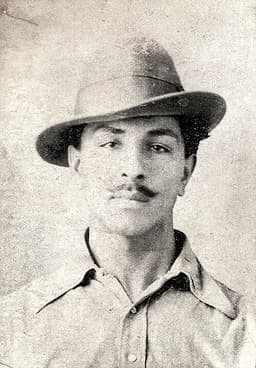
Bhagat Singh
Revolutionary · Modern
46.8Total
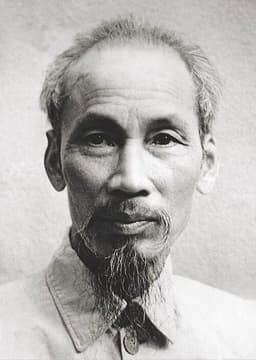
Ho Chi Minh
Revolutionary · Modern
62.9Total
Basic Information
Born
1907
1890
Died
1931
1969
Era
Modern
Modern
Nationality
India
Vietnam
Occupation
Revolutionary
Revolutionary
Civilization
Indian
Eastern
Score Comparison
Military (10%)
30.0
55.0
Political (20%)
25.0
72.0
Influence (20%)
61.0
62.0
Legacy (20%)
50.0
58.0
Leadership (15%)
65.0
72.0
Strategy (15%)
25.0
58.0
TOTAL
46.8
62.9
Bhagat Singh — Complete Timeline
1928 AD
Killing of John SaundersPolitical Action◆ Major
Bhagat Singh and his associates killed British police officer John Saunders in Lahore, mistaking him for James Scott, who had ordered the lathi charge that killed Lala Lajpat Rai. This act of revenge escalated the revolutionary movement.
AssassinationRevolutionary Action
Impact: national
1929 AD
Central Legislative Assembly BombingPolitical Action◆ Major
Bhagat Singh and Batukeshwar Dutt threw bombs in the Central Legislative Assembly in Delhi to protest the Public Safety Bill and Trade Disputes Act. They were arrested and used the trial to propagate revolutionary ideas.
ProtestRevolutionary Action
Impact: national
Hunger Strike in JailPolitical Action◆ Major
Bhagat Singh and fellow prisoners went on a 116-day hunger strike in Lahore jail demanding better treatment for political prisoners. The strike drew national attention and forced the British to make concessions.
ProtestPrison Reform
Impact: national
1931 AD
Execution by HangingPolitical Action◆ Major
Bhagat Singh was executed by hanging at Lahore jail at age 23, along with Rajguru and Sukhdev. His execution sparked widespread protests and made him a martyr for the Indian independence movement.
ExecutionMartyrdom
Impact: nationaltragic
Ho Chi Minh — Complete Timeline
1941 AD
Establishment of the Viet MinhPolitical Action◆ Major
Ho Chi Minh founded the Viet Minh (League for the Independence of Vietnam) in southern China. This coalition of nationalist and communist groups became the primary force for Vietnamese independence, fighting both Japanese occupation and French colonialism.
Viet MinhIndependence MovementWorld War II
Impact: nationalconstructive
1945 AD
Declaration of Independence of VietnamPolitical Action
Ho Chi Minh proclaimed the Democratic Republic of Vietnam in Hanoi's Ba Dinh Square, citing the US Declaration of Independence. This established the Viet Minh government and began the struggle for independence from French colonial rule.
IndependenceVietnamDecolonization
Impact: nationalconstructive
1954 AD
Battle of Dien Bien PhuWar
Ho Chi Minh's Viet Minh forces, under General Giap, defeated the French garrison at Dien Bien Phu. This victory ended French colonial rule in Indochina and led to the Geneva Accords dividing Vietnam at the 17th parallel.
Vietnam WarDecolonizationFrench Indochina
Impact: regional
Geneva AccordsPolitical Action◆ Major
Ho Chi Minh's delegation signed the Geneva Accords, temporarily dividing Vietnam at the 17th parallel. The agreement promised nationwide elections in 1956, which were never held, leading to the permanent division of Vietnam.
Geneva ConferenceDivision of VietnamDiplomacy
Impact: regional
1959 AD
Start of the Vietnam WarWar
Ho Chi Minh's government in North Vietnam authorized armed struggle against the US-backed South Vietnamese regime. This escalated into the Vietnam War, a prolonged conflict that resulted in millions of deaths and US withdrawal in 1973.
Vietnam WarCold WarCommunism
Impact: globaldestructive
Expert Analysis
Bhagat Singh vs Ho Chi Minh
# The Revolutionary’s Path: Ho Chi Minh and Bhagat Singh
In the early hours of March 23, 1931, a 23-year-old man walked to the gallows in Lahore’s central jail, singing “Down with British imperialism” as the noose tightened. Thirty-eight years later, on September 2, 1969, an emaciated man of 79 died quietly in Hanoi, his body preserved in a glass mausoleum where millions would come to pay respects. One died in failure, his cause seemingly crushed; the other died in triumph, his nation independent. Yet both were revolutionaries who gave everything for freedom. Why did one succeed where the other perished young?
Origins
Ho Chi Minh was born Nguyen Sinh Cung in 1890 in Nghe An province, central Vietnam, a land of rice paddies and French colonial exploitation. His father, a Confucian scholar, taught him to resist oppression, but it was his travels that forged him. At 21, he signed on as a cook’s assistant on a French steamer, spending the next three decades in London, Paris, Moscow, and Guangzhou. He washed dishes, painted retouches, and read Marx. He became a man without a country, but with a vision.
Bhagat Singh was born in 1907 in Banga, Punjab, into a family of Sikh revolutionaries. His uncle had been hanged by the British; his father was jailed. At 13, he witnessed the Jallianwala Bagh massacre, where British troops fired on unarmed civilians. That night, he scooped up soil soaked with blood and kept it as a relic. He grew up reading Bakunin and Lenin, but also the Bhagavad Gita. He was a teenager when he swore to die for India.
The difference begins here. Ho Chi Minh had time—decades to learn, adapt, and build. Bhagat Singh had fury and a short fuse.
Rise to Power
Ho Chi Minh entered history slowly. In 1919, he tried to petition Woodrow Wilson at Versailles for Vietnamese self-rule; the president ignored him. In 1930, he founded the Indochinese Communist Party, but French repression forced him into exile. His turning point came in 1941, when he established the Viet Minh in southern China. This was not a spontaneous uprising but a calculated coalition of nationalists, communists, and peasants. He spent four years organizing, training, and waiting.
Bhagat Singh’s rise was a lightning strike. In 1928, he and his associates killed British police officer John Saunders in Lahore, mistaking him for James Scott, the man who had lathi-charged the elderly nationalist leader Lala Lajpat Rai to death. The following year, he and Batukeshwar Dutt threw bombs in the Central Legislative Assembly in Delhi, not to kill but to make a statement. They deliberately aimed at empty benches and surrendered, shouting “Inquilab Zindabad!”—Long Live Revolution.
Ho Chi Minh built an army; Bhagat Singh built a symbol.
Leadership & Governance
Ho Chi Minh was a master of political patience. He understood that revolution required organization, not just sacrifice. In 1945, he proclaimed the Democratic Republic of Vietnam in Hanoi’s Ba Dinh Square, quoting the American Declaration of Independence. He knew propaganda. But his true genius was military strategy: at Dien Bien Phu in 1954, his forces under General Giap surrounded and crushed the French garrison, ending colonial rule. The Geneva Accords that followed temporarily divided Vietnam, but Ho accepted the compromise, knowing a longer war loomed.
Bhagat Singh never governed anything. In jail, he led a 116-day hunger strike demanding better treatment for political prisoners, forcing the British to concede. He wrote essays on atheism and revolution, his words smuggled out in matchboxes. He was a thinker, but his leadership was moral, not administrative. When the British executed him, they made him a martyr—but martyrs do not win wars.
Ho Chi Minh’s leadership score of 84.8 reflects his ability to command loyalty and strategy. Bhagat Singh’s 44.8 reflects his youth and lack of statecraft.
Triumph & Tragedy
Ho Chi Minh’s greatest moment was Dien Bien Phu, a victory that shocked the world. His deepest tragedy was the Vietnam War that followed, a conflict that killed millions and devastated his country. He authorized armed struggle against the US-backed South in 1959, but he died six years before Saigon fell. He never saw his united Vietnam.
Bhagat Singh’s triumph was his trial. He used the courtroom as a platform, turning the British legal system against itself. His tragedy was his death—a hanging at 23, before he could build anything. Yet his execution sparked riots across India. The British feared him more alive than dead, but they killed him anyway.
Character & Destiny
Ho Chi Minh was ascetic, cunning, and patient. He wore simple sandals, slept on a bamboo mat, and wrote poetry. He was called “Uncle Ho”—a father figure, not a firebrand. He survived years of exile, prison, and war because he could wait. His destiny was to become a nation’s father.
Bhagat Singh was romantic, intellectual, and impatient. He read Lenin at 16, wrote manifestos at 20, and died at 23. He knew he would die young. In his last letter, he wrote: “The sword of revolution is sharpened on the whetstone of sacrifice.” His destiny was to become a legend, not a leader.
Legacy
Ho Chi Minh left a unified Vietnam, a communist state that still bears his name. Saigon is now Ho Chi Minh City. His mausoleum draws pilgrims. His legacy score of 72.2 reflects his lasting influence, but also the controversies of his regime—forced collectivization, repression, war.
Bhagat Singh left a spark. His image adorns posters in every Indian protest. His slogan “Inquilab Zindabad” still echoes in rallies. His influence score of 72.2 is nearly identical to Ho’s, but his legacy is cultural, not political. He inspired generations, but he did not win independence—that came in 1947, 16 years after his death, through negotiation, not revolution.
Conclusion
Ho Chi Minh and Bhagat Singh both wanted freedom. One lived long enough to see it; the other died too young. But perhaps the deeper difference is this: Ho Chi Minh understood that revolution is a marathon, not a sprint. He built institutions, forged alliances, and accepted compromise. Bhagat Singh believed that revolution is a flame—brief, bright, and purifying.
History honors both. But it builds nations with the patient, and creates myths with the brave.
Rankings
🥇
Ho Chi MinhLeader
Mil: 55.0Pol: 72.0Inf: 62.0
62.9
🥈
Bhagat Singh
Mil: 30.0Pol: 25.0Inf: 61.0
46.8
+16.1 behind
How This Comparison Works
Algorithm
Each figure is scored on 6 dimensions (0—100 scale) based on structured historical data: Military (10%), Political (20%), Influence (20%), Legacy (20%), Leadership (15%), Strategy (15%). The weighted total produces the final ranking.
Data Sources
Scores are computed from structured sub-indicators in the database. Scale factors adjust for era (Ancient ×0.85, Modern ×1.0) and civilization size (Eastern ×1.05, Other ×0.80) to account for differences in population and military scale.
Maximum 3 Figures
Comparisons are limited to 2—3 figures to ensure readability and statistical meaningfulness.
Error Margins
±5 points per dimension — Sub-scores are derived from historical records with inherent uncertainty. Two figures within 5 points on a dimension should be considered roughly equivalent in that area.
Total Score Accuracy
±3 points overall — The weighted combination of 6 dimensions produces a total score with approximately ±3 points of uncertainty. Differences of less than 3 points are not statistically significant— the figures are effectively tied.
Known Limitations
- Historical records are incomplete and uneven across civilizations
- Figures from oral-tradition societies may be underrepresented
- Occupation labels can misclassify multi-role figures
- Scores measure capability and impact, not moral character
- Quantitative scoring is a comparison tool, not absolute truth
Capability Radar
Military (10%) — Battles & Warfare
Battles
0
65
Win Rate
0
60
Expansion
0
55
Political (20%) — Governance & Reform
Reform
15
85
Diplomacy
5
90
Economy
0
40
Influence (20%) — Cultural & Global Reach
Cultural
55
75
Global
50
75
Legacy (20%) — Historical Impact
Historical
60
85
Longevity
55
70
Leadership (15%) — Power & Stability
Tenure
0
70
Stability
0
50
Strategy (15%) — Tactics & Innovation
Strategy
5
80
Tactics
10
70
Reform
0
75
Similar Comparisons
Comments & Discussion
GALLOWS GAZER6/16/2026
Ho Chi Minh lived to see victory because he understood war as a long, patient chess match—not a sprint to martyrdom. Bhagat Singh’s bomb in the Central Legislative Assembly was a symbolic act, meant to wake the deaf, but it handed the British a perfect excuse to hang him. Ho spent decades in exile, studying revolution from Paris to Moscow. Singh spent his final years in prison writing letters. One built a state; the other built a legend.
JALLIANWALA'S GHOST6/16/2026
The real difference? Timing and terrain. Ho Chi Minh exploited World War II’s chaos, when Japan shattered French colonial control, leaving a power vacuum for the Viet Minh to fill. Bhagat Singh faced a British Raj at its peak, post-1919 reforms that actually pacified much of India. For all his courage, Singh’s pistol and bombs were obsolete against an empire that could still afford to hang a 23-year-old. Ho’s revolution rode the wave of history; Singh’s drowned under it.
红河铁血6/16/2026
胡志明是地缘政治的天才,而巴格特·辛格只是浪漫主义的烈士。胡志明懂得“以夷制夷”,先是利用国民党,再拉拢苏联,甚至跟美国情报局合作过。辛格只会对着英国法官大喊“Inquilab Zindabad”,却没有任何外交后盾。1931年的印度,真比1969年的越南更分裂、更无力吗?根本不是。辛格死得太蠢,胡志明活得太精。
德里老烟枪6/16/2026
数据不会撒谎:胡志明活了79岁,领导了一场30年的战争,最终统一祖国。巴格特·辛格23岁被吊死,从被捕到行刑不到一年。辛格的支持者说他的牺牲唤醒了民族意识——但1931年之后的印度独立运动,不是照样要等到1947年吗?胡志明的每一滴血都算进了胜利的账单里,辛格的血却只换来几本盗版传记和街道命名权。
河内灰烬6/16/2026
别把辛格捧成另一个胡志明。胡志明读过马克思,但他更懂孔子和拿破仑——他翻译过《中国革命的悲剧》,研究过“怎么死不如怎么赢”。辛格呢?他临刑前还在读《列宁传》,以为牺牲就是全部。越南的独立是胡志明一颗颗螺丝拧出来的,不是哪颗炸弹炸出来的。辛格的炸弹只炸死了几个旁观者,连一个英国高官都没伤着。这是革命,还是自杀式表演?