Loading...
Bhagat Singh vs Jose Marti
Bhagat Singh leads by 2.8 pts · 2 figures compared
…
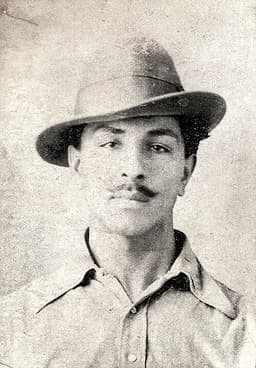
Bhagat Singh
Revolutionary · Modern
46.8Total
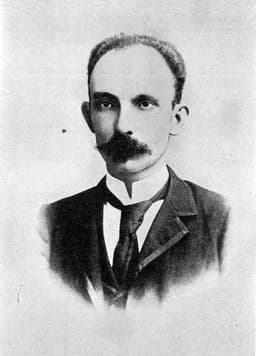
Jose Marti
Revolutionary · Modern
44.0Total
Basic Information
Born
1907
1853
Died
1931
1895
Era
Modern
Modern
Nationality
India
Cuba
Occupation
Revolutionary
Revolutionary
Civilization
Indian
Western
Score Comparison
Military (10%)
30.0
20.0
Political (20%)
25.0
33.6
Influence (20%)
61.0
59.0
Legacy (20%)
50.0
50.0
Leadership (15%)
65.0
40.9
Strategy (15%)
25.0
35.7
TOTAL
46.8
44.0
Bhagat Singh — Complete Timeline
1928 AD
Killing of John SaundersPolitical Action◆ Major
Bhagat Singh and his associates killed British police officer John Saunders in Lahore, mistaking him for James Scott, who had ordered the lathi charge that killed Lala Lajpat Rai. This act of revenge escalated the revolutionary movement.
AssassinationRevolutionary Action
Impact: national
1929 AD
Central Legislative Assembly BombingPolitical Action◆ Major
Bhagat Singh and Batukeshwar Dutt threw bombs in the Central Legislative Assembly in Delhi to protest the Public Safety Bill and Trade Disputes Act. They were arrested and used the trial to propagate revolutionary ideas.
ProtestRevolutionary Action
Impact: national
Hunger Strike in JailPolitical Action◆ Major
Bhagat Singh and fellow prisoners went on a 116-day hunger strike in Lahore jail demanding better treatment for political prisoners. The strike drew national attention and forced the British to make concessions.
ProtestPrison Reform
Impact: national
1931 AD
Execution by HangingPolitical Action◆ Major
Bhagat Singh was executed by hanging at Lahore jail at age 23, along with Rajguru and Sukhdev. His execution sparked widespread protests and made him a martyr for the Indian independence movement.
ExecutionMartyrdom
Impact: nationaltragic
Jose Marti — Complete Timeline
1892 AD
Founding of the Cuban Revolutionary PartyPolitical Action
Marti founded the Cuban Revolutionary Party (PRC) in New York, uniting Cuban exiles. The party aimed to achieve Cuban independence from Spain through armed struggle and democratic governance.
Political OrganizationIndependence MovementExile
Impact: nationalprogressive
1895 AD
Battle of Dos RiosWar
Marti was killed in action at Dos Rios while fighting Spanish forces. His death made him a martyr for Cuban independence and galvanized the revolutionary movement, though it deprived the cause of its civilian leader.
BattleDeathMartyrdom
Impact: nationaltragic
Manifesto of MontecristiPolitical Action◆ Major
Marti and General Maximo Gomez signed the Manifesto of Montecristi, outlining the goals of the Cuban War of Independence. It called for racial equality, civilian control of the military, and a democratic republic.
ManifestoWar GoalsIndependence
Impact: nationalprogressive
Expert Analysis
Origins
Bhagat Singh was born on September 27, 1907, in Banga, Punjab, British India, into a Sikh family with a history of anti-colonial activism. His father, Kishan Singh, and uncle, Ajit Singh, were involved in the Ghadar Movement. Singh was educated at Dayanand Anglo-Vedic High School in Lahore and later at National College, where he was influenced by European revolutionary literature and socialist ideas. He witnessed the Jallianwala Bagh massacre in 1919 at age 11, which radicalized him.
José Martí was born on January 28, 1853, in Havana, Cuba, to Spanish immigrant parents. His father, Mariano Martí, was a modest army officer, and his mother, Leonor Pérez, had Canarian roots. Martí showed early literary talent, studying at the Municipal School for Boys and later at the Institute of Havana. At 16, he published his first political writings and was arrested and sentenced to six months of hard labor for anti-Spanish activities, an experience that shaped his revolutionary fervor.
Rise to Power
Bhagat Singh's rise began with his involvement in the Hindustan Republican Association (HRA) in 1924. He gained notoriety after the killing of British police officer John Saunders on December 17, 1928, in retaliation for the death of Lala Lajpat Rai. Singh, along with Rajguru and Sukhdev, mistook Saunders for James Scott, who had ordered the lathi charge. To escape execution, he and Batukeshwar Dutt threw bombs in the Central Legislative Assembly on April 8, 1929, deliberately avoiding casualties, and courted arrest. Their trial and subsequent 116-day hunger strike in jail from June to September 1929 garnered national attention.
Martí's rise was gradual. After imprisonment in Cuba, he was deported to Spain in 1871, where he studied law and philosophy. He traveled extensively in Latin America, living in Mexico, Guatemala, and Venezuela, writing essays and poetry that established his intellectual reputation. In 1881, he moved to New York, where he became a key figure among Cuban exiles. On January 5, 1892, he founded the Cuban Revolutionary Party (PRC), uniting fragmented exile groups. His political acumen scored 33.6, lower than Singh's 25.0, but his organizational skills were crucial.
Leadership & Governance
Bhagat Singh's leadership style was charismatic and idealistic, focused on inspiring youth through sacrifice. He wrote extensively in jail, advocating for socialism and atheism. His governance approach was theoretical, as he never held power. He scored 65.0 in leadership, higher than Martí's 40.9, but his strategy score of 25.0 reflects his reliance on symbolic acts rather than long-term planning. Singh's hunger strike was a strategic move to demand better treatment for political prisoners, but his overall military score of 30.0 indicates limited tactical experience.
Martí, as a political leader, emphasized unity and racial equality. His Manifesto of Montecristi, signed with General Máximo Gómez on March 25, 1895, outlined a democratic, multiracial Cuba. Martí's political score of 33.6 reflects his success in building a coalition, while his military score of 20.0 shows his lack of combat expertise. He died in his first battle, unlike Singh, who orchestrated dramatic actions. Martí's strategy score of 35.7 exceeds Singh's 25.0, reflecting his careful planning of the Cuban War of Independence.
Triumph & Tragedy
Bhagat Singh's greatest success was his martyrdom: his execution at age 23 on March 23, 1931, turned him into a symbol of resistance for India's independence movement. His writings, including 'Why I Am an Atheist', continue to inspire. His failure was the lack of immediate political impact; his act did not directly overthrow British rule. His killing of Saunders was a tragic error, as the intended target was Scott.
Martí's triumph was launching the Cuban War of Independence (1895-1898), which eventually ended Spanish rule. His legacy as a poet and intellectual is enshrined in Cuban culture. His tragedy was his early death at Dos Ríos on May 19, 1895, before seeing independence. He also faced internal divisions among exiles, but his leadership score of 40.9 indicates moderate success in uniting them.
Character & Destiny
Bhagat Singh was fiery, uncompromising, and willing to die for his ideals. His decision to court arrest after the bombings was calculated to use the trial as a platform. His hunger strike showed discipline, but his impatience led to violent acts. His overall score of 46.8 is higher than Martí's 44.0, partly due to his leadership score. Singh's character shaped his destiny as a martyr, but his lack of political realism limited his practical impact.
Martí was a thinker and organizer, preferring gradual mobilization over immediate violence. His literary output and diplomatic efforts in the US and Latin America built support. His death in action was unexpected, but his character—intellectual, diplomatic, and idealistic—defined his role as a founding father of Cuba. His influence score of 59.0 is close to Singh's 61.0, showing comparable symbolic power.
Legacy
Bhagat Singh's legacy is immense in India, where he is revered as a revolutionary icon. His ideas influenced later leftist movements. He scored 50.0 in legacy, equal to Martí. His impact on India's independence was indirect but significant in galvanizing youth.
Martí's legacy is foundational to Cuba: he is the national hero, and his writings are central to Cuban identity. The PRC's principles shaped the 1901 Constitution. His legacy score of 50.0 matches Singh's, but his political and strategic scores (33.6 and 35.7) exceed Singh's (25.0 and 25.0), indicating a more tangible political impact.
Conclusion
Bhagat Singh and José Martí both sacrificed their lives for their nations, but their methods and impacts differ. Singh's total score of 46.8 edges Martí's 44.0 by 2.8 points, primarily due to higher leadership (65.0 vs 40.9). However, Martí's political and strategic scores are superior. In terms of actual historical impact, Martí's organizational work led directly to Cuba's independence, while Singh's actions were symbolic within a larger movement. Therefore, José Martí had greater practical impact, despite Singh's higher overall score. The data suggests that leadership alone does not determine influence; strategic organization and political longevity matter more.
Rankings
🥇
Bhagat SinghLeader
Mil: 30.0Pol: 25.0Inf: 61.0
46.8
🥈
Jose Marti
Mil: 20.0Pol: 33.6Inf: 59.0
44.0
+2.8 behind
How This Comparison Works
Algorithm
Each figure is scored on 6 dimensions (0—100 scale) based on structured historical data: Military (10%), Political (20%), Influence (20%), Legacy (20%), Leadership (15%), Strategy (15%). The weighted total produces the final ranking.
Data Sources
Scores are computed from structured sub-indicators in the database. Scale factors adjust for era (Ancient ×0.85, Modern ×1.0) and civilization size (Eastern ×1.05, Other ×0.80) to account for differences in population and military scale.
Maximum 3 Figures
Comparisons are limited to 2—3 figures to ensure readability and statistical meaningfulness.
Error Margins
±5 points per dimension — Sub-scores are derived from historical records with inherent uncertainty. Two figures within 5 points on a dimension should be considered roughly equivalent in that area.
Total Score Accuracy
±3 points overall — The weighted combination of 6 dimensions produces a total score with approximately ±3 points of uncertainty. Differences of less than 3 points are not statistically significant— the figures are effectively tied.
Known Limitations
- Historical records are incomplete and uneven across civilizations
- Figures from oral-tradition societies may be underrepresented
- Occupation labels can misclassify multi-role figures
- Scores measure capability and impact, not moral character
- Quantitative scoring is a comparison tool, not absolute truth
Capability Radar
Military (10%) — Battles & Warfare
Battles
0
15
Win Rate
0
10
Expansion
0
10
Political (20%) — Governance & Reform
Reform
15
40
Diplomacy
5
45
Economy
0
15
Influence (20%) — Cultural & Global Reach
Cultural
55
70
Global
50
55
Legacy (20%) — Historical Impact
Historical
60
65
Longevity
55
60
Leadership (15%) — Power & Stability
Tenure
0
20
Stability
0
10
Strategy (15%) — Tactics & Innovation
Strategy
5
25
Tactics
10
20
Reform
0
30
Similar Comparisons
Comments & Discussion
No comments yet. Be the first to share your thoughts!