Loading...
Bhagat Singh vs Jose Rizal
Bhagat Singh leads by 0.1 pts · 2 figures compared
…
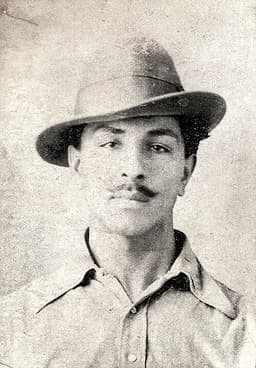
Bhagat Singh
Revolutionary · Modern
46.8Total
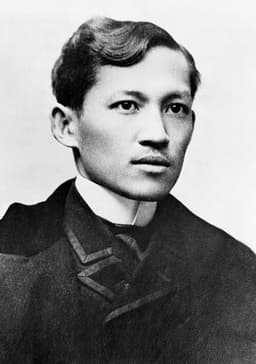
Jose Rizal
Revolutionary · Modern
46.7Total
Basic Information
Born
1907
1861
Died
1931
1896
Era
Modern
Modern
Nationality
India
Philippines
Occupation
Revolutionary
Revolutionary
Civilization
Indian
Eastern
Score Comparison
Military (10%)
30.0
11.9
Political (20%)
25.0
33.6
Influence (20%)
61.0
62.0
Legacy (20%)
50.0
58.0
Leadership (15%)
65.0
40.4
Strategy (15%)
25.0
44.5
TOTAL
46.8
46.7
Bhagat Singh — Complete Timeline
1928 AD
Killing of John SaundersPolitical Action◆ Major
Bhagat Singh and his associates killed British police officer John Saunders in Lahore, mistaking him for James Scott, who had ordered the lathi charge that killed Lala Lajpat Rai. This act of revenge escalated the revolutionary movement.
AssassinationRevolutionary Action
Impact: national
1929 AD
Central Legislative Assembly BombingPolitical Action◆ Major
Bhagat Singh and Batukeshwar Dutt threw bombs in the Central Legislative Assembly in Delhi to protest the Public Safety Bill and Trade Disputes Act. They were arrested and used the trial to propagate revolutionary ideas.
ProtestRevolutionary Action
Impact: national
Hunger Strike in JailPolitical Action◆ Major
Bhagat Singh and fellow prisoners went on a 116-day hunger strike in Lahore jail demanding better treatment for political prisoners. The strike drew national attention and forced the British to make concessions.
ProtestPrison Reform
Impact: national
1931 AD
Execution by HangingPolitical Action◆ Major
Bhagat Singh was executed by hanging at Lahore jail at age 23, along with Rajguru and Sukhdev. His execution sparked widespread protests and made him a martyr for the Indian independence movement.
ExecutionMartyrdom
Impact: nationaltragic
Jose Rizal — Complete Timeline
1887 AD
Publication of Noli Me TangereCultural
Rizal published his first novel, Noli Me Tangere, in Berlin. The book exposed the corruption and abuses of Spanish colonial rule and the Catholic Church in the Philippines, sparking nationalist sentiment among Filipinos.
LiteratureNationalismColonial Critique
Impact: nationalprogressive
1891 AD
Publication of El FilibusterismoCultural◆ Major
Rizal published his second novel, El Filibusterismo, in Ghent, Belgium. A darker sequel to Noli Me Tangere, it advocated for revolution and further criticized Spanish oppression, intensifying calls for reform and independence.
LiteratureRevolutionColonial Critique
Impact: nationalprogressive
1892 AD
Exile to DapitanPolitical Action◆ Major
Rizal was exiled by Spanish authorities to Dapitan in Mindanao for his alleged involvement in revolutionary activities. During his four-year exile, he practiced medicine, taught, and conducted scientific research, but remained under surveillance.
ExileSpanish ColonialismDapitan
Impact: nationaltragic
1896 AD
Execution of José RizalPolitical Action
Rizal was executed by firing squad in Manila on charges of sedition and rebellion, following a trial by Spanish military court. His martyrdom galvanized the Philippine Revolution, making him a national hero and symbol of resistance.
ExecutionMartyrdomPhilippine Revolution
Impact: nationaltragic
Expert Analysis
Jose Rizal vs Bhagat Singh
# The Pen and the Pistol
On a winter morning in 1896, a man in a black suit walked calmly to his death in a Manila field. His last words were not shouted in defiance but whispered in forgiveness. Thirty-five years later, in a Lahore prison, a young man of twenty-three kissed the gallows rope and sang “Down with British rule” as the trapdoor opened beneath him. One died with a rosary in his hand. The other died with a revolutionary song on his lips. Both were twenty-three when they faced their executioners. Both were revolutionaries. But José Rizal and Bhagat Singh chose radically different paths to the same end, and their divergent fates tell us something profound about how history shapes its martyrs.
Origins
José Rizal was born in 1861 into a prosperous mestizo family in Calamba, Laguna. His world was one of relative privilege—his father owned rice lands and a sugar plantation, and young José was sent to the best schools in Manila and later to universities in Madrid, Paris, and Heidelberg. He was a polymath who spoke twenty-two languages, a novelist, a poet, an ophthalmologist, and a sculptor. His Philippines was a Spanish colony suffocating under the weight of centuries of friar rule, where Filipinos were second-class citizens in their own land.
Bhagat Singh was born in 1907 in a small village in Punjab, into a Sikh family with a long history of resistance against British rule. His father and uncles had been jailed for their involvement in nationalist activities. From childhood, he breathed the air of rebellion. He was shaped not by European universities but by the Jallianwala Bagh massacre of 1919, which he witnessed at age twelve, and by the writings of Lenin, Trotsky, and Bakunin. His India was a vast colonial enterprise where the British Raj ruled through a combination of force and divide-and-conquer politics.
The difference in their origins was not just personal but historical. Rizal came of age in the 1880s, when nationalism in the Philippines was still a movement of reform, not revolution. Bhagat Singh came of age in the 1920s, when Gandhi’s non-cooperation movement had already transformed Indian politics and the Russian Revolution had demonstrated that empires could be overthrown.
Rise to Power
Rizal’s rise was through the pen. In 1887, he published *Noli Me Tangere* in Berlin, a novel that laid bare the corruption of Spanish friars, the hypocrisy of colonial officials, and the suffering of ordinary Filipinos. The book was smuggled into the Philippines and read in secret, passing from hand to hand like a forbidden gospel. Four years later, he published *El Filibusterismo* in Ghent, a darker, more violent sequel that seemed to warn that reform was impossible without revolution. These novels did not call for armed uprising. They did something more dangerous: they made Filipinos see themselves as a nation.
Bhagat Singh’s rise was through action. In 1928, at age twenty-one, he and his associates killed British police officer John Saunders in Lahore—a case of mistaken identity, as they had intended to kill a police superintendent responsible for the death of nationalist leader Lala Lajpat Rai. The following year, Bhagat Singh and Batukeshwar Dutt threw bombs in the Central Legislative Assembly in Delhi. They did not aim to kill; they aimed to make a statement. After the bombing, they did not flee. They shouted “Inquilab Zindabad!”—Long Live Revolution—and waited to be arrested.
The contrast is striking. Rizal’s weapons were words, deployed in European capitals, aimed at the conscience of the educated. Bhagat Singh’s weapons were bombs, deployed in the heart of the colonial government, aimed at the attention of the masses.
Leadership & Governance
Rizal never led an army, never commanded a government, never held political office. His leadership was intellectual and moral. He founded the La Liga Filipina, a civic organization that sought to unite Filipinos through peaceful means, but it was quickly suppressed. His true power lay in his ability to articulate the grievances of his people and to imagine a future without colonial rule. He was a strategist of the mind, not the battlefield.
Bhagat Singh was also young, but he operated within a revolutionary underground that demanded discipline and sacrifice. He helped found the Hindustan Socialist Republican Association, which aimed to overthrow British rule through armed struggle. He wrote manifestos, organized cells, and planned operations. In jail, he led a 116-day hunger strike demanding better treatment for political prisoners—a campaign that turned him into a national symbol. His leadership was collective, not individual; he saw himself as part of a movement, not its singular hero.
Both men governed through example. Rizal showed that a single person armed with truth could shake an empire. Bhagat Singh showed that a single person armed with courage could inspire a generation.
Triumph & Tragedy
Rizal’s greatest triumph was the publication of his novels, which transformed Philippine consciousness. His greatest tragedy was his execution. In 1892, he was exiled to Dapitan in Mindanao, where he lived for four years, practicing medicine, teaching, and writing. In 1896, the Katipunan—a secret revolutionary society inspired in part by his works—rose up against Spain. Though Rizal had no direct involvement, the Spanish authorities blamed him. He was tried by a military court and sentenced to death.
On December 30, 1896, he was marched to Bagumbayan field. His last poem, “Mi Último Adiós,” hidden in a small alcohol stove, became the anthem of the Philippine Revolution. He died facing the firing squad, refusing the blindfold, turning his body to face his executioners.
Bhagat Singh’s greatest triumph was the Central Legislative Assembly bombing, which electrified India. His greatest tragedy was his execution. In 1930, he was sentenced to death for the killing of John Saunders. The British government, fearing his growing popularity, rushed his execution. On March 23, 1931, he was hanged at Lahore jail at 7:30 PM, hours before the scheduled time. The prison authorities refused to give his body to his family, fearing a massive funeral procession.
Both men died young, but their deaths were not ends. They were beginnings.
Character & Destiny
Rizal was a reformer who became a revolutionary by accident. He believed in education, reason, and gradual change. He wrote to a friend, “I have to die so that others may live.” His martyrdom was almost poetic—a quiet intellectual whose execution ignited a fire he never intended to start.
Bhagat Singh was a revolutionary by conviction. He wrote, “The sword of revolution is sharpened on the whetstone of thought.” He believed in violence as a necessity, not a choice. His execution was the logical conclusion of a life dedicated to the overthrow of tyranny.
Rizal’s destiny was shaped by his belief in the power of ideas. Bhagat Singh’s destiny was shaped by his belief in the power of action. Both were right.
Legacy
Rizal is remembered as the national hero of the Philippines. His face appears on the one-peso coin. His novels are required reading in every Filipino school. His execution date is a national holiday. He is the symbol of the Filipino nation, the proof that a colony can produce a mind that rivals the best of Europe.
Bhagat Singh is remembered as a revolutionary martyr in India. His statues stand in every major city. His slogan “Inquilab Zindabad” still echoes in political rallies. He is the symbol of youth, courage, and uncompromising resistance. His life has been the subject of countless films, books, and songs.
Both men left behind not just a memory, but a question: What would you die for?
Conclusion
Rizal and Bhagat Singh never met. They lived in different colonies, under different empires, in different decades. But they faced the same choice: to submit or to resist. One chose the pen. The other chose the pistol. Both chose death over silence.
Their differences reflect the times they lived in and the tools available to them. Rizal’s world was one of reform, where novels could still shock the conscience of the powerful. Bhagat Singh’s world was one of total confrontation, where only bombs could break through the complacency of the oppressor.
But in the end, what unites them is more important than what divides them. Both believed that a single life could change the course of history. Both were right. And both, in their separate ways, proved that the most powerful weapon in the world is not a pen or a pistol, but a person willing to die for what they believe.
Rankings
🥇
Bhagat SinghLeader
Mil: 30.0Pol: 25.0Inf: 61.0
46.8
🥈
Jose Rizal
Mil: 11.9Pol: 33.6Inf: 62.0
46.7
+0.1 behind
How This Comparison Works
Algorithm
Each figure is scored on 6 dimensions (0—100 scale) based on structured historical data: Military (10%), Political (20%), Influence (20%), Legacy (20%), Leadership (15%), Strategy (15%). The weighted total produces the final ranking.
Data Sources
Scores are computed from structured sub-indicators in the database. Scale factors adjust for era (Ancient ×0.85, Modern ×1.0) and civilization size (Eastern ×1.05, Other ×0.80) to account for differences in population and military scale.
Maximum 3 Figures
Comparisons are limited to 2—3 figures to ensure readability and statistical meaningfulness.
Error Margins
±5 points per dimension — Sub-scores are derived from historical records with inherent uncertainty. Two figures within 5 points on a dimension should be considered roughly equivalent in that area.
Total Score Accuracy
±3 points overall — The weighted combination of 6 dimensions produces a total score with approximately ±3 points of uncertainty. Differences of less than 3 points are not statistically significant— the figures are effectively tied.
Known Limitations
- Historical records are incomplete and uneven across civilizations
- Figures from oral-tradition societies may be underrepresented
- Occupation labels can misclassify multi-role figures
- Scores measure capability and impact, not moral character
- Quantitative scoring is a comparison tool, not absolute truth
Capability Radar
Military (10%) — Battles & Warfare
Battles
0
14
Win Rate
0
21
Expansion
0
22
Political (20%) — Governance & Reform
Reform
15
15
Diplomacy
5
20
Economy
0
5
Influence (20%) — Cultural & Global Reach
Cultural
55
75
Global
50
65
Legacy (20%) — Historical Impact
Historical
60
80
Longevity
55
75
Leadership (15%) — Power & Stability
Tenure
0
0
Stability
0
5
Strategy (15%) — Tactics & Innovation
Strategy
5
27
Tactics
10
28
Reform
0
28
Similar Comparisons
Comments & Discussion
GALLOWS HOMBRE6/16/2026
Rizal’s soft approach got him shot anyway. He begged for reforms like a suitor pleading for scraps from the Spanish table, while Bhagat Singh grabbed history by the throat and forced it to listen. One wrote pretty novels the elite clapped for, the other died with “Long live revolution” echoing through Lahore’s walls. Rizal’s execution turned him into a literary martyr; Bhagat Singh’s made him a thunderclap. There’s a reason people name streets after the bomber, not the novelist.
血与墨判官6/16/2026
拿毛笔的永远赢不了拿手枪的——这个比较根本是画错了靶子。黎刹用二十三种语言写小说求西班牙总督“发发慈悲”,结果还是被当叛徒崩了。巴格特·辛格才二十三岁就往议会扔炸弹,临刑前还高唱“印度万岁”。一个在纸上写悲歌,一个用血给帝国上课。历史对文人的记性差得很,但永远记得那个笑着走向绞索的人。
STATISTICAL GHOST6/16/2026
Conveniently skipping the body counts? Rizal’s peaceful propaganda inspired a bloody revolution that killed thousands within months of his death. Bhagat Singh’s bombing injured exactly zero people, and his martyrdom actually accelerated British reforms like the Government of India Act 1935. So who caused more real change? The “gentle” novelist or the “violent” bomber? Let’s talk numbers, not romantic myths. One novel started a war. One bomb ended an empire’s illusions.
侠客与书生6/16/2026
黎刹是儒家式的改良君子——相信教育能感化暴君,结果西班牙人骂他是“华人杂种”照样枪毙。辛格是江湖式的死士刺客——明知必死还要用炸弹唤醒睡狮。两人的悲剧都输在一个字:早。早了十年,菲律宾人还没学会恨;晚了十年,印度老百姓已经开始反抗。但他们点燃的火种从来不会熄灭,这才是最重要的。
BANANA REPUBLIC MARTYR6/16/2026
Rizal’s execution was a diplomatic clutch move by a dying colonial regime. The Spanish shot him for “subversion” but made him a global martyr. Bhagat Singh’s hanging was a panic reaction by Brits who realized they’d created a folk hero. The difference? Rizal died with a rosary and forgave everyone — peak Catholic colonialism absorbing its own victim. Singh kissed the noose and cursed the Raj — pure anti-colonial defiance. One legacy sterilized by the church; the other, forever radicalized by the
第三只眼看历史6/16/2026
把黎刹和辛格硬凑一起比较的人,多半只看过维基百科第一段。黎刹的家庭是地主阶级,他的斗争是精英阶层的改良尝试——求个平等席位