Loading...
Bhagat Singh vs Sun Yat-sen
Sun Yat-sen leads by 5.7 pts · 2 figures compared
…
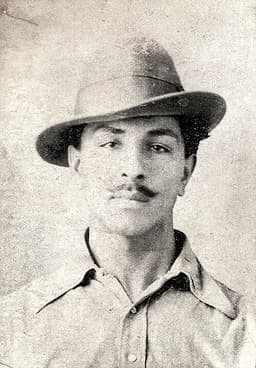
Bhagat Singh
Revolutionary · Modern
46.8Total
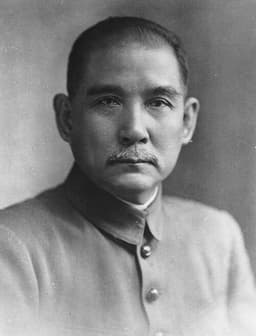
Sun Yat-sen
Revolutionary · Modern
52.5Total
Basic Information
Born
1907
1866
Died
1931
1925
Era
Modern
Modern
Nationality
India
China
Occupation
Revolutionary
Revolutionary
Civilization
Indian
Eastern
Score Comparison
Military (10%)
30.0
45.0
Political (20%)
25.0
68.0
Influence (20%)
61.0
61.0
Legacy (20%)
50.0
58.0
Leadership (15%)
65.0
33.5
Strategy (15%)
25.0
30.3
TOTAL
46.8
52.5
Bhagat Singh — Complete Timeline
1928 AD
Killing of John SaundersPolitical Action◆ Major
Bhagat Singh and his associates killed British police officer John Saunders in Lahore, mistaking him for James Scott, who had ordered the lathi charge that killed Lala Lajpat Rai. This act of revenge escalated the revolutionary movement.
AssassinationRevolutionary Action
Impact: national
1929 AD
Central Legislative Assembly BombingPolitical Action◆ Major
Bhagat Singh and Batukeshwar Dutt threw bombs in the Central Legislative Assembly in Delhi to protest the Public Safety Bill and Trade Disputes Act. They were arrested and used the trial to propagate revolutionary ideas.
ProtestRevolutionary Action
Impact: national
Hunger Strike in JailPolitical Action◆ Major
Bhagat Singh and fellow prisoners went on a 116-day hunger strike in Lahore jail demanding better treatment for political prisoners. The strike drew national attention and forced the British to make concessions.
ProtestPrison Reform
Impact: national
1931 AD
Execution by HangingPolitical Action◆ Major
Bhagat Singh was executed by hanging at Lahore jail at age 23, along with Rajguru and Sukhdev. His execution sparked widespread protests and made him a martyr for the Indian independence movement.
ExecutionMartyrdom
Impact: nationaltragic
Sun Yat-sen — Complete Timeline
1894 AD
Founded the Revive China SocietyPolitical Action◆ Major
Sun Yat-sen founded the Revive China Society (Xingzhonghui) in Honolulu, the first modern revolutionary organization among overseas Chinese. The society aimed to overthrow the Qing dynasty and establish a republic, marking the beginning of organized revolutionary activity.
RevolutionOverseas ChineseRepublic
Impact: nationalconstructive
1911 AD
Led the Xinhai RevolutionPolitical Action
Sun Yat-sen's revolutionary activities culminated in the Wuchang Uprising of October 1911, which sparked the Xinhai Revolution. The uprising spread across China, leading to the abdication of the Qing emperor in 1912 and the end of 2,000 years of imperial rule.
RevolutionQing DynastyRepublic
Impact: globalconstructive
1912 AD
Proclaimed the Republic of ChinaPolitical Action
On January 1, 1912, Sun Yat-sen was inaugurated as the provisional president of the Republic of China in Nanjing. He proclaimed the establishment of the first republic in Asia, based on his Three Principles of the People: nationalism, democracy, and livelihood.
RepublicPresidencyThree Principles
Impact: globalconstructive
Resigned Presidency in Favor of Yuan ShikaiPolitical Action◆ Major
To secure the abdication of the Qing emperor and avoid civil war, Sun Yat-sen resigned the provisional presidency in February 1912 in favor of Yuan Shikai. This decision, while pragmatic, allowed Yuan to consolidate power and later attempt to restore the monarchy.
Power TransferYuan ShikaiCompromise
Impact: national
1919 AD
Reorganized the KuomintangPolitical Action◆ Major
Sun Yat-sen reorganized the Chinese Revolutionary Party into the Kuomintang (KMT) in 1919, with a more centralized structure. He later accepted Soviet aid and CCP members into the party under the policy of 'alliance with Russia and the Communists,' reshaping the revolutionary movement.
KuomintangSoviet AllianceCCP
Impact: nationalconstructive
Expert Analysis
Sun Yat-sen vs Bhagat Singh
# The Revolutionary’s Path: Sun Yat-sen and Bhagat Singh
On a cold March morning in 1931, a 23-year-old man walked to the gallows in Lahore’s jail, singing “Down with British imperialism.” Half a world away and two decades earlier, a 45-year-old doctor had stood in Nanjing’s presidential palace, proclaiming the end of 2,000 years of imperial rule. One died young, a martyr whose name would echo through generations; the other died in exile, his dream of a unified China still incomplete. Both were revolutionaries, but their paths, their methods, and their legacies diverged as sharply as the civilizations they sought to transform. Why did one become a founding father and the other a symbol of defiant sacrifice?
Origins
Sun Yat-sen was born in 1866 in a small village in Guangdong province, southern China, into a peasant family. His early exposure to Western education in Hawaii and Hong Kong shaped a worldview that blended Confucian ethics with Enlightenment ideals. China in the late 19th century was a decaying empire, humiliated by foreign powers and torn by internal rebellion. Sun absorbed the urgency of reform, but unlike many of his contemporaries, he dreamed not of restoring the Qing dynasty but of sweeping it away entirely. His was a revolution conceived in books and foreign ports, not in the blood of street battles.
Bhagat Singh, born in 1907 in Punjab, India, grew up in a family steeped in anti-colonial resistance. His father and uncle were involved in nationalist movements; his village was scarred by the 1919 Jallianwala Bagh massacre, where British troops fired on unarmed civilians. From childhood, Singh was immersed in tales of defiance—of the 1857 rebellion, of Sikh warriors, of the writings of Marx and Lenin. While Sun’s revolution was a calculated political project, Singh’s was a visceral, almost existential response to oppression. He was a product of a colonized land where compromise felt like betrayal.
Rise to Power
Sun’s rise was a slow, painstaking climb through the corridors of exile. In 1894, he founded the Revive China Society in Honolulu, the first modern revolutionary organization among overseas Chinese. His network grew through secret societies and student groups across Japan, Europe, and the United States. He attempted ten uprisings before the Wuchang Uprising of October 1911 finally succeeded. Sun was not present at the battle; he was in Denver, Colorado, reading about it in a newspaper. His path to power was that of a planner, a fundraiser, a man who built coalitions from a distance.
Bhagat Singh’s rise was explosive and short. In 1928, at age 21, he and his associates killed British police officer John Saunders in Lahore, mistaking him for a notorious official. The act was a response to the death of nationalist leader Lala Lajpat Rai, who had been beaten by police. Singh did not flee; he courted arrest. In 1929, he and Batukeshwar Dutt threw bombs in the Central Legislative Assembly in Delhi, not to kill but to protest repressive laws. They shouted “Inquilab Zindabad” (Long Live Revolution) and surrendered. Singh’s rise was not a campaign of incremental influence but a series of defiant gestures designed to ignite a firestorm.
Leadership & Governance
Sun Yat-sen’s leadership was that of an architect. He wrote the Three Principles of the People—nationalism, democracy, and livelihood—which became the ideological foundation of modern China. As provisional president of the Republic of China in 1912, he issued decrees abolishing feudal titles, promoting education, and modernizing law. But his political wisdom was tempered by naivety. To secure the Qing emperor’s abdication and avoid civil war, he resigned the presidency in favor of the military strongman Yuan Shikai—a decision that plunged China into warlord chaos. Sun was a visionary, not a tactician; his military score of 45.4 reflects a man who rarely held a gun, let alone commanded an army.
Bhagat Singh never governed. His leadership was symbolic, not administrative. He organized hunger strikes in Lahore jail, demanding better treatment for political prisoners, and lasted 116 days. He wrote pamphlets on socialism and atheism, reading Lenin and Trotsky behind bars. His strategy was to make the British visible in their brutality. When he was executed, he demanded to be shot, not hanged, as a soldier’s death—a request denied. His political score of 40.0 and leadership score of 44.8 reflect a man whose influence lay in his martyrdom, not in statecraft.
Triumph & Tragedy
Sun’s greatest triumph was the Xinhai Revolution of 1911, which ended 2,000 years of imperial rule. He became the father of a republic, a title that would outlast his failures. His tragedy was his exile and death in 1925 at age 58, never seeing a unified China. His revolution had been stolen by warlords, and his Kuomintang party, reorganized in 1919, was still struggling for control.
Bhagat Singh’s triumph was his execution itself. On March 23, 1931, he was hanged at Lahore jail, and his death sparked protests across India, turning him into a national icon. His tragedy was his youth—23 years old, with a mind full of ideas that never matured into action. He left behind no government, no constitution, only a legend.
Character & Destiny
Sun Yat-sen was a man of patience and persistence. He failed more times than he succeeded, yet he never stopped organizing, writing, or dreaming. His character was shaped by the belief that history could be guided by reason. He was a doctor who tried to heal a nation.
Bhagat Singh was a man of fury and conviction. He believed that violence was a language the British understood. His character was forged in the fire of injustice, and he chose a path that guaranteed his early death. He was a martyr who knew his fate.
Legacy
Sun Yat-sen’s legacy is colossal. He is revered in both mainland China and Taiwan as a founding father, though each side interprets him differently. His Three Principles of the People remain a touchstone. His legacy score of 72.2 reflects a man whose ideas outlived his failures.
Bhagat Singh’s legacy is more ambiguous. He is a hero to Indian leftists and nationalists, a symbol of resistance against colonialism. But his use of violence is debated. His legacy score of 68.4 is high for a man who lived only 23 years, but it is the legacy of a symbol, not a statesman.
Conclusion
Sun Yat-sen and Bhagat Singh represent two faces of revolution: the statesman and the martyr. Sun built a framework that others would fill; Singh lit a fire that others would feed. One died in a hospital bed, the other on a gallows. Yet both understood that the old world must be destroyed before a new one can be built. Their differences—in method, in time, in temperament—are less important than their shared conviction that history belongs to those who dare to change it. In the end, revolutions need both architects and icons, planners and poets. Sun and Singh, each in their own way, gave their lives to that truth.
Rankings
🥇
Sun Yat-senLeader
Mil: 45.0Pol: 68.0Inf: 61.0
52.5
🥈
Bhagat Singh
Mil: 30.0Pol: 25.0Inf: 61.0
46.8
+5.7 behind
How This Comparison Works
Algorithm
Each figure is scored on 6 dimensions (0—100 scale) based on structured historical data: Military (10%), Political (20%), Influence (20%), Legacy (20%), Leadership (15%), Strategy (15%). The weighted total produces the final ranking.
Data Sources
Scores are computed from structured sub-indicators in the database. Scale factors adjust for era (Ancient ×0.85, Modern ×1.0) and civilization size (Eastern ×1.05, Other ×0.80) to account for differences in population and military scale.
Maximum 3 Figures
Comparisons are limited to 2—3 figures to ensure readability and statistical meaningfulness.
Error Margins
±5 points per dimension — Sub-scores are derived from historical records with inherent uncertainty. Two figures within 5 points on a dimension should be considered roughly equivalent in that area.
Total Score Accuracy
±3 points overall — The weighted combination of 6 dimensions produces a total score with approximately ±3 points of uncertainty. Differences of less than 3 points are not statistically significant— the figures are effectively tied.
Known Limitations
- Historical records are incomplete and uneven across civilizations
- Figures from oral-tradition societies may be underrepresented
- Occupation labels can misclassify multi-role figures
- Scores measure capability and impact, not moral character
- Quantitative scoring is a comparison tool, not absolute truth
Capability Radar
Military (10%) — Battles & Warfare
Battles
0
15
Win Rate
0
10
Expansion
0
5
Political (20%) — Governance & Reform
Reform
15
85
Diplomacy
5
60
Economy
0
20
Influence (20%) — Cultural & Global Reach
Cultural
55
70
Global
50
65
Legacy (20%) — Historical Impact
Historical
60
80
Longevity
55
75
Leadership (15%) — Power & Stability
Tenure
0
30
Stability
0
15
Strategy (15%) — Tactics & Innovation
Strategy
5
20
Tactics
10
10
Reform
0
40
Similar Comparisons
Comments & Discussion
BombThrowerBhagat6/16/2026
Both men had guts, but Bhagat Singh actually struck at the heart of Empire. Lathi charges in Lahore, killing Saunders with revolvers at point-blank range—that’s direct action. Sun Yat-sen raised funds from overseas Chinese, cut deals with warlords, and fled to Tokyo when things heated up. Bhagat didn’t run; he walked to the gallows at 23 smiling. That’s why his photo’s in every Indian classroom, not a dusty museum. Sun governed; Bhagat symbolized.
江左史官6/16/2026
孙中山与宋教仁密谋二次革命,说白了还是军阀内斗的延续。你对比他失败多少次?十次起义,九次靠华侨募捐,连辛亥革命都是捡武昌新军倒戈的便宜。梁启超骂他“空谈误国”,我看不无道理。反观博古译《资本论》的那帮人——不对,是巴格特·辛格——他在狱中写《为什么我是无神论者》,把殖民法律的虚伪撕了个干净。一个要当总统,一个要毁灭等级。
MartyrOverMerchant6/16/2026
Bhagat Singh’s 1929 Assembly bomb stunt was deliberately non-lethal—“a loud noise to wake the deaf.” That’s revolutionary theater at its finest. Sun Yat-sen was a master of protestations, but he traded the Chinese revolution for Japanese loans and Soviet advisors. Bhagat never compromised; he refused to beg for clemency even when Gandhi’s crowd pleaded. Sun died of liver cancer in a Beijing hospital. Bhagat died on the noose. One legacy is government; the other is rebellion itself.
同光遗少6/16/2026
孙中山好歹是个医生,开过药方,办过黄埔军校,虽然在陈炯明叛变时跑得比兔子还快。巴格特·辛格呢?除了扔炸弹和写小册子,根本没碰过行政实务。你让他管个村子试试?他在中央庙炸弹案后躲了七个月,才被乔装警察抓走。革命不是写读书笔记,是北伐、是联俄、是跟宋庆龄结婚拉赞助。辛格的死壮烈,但没能阻止印度教与穆斯林的分裂——圣雄才是那个拆弹专家。