Loading...
Bhairon Singh Shekhawat vs Sokollu Mehmed Pasha
Sokollu Mehmed Pasha leads by 5.7 pts · 2 figures compared
…

Bhairon Singh Shekhawat
Politician · Modern
54.8Total
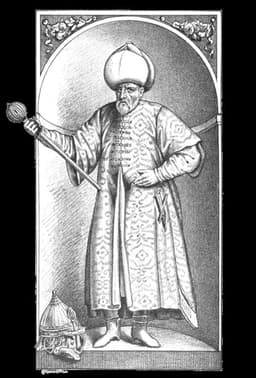
Sokollu Mehmed Pasha
Politician · Modern
60.5Total
Basic Information
Born
1923
1506
Died
—
1579
Era
Modern
Modern
Nationality
India
Ottoman Empire
Occupation
Politician
Politician
Civilization
Indian
Middle Eastern
Score Comparison
Military (10%)
32.2
52.5
Political (20%)
68.0
75.0
Influence (20%)
54.1
55.0
Legacy (20%)
44.2
55.0
Leadership (15%)
72.0
75.0
Strategy (15%)
60.0
52.5
TOTAL
54.8
60.5
Bhairon Singh Shekhawat — Complete Timeline
1977 AD
Became Chief Minister of RajasthanPolitical Action◆ Major
Bhairon Singh Shekhawat was sworn in as the Chief Minister of Rajasthan, leading the Janata Party government. His tenure focused on rural development and anti-poverty programs, but was cut short by the fall of the Janata government at the centre.
Chief MinisterRajasthanJanata Party
Impact: regionalconstructive
1990 AD
Second term as Chief Minister of RajasthanPolitical Action◆ Major
Shekhawat returned as Chief Minister after the BJP won the 1990 Rajasthan elections. His second term saw the implementation of economic reforms and infrastructure projects, but also faced communal tensions following the Babri Masjid demolition.
Chief MinisterRajasthanBJP
Impact: regionalconstructive
2002 AD
Elected Vice President of IndiaPolitical Action◆ Major
Shekhawat was elected as the 11th Vice President of India, serving under President A.P.J. Abdul Kalam. As Vice President, he also served as the ex-officio Chairman of the Rajya Sabha, presiding over parliamentary proceedings.
Vice PresidentIndiaRajya Sabha
Impact: nationalconstructive
2007 AD
Contested for President of IndiaPolitical Action◆ Major
Shekhawat contested the 2007 Indian presidential election as an independent candidate supported by the opposition. He lost to Pratibha Patil, the UPA candidate, marking the end of his active political career.
Presidential ElectionOppositionBJP
Impact: national
Sokollu Mehmed Pasha — Complete Timeline
1565 AD
Siege of MaltaWar◆ Major
As Grand Vizier, Sokollu Mehmed Pasha oversaw the Ottoman siege of Malta. The campaign failed to capture the island from the Knights Hospitaller, marking a significant Ottoman defeat in the Mediterranean and halting their westward expansion.
Ottoman-Habsburg WarsMediterraneanDefeat
Impact: regional
Appointment as Grand VizierPolitical Action◆ Major
Sokollu Mehmed Pasha was appointed Grand Vizier of the Ottoman Empire by Sultan Suleiman. He served under three sultans (Suleiman, Selim II, and Murad III), maintaining stability and overseeing the empire's administration during a period of expansion and consolidation.
Ottoman AdministrationGrand VizierStability
Impact: globalconstructive
1571 AD
Conquest of CyprusWar◆ Major
Under Sokollu Mehmed Pasha's administration, the Ottoman Empire conquered Cyprus from the Republic of Venice. The island became an Ottoman province, though the victory was followed by the naval defeat at Lepanto later that year.
Ottoman ExpansionCyprusVenice
Impact: regional
1579 AD
AssassinationPolitical Action◆ Major
Sokollu Mehmed Pasha was assassinated in the Divan chamber of the Topkapi Palace by a disgruntled soldier. His death ended the longest uninterrupted tenure as Grand Vizier in Ottoman history and marked the beginning of a period of political instability.
AssassinationOttoman PoliticsEnd of Era
Impact: nationaltragic
Expert Analysis
Origins
Bhairon Singh Shekhawat was born in 1923 in a farming family in Khachariyawas, Rajasthan. He completed his early education locally and later earned a law degree from Rajasthan University. His political career began with the Rashtriya Swayamsevak Sangh (RSS) and the Bharatiya Jana Sangh, where he rose through grassroots activism.
Sokollu Mehmed Pasha was born in 1505 in Sokolovići, Bosnia (then part of the Ottoman Empire), into an Orthodox Christian family. He was taken as a child through the devşirme system, converted to Islam, and educated at the Enderun school in Istanbul. He rose through military and administrative ranks, becoming a trusted official under Sultan Suleiman.
Rise to Power
Shekhawat entered electoral politics in 1952 as a member of the Rajasthan Legislative Assembly from Sikar. He served as a minister in the 1960s and became Chief Minister for the first time in 1977 after the Janata Party wave. His second term began in 1990 when the BJP won the state elections. In 2002, he was elected Vice President of India, serving until 2007. His political rise was marked by consistent electoral success and loyalty to the BJP.
Sokollu Mehmed Pasha rose through the Ottoman bureaucracy, serving as governor of various provinces. He became Grand Vizier in 1565 under Sultan Suleiman, a position he held for 14 years under three sultans (Suleiman, Selim II, and Murad III). His appointment was due to his administrative competence and military successes, including the conquest of Cyprus in 1570-1571.
Leadership & Governance
Shekhawat focused on rural development and infrastructure in Rajasthan. He implemented irrigation projects, improved electricity access, and promoted education. His governance style was pragmatic and consultative, working within coalition governments. As Vice President, he presided over the Rajya Sabha with impartiality. He scored 72.0 in leadership and 68.0 in political skill.
Sokollu Mehmed Pasha managed the vast Ottoman Empire, overseeing reforms in taxation, land tenure, and the military. He negotiated peace treaties with the Holy Roman Empire and Venice. His leadership score was 75.0, reflecting his ability to maintain stability across three reigns. He also scored 75.0 in political acumen, balancing court factions and the powerful harem.
Triumph & Tragedy
Shekhawat's greatest success was his long tenure as Chief Minister, transforming Rajasthan's rural economy. His defeat in the 2007 presidential election, where he lost to Pratibha Patil, was a personal and political setback. He also faced criticism for not modernizing the state more rapidly.
Sokollu Mehmed Pasha's triumph was the conquest of Cyprus, adding a strategic island to the empire. His tragedy was the failed Siege of Malta in 1565, which halted Ottoman expansion in the Mediterranean. He was assassinated in 1579 by a disgruntled soldier, ending his effective administration.
Character & Destiny
Shekhawat was known for his humility, patience, and political resilience. He survived multiple electoral defeats and remained a key figure in the BJP. His character as a consensus-builder helped him hold diverse coalitions together. His destiny was shaped by his loyalty to the party and his ability to adapt to changing political landscapes.
Sokollu Mehmed Pasha was a skilled strategist and administrator, known for his calm demeanor and diplomatic finesse. He served under three sultans, a testament to his political survival skills. His assassination was a result of court intrigues, reflecting the volatile nature of Ottoman politics.
Legacy
Shekhawat is remembered as a pioneering Chief Minister who laid the foundation for Rajasthan's development. His legacy includes improved water supply, roads, and education. However, his impact is largely regional. He scored 44.2 in legacy, limited by his national role as Vice President, which is a largely ceremonial position.
Sokollu Mehmed Pasha is considered one of the greatest Grand Viziers of the Ottoman Empire. His administrative reforms influenced the empire for centuries. The conquest of Cyprus remained a lasting territorial gain. He scored 55.0 in legacy, reflecting his enduring impact on Ottoman governance and expansion.
Conclusion
Sokollu Mehmed Pasha had a greater impact on history. His total score of 60.5 compared to Shekhawat's 54.8 reflects his broader influence across military, political, and administrative spheres. While Shekhawat was a capable regional leader, Sokollu Mehmed Pasha managed an empire, shaped international relations, and left a more enduring legacy. The data supports the conclusion that Sokollu Mehmed Pasha was the more consequential figure.
Rankings
🥇
Sokollu Mehmed PashaLeader
Mil: 52.5Pol: 75.0Inf: 55.0
60.5
🥈
Bhairon Singh Shekhawat
Mil: 32.2Pol: 68.0Inf: 54.1
54.8
+5.7 behind
How This Comparison Works
Algorithm
Each figure is scored on 6 dimensions (0—100 scale) based on structured historical data: Military (10%), Political (20%), Influence (20%), Legacy (20%), Leadership (15%), Strategy (15%). The weighted total produces the final ranking.
Data Sources
Scores are computed from structured sub-indicators in the database. Scale factors adjust for era (Ancient ×0.85, Modern ×1.0) and civilization size (Eastern ×1.05, Other ×0.80) to account for differences in population and military scale.
Maximum 3 Figures
Comparisons are limited to 2—3 figures to ensure readability and statistical meaningfulness.
Error Margins
±5 points per dimension — Sub-scores are derived from historical records with inherent uncertainty. Two figures within 5 points on a dimension should be considered roughly equivalent in that area.
Total Score Accuracy
±3 points overall — The weighted combination of 6 dimensions produces a total score with approximately ±3 points of uncertainty. Differences of less than 3 points are not statistically significant— the figures are effectively tied.
Known Limitations
- Historical records are incomplete and uneven across civilizations
- Figures from oral-tradition societies may be underrepresented
- Occupation labels can misclassify multi-role figures
- Scores measure capability and impact, not moral character
- Quantitative scoring is a comparison tool, not absolute truth
Capability Radar
Military (10%) — Battles & Warfare
Battles
46
60
Win Rate
45
65
Expansion
52
70
Political (20%) — Governance & Reform
Reform
55
80
Diplomacy
60
90
Economy
50
85
Influence (20%) — Cultural & Global Reach
Cultural
30
60
Global
25
70
Legacy (20%) — Historical Impact
Historical
35
75
Longevity
30
65
Leadership (15%) — Power & Stability
Tenure
65
85
Stability
55
80
Strategy (15%) — Tactics & Innovation
Strategy
52
75
Tactics
53
70
Reform
56
55
Similar Comparisons
Comments & Discussion
No comments yet. Be the first to share your thoughts!