Loading...
This comparison has not been analyzed yet.
One-time AI generation (~1 minute). Scores and timeline are already available below.
Bhupinder Singh of Patiala vs Prempeh I
Bhupinder Singh of Patiala leads by 3.7 pts · 2 figures compared
…

Bhupinder Singh of Patiala
Emperor · Modern
53.3Total
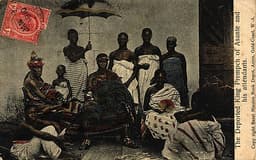
Prempeh I
Emperor · Modern
49.6Total
Basic Information
Born
1891
1870
Died
1938
1931
Era
Modern
Modern
Nationality
India
Ashanti Empire
Occupation
Emperor
Emperor
Civilization
Indian
Other
Score Comparison
Military (10%)
20.0
22.6
Political (20%)
68.0
54.7
Influence (20%)
60.0
56.4
Legacy (20%)
46.7
47.5
Leadership (15%)
68.0
62.2
Strategy (15%)
42.3
38.6
TOTAL
53.3
49.6
Bhupinder Singh of Patiala — Complete Timeline
1920 AD
Founded the Patiala Cricket TeamCultural◆ Major
Bhupinder Singh established the Patiala cricket team, which became one of the strongest in India. He recruited top players, including Lala Amarnath, and sponsored matches, contributing to the development of cricket in the country.
CricketSportsPatronage
Impact: nationalconstructive
Built the Moti Bagh PalaceCultural
Bhupinder Singh constructed the Moti Bagh Palace in Patiala, a lavish complex blending Indian and European architectural styles. The palace became a symbol of his wealth and patronage of the arts, housing a renowned collection of paintings and artifacts.
ArchitecturePatronageLuxury
Impact: regional
1925 AD
Represented India at the League of NationsPolitical Action
Bhupinder Singh served as a delegate to the League of Nations, representing India's princely states. He advocated for Indian interests and gained international recognition for his diplomatic skills.
DiplomacyLeague of NationsInternational Relations
Impact: globalconstructive
1926 AD
Chaired the Chamber of PrincesPolitical Action◆ Major
Bhupinder Singh was elected Chancellor of the Chamber of Princes, the representative body of India's princely states. He used this position to negotiate with the British on behalf of the princes, seeking to preserve their powers.
Princely StatesPoliticsBritish Raj
Impact: national
1928 AD
Sponsored the Patiala NecklaceCultural
Bhupinder Singh commissioned the Patiala Necklace, a diamond and emerald necklace from Cartier. The necklace, featuring the 'De Beers' diamond, became one of the most famous pieces of jewelry in the world, symbolizing his opulence.
JewelryLuxuryPatronage
Impact: global
Prempeh I — Complete Timeline
1895 AD
Fourth Anglo-Ashanti WarWar◆ Major
Prempeh I faced the Fourth Anglo-Ashanti War, where British forces invaded Ashanti to enforce a protectorate. The Ashanti were defeated, and Prempeh I was captured and exiled to the Seychelles.
Anglo-Ashanti WarBritish InvasionExile
Impact: regionaldestructive
1896 AD
Exile to the SeychellesPolitical Action◆ Major
After the British conquest of Ashanti, Prempeh I was deposed and exiled to the Seychelles along with his family. This exile ended Ashanti independence and incorporated the kingdom into the British Gold Coast colony.
ExileBritish ColonialismAshanti
Impact: nationaltragic
1924 AD
Return from exilePolitical Action◆ Major
Prempeh I was allowed to return to the Gold Coast after 28 years in exile. He was restored as a private citizen, not as Asantehene, but his return was a significant moment for Ashanti national pride.
ReturnExileAshanti
Impact: nationalconstructive
This comparison has not been analyzed yet.
One-time AI generation (~1 minute). Scores and timeline are already available below.
Rankings
🥇
Bhupinder Singh of PatialaLeader
Mil: 20.0Pol: 68.0Inf: 60.0
53.3
🥈
Prempeh I
Mil: 22.6Pol: 54.7Inf: 56.4
49.6
+3.7 behind
How This Comparison Works
Algorithm
Each figure is scored on 6 dimensions (0—100 scale) based on structured historical data: Military (10%), Political (20%), Influence (20%), Legacy (20%), Leadership (15%), Strategy (15%). The weighted total produces the final ranking.
Data Sources
Scores are computed from structured sub-indicators in the database. Scale factors adjust for era (Ancient ×0.85, Modern ×1.0) and civilization size (Eastern ×1.05, Other ×0.80) to account for differences in population and military scale.
Maximum 3 Figures
Comparisons are limited to 2—3 figures to ensure readability and statistical meaningfulness.
Error Margins
±5 points per dimension — Sub-scores are derived from historical records with inherent uncertainty. Two figures within 5 points on a dimension should be considered roughly equivalent in that area.
Total Score Accuracy
±3 points overall — The weighted combination of 6 dimensions produces a total score with approximately ±3 points of uncertainty. Differences of less than 3 points are not statistically significant— the figures are effectively tied.
Known Limitations
- Historical records are incomplete and uneven across civilizations
- Figures from oral-tradition societies may be underrepresented
- Occupation labels can misclassify multi-role figures
- Scores measure capability and impact, not moral character
- Quantitative scoring is a comparison tool, not absolute truth
Capability Radar
Military (10%) — Battles & Warfare
Battles
5
15
Win Rate
5
10
Expansion
5
10
Political (20%) — Governance & Reform
Reform
40
35
Diplomacy
55
45
Economy
50
30
Influence (20%) — Cultural & Global Reach
Cultural
55
50
Global
45
30
Legacy (20%) — Historical Impact
Historical
50
55
Longevity
40
40
Leadership (15%) — Power & Stability
Tenure
60
40
Stability
45
20
Strategy (15%) — Tactics & Innovation
Strategy
5
25
Tactics
5
20
Reform
10
30
Similar Comparisons
Comments & Discussion
No comments yet. Be the first to share your thoughts!