Loading...
Bimbisara vs Yu the Great
Yu the Great leads by 8.3 pts · 2 figures compared
…
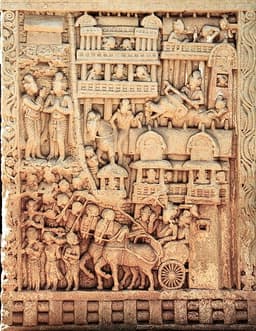
Bimbisara
Emperor · Ancient
57.3Total
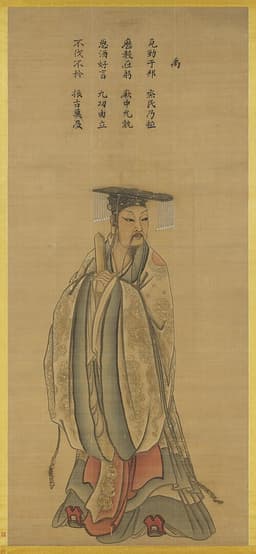
Yu the Great
Emperor · Ancient
65.6Total
Basic Information
Born
-558
-2123
Died
-491
-2055
Era
Ancient
Ancient
Nationality
India
China
Occupation
Emperor
Emperor
Civilization
Indian
Eastern
Score Comparison
Military (10%)
60.0
25.9
Political (20%)
60.0
65.0
Influence (20%)
55.7
65.0
Legacy (20%)
49.2
90.0
Leadership (15%)
72.0
72.0
Strategy (15%)
52.5
36.8
TOTAL
57.3
65.6
Bimbisara — Complete Timeline
550 BC
Married Princess Chellana of LicchaviPolitical Action
Bimbisara married Chellana, daughter of the Licchavi chief Chetaka of Vaishali. This marriage alliance strengthened Magadha's ties with the powerful Licchavi republic and produced his son Ajatashatru.
Marriage AllianceDiplomacy
Impact: regional
540 BC
Conquered AngaWar◆ Major
Bimbisara annexed the kingdom of Anga (modern Bihar) to the Magadha empire. This conquest gave Magadha control over the Ganges river trade route and access to the sea, strengthening its economic and military power.
ConquestMagadha Expansion
Impact: regional
530 BC
Established Diplomatic Relations with the BuddhaPolitical Action◆ Major
Bimbisara met Gautama Buddha and became a lay follower, donating the Veluvana Bamboo Grove monastery near Rajagriha. This patronage helped establish Buddhism in Magadha and provided the Buddha with a permanent residence during the rainy season.
BuddhismPatronageReligion
Impact: regionalconstructive
491 BC
Imprisoned and Killed by AjatashatruPolitical Action◆ Major
Bimbisara was imprisoned by his son Ajatashatru, who seized the throne. According to Buddhist sources, Bimbisara died in captivity, possibly by starvation or suicide. This event marked a violent succession in Magadha.
Succession CrisisPatricide
Impact: nationaltragic
Yu the Great — Complete Timeline
2100 BC
Flood Control of the Yellow RiverOther◆ Major
According to legend, Yu the Great devised a system of dredging and channeling to control the catastrophic flooding of the Yellow River. His success in flood control earned him the favor of the sage-king Shun, who later abdicated in his favor.
Flood ControlLegendXia Dynasty
Impact: regionalconstructive
2070 BC
Founding of the Xia DynastyPolitical Action
Yu the Great established the Xia dynasty, traditionally considered the first dynasty in Chinese history. He divided the realm into nine provinces and instituted a hereditary succession, breaking the previous system of abdication to the most capable.
Xia DynastyFoundingHereditary Rule
Impact: regionalconstructive
Casting of the Nine Tripod CauldronsCultural
Yu the Great ordered the casting of nine bronze tripod cauldrons, each symbolizing one of the nine provinces of China. These cauldrons became symbols of imperial authority and were passed down through successive dynasties.
SymbolismBronze AgeImperial Authority
Impact: regionalconstructive
Expert Analysis
Origins
Bimbisara (558–491 BCE) was born into the Haryanka dynasty of Magadha, one of the 16 Mahajanapadas in ancient India. His father was King Bhattiya, and Bimbisara ascended the throne at age 15. He received training in statecraft and military tactics, and his early marriage to Princess Chellana of the Licchavi clan of Vaishali forged a crucial alliance with a powerful republic. Yu the Great (c. 2123–2025 BCE) is a legendary figure in Chinese history, traditionally regarded as the founder of the Xia dynasty. According to myth, he was the grandson of Zhuanxu, a legendary emperor, and his father Gun was a noble tasked with flood control. Yu grew up in a period of catastrophic flooding of the Yellow River, which shaped his life's mission.
Rise to Power
Bimbisara rose to power through a combination of military conquest and strategic marriage. At the start of his reign, Magadha was one of several competing states. His first major achievement was the annexation of Anga (modern Bihar) around 543 BCE, which gave Magadha control over the Ganges river trade route and access to coastal ports. This conquest provided substantial economic resources. He also married Kosala Devi, sister of King Prasenajit of Kosala, and received the Kashi region as dowry. These alliances strengthened Magadha's position. Bimbisara's patronage of the Buddha, whom he met around 535 BCE, enhanced his moral authority and aligned him with a growing religious movement. Yu the Great's rise is tied to his flood control project. His father Gun had failed to stop the floods and was executed. Yu was then appointed by Emperor Shun to continue the work. Yu spent 13 years dredging and channeling the Yellow River, famously passing his home three times without entering. His success in controlling the floods earned him immense prestige and the support of the people. Emperor Shun then abdicated in his favor, making Yu the ruler. Yu later established the Xia dynasty, dividing the realm into nine provinces and casting nine bronze tripod cauldrons as symbols of authority.
Leadership & Governance
Bimbisara's governance reflected a blend of military expansion and administrative consolidation. He maintained a standing army and a bureaucracy to manage the conquered territories. His reign saw the development of the Magadhan capital Rajagriha, which became a center of trade and culture. Bimbisara was an early patron of Buddhism, granting the Veluvana Bamboo Grove monastery to the Buddha and his sangha. This patronage helped establish Buddhism in the region and set a precedent for state support of religion. However, his leadership was ultimately undermined by his son Ajatashatru, who imprisoned and killed him to seize the throne. Yu the Great's leadership focused on public works and territorial organization. He is credited with dividing the kingdom into nine provinces, each with its own governor and tax system. The casting of the nine tripod cauldrons symbolized the unity of these provinces under his rule. Yu's flood control methods—dredging channels and building levees—demonstrated a systematic approach to large-scale engineering. His governance style emphasized practical problem-solving and the welfare of the people, as illustrated by his dedication to the flood project. Unlike Bimbisara, Yu's transition of power to his son Qi established the hereditary principle of the Xia dynasty, though this broke the earlier tradition of merit-based succession.
Triumph & Tragedy
Bimbisara's greatest triumph was the expansion of Magadha through the conquest of Anga and strategic marriages, which laid the foundation for the Magadhan empire that would later peak under his grandson Ashoka. His patronage of Buddhism also contributed to the religion's spread. However, his tragedy was his violent death at the hands of his son Ajatashatru, who imprisoned him and, according to Buddhist sources, starved him to death. This parricide stained his legacy and ended his reign in disgrace. Yu the Great's triumph was the successful control of the Yellow River floods, a feat that saved countless lives and allowed agriculture to flourish. His establishment of the Xia dynasty is considered the beginning of Chinese dynastic history. Yet, his tragedy lies in the legendary nature of his story—historians debate whether he actually existed. The Xia dynasty remains archaeologically unconfirmed, and Yu's achievements may be mythological. Additionally, his decision to pass the throne to his son rather than a worthy successor set a precedent for hereditary rule that led to future dynastic conflicts.
Character & Destiny
Bimbisara was pragmatic and diplomatic, as seen in his alliance-building and patronage of Buddhism. He was also ambitious, expanding Magadha's territory. However, his trust in his son proved fatal; he failed to anticipate Ajatashatru's betrayal. Historical assessments note that Bimbisara's reign was stable and prosperous, but his death highlights the dangers of dynastic politics. Yu the Great is depicted as selfless, diligent, and innovative. His dedication to flood control, even at the cost of personal sacrifice, made him a model ruler in Chinese tradition. His character—hardworking and humble—contrasts with Bimbisara's more political nature. Yu's destiny was to become a legendary culture hero, while Bimbisara's fate was to be overshadowed by his son's treachery.
Legacy
Bimbisara's legacy is primarily as a founder of Magadha's power. He scored 57.3 overall, with a leadership score of 72.0, reflecting his effective governance. However, his military score of 60.0 and political score of 60.0 indicate balanced but not exceptional achievements. His influence (55.7) and legacy (49.2) are modest compared to Yu. Bimbisara is remembered in Buddhist texts as a generous patron, but his dynasty was short-lived. Yu the Great scores 65.6 overall, with a legacy score of 90.0—the highest among all metrics. His flood control methods influenced Chinese hydraulic engineering for millennia. The Xia dynasty, though legendary, established the concept of dynastic rule in China. Yu's influence (65.0) and political score (65.0) reflect his lasting impact on Chinese political thought. He is revered as a cultural hero and a symbol of perseverance.
Conclusion
While Bimbisara was a capable ruler who expanded Magadha and supported Buddhism, his impact was limited to his region and era. Yu the Great, despite the legendary nature of his story, had a far greater and more enduring influence on Chinese civilization. His flood control project fundamentally shaped the development of Chinese society, and his establishment of the Xia dynasty set the pattern for imperial rule. With a total score of 65.6 versus Bimbisara's 57.3, and a legacy score of 90.0 versus 49.2, Yu the Great is clearly the more impactful figure. The score gap of 8.3 points reflects Yu's superior long-term influence and the foundational role he played in Chinese history.
Rankings
🥇
Yu the GreatLeader
Mil: 25.9Pol: 65.0Inf: 65.0
65.6
🥈
Bimbisara
Mil: 60.0Pol: 60.0Inf: 55.7
57.3
+8.3 behind
How This Comparison Works
Algorithm
Each figure is scored on 6 dimensions (0—100 scale) based on structured historical data: Military (10%), Political (20%), Influence (20%), Legacy (20%), Leadership (15%), Strategy (15%). The weighted total produces the final ranking.
Data Sources
Scores are computed from structured sub-indicators in the database. Scale factors adjust for era (Ancient ×0.85, Modern ×1.0) and civilization size (Eastern ×1.05, Other ×0.80) to account for differences in population and military scale.
Maximum 3 Figures
Comparisons are limited to 2—3 figures to ensure readability and statistical meaningfulness.
Error Margins
±5 points per dimension — Sub-scores are derived from historical records with inherent uncertainty. Two figures within 5 points on a dimension should be considered roughly equivalent in that area.
Total Score Accuracy
±3 points overall — The weighted combination of 6 dimensions produces a total score with approximately ±3 points of uncertainty. Differences of less than 3 points are not statistically significant— the figures are effectively tied.
Known Limitations
- Historical records are incomplete and uneven across civilizations
- Figures from oral-tradition societies may be underrepresented
- Occupation labels can misclassify multi-role figures
- Scores measure capability and impact, not moral character
- Quantitative scoring is a comparison tool, not absolute truth
Capability Radar
Military (10%) — Battles & Warfare
Battles
45
10
Win Rate
50
10
Expansion
65
10
Political (20%) — Governance & Reform
Reform
75
80
Diplomacy
70
70
Economy
65
70
Influence (20%) — Cultural & Global Reach
Cultural
55
85
Global
40
70
Legacy (20%) — Historical Impact
Historical
60
90
Longevity
55
90
Leadership (15%) — Power & Stability
Tenure
70
60
Stability
60
70
Strategy (15%) — Tactics & Innovation
Strategy
55
10
Tactics
40
10
Reform
60
10
Similar Comparisons
Comments & Discussion
No comments yet. Be the first to share your thoughts!