Loading...
Analysis will be generated on first visit.
Scores and timeline are available below. The page will refresh automatically when ready.
Binyamin Netanyahu vs Julius Caesar
Julius Caesar leads by 18.0 pts · 2 figures compared
…
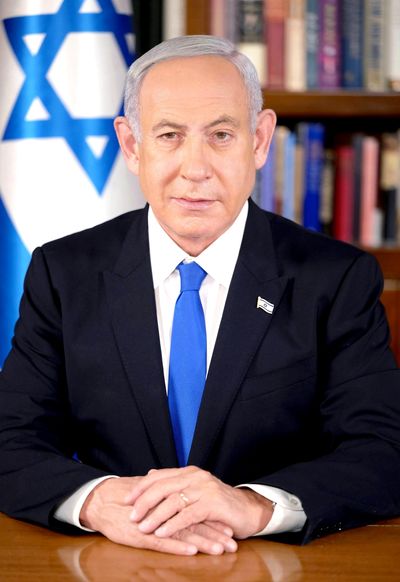
Binyamin Netanyahu
Politician · Modern
65.3Total
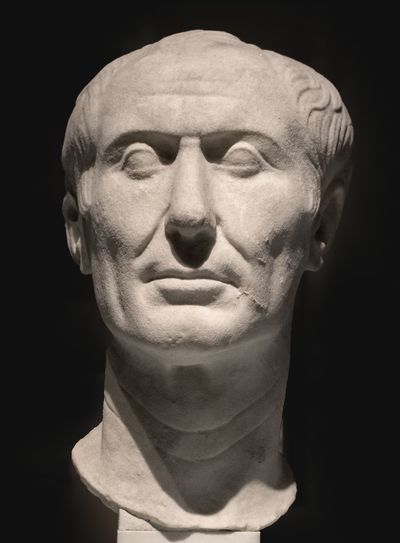
Julius Caesar
General · Ancient
83.3Total
Basic Information
Born
1949
-100
Died
—
-44
Era
Modern
Ancient
Nationality
Israel
Roman Republic
Occupation
Politician
General
Civilization
Middle Eastern
Western
Score Comparison
Military (10%)
36.4
88.0
Political (20%)
72.0
78.0
Influence (20%)
73.1
85.0
Legacy (20%)
68.7
82.0
Leadership (15%)
85.7
82.0
Strategy (15%)
40.0
88.0
TOTAL
65.3
83.3
Rankings
🥇
Julius CaesarLeader
Mil: 88.0Pol: 78.0Inf: 85.0
83.3
🥈
Binyamin Netanyahu
Mil: 36.4Pol: 72.0Inf: 73.1
65.3
+18.0 behind
How This Comparison Works
Algorithm
Each figure is scored on 6 dimensions (0—100 scale) based on structured historical data: Military (10%), Political (20%), Influence (20%), Legacy (20%), Leadership (15%), Strategy (15%). The weighted total produces the final ranking.
Data Sources
Scores are computed from structured sub-indicators in the database. Scale factors adjust for era (Ancient ×0.85, Modern ×1.0) and civilization size (Eastern ×1.05, Other ×0.80) to account for differences in population and military scale.
Maximum 3 Figures
Comparisons are limited to 2—3 figures to ensure readability and statistical meaningfulness.
Error Margins
±5 points per dimension — Sub-scores are derived from historical records with inherent uncertainty. Two figures within 5 points on a dimension should be considered roughly equivalent in that area.
Total Score Accuracy
±3 points overall — The weighted combination of 6 dimensions produces a total score with approximately ±3 points of uncertainty. Differences of less than 3 points are not statistically significant— the figures are effectively tied.
Known Limitations
- Historical records are incomplete and uneven across civilizations
- Figures from oral-tradition societies may be underrepresented
- Occupation labels can misclassify multi-role figures
- Scores measure capability and impact, not moral character
- Quantitative scoring is a comparison tool, not absolute truth
Capability Radar
Military (10%) — Battles & Warfare
Battles
10
95
Win Rate
15
92
Expansion
35
97
Political (20%) — Governance & Reform
Reform
60
90
Diplomacy
75
85
Economy
70
82
Influence (20%) — Cultural & Global Reach
Cultural
50
88
Global
70
94
Legacy (20%) — Historical Impact
Historical
65
95
Longevity
60
96
Leadership (15%) — Power & Stability
Tenure
85
75
Stability
55
60
Strategy (15%) — Tactics & Innovation
Strategy
25
94
Tactics
20
96
Reform
30
88
Analysis will be generated on first visit.
Scores and timeline are available below. The page will refresh automatically when ready.
Binyamin Netanyahu — Complete Timeline
1996 AD
First Term as Prime Minister of IsraelPolitical Action◆ Major
Netanyahu became the youngest person to serve as Prime Minister of Israel after winning the 1996 election. His first term was marked by a slowdown in the Oslo peace process and increased settlement construction in the West Bank.
Israeli PoliticsElectionPeace Process
Impact: regional
1998 AD
Signed the Wye River MemorandumPolitical Action◆ Major
Netanyahu signed the Wye River Memorandum with Yasser Arafat, which outlined further Israeli withdrawals from the West Bank and security cooperation. The agreement was never fully implemented due to political opposition in Israel.
Israeli-Palestinian PeaceWye RiverNegotiations
Impact: regional
2012 AD
Addressed the United Nations General Assembly on Iran Nuclear ThreatPolitical Action◆ Major
Netanyahu delivered a speech at the UN General Assembly where he drew a red line on a diagram of a bomb to illustrate the point at which Iran's nuclear program would become irreversible. This speech was a major diplomatic effort to pressure the international community to take action against Iran.
Iran Nuclear ProgramUN SpeechDiplomacy
Impact: global
2019 AD
Became Longest-Serving Prime Minister of IsraelPolitical Action◆ Major
Netanyahu surpassed David Ben-Gurion's record to become Israel's longest-serving prime minister. His tenure was characterized by political stability, economic growth, and a rightward shift in Israeli politics, but also by corruption investigations and political polarization.
Israeli PoliticsRecordLongevity
Impact: national
Indicted for CorruptionPolitical Action◆ Major
Israel's Attorney General indicted Netanyahu on charges of bribery, fraud, and breach of trust in three separate cases. The indictments led to ongoing legal proceedings and political crises, including multiple elections and a power-sharing government.
CorruptionLegal ProceedingsPolitical Crisis
Impact: nationaldestructive
2020 AD
Normalization Agreements with UAE, Bahrain, Morocco, SudanPolitical Action
Under the Abraham Accords brokered by the United States, Netanyahu's government signed normalization agreements with the United Arab Emirates, Bahrain, Morocco, and Sudan. These were the first Arab-Israeli peace deals since 1994.
Abraham AccordsNormalizationDiplomacy
Impact: globalconstructive
Similar Comparisons
Comments & Discussion
No comments yet. Be the first to share your thoughts!