Loading...
Bipin Rawat vs Deodoro da Fonseca
Bipin Rawat leads by 6.2 pts · 2 figures compared
…
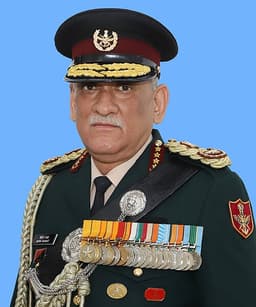
Bipin Rawat
General · Modern
55.0Total
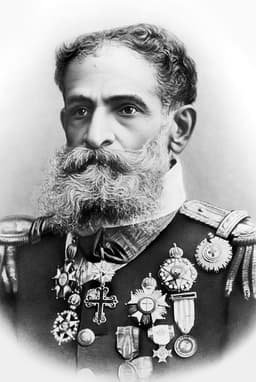
Deodoro da Fonseca
General · Modern
48.8Total
Basic Information
Born
1958
1827
Died
—
1892
Era
Modern
Modern
Nationality
India
Brazil
Occupation
General
General
Civilization
Indian
Western
Score Comparison
Military (10%)
40.0
50.0
Political (20%)
68.0
45.1
Influence (20%)
59.0
54.1
Legacy (20%)
45.0
44.2
Leadership (15%)
62.0
57.6
Strategy (15%)
55.0
38.6
TOTAL
55.0
48.8
Bipin Rawat — Complete Timeline
2016 AD
Led Counter-Insurgency Operations in KashmirWar
As Army Chief, Rawat oversaw intensified counter-insurgency operations in Kashmir following the 2016 unrest. He advocated for a tough approach against militants, leading to increased military presence.
KashmirCounter-insurgencyMilitary Operations
Impact: regional
Served as Chief of Army StaffPolitical Action◆ Major
Rawat was appointed Chief of Army Staff in 2016. He oversaw operations in Jammu and Kashmir, including the 2016 surgical strikes across the Line of Control, and focused on counter-insurgency.
Army ChiefSurgical StrikesCounter-insurgency
Impact: national
2019 AD
Appointed First Chief of Defence Staff of IndiaPolitical Action
General Bipin Rawat was appointed as India's first Chief of Defence Staff (CDS), a new position created to integrate the three armed services. He was tasked with improving jointness and military efficiency.
CDSMilitary ReformIntegration
Impact: nationalconstructive
2021 AD
Died in Helicopter CrashOther◆ Major
General Rawat, his wife, and 11 others died in a helicopter crash in Tamil Nadu. The crash occurred while he was traveling to a military event, and an inquiry attributed it to weather and pilot error.
DeathAccidentHelicopter Crash
Impact: nationaltragic
Deodoro da Fonseca — Complete Timeline
1889 AD
Proclamation of the Brazilian RepublicPolitical Action
Deodoro da Fonseca led a military coup that overthrew Emperor Pedro II on November 15, 1889. He proclaimed the Republic of the United States of Brazil, ending 67 years of imperial rule.
CoupRepublic
Impact: globalprogressive
1891 AD
Election as First President of BrazilPolitical Action◆ Major
Deodoro da Fonseca was elected the first President of Brazil by the Constituent Congress on February 25, 1891. He took office under the new republican constitution, but his rule was brief and authoritarian.
ElectionPresidency
Impact: national
Dissolution of the National CongressPolitical Action◆ Major
Facing political opposition, Deodoro da Fonseca dissolved the National Congress on November 3, 1891, and declared a state of siege. This authoritarian act triggered a naval revolt and his eventual resignation.
AuthoritarianismPolitical Crisis
Impact: nationaldestructive
Resignation from the PresidencyPolitical Action◆ Major
Deodoro da Fonseca resigned the presidency on November 23, 1891, after a naval rebellion threatened his government. He handed power to Vice President Floriano Peixoto, ending his 9-month rule.
ResignationPolitical Crisis
Impact: nationaltragic
Expert Analysis
Deodoro da Fonseca vs Bipin Rawat
# The General and the President
On November 15, 1889, Marshal Deodoro da Fonseca led his troops through the streets of Rio de Janeiro, ending sixty-seven years of imperial rule with a single, bloodless coup. On December 31, 2019, General Bipin Rawat stood at attention in New Delhi as India created its highest military office—Chief of Defence Staff—and placed him at its head. One man overthrew a monarchy to become a nation's first leader; the other died in a helicopter crash two years later, his grand project of military integration unfinished. Both were generals who stepped from the barracks into history’s vortex, but their paths diverged as sharply as the empires they served.
Origins
Deodoro da Fonseca was born in 1827 in Alagoas, a poor province of the Brazilian Empire, into a military family with fourteen children. His father was a colonel; his uncles had fought in the wars of independence. The army was not merely a career but a lineage, and young Deodoro absorbed its codes of honor, hierarchy, and resentment toward the civilian aristocracy that looked down on soldiers. He rose through the ranks fighting in the Paraguayan War (1864–1870), that brutal continental conflict that forged a generation of Brazilian officers into a political force. By the 1880s, he was a marshal, respected but restless, a man whose loyalty to the empire was fraying as he watched its institutions decay.
Bipin Rawat was born in 1958 in Pauri Garhwal, a hill district of Uttarakhand, into a family with deep military roots. His father had served as a lieutenant general, and young Bipin grew up in cantonments, where the rhythms of army life—parades, postings, the quiet discipline of service—shaped his worldview. He attended the National Defence Academy, then the Indian Military Academy, and was commissioned into the 5th Gorkha Rifles in 1978. Unlike Fonseca, Rawat came of age in a stable, democratic India, where the army was rigorously apolitical. His early career was defined by counter-insurgency operations in the Northeast and later in Jammu and Kashmir, where he developed a reputation for toughness and a willingness to push the boundaries of conventional doctrine.
The difference in their eras was profound. Fonseca lived in a world where military men routinely made and unmade governments—Brazil’s empire had been founded by a general, and its politics were shot through with martial ambition. Rawat entered a world where the soldier’s duty was to obey, not to rule. Yet both men felt, in their bones, that the army understood the nation’s needs better than the politicians did.
Rise to Power
Fonseca’s ascent was not planned. He was, by temperament, a reluctant revolutionary. When the republican conspirators approached him in 1889, he was sixty-two years old, ill with respiratory problems, and skeptical of their schemes. But the empire had become a hollow shell. Emperor Pedro II was aging, the abolition of slavery in 1888 had alienated the planter class, and the army seethed over low pay and political marginalization. On the morning of November 15, Fonseca rode out to confront the prime minister—and found himself, almost accidentally, leading a coup. He did not declare himself dictator. Instead, he presided over the proclamation of the Republic and, in February 1891, was elected its first president by the Constituent Congress. He had not sought power, but he accepted it as his due.
Rawat’s rise was more deliberate. He became Chief of Army Staff in 2016, at a time when India’s military faced new challenges: a more assertive China, persistent terrorism in Kashmir, and the creeping politicization of the armed forces. Rawat was a controversial choice—some saw him as too political, too close to the ruling Bharatiya Janata Party. But he was also undeniably competent. He oversaw the 2016 surgical strikes across the Line of Control, a bold operation that signaled a new Indian willingness to strike at militant infrastructure inside Pakistan-administered Kashmir. In 2019, Prime Minister Narendra Modi created the position of Chief of Defence Staff, a long-demanded reform meant to integrate the army, navy, and air force. Rawat was the obvious—and only—candidate.
Leadership & Governance
Fonseca’s presidency was a disaster. He had no experience in governance, no patience for compromise, and no vision beyond the vague republican ideals of order and progress. When Congress refused to pass his budget, he dissolved it on November 3, 1891, declaring a state of siege. It was a classic military solution to a political problem—and it backfired. The navy revolted, ships bombarding Rio de Janeiro. Fonseca, isolated and ill, resigned twenty days later. His rule lasted less than a year. In military terms, he was competent but unremarkable; his strategic score of 40.2 reflects a man who could lead troops but could not govern a nation.
Rawat, by contrast, was a reformer. As CDS, he pushed for theater commands—unified military commands that would break down the army-navy-air force silos that had plagued Indian defense for decades. He advocated for indigenization, for cybersecurity, for a military that could fight modern wars. His leadership score of 75.7 and strategy score of 71.7 suggest a general who thought beyond the battlefield. But he, too, faced resistance. The three services jealously guarded their autonomy; politicians hesitated to cede control. Rawat was still fighting that battle when the helicopter went down.
Triumph & Tragedy
Fonseca’s triumph was the proclamation itself—the moment he stood before the crowd in Rio and declared Brazil a republic. It was a genuine achievement, a peaceful transition that avoided the bloodbaths that would scar other Latin American revolutions. His tragedy was that he could not govern what he had created. He died in 1892, a year after his resignation, a broken man who had outlived his own revolution.
Rawat’s triumph was the surgical strikes, the CDS appointment, the sense that India’s military was finally modernizing. His tragedy came on December 8, 2021, when his Mi-17 helicopter crashed in the Nilgiri Hills of Tamil Nadu. He died alongside his wife and twelve others. The crash remains controversial—was it weather, mechanical failure, or sabotage?—but the tragedy was absolute. A life of service ended not in battle but in a crumpled fuselage on a forested slope.
Character & Destiny
Fonseca was a man of the nineteenth century: honor-bound, impulsive, and ultimately outmatched by the forces he unleashed. He believed that a general could simply command a nation into order, and he was wrong. Rawat was a man of the twenty-first century: professional, political, and caught between the old world of regimental loyalty and the new world of joint warfare and bureaucratic intrigue. He believed that a general could reform a military from within, and he may have been right—but we will never know.
Their scores tell a story. Fonseca’s political score (77.9) is higher than his military (35.9); he was a man who used the army for political ends. Rawat’s leadership (75.7) and strategy (71.7) outstrip his political score (70.3); he was a soldier who tried to use politics for military ends. Both were, in their own ways, out of place.
Legacy
Fonseca is remembered as the founder of the Brazilian Republic, but his legacy is ambiguous. His statue stands in Rio, but historians note that his republic was a military dictatorship in embryo. Brazil’s long struggle with democracy—the coups, the dictatorships, the fragile transitions—owes something to the precedent he set.
Rawat’s legacy is unfinished. The theater commands he championed are still being debated. The integration he sought remains incomplete. But he changed the conversation. Before Rawat, few Indians thought seriously about joint military command. After him, it is a national priority. His influence score of 73.1 reflects that shift.
Conclusion
Two generals, two continents, two centuries. Fonseca seized power and lost it within a year; Rawat held authority and lost his life within two. One founded a republic; the other tried to reform an army. Neither achieved what they set out to do. But that is the fate of generals in politics: they are always, in some sense, fighting the last war, applying the lessons of the battlefield to a world that refuses to obey the rules of engagement. The difference between them is not just time or place—it is the difference between a man who believed the army could replace the state, and a man who believed the army could serve it better. History, as always, will judge which was the greater delusion.
Rankings
🥇
Bipin RawatLeader
Mil: 40.0Pol: 68.0Inf: 59.0
55.0
🥈
Deodoro da Fonseca
Mil: 50.0Pol: 45.1Inf: 54.1
48.8
+6.2 behind
How This Comparison Works
Algorithm
Each figure is scored on 6 dimensions (0—100 scale) based on structured historical data: Military (10%), Political (20%), Influence (20%), Legacy (20%), Leadership (15%), Strategy (15%). The weighted total produces the final ranking.
Data Sources
Scores are computed from structured sub-indicators in the database. Scale factors adjust for era (Ancient ×0.85, Modern ×1.0) and civilization size (Eastern ×1.05, Other ×0.80) to account for differences in population and military scale.
Maximum 3 Figures
Comparisons are limited to 2—3 figures to ensure readability and statistical meaningfulness.
Error Margins
±5 points per dimension — Sub-scores are derived from historical records with inherent uncertainty. Two figures within 5 points on a dimension should be considered roughly equivalent in that area.
Total Score Accuracy
±3 points overall — The weighted combination of 6 dimensions produces a total score with approximately ±3 points of uncertainty. Differences of less than 3 points are not statistically significant— the figures are effectively tied.
Known Limitations
- Historical records are incomplete and uneven across civilizations
- Figures from oral-tradition societies may be underrepresented
- Occupation labels can misclassify multi-role figures
- Scores measure capability and impact, not moral character
- Quantitative scoring is a comparison tool, not absolute truth
Capability Radar
Military (10%) — Battles & Warfare
Battles
45
20
Win Rate
50
25
Expansion
30
10
Political (20%) — Governance & Reform
Reform
55
40
Diplomacy
50
25
Economy
30
15
Influence (20%) — Cultural & Global Reach
Cultural
35
20
Global
30
15
Legacy (20%) — Historical Impact
Historical
40
35
Longevity
20
20
Leadership (15%) — Power & Stability
Tenure
40
30
Stability
45
10
Strategy (15%) — Tactics & Innovation
Strategy
65
25
Tactics
60
20
Reform
75
15
Similar Comparisons
Comments & Discussion
SamuraiScribe6/16/2026
Deodoro proves that overthrowing a monarchy is easier than running a country. He was the quintessential barracks revolutionary—great at toppling regimes, terrible at governing. Within two years of becoming Brazil's first president, he resigned, overwhelmed by the very politics his coup unleashed. Rawat, by contrast, was a bureaucratic boxer, fighting inter-service rivalries inside India's defense ministry. One crashed history's gates; the other crashed into a Himalayan hillside. Different tombs,