Loading...
Bodawpaya vs Joseph I
Bodawpaya leads by 6.7 pts · 2 figures compared
…

Bodawpaya
Emperor · Modern
60.0Total
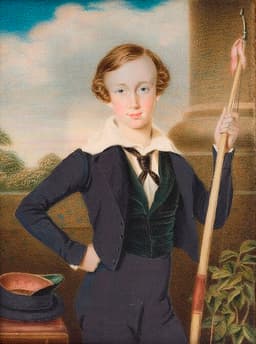
Joseph I
Emperor · Modern
53.3Total
Basic Information
Born
1745
1678
Died
1819
1711
Era
Modern
Modern
Nationality
Myanmar
Holy Roman Empire
Occupation
Emperor
Emperor
Civilization
Eastern
Western
Score Comparison
Military (10%)
67.5
50.0
Political (20%)
68.0
72.0
Influence (20%)
56.4
51.8
Legacy (20%)
45.8
41.7
Leadership (15%)
80.0
67.0
Strategy (15%)
55.0
41.0
TOTAL
60.0
53.3
Bodawpaya — Complete Timeline
1785 AD
Invasion of Siam (1785-1786)War◆ Major
Bodawpaya launched a massive invasion of Siam with nine armies totaling over 140,000 men. The campaign aimed to conquer the newly established Rattanakosin kingdom. However, the invasion was repelled by Siamese forces under King Rama I, marking a major defeat.
Burmese-Siamese WarInvasionDefeat
Impact: regional
Annexation of ArakanWar◆ Major
Bodawpaya's forces conquered the kingdom of Arakan (Rakhine) on the western coast of Burma. The annexation brought the region under Konbaung control and led to the flight of many Arakanese refugees into British India, creating tensions with the British East India Company.
ArakanConquestBurma
Impact: regional
1790 AD
Construction of the Mingun PahtodawgyiCultural
Bodawpaya began construction of the Mingun Pahtodawgyi, a massive unfinished stupa near Mandalay. The project was abandoned after a prophecy that its completion would bring disaster. The structure remains the largest pile of bricks in the world.
Mingun PahtodawgyiArchitectureBurma
1808 AD
Construction of the Mingun BellCultural◆ Major
Bodawpaya commissioned the casting of the Mingun Bell, the largest functioning bell in the world at the time. Weighing over 90 tons, it was intended for a massive pagoda at Mingun. The bell remains a major historical artifact and tourist attraction.
Mingun BellArtBurma
Impact: nationalconstructive
Joseph I — Complete Timeline
1701 AD
War of the Spanish SuccessionWar◆ Major
Joseph I, as King of the Romans and later Emperor, supported the Habsburg claim to the Spanish throne against the Bourbon candidate. The war, fought across Europe, ended with the Treaty of Utrecht in 1713, which recognized Philip V as king of Spain but ceded Spanish territories to Austria.
War of the Spanish SuccessionTreaty of UtrechtHabsburg
Impact: global
1705 AD
Reforms in HungaryReform
Joseph I, as Emperor, pursued a policy of reconciliation with the Hungarian nobility, ending the R
HungaryReformRákóczi
Impact: regionalconstructive
1711 AD
Died of smallpoxOther◆ Major
Joseph I died suddenly of smallpox at age 32, leaving no male heir. His death triggered the succession crisis that led to the Pragmatic Sanction and the eventual War of the Austrian Succession, as his brother Charles VI inherited the Habsburg domains.
DeathSuccession CrisisSmallpox
Impact: regionaltragic
Expert Analysis
Origins
Bodawpaya, born Maung Shwe Waing in 1745, was the fourth son of King Alaungpaya, founder of the Konbaung dynasty. He grew up in the court of Ava, witnessing the consolidation of Burmese power after the fall of the Toungoo dynasty. His education focused on military arts and Theravada Buddhism, typical for a prince of the line. In contrast, Joseph I, born in 1678 in Vienna, was the eldest son of Emperor Leopold I and Eleonore Magdalene of Neuburg. As a Habsburg heir, he received a rigorous education in statecraft, languages, and military theory, preparing him for the complex politics of the Holy Roman Empire. While Bodawpaya was shaped by the volatile politics of Southeast Asian kingdoms, Joseph I was immersed in the dynastic struggles of Europe.
Rise to Power
Bodawpaya ascended the throne in 1782 after a series of palace intrigues, deposing his nephew Phaungkaza Maung Maung. He immediately faced challenges from rival princes and consolidated power by executing potential claimants. His rise was marked by military campaigns to assert authority over vassal states. Joseph I became King of the Romans in 1690 and succeeded his father as Holy Roman Emperor in 1705. His rise was smoother, though he had to navigate the ongoing War of the Spanish Succession, which pitted Habsburg against Bourbon. Joseph I actively led campaigns, notably the 1706 relief of Turin, which turned the war in Italy in his favor. Both rulers ascended during periods of conflict, but Bodawpaya's path was more violent.
Leadership & Governance
Bodawpaya ruled with an iron fist, centralizing authority and expanding the Konbaung state. He invaded Siam in 1785 with nine armies totaling over 140,000 men, aiming to conquer the Rattanakosin Kingdom. Though the invasion failed, he annexed Arakan in 1785, bringing the region under direct Burmese control. He also commissioned the Mingun Bell, weighing over 90 tons, as a symbol of his power. His governance was autocratic, with little tolerance for dissent. Joseph I, by contrast, pursued reforms in Hungary, ending the Rákóczi's War of Independence by granting amnesty and respecting Hungarian privileges. He also supported the Habsburg cause in the War of the Spanish Succession, but his premature death limited his reforms. Bodawpaya's leadership scored 80.0, reflecting his strong control, while Joseph I's political score of 72.0 indicates more conciliatory governance.
Triumph & Tragedy
Bodawpaya's greatest triumph was the annexation of Arakan, which extended Burmese territory to the Bay of Bengal. His construction of the Mingun Bell remains a cultural landmark. However, his invasion of Siam failed, and his massive stupa, the Mingun Pahtodawgyi, was left unfinished due to a prophecy that its completion would bring disaster. Joseph I's triumph was his role in the War of the Spanish Succession, where his forces achieved victories in Italy and Hungary. His tragedy was his sudden death from smallpox at age 32, leaving no male heir, which triggered the succession crisis leading to the Pragmatic Sanction and the War of the Austrian Succession. Bodawpaya's failures were military and architectural; Joseph I's was a personal loss that had dynastic consequences.
Character & Destiny
Bodawpaya was ambitious and ruthless, driven by a desire to expand his empire and leave monumental legacies. His decision to invade Siam with overwhelming force reflected his confidence, but also his overreach. His character led to both territorial gains and costly failures. Joseph I was pragmatic and reform-minded, seeking to stabilize the Habsburg domains through diplomacy and measured force. His early death cut short his plans, but his conciliatory approach in Hungary set a precedent for later reforms. Bodawpaya's total score of 60.0 reflects his mixed legacy, while Joseph I's 53.3 is lowered by his short reign. Both were shaped by their times, but Joseph I's character favored negotiation, while Bodawpaya's favored conquest.
Legacy
Bodawpaya's legacy is visible in Myanmar's cultural heritage, with the Mingun Bell attracting tourists, and his conquests shaping the country's borders. However, his failed invasion of Siam and unfinished stupa symbolize overambition. Joseph I's legacy is less tangible but significant: his reforms in Hungary eased tensions, and his death led to the Pragmatic Sanction, which ultimately allowed Maria Theresa to succeed. In terms of influence, Bodawpaya scored 56.4, while Joseph I scored 51.8. Bodawpaya's legacy is more physical, Joseph I's more political. Both had lasting impacts, but Bodawpaya's territorial changes were more permanent.
Conclusion
Bodawpaya had a greater impact than Joseph I, despite his lower political score. His military score of 67.5 versus Joseph I's 50.0, and leadership score of 80.0 versus 67.0, reflect his more decisive actions. While Joseph I's reforms were promising, his early death limited their scope. Bodawpaya's annexation of Arakan and the Mingun Bell endure as concrete achievements, whereas Joseph I's legacy is largely reactive—a response to his death. In the balance of history, Bodawpaya's aggressive expansion left a deeper mark on Southeast Asia than Joseph I's brief reign did on Europe. Thus, Bodawpaya, with a total score of 60.0, surpasses Joseph I's 53.3 in terms of lasting influence.
Rankings
🥇
BodawpayaLeader
Mil: 67.5Pol: 68.0Inf: 56.4
60.0
🥈
Joseph I
Mil: 50.0Pol: 72.0Inf: 51.8
53.3
+6.7 behind
How This Comparison Works
Algorithm
Each figure is scored on 6 dimensions (0—100 scale) based on structured historical data: Military (10%), Political (20%), Influence (20%), Legacy (20%), Leadership (15%), Strategy (15%). The weighted total produces the final ranking.
Data Sources
Scores are computed from structured sub-indicators in the database. Scale factors adjust for era (Ancient ×0.85, Modern ×1.0) and civilization size (Eastern ×1.05, Other ×0.80) to account for differences in population and military scale.
Maximum 3 Figures
Comparisons are limited to 2—3 figures to ensure readability and statistical meaningfulness.
Error Margins
±5 points per dimension — Sub-scores are derived from historical records with inherent uncertainty. Two figures within 5 points on a dimension should be considered roughly equivalent in that area.
Total Score Accuracy
±3 points overall — The weighted combination of 6 dimensions produces a total score with approximately ±3 points of uncertainty. Differences of less than 3 points are not statistically significant— the figures are effectively tied.
Known Limitations
- Historical records are incomplete and uneven across civilizations
- Figures from oral-tradition societies may be underrepresented
- Occupation labels can misclassify multi-role figures
- Scores measure capability and impact, not moral character
- Quantitative scoring is a comparison tool, not absolute truth
Capability Radar
Military (10%) — Battles & Warfare
Battles
65
20
Win Rate
55
25
Expansion
70
10
Political (20%) — Governance & Reform
Reform
45
70
Diplomacy
50
50
Economy
55
55
Influence (20%) — Cultural & Global Reach
Cultural
50
30
Global
30
20
Legacy (20%) — Historical Impact
Historical
45
40
Longevity
40
20
Leadership (15%) — Power & Stability
Tenure
75
30
Stability
60
40
Strategy (15%) — Tactics & Innovation
Strategy
60
20
Tactics
50
15
Reform
40
30
Similar Comparisons
Comments & Discussion
No comments yet. Be the first to share your thoughts!