Loading...
This comparison has not been analyzed yet.
One-time AI generation (~1 minute). Scores and timeline are already available below.
Bongbong Marcos vs Charles Haughey
Charles Haughey leads by 13.6 pts · 2 figures compared
…

Bongbong Marcos
Politician · Modern
37.8Total
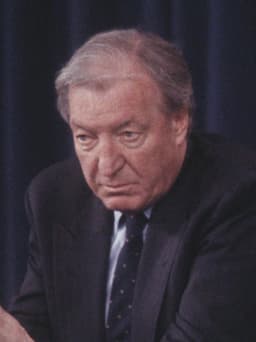
Charles Haughey
Politician · Modern
51.4Total
Basic Information
Born
1957
1925
Died
—
—
Era
Modern
Modern
Nationality
Philippines
Ireland
Occupation
Politician
Politician
Civilization
Eastern
Western
Score Comparison
Military (10%)
10.8
50.0
Political (20%)
32.2
68.0
Influence (20%)
48.6
56.4
Legacy (20%)
35.8
46.7
Leadership (15%)
51.9
40.0
Strategy (15%)
30.1
44.6
TOTAL
37.8
51.4
Bongbong Marcos — Complete Timeline
1998 AD
Elected Governor of Ilocos NortePolitical Action◆ Major
Bongbong Marcos was elected Governor of Ilocos Norte, a position his father had also held. He served for 9 years, focusing on infrastructure and economic development in the province.
GovernorshipPolitical Career
Impact: regionalconstructive
2010 AD
Elected Senator of the PhilippinesPolitical Action◆ Major
Bongbong Marcos was elected Senator of the Philippines, placing 7th in the national election. He served until 2016, advocating for infrastructure and agricultural development.
SenatePolitical Career
Impact: national
2016 AD
Lost vice presidential election to Leni RobredoPolitical Action◆ Major
Bongbong Marcos ran for Vice President of the Philippines in the 2016 election, losing narrowly to Leni Robredo by 263,473 votes. He contested the result, filing an electoral protest that was ultimately dismissed by the Supreme Court.
Vice Presidential ElectionElectoral Protest
Impact: national
2022 AD
Elected President of the PhilippinesPolitical Action
Bongbong Marcos was elected President of the Philippines in a landslide victory, winning 58.8% of the vote. His election marked the return of the Marcos family to the highest office, 36 years after his father's ouster.
PresidencyElectionMarcos Family
Impact: national
Charles Haughey — Complete Timeline
1961 AD
Appointed Minister for JusticePolitical Action◆ Major
Haughey was appointed Minister for Justice in 1961 under Taoiseach Se
Justice ReformFianna FáilLaw
Impact: nationalconstructive
1970 AD
Involved in the Arms CrisisPolitical Action◆ Major
Haughey was sacked as Minister for Finance by Taoiseach Jack Lynch in May 1970 for alleged involvement in a plot to import arms for the IRA. He was tried and acquitted in October 1970. The scandal damaged his reputation but he later returned to high office.
Arms CrisisIRAScandal
Impact: nationaldestructive
1979 AD
Became Taoiseach of IrelandPolitical Action◆ Major
Haughey became Taoiseach in December 1979 after a bitter leadership contest within Fianna F
LeadershipFianna FáilIrish Politics
Impact: national
1985 AD
Signed the Anglo-Irish AgreementPolitical Action
Haughey, as Taoiseach, signed the Anglo-Irish Agreement with British Prime Minister Margaret Thatcher on November 15, 1985. The agreement gave the Irish government a consultative role in Northern Ireland affairs. It was opposed by unionists but marked a step toward peace.
Anglo-Irish AgreementNorthern IrelandThatcher
Impact: regionalconstructive
1992 AD
Resigned as Taoiseach Amid ScandalsPolitical Action◆ Major
Haughey resigned as Taoiseach in January 1992 following revelations of a phone-tapping scandal involving journalist Bruce Arnold. His resignation ended his third term. Subsequent investigations revealed extensive corruption, including payments from businessmen, tarnishing his legacy.
ResignationScandalCorruption
Impact: nationaldestructive
This comparison has not been analyzed yet.
One-time AI generation (~1 minute). Scores and timeline are already available below.
Rankings
🥇
Charles HaugheyLeader
Mil: 50.0Pol: 68.0Inf: 56.4
51.4
🥈
Bongbong Marcos
Mil: 10.8Pol: 32.2Inf: 48.6
37.8
+13.6 behind
How This Comparison Works
Algorithm
Each figure is scored on 6 dimensions (0—100 scale) based on structured historical data: Military (10%), Political (20%), Influence (20%), Legacy (20%), Leadership (15%), Strategy (15%). The weighted total produces the final ranking.
Data Sources
Scores are computed from structured sub-indicators in the database. Scale factors adjust for era (Ancient ×0.85, Modern ×1.0) and civilization size (Eastern ×1.05, Other ×0.80) to account for differences in population and military scale.
Maximum 3 Figures
Comparisons are limited to 2—3 figures to ensure readability and statistical meaningfulness.
Error Margins
±5 points per dimension — Sub-scores are derived from historical records with inherent uncertainty. Two figures within 5 points on a dimension should be considered roughly equivalent in that area.
Total Score Accuracy
±3 points overall — The weighted combination of 6 dimensions produces a total score with approximately ±3 points of uncertainty. Differences of less than 3 points are not statistically significant— the figures are effectively tied.
Known Limitations
- Historical records are incomplete and uneven across civilizations
- Figures from oral-tradition societies may be underrepresented
- Occupation labels can misclassify multi-role figures
- Scores measure capability and impact, not moral character
- Quantitative scoring is a comparison tool, not absolute truth
Capability Radar
Military (10%) — Battles & Warfare
Battles
16
28
Win Rate
16
31
Expansion
22
32
Political (20%) — Governance & Reform
Reform
20
55
Diplomacy
25
60
Economy
20
50
Influence (20%) — Cultural & Global Reach
Cultural
10
45
Global
10
35
Legacy (20%) — Historical Impact
Historical
10
50
Longevity
5
40
Leadership (15%) — Power & Stability
Tenure
30
65
Stability
15
30
Strategy (15%) — Tactics & Innovation
Strategy
26
40
Tactics
28
44
Reform
31
45
Similar Comparisons
Comments & Discussion
No comments yet. Be the first to share your thoughts!