Loading...
This comparison has not been analyzed yet.
One-time AI generation (~1 minute). Scores and timeline are already available below.
Bonifacius vs Zu Ti
Zu Ti leads by 4.3 pts · 2 figures compared
…

Bonifacius
General · Ancient
45.5Total
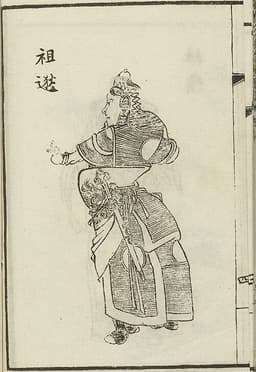
Zu Ti
General · Ancient
49.8Total
Basic Information
Born
390
266
Died
432
321
Era
Ancient
Ancient
Nationality
Western Roman Empire
China
Occupation
General
General
Civilization
Western
Eastern
Score Comparison
Military (10%)
60.0
74.7
Political (20%)
32.1
27.9
Influence (20%)
53.3
54.9
Legacy (20%)
43.3
49.2
Leadership (15%)
35.4
36.9
Strategy (15%)
52.5
66.3
TOTAL
45.5
49.8
Bonifacius — Complete Timeline
422 AD
Appointment as Count of AfricaPolitical Action◆ Major
Bonifacius was appointed comes Africae, commanding Roman forces in North Africa. This position gave him control over the vital grain supply to Rome and made him a key figure in Western Roman politics.
AppointmentNorth AfricaRoman Military
Impact: regional
429 AD
Invitation of the Vandals to AfricaPolitical Action
During his conflict with Aetius, Bonifacius allegedly invited the Vandals under King Gaiseric to cross from Spain into North Africa. This action led to the Vandal conquest of Roman Africa, a catastrophic loss for the Western Empire.
Vandal InvasionNorth AfricaBetrayal
Impact: regionaldestructive
432 AD
Battle of Ravenna and deathWar◆ Major
Bonifacius returned to Italy and fought a battle against his rival Aetius near Ravenna. Although he defeated Aetius, Bonifacius was mortally wounded in the conflict and died shortly after, ending his political ambitions.
Civil WarBattleRivalry
Impact: regionaltragic
Zu Ti — Complete Timeline
313 AD
Crossed the Yellow River with volunteersWar◆ Major
Zu Ti led a small force of volunteers across the Yellow River to attack the Xiongnu and other northern tribes. He successfully reclaimed several territories for the Eastern Jin dynasty, becoming a symbol of resistance against northern invaders.
Northern ExpeditionJin DynastyResistance
Impact: regionalconstructive
321 AD
Death from frustrationOther◆ Major
Zu Ti died of illness after becoming frustrated by court intrigues and lack of support from the Eastern Jin court. His death ended his campaign to reclaim the north, and his territories were gradually lost.
DeathFrustrationEnd of Campaign
Impact: regionaltragic
This comparison has not been analyzed yet.
One-time AI generation (~1 minute). Scores and timeline are already available below.
Rankings
🥇
Zu TiLeader
Mil: 74.7Pol: 27.9Inf: 54.9
49.8
🥈
Bonifacius
Mil: 60.0Pol: 32.1Inf: 53.3
45.5
+4.3 behind
How This Comparison Works
Algorithm
Each figure is scored on 6 dimensions (0—100 scale) based on structured historical data: Military (10%), Political (20%), Influence (20%), Legacy (20%), Leadership (15%), Strategy (15%). The weighted total produces the final ranking.
Data Sources
Scores are computed from structured sub-indicators in the database. Scale factors adjust for era (Ancient ×0.85, Modern ×1.0) and civilization size (Eastern ×1.05, Other ×0.80) to account for differences in population and military scale.
Maximum 3 Figures
Comparisons are limited to 2—3 figures to ensure readability and statistical meaningfulness.
Error Margins
±5 points per dimension — Sub-scores are derived from historical records with inherent uncertainty. Two figures within 5 points on a dimension should be considered roughly equivalent in that area.
Total Score Accuracy
±3 points overall — The weighted combination of 6 dimensions produces a total score with approximately ±3 points of uncertainty. Differences of less than 3 points are not statistically significant— the figures are effectively tied.
Known Limitations
- Historical records are incomplete and uneven across civilizations
- Figures from oral-tradition societies may be underrepresented
- Occupation labels can misclassify multi-role figures
- Scores measure capability and impact, not moral character
- Quantitative scoring is a comparison tool, not absolute truth
Capability Radar
Military (10%) — Battles & Warfare
Battles
45
55
Win Rate
40
60
Expansion
35
55
Political (20%) — Governance & Reform
Reform
25
30
Diplomacy
20
45
Economy
30
35
Influence (20%) — Cultural & Global Reach
Cultural
25
40
Global
35
30
Legacy (20%) — Historical Impact
Historical
40
50
Longevity
30
45
Leadership (15%) — Power & Stability
Tenure
40
40
Stability
15
30
Strategy (15%) — Tactics & Innovation
Strategy
45
70
Tactics
50
65
Reform
30
50
Similar Comparisons
Comments & Discussion
No comments yet. Be the first to share your thoughts!