Loading...
Branko Crvenkovski vs Gaspar de Guzman Count-Duke of Olivares
Gaspar de Guzman Count-Duke of Olivares leads by 3.3 pts · 2 figures compared
…
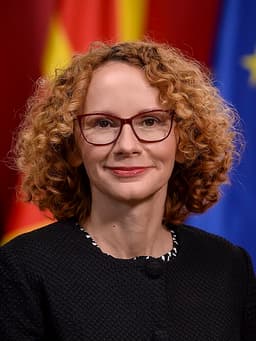
Branko Crvenkovski
Politician · Modern
53.0Total

Gaspar de Guzman Count-Duke of Olivares
Politician · Modern
56.3Total
Basic Information
Born
1962
1587
Died
—
1645
Era
Modern
Modern
Nationality
North Macedonia
Spain
Occupation
Politician
Politician
Civilization
Western
Western
Score Comparison
Military (10%)
49.3
14.9
Political (20%)
68.0
68.0
Influence (20%)
49.4
61.0
Legacy (20%)
41.7
56.0
Leadership (15%)
72.0
74.0
Strategy (15%)
43.0
42.3
TOTAL
53.0
56.3
Branko Crvenkovski — Complete Timeline
1992 AD
Elected Prime Minister of MacedoniaPolitical Action◆ Major
Crvenkovski became the first post-communist Prime Minister of independent Macedonia, leading the country through its early years of independence, including the 2001 insurgency and economic transition.
IndependenceGovernmentMacedonia
Impact: nationalconstructive
2001 AD
Signed the Ohrid Framework AgreementPolitical Action
As Prime Minister, Crvenkovski signed the Ohrid Framework Agreement, ending the 2001 insurgency by ethnic Albanian rebels. The agreement granted greater rights to Albanians, including language and decentralization.
Peace AgreementEthnic ConflictOhrid
Impact: nationalconstructive
2004 AD
Elected President of MacedoniaPolitical Action◆ Major
Crvenkovski was elected President, serving until 2009. His presidency focused on Euro-Atlantic integration, but was marked by political instability and the unresolved name dispute with Greece.
PresidencyIntegrationMacedonia
Impact: nationalconstructive
2009 AD
Lost presidential re-election bidPolitical Action
Crvenkovski lost the presidential election to Gjorge Ivanov, ending his tenure. His defeat reflected public dissatisfaction with the pace of reforms and the ongoing name dispute.
ElectionDefeatPolitics
Impact: national
Gaspar de Guzman Count-Duke of Olivares — Complete Timeline
1621 AD
Appointment as chief minister of Philip IVPolitical Action◆ Major
Gaspar de Guzm
AppointmentGovernmentReform
Impact: national
1625 AD
Implementation of the Union of ArmsReform◆ Major
Olivares proposed the Union of Arms, a plan to create a unified army drawn from all Spanish kingdoms. The plan was resisted by the various realms, particularly Catalonia, and contributed to the outbreak of the Catalan Revolt in 1640.
ReformCentralizationCatalonia
Impact: regionaldestructive
1640 AD
Outbreak of the Portuguese Restoration WarWar
Portugal declared independence from Spain, beginning the Portuguese Restoration War. Olivares's centralizing policies and heavy taxation had alienated the Portuguese nobility, leading to the revolt that ultimately ended the Iberian Union.
WarPortugalIndependence
Impact: regionaldestructive
1643 AD
Fall from power and exilePolitical Action◆ Major
Olivares was dismissed by Philip IV after a series of military defeats and political failures. He was forced into exile and died shortly after, marking the end of his ambitious but ultimately unsuccessful attempt to centralize and revive the Spanish Empire.
DismissalExileFailure
Impact: nationaltragic
Expert Analysis
Origins
Branko Crvenkovski was born on October 12, 1962, in Sarajevo, SR Bosnia and Herzegovina, but grew up in Skopje, SR Macedonia. He studied computer science at the University of Sts. Cyril and Methodius in Skopje, graduating in 1986. His father was a lawyer, and his mother a teacher. He joined the League of Communists of Yugoslavia in 1986, rising through the ranks during the tumultuous breakup of Yugoslavia. In 1990, he was elected to the Macedonian parliament as a member of the Social Democratic Union of Macedonia (SDSM), the successor to the communist party.
Gaspar de Guzmán, Count-Duke of Olivares, was born on January 6, 1587, in Rome, where his father served as Spanish ambassador. He came from an old noble family and studied at the University of Salamanca. His father died when he was young, and he inherited the title of Count of Olivares in 1607. He entered the court of Philip III, but his rise began under Philip IV, whom he cultivated as a friend and confidant from the prince's youth.
Rise to Power
Crvenkovski became Prime Minister of the Republic of Macedonia in 1992, following the resignation of the first post-communist government. At age 29, he was the youngest prime minister in Europe. He led a coalition government and oversaw Macedonia's peaceful secession from Yugoslavia. His early tenure focused on economic stabilization and international recognition. He was re-elected in 1994 and 1998, but his party lost the 1998 elections. However, he returned as prime minister in 2002 after the 2001 insurgency, playing a key role in negotiating the Ohrid Framework Agreement.
Olivares was appointed chief minister to Philip IV in 1621, upon the young king's accession. He quickly consolidated power, becoming the king's favourite and the de facto ruler of Spain. He implemented a series of reforms aimed at centralizing the Spanish monarchy and restoring its military dominance. His influence peaked in the 1620s, as he launched ambitious foreign and domestic policies.
Leadership & Governance
Crvenkovski governed as a pragmatic social democrat, focusing on stability and Euro-Atlantic integration. He signed the Ohrid Framework Agreement in 2001, which granted greater rights to ethnic Albanians and ended the insurgency. This agreement was a delicate compromise, and Crvenkovski's leadership was instrumental in its implementation. However, his governance was marked by political instability, slow reforms, and accusations of corruption. His political score of 68.0 reflects his ability to navigate crises but also his limited transformative impact.
Olivares was a centralizer and reformer. He proposed the Union of Arms in 1625, aiming to create a unified army from all Spanish kingdoms, requiring each to contribute troops and funds. This was resisted by Portugal, Catalonia, and others, leading to revolts. His leadership score of 74.0 indicates his strong will and vision, but his strategy score of 42.3 shows his policies often backfired. He micromanaged the empire, alienating regional elites and overstretching resources.
Triumph & Tragedy
Crvenkovski's greatest triumph was the Ohrid Framework Agreement, which secured peace and preserved Macedonia's territorial integrity. He also led the country to NATO membership invitation in 2008. However, his presidency (2004-2009) was marred by political infighting, a weak economy, and failure to secure EU membership. He lost re-election in 2009, scoring only 41.7 in legacy.
Olivares's triumphs include the early successes of Spanish arms in the Thirty Years' War, such as the capture of Breda in 1625. He also reformed the tax system and sought to modernize the administration. His tragedy was the catastrophic decline of Spain: the Portuguese Restoration War (1640) and the Catalan Revolt (1640-1659) were direct consequences of his policies. He was dismissed in 1643 and died in exile in 1645, his legacy tarnished.
Character & Destiny
Crvenkovski was cautious and diplomatic, focusing on consensus-building. He was a technocrat rather than a charismatic leader. His indecisiveness often led to policy drift, and he was criticized for not pushing reforms aggressively enough. His leadership score of 72.0 suggests competence, but his influence score of 49.4 indicates limited impact beyond Macedonia.
Olivares was bold and ambitious, with a grand vision for Spain. He was a micromanager who alienated allies through his arrogance. His personality clashed with regional elites, and his inflexibility led to revolt. His character was his destiny: his drive for centralization ultimately fragmented the empire.
Legacy
Crvenkovski is remembered as the first post-communist prime minister and the architect of the Ohrid Agreement. The agreement remains the foundation of Macedonia's multi-ethnic state, but his legacy is mixed due to unfulfilled promises of reform. His total score of 53.0 reflects a competent but not transformative figure.
Olivares is seen as a tragic figure who attempted to reverse Spain's decline but accelerated it. His Union of Arms failed, and his policies sparked revolts that led to the loss of Portugal. His legacy score of 56.0 is higher than Crvenkovski's, as his impact on Spanish history was greater, albeit negative. He is often compared to other valido ministers like Lerma.
Conclusion
Olivares had greater historical impact than Crvenkovski, despite a similar total score (56.3 vs 53.0). Olivares's policies reshaped the Spanish Empire and contributed to its long-term decline, affecting millions across Europe and the Americas. Crvenkovski's impact was confined to a small Balkan state, and his achievements, while significant, were less far-reaching. The score gap of 3.3 points reflects this: Olivares's influence (61.0) and legacy (56.0) exceed Crvenkovski's (49.4 and 41.7). While Crvenkovski preserved peace in Macedonia, Olivares's actions had continental consequences, making him the more consequential figure.
Rankings
🥇
Gaspar de Guzman Count-Duke of OlivaresLeader
Mil: 14.9Pol: 68.0Inf: 61.0
56.3
🥈
Branko Crvenkovski
Mil: 49.3Pol: 68.0Inf: 49.4
53.0
+3.3 behind
How This Comparison Works
Algorithm
Each figure is scored on 6 dimensions (0—100 scale) based on structured historical data: Military (10%), Political (20%), Influence (20%), Legacy (20%), Leadership (15%), Strategy (15%). The weighted total produces the final ranking.
Data Sources
Scores are computed from structured sub-indicators in the database. Scale factors adjust for era (Ancient ×0.85, Modern ×1.0) and civilization size (Eastern ×1.05, Other ×0.80) to account for differences in population and military scale.
Maximum 3 Figures
Comparisons are limited to 2—3 figures to ensure readability and statistical meaningfulness.
Error Margins
±5 points per dimension — Sub-scores are derived from historical records with inherent uncertainty. Two figures within 5 points on a dimension should be considered roughly equivalent in that area.
Total Score Accuracy
±3 points overall — The weighted combination of 6 dimensions produces a total score with approximately ±3 points of uncertainty. Differences of less than 3 points are not statistically significant— the figures are effectively tied.
Known Limitations
- Historical records are incomplete and uneven across civilizations
- Figures from oral-tradition societies may be underrepresented
- Occupation labels can misclassify multi-role figures
- Scores measure capability and impact, not moral character
- Quantitative scoring is a comparison tool, not absolute truth
Capability Radar
Military (10%) — Battles & Warfare
Battles
27
20
Win Rate
34
15
Expansion
35
15
Political (20%) — Governance & Reform
Reform
55
65
Diplomacy
60
40
Economy
50
30
Influence (20%) — Cultural & Global Reach
Cultural
20
40
Global
15
55
Legacy (20%) — Historical Impact
Historical
30
60
Longevity
20
50
Leadership (15%) — Power & Stability
Tenure
65
70
Stability
45
20
Strategy (15%) — Tactics & Innovation
Strategy
40
25
Tactics
40
10
Reform
44
30
Similar Comparisons
Comments & Discussion
No comments yet. Be the first to share your thoughts!