Loading...
Brian Mulroney vs Kwame Nkrumah
Brian Mulroney leads by 0.6 pts · 2 figures compared
…
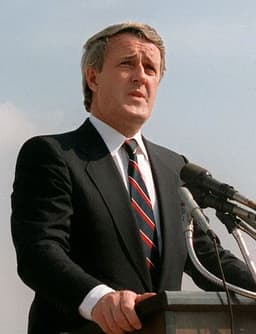
Brian Mulroney
Politician · Modern
60.8Total

Kwame Nkrumah
Politician · Modern
60.2Total
Basic Information
Born
1939
1909
Died
—
1972
Era
Modern
Modern
Nationality
Canada
Ghana
Occupation
Politician
Politician
Civilization
Western
Other
Score Comparison
Military (10%)
48.4
10.0
Political (20%)
78.0
72.0
Influence (20%)
61.0
65.0
Legacy (20%)
56.0
72.0
Leadership (15%)
72.0
68.0
Strategy (15%)
42.5
40.0
TOTAL
60.8
60.2
Brian Mulroney — Complete Timeline
1988 AD
Negotiation of the Canada-US Free Trade AgreementPolitical Action◆ Major
Mulroney's government negotiated the Canada-US Free Trade Agreement (CUSFTA), which eliminated tariffs and trade barriers between the two countries. The deal was controversial in Canada but passed after a federal election fought largely on the issue.
Free TradeUS-Canada RelationsEconomic Policy
Impact: regionalconstructive
1991 AD
Introduction of the Goods and Services TaxReform◆ Major
Mulroney's government implemented a 7% federal Goods and Services Tax (GST) to replace the hidden Manufacturers' Sales Tax. The GST was deeply unpopular and contributed to the Progressive Conservative Party's electoral collapse in 1993.
Tax ReformGSTFiscal Policy
Impact: nationaldestructive
1992 AD
Signing of the North American Free Trade AgreementPolitical Action◆ Major
Mulroney signed NAFTA alongside US President George H.W. Bush and Mexican President Carlos Salinas de Gortari. The agreement expanded CUSFTA to include Mexico, creating a trilateral trade bloc that reshaped North American commerce.
NAFTATrade BlocNorth America
Impact: regionalconstructive
Kwame Nkrumah — Complete Timeline
1950 AD
Positive Action CampaignPolitical Action◆ Major
Nkrumah organized a campaign of civil disobedience, strikes, and boycotts against British colonial rule in the Gold Coast. The campaign pressured the British to grant self-government and accelerated independence negotiations.
Independence MovementCivil DisobedienceGold Coast
Impact: nationalconstructive
1957 AD
Independence of GhanaPolitical Action
Ghana became the first sub-Saharan African country to gain independence from colonial rule. Nkrumah became the first Prime Minister, declaring 'Ghana, your beloved country is free forever.' This inspired other African independence movements.
IndependenceDecolonizationPan-Africanism
Impact: globalconstructive
1958 AD
Preventive Detention ActPolitical Action◆ Major
Nkrumah's government passed the Preventive Detention Act, allowing imprisonment without trial for up to five years. The law was used to suppress political opposition and dissent, marking a shift toward authoritarian rule.
AuthoritarianismCivil LibertiesGhana Politics
Impact: nationaldestructive
1963 AD
Founding of the Organization of African UnityPolitical Action◆ Major
Nkrumah was a key founder of the OAU in Addis Ababa, advocating for a united Africa. The organization aimed to promote solidarity and end colonialism. Nkrumah's vision of a continental government was not fully realized.
Pan-AfricanismInternational OrganizationAfrican Unity
Impact: globalconstructive
1966 AD
Overthrow of NkrumahPolitical Action
While on a state visit to China, Nkrumah was overthrown by a military coup led by the National Liberation Council. The coup was supported by Western powers due to Nkrumah's socialist policies and alignment with the Soviet bloc.
Coup d'étatExileCold War
Impact: nationaltragic
Expert Analysis
Origins
Brian Mulroney was born on March 20, 1939, in Baie-Comeau, Quebec, Canada, into a working-class family. His father was an electrician, and his mother a homemaker. Mulroney studied political science at St. Francis Xavier University and later earned a law degree from Université Laval. He became a labor lawyer and built connections within the Progressive Conservative Party.
Kwame Nkrumah was born on September 21, 1909, in Nkroful, Gold Coast (now Ghana), to a goldsmith father and a mother who was a trader. He trained as a teacher at Achimota College, then studied in the United States at Lincoln University and the University of Pennsylvania, earning degrees in economics, sociology, and theology. He later studied in London, where he was influenced by pan-Africanist ideas.
Rise to Power
Mulroney entered politics gradually. He ran for the leadership of the Progressive Conservative Party in 1976 but lost to Joe Clark. He succeeded in 1983, winning the leadership on the second ballot. In the 1984 federal election, he led the PCs to a landslide victory, winning 211 of 282 seats, the largest majority in Canadian history. Key to his rise was his charisma and ability to unite the party's factions.
Nkrumah rose to prominence as a leader of the independence movement. In 1947, he became General Secretary of the United Gold Coast Convention (UGCC). He broke away to form the Convention People's Party (CPP) in 1949, advocating for self-government. His 'Positive Action' campaign of strikes and boycotts in 1950 led to his imprisonment, but he was released in 1951 after the CPP won elections. He became Prime Minister in 1952 and led Ghana to independence on March 6, 1957.
Leadership & Governance
Mulroney's leadership focused on economic integration and fiscal reform. He negotiated the Canada-US Free Trade Agreement (CUSFTA) in 1988, eliminating tariffs between the two countries. This was expanded into the North American Free Trade Agreement (NAFTA) in 1994, including Mexico. Domestically, he introduced the Goods and Services Tax (GST) in 1991, replacing a hidden manufacturers' tax. The GST was deeply unpopular but aimed to reduce the deficit. He also attempted constitutional reforms, such as the Meech Lake Accord (1987) and Charlottetown Accord (1992), both of which failed. His leadership score is 72.0.
Nkrumah's governance was characterized by ambitious nation-building and pan-Africanism. He invested heavily in infrastructure, including the Akosombo Dam (completed 1965), and expanded education and healthcare. He advocated for a united Africa, founding the Organization of African Unity (OAU) in 1963. However, his rule became increasingly authoritarian. The Preventive Detention Act (1958) allowed imprisonment without trial, used to suppress political opponents. He also created a one-party state in 1964. His political score is 72.0, but his strategy score is only 40.0.
Triumph & Tragedy
Mulroney's greatest triumph was negotiating NAFTA, which reshaped North American trade and boosted Canada's economy. He also signed a landmark acid rain treaty with the US (1991). His tragedies include the failure of constitutional accords, which alienated Quebec and contributed to the rise of the Bloc Québécois. The GST cost his party popularity, leading to a crushing defeat in the 1993 election, with the PCs reduced to two seats.
Nkrumah's triumph was leading Ghana to independence, inspiring decolonization across Africa. His pan-African vision culminated in the OAU. His tragedy was his overthrow on February 24, 1966, while on a state visit to China. The coup, supported by Western powers, led to years of instability. His authoritarian policies and economic mismanagement (heavy borrowing for projects) had eroded his support.
Character & Destiny
Mulroney was pragmatic and deal-making, often described as a conciliator. He built coalitions but could be seen as aloof. His decision to implement the GST despite opposition showed political courage but poor timing. His character contributed to his electoral downfall, but his policies endured.
Nkrumah was idealistic and charismatic, driven by a vision of African unity. He was also intolerant of dissent, leading to repression. His character—both visionary and autocratic—shaped his fate: he transformed Ghana but was ultimately rejected. Historians note that his legacy is complex: a liberator who became a dictator.
Legacy
Mulroney's legacy is tied to free trade: NAFTA (now USMCA) remains a cornerstone of Canadian trade policy. The GST is still in place, though reduced to 5%. He is remembered as a transformative but polarizing figure. His influence score is 61.0, legacy 56.0.
Nkrumah's legacy is immense: he is a symbol of African independence and pan-Africanism. The OAU evolved into the African Union. Ghana's democracy today owes much to his struggle. However, his authoritarian methods are criticized. His influence score is 65.0, legacy 72.0.
Conclusion
While Mulroney's political score (78.0) edges Nkrumah's (72.0), Nkrumah's legacy (72.0) and influence (65.0) surpass Mulroney's (56.0 and 61.0). Nkrumah's impact on decolonization and pan-Africanism reshaped a continent, whereas Mulroney's achievements, though significant, are primarily regional. The total scores are nearly equal (60.8 vs 60.2), but Nkrumah's transformative role in world history gives him greater long-term impact. Therefore, Kwame Nkrumah had a greater overall impact.
Rankings
🥇
Brian MulroneyLeader
Mil: 48.4Pol: 78.0Inf: 61.0
60.8
🥈
Kwame Nkrumah
Mil: 10.0Pol: 72.0Inf: 65.0
60.2
+0.6 behind
How This Comparison Works
Algorithm
Each figure is scored on 6 dimensions (0—100 scale) based on structured historical data: Military (10%), Political (20%), Influence (20%), Legacy (20%), Leadership (15%), Strategy (15%). The weighted total produces the final ranking.
Data Sources
Scores are computed from structured sub-indicators in the database. Scale factors adjust for era (Ancient ×0.85, Modern ×1.0) and civilization size (Eastern ×1.05, Other ×0.80) to account for differences in population and military scale.
Maximum 3 Figures
Comparisons are limited to 2—3 figures to ensure readability and statistical meaningfulness.
Error Margins
±5 points per dimension — Sub-scores are derived from historical records with inherent uncertainty. Two figures within 5 points on a dimension should be considered roughly equivalent in that area.
Total Score Accuracy
±3 points overall — The weighted combination of 6 dimensions produces a total score with approximately ±3 points of uncertainty. Differences of less than 3 points are not statistically significant— the figures are effectively tied.
Known Limitations
- Historical records are incomplete and uneven across civilizations
- Figures from oral-tradition societies may be underrepresented
- Occupation labels can misclassify multi-role figures
- Scores measure capability and impact, not moral character
- Quantitative scoring is a comparison tool, not absolute truth
Capability Radar
Military (10%) — Battles & Warfare
Battles
31
0
Win Rate
32
0
Expansion
36
0
Political (20%) — Governance & Reform
Reform
75
85
Diplomacy
80
80
Economy
75
60
Influence (20%) — Cultural & Global Reach
Cultural
40
75
Global
65
75
Legacy (20%) — Historical Impact
Historical
65
80
Longevity
55
70
Leadership (15%) — Power & Stability
Tenure
65
65
Stability
60
40
Strategy (15%) — Tactics & Innovation
Strategy
38
0
Tactics
39
0
Reform
46
15
Similar Comparisons
Comments & Discussion
No comments yet. Be the first to share your thoughts!