Loading...
Bumin Qaghan vs Chen Baxian
Bumin Qaghan leads by 20.2 pts · 2 figures compared
…
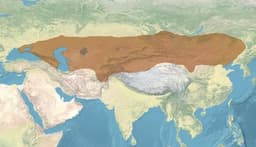
Bumin Qaghan
Emperor · Ancient
67.6Total

Chen Baxian
Emperor · Ancient
47.4Total
Basic Information
Born
490
-503
Died
552
—
Era
Ancient
Ancient
Nationality
Gokturk Khaganate
China
Occupation
Emperor
Emperor
Civilization
Eastern
Eastern
Score Comparison
Military (10%)
80.0
65.0
Political (20%)
60.0
40.8
Influence (20%)
82.0
50.2
Legacy (20%)
72.0
40.8
Leadership (15%)
40.0
45.0
Strategy (15%)
61.2
52.5
TOTAL
67.6
47.4
Bumin Qaghan — Complete Timeline
534 AD
Revolt against the Rouran KhaganatePolitical Action◆ Major
Bumin, a vassal of the Rouran Khaganate, led a revolt of the Turkic tribes (Ashina clan) against Rouran rule. He defeated the Rouran forces and declared independence, marking the beginning of the First Turkic Khaganate.
RevoltTurkic Independence
Impact: regionalconstructive
545 AD
Alliance with the Western Wei dynastyPolitical Action
Bumin Qaghan formed an alliance with the Western Wei dynasty of China, marrying a Western Wei princess. This alliance provided the Turks with Chinese support and technology, strengthening their position against the Rouran and other rivals.
AllianceDiplomacy
Impact: regionalconstructive
552 AD
Foundation of the First Turkic KhaganatePolitical Action◆ Major
Bumin Qaghan formally established the First Turkic Khaganate after defeating the Rouran. He took the title 'Qaghan' and set up his capital in the Orkhon Valley. The khaganate quickly became a major power on the Eurasian steppe.
Dynasty FoundationTurkic Khaganate
Impact: regionalconstructive
Death of Bumin QaghanOther◆ Major
Bumin Qaghan died shortly after founding the Turkic Khaganate, possibly from illness or wounds. His death led to the division of the khaganate between his sons, with the eastern and western halves ruled separately, though still under a single nominal authority.
DeathSuccession
Impact: regionaltragic
Chen Baxian — Complete Timeline
557 AD
Defeated the Northern Qi invasionWar◆ Major
Chen Baxian repelled a Northern Qi invasion of the Chen dynasty. His victory secured the southern border and stabilized the new dynasty.
BattleDefenseNorthern Qi
Impact: regionalconstructive
Founded the Chen dynastyPolitical Action◆ Major
Chen Baxian forced the abdication of the last Liang emperor and proclaimed himself emperor, founding the Chen dynasty. He established his capital at Jiankang (Nanjing) and began rebuilding after the Hou Jing rebellion.
Dynasty FoundingSouthern DynastiesRebuilding
Impact: regionalconstructive
559 AD
Death from illnessOther◆ Major
Chen Baxian died of illness after a short reign of two years. His death left the Chen dynasty in a precarious position, but it survived under his successors until 589.
DeathShort ReignDynastic Continuity
Impact: regionaltragic
Expert Analysis
Origins
Bumin Qaghan (born c. 490s AD) was a chieftain of the Ashina clan, a vassal tribe under the Rouran Khaganate. Little is known of his early life, but he rose within the tribal structure, likely serving as a local leader responsible for metallurgy and tribute. His background was rooted in the steppe nomadic tradition, with skills in horse archery and tribal diplomacy. Chen Baxian (born 503 AD) came from a modest family in Wuxing, modern Zhejiang. He began his career as a local official in the Liang dynasty, but military talent propelled him upward. His early experiences included suppressing peasant rebellions and defending the southern frontier against the Northern Wei.
Rise to Power
Bumin's pivotal moment came in 552 AD when he led a revolt against the Rouran Khaganate. He exploited internal Rouran divisions and allied with the Western Wei dynasty, marrying a Western Wei princess. His victory over the Rouran forces allowed him to declare himself Qaghan and establish the First Turkic Khaganate. Chen Baxian rose during the chaos of the Hou Jing rebellion (548-552 AD). He gained fame by defeating rebel forces and later defended the Liang dynasty against Northern Qi invasions. In 557 AD, he forced the abdication of the last Liang emperor, founding the Chen dynasty with his capital at Jiankang (modern Nanjing). Bumin's rise was a swift rebellion, while Chen's was a gradual accumulation of power during civil war.
Leadership & Governance
Bumin Qaghan's leadership focused on consolidating Turkic tribes under a single khaganate. He established a capital in the Orkhon Valley and implemented a hierarchical tribal structure. His governance relied on personal authority and alliances with Chinese dynasties, but his reign lasted only about a year, leaving little time for reforms. Chen Baxian, with a political score of 40.8, struggled with governance. He attempted to centralize authority but faced resistance from powerful clans. He reduced taxes and promoted agriculture, but his brief two-year reign limited his impact. Both leaders were better at military conquest than administration, but Bumin's structural legacy for the Turks was more enduring.
Triumph & Tragedy
Bumin's greatest triumph was the revolt against the Rouran, scoring 80.0 in military. He unified the Turkic tribes and founded an empire that would last centuries. However, his early death (possibly from illness or wounds) led to the division of the khaganate between his sons, causing internal strife. Chen Baxian's triumph was repelling a Northern Qi invasion in 558 AD, securing the Chen dynasty's southern border. His tragedy was his short reign and failure to fully stabilize the dynasty; he died of illness in 559 AD, leaving a fragile state. Both succeeded in founding dynasties but died before consolidating them.
Character & Destiny
Bumin Qaghan appears as a decisive and ambitious leader, willing to challenge a superior power. His alliance with Western Wei shows strategic flexibility, reflected in his strategy score of 61.2. But his early death suggests perhaps a lack of foresight in personal health or succession planning. Chen Baxian, with a leadership score of 45.0, was more cautious, rising through established channels. He was pragmatic but not visionary, focusing on immediate threats rather than long-term institutions. Their characters mirrored their fates: Bumin's boldness created a vast empire, but his sudden death undermined it; Chen's steady approach secured a dynasty, but it remained weak.
Legacy
Bumin Qaghan's legacy is immense: the First Turkic Khaganate became a model for later steppe empires, influencing the Mongols and others. He scored 82.0 in influence and 72.0 in legacy. The Turkic identity and language spread across Central Asia. Chen Baxian's legacy is more limited; the Chen dynasty was the last of the Southern Dynasties and fell to the Sui in 589 AD. His influence score is 50.2 and legacy 40.8. While he preserved southern Chinese culture temporarily, his dynasty left no lasting institutions. Bumin's impact on world history through the Turkic expansion is far greater.
Conclusion
Bumin Qaghan had a greater historical impact than Chen Baxian. His total score of 67.6 versus Chen's 47.4 reflects this. Bumin founded a khaganate that shaped Eurasian history for centuries, while Chen's dynasty was a brief episode in Chinese history. The Turkic Khaganate influenced the Silk Road, trade, and migration patterns, whereas the Chen dynasty was merely a transitional regime. Bumin's military and political achievements, despite his short reign, created a lasting legacy.
Rankings
🥇
Bumin QaghanLeader
Mil: 80.0Pol: 60.0Inf: 82.0
67.6
🥈
Chen Baxian
Mil: 65.0Pol: 40.8Inf: 50.2
47.4
+20.2 behind
How This Comparison Works
Algorithm
Each figure is scored on 6 dimensions (0—100 scale) based on structured historical data: Military (10%), Political (20%), Influence (20%), Legacy (20%), Leadership (15%), Strategy (15%). The weighted total produces the final ranking.
Data Sources
Scores are computed from structured sub-indicators in the database. Scale factors adjust for era (Ancient ×0.85, Modern ×1.0) and civilization size (Eastern ×1.05, Other ×0.80) to account for differences in population and military scale.
Maximum 3 Figures
Comparisons are limited to 2—3 figures to ensure readability and statistical meaningfulness.
Error Margins
±5 points per dimension — Sub-scores are derived from historical records with inherent uncertainty. Two figures within 5 points on a dimension should be considered roughly equivalent in that area.
Total Score Accuracy
±3 points overall — The weighted combination of 6 dimensions produces a total score with approximately ±3 points of uncertainty. Differences of less than 3 points are not statistically significant— the figures are effectively tied.
Known Limitations
- Historical records are incomplete and uneven across civilizations
- Figures from oral-tradition societies may be underrepresented
- Occupation labels can misclassify multi-role figures
- Scores measure capability and impact, not moral character
- Quantitative scoring is a comparison tool, not absolute truth
Capability Radar
Military (10%) — Battles & Warfare
Battles
70
65
Win Rate
75
70
Expansion
85
50
Political (20%) — Governance & Reform
Reform
70
35
Diplomacy
75
45
Economy
65
30
Influence (20%) — Cultural & Global Reach
Cultural
65
30
Global
65
10
Legacy (20%) — Historical Impact
Historical
80
35
Longevity
70
20
Leadership (15%) — Power & Stability
Tenure
60
30
Stability
55
25
Strategy (15%) — Tactics & Innovation
Strategy
80
55
Tactics
65
60
Reform
60
40
Similar Comparisons
Comments & Discussion
No comments yet. Be the first to share your thoughts!