Loading...
Carlo Azeglio Ciampi vs Heydar Aliyev
Heydar Aliyev leads by 1.6 pts · 2 figures compared
…

Carlo Azeglio Ciampi
Politician · Modern
57.4Total
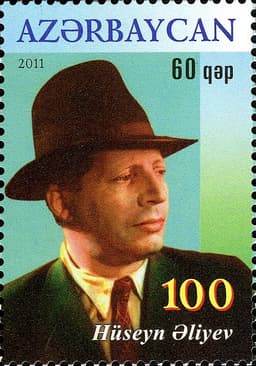
Heydar Aliyev
Politician · Modern
59.0Total
Basic Information
Born
1920
1923
Died
—
—
Era
Modern
Modern
Nationality
Italy
Azerbaijan
Occupation
Politician
Politician
Civilization
Western
Eastern
Score Comparison
Military (10%)
47.8
38.3
Political (20%)
70.3
70.0
Influence (20%)
55.0
62.0
Legacy (20%)
50.0
52.0
Leadership (15%)
78.0
78.0
Strategy (15%)
41.5
45.0
TOTAL
57.4
59.0
Carlo Azeglio Ciampi — Complete Timeline
1993 AD
Implementation of the 1993 Budget and PrivatizationsReform◆ Major
Ciampi's government passed a stringent budget and began a major privatization program of state-owned enterprises. These measures aimed to reduce public debt and modernize the Italian economy, paving the way for euro adoption.
PrivatizationAusterityEconomic Reform
Impact: nationalconstructive
Appointment as Prime Minister of ItalyPolitical Action◆ Major
Carlo Azeglio Ciampi was appointed Prime Minister of Italy, leading a technocratic government during the Tangentopoli crisis. His government focused on economic reforms and restoring confidence in Italian institutions.
Prime MinisterTechnocraticTangentopoli
Impact: nationalconstructive
1999 AD
Election as President of ItalyPolitical Action◆ Major
Ciampi was elected President of Italy, a largely ceremonial but influential role. His presidency was marked by his efforts to promote national unity, European integration, and constitutional respect.
PresidentHead of StateNational Unity
Impact: nationalconstructive
2002 AD
Promotion of the Euro AdoptionPolitical Action◆ Major
As President, Ciampi strongly supported Italy's adoption of the euro as its currency. He used his moral authority to advocate for European integration and the benefits of the single currency for Italy.
EuroEuropean IntegrationCurrency
Impact: regionalconstructive
2006 AD
End of Presidential TermPolitical Action
Ciampi's seven-year presidential term ended. He was succeeded by Giorgio Napolitano. His tenure was widely respected for its stability and dignity during a period of political turbulence.
End of TermPresidencySuccession
Impact: nationalconstructive
Heydar Aliyev — Complete Timeline
1993 AD
Became President of AzerbaijanPolitical Action◆ Major
Heydar Aliyev was elected President of Azerbaijan after a military coup ousted the previous government. He had previously served as a KGB general and First Secretary of the Communist Party of Azerbaijan. His presidency stabilized the country after the chaos of the post-Soviet period and the Nagorno-Karabakh war.
Rise to PowerPost-Soviet TransitionStabilization
Impact: national
1994 AD
Negotiated Ceasefire in Nagorno-KarabakhWar◆ Major
Aliyev brokered a ceasefire agreement with Armenia, ending the active phase of the Nagorno-Karabakh war. The ceasefire left Armenia in control of the disputed region and surrounding territories. Aliyev used the ceasefire to consolidate power and begin rebuilding the Azerbaijani military.
CeasefireNagorno-KarabakhConflict Resolution
Impact: regional
Signed 'Contract of the Century'Political Action◆ Major
Aliyev signed a major oil production sharing agreement with a consortium of international oil companies, known as the 'Contract of the Century.' The deal opened Azerbaijan's oil sector to foreign investment and laid the foundation for the country's economic growth. It was a key element of his economic strategy.
Oil AgreementForeign InvestmentEconomic Development
Impact: globalconstructive
1995 AD
Established Authoritarian RegimePolitical Action◆ Major
Aliyev consolidated authoritarian rule by suppressing political opposition, controlling the media, and rigging elections. He amended the constitution to extend presidential powers and ensure his continued rule. His regime was characterized by nepotism and corruption, but also provided stability.
AuthoritarianismPolitical RepressionCorruption
Impact: nationaldestructive
2003 AD
Appointed Son as Prime MinisterPolitical Action◆ Major
Heydar Aliyev appointed his son Ilham Aliyev as Prime Minister of Azerbaijan, setting the stage for a dynastic succession. Heydar's health was failing, and he stepped down as president later that year, with Ilham winning the subsequent election. This established the Aliyev family's political dynasty.
Dynastic SuccessionPolitical DynastyPower Transfer
Impact: national
Expert Analysis
Origins
Carlo Azeglio Ciampi was born in Livorno, Italy, on December 9, 1920. He studied literature and law at the University of Pisa, graduating in 1941. After World War II, he joined the Bank of Italy, where he worked for over four decades, rising through the ranks to become Governor in 1979. His technocratic background shaped his cautious, consensus-driven approach.
Heydar Aliyev was born on May 10, 1923, in Nakhchivan, Azerbaijan, then part of the Soviet Union. He studied at the Azerbaijan State University and later joined the KGB, rising to become a general. His early career in the Soviet security apparatus instilled a pragmatic, authoritarian style. He served as First Secretary of the Communist Party of Azerbaijan from 1969 to 1982, modernizing the republic's economy while suppressing dissent.
Rise to Power
Ciampi's rise was gradual and institutional. In 1993, amid the Tangentopoli corruption scandal that devastated Italy's political class, he was appointed Prime Minister as a non-partisan technocrat. He led a government of experts, implementing austerity measures and privatization to restore economic credibility. His success earned him respect, and in 1999 he was elected President of Italy, a largely ceremonial but influential role, with broad parliamentary support.
Aliyev's ascent was more dramatic. After the Soviet collapse, Azerbaijan faced war with Armenia over Nagorno-Karabakh and political instability. In 1993, a military coup ousted President Abulfaz Elchibey, and Aliyev, then a former KGB general and Soviet Politburo member, was invited to lead. He won a presidential election later that year, though the vote was widely criticized as neither free nor fair. He consolidated power by sidelining rivals and building a patronage network.
Leadership & Governance
Ciampi governed as a consensus-builder, using his moral authority to unite a fragmented political landscape. As Prime Minister, he passed a stringent 1993 budget, cutting spending and raising taxes, and initiated privatizations of state-owned enterprises like ENI and IRI. As President, he promoted Italy's adoption of the euro, using his influence to reassure markets and citizens. His leadership score of 78.0 reflects his ability to steer through crisis without personal aggrandizement.
Aliyev ruled with an iron fist, suppressing opposition and controlling media. He negotiated a 1994 ceasefire with Armenia that froze the Nagorno-Karabakh conflict, leaving Armenia in control of 20% of Azerbaijan's territory. In 1994, he signed the 'Contract of the Century' with a consortium of oil companies, attracting $30 billion in investment. He amended the constitution to extend presidential terms and appointed his son Ilham as Prime Minister in 2003, ensuring dynastic succession. His political score of 70.0 is similar to Ciampi's 70.3, but his methods were authoritarian.
Triumph & Tragedy
Ciampi's greatest triumph was steering Italy into the eurozone, achieving price stability and low inflation after decades of lira devaluation. His presidency (1999-2006) was marked by dignity and stability, earning widespread respect. His tragedy was the limited power of his office; he could not prevent the return of Silvio Berlusconi, whose conflicts of interest and legal troubles undermined Italy's reputation. Ciampi's influence score of 55.0 reflects his constrained role.
Aliyev's triumph was securing Azerbaijan's oil wealth and stabilizing the country after war. The 'Contract of the Century' transformed Azerbaijan into a major energy exporter, boosting GDP per capita from $500 in 1993 to $3,500 by 2003. His tragedy was the authoritarian legacy: he crushed dissent, rigged elections, and bequeathed a dynastic autocracy. His military score of 38.3 reflects the unresolved Nagorno-Karabakh conflict, which erupted again in 2020. His legacy score of 52.0 is slightly above Ciampi's 50.0, but the cost was high.
Character & Destiny
Ciampi was reserved, intellectual, and principled. He prioritized institutional stability over personal ambition, refusing to use his popularity to seek a second presidential term. His character shaped his destiny as a respected elder statesman, but also limited his direct impact. He scored 78.0 in leadership, reflecting his ability to guide without dominating.
Aliyev was pragmatic, ruthless, and strategic. He understood power dynamics from his KGB training and Soviet experience. He was willing to sacrifice democratic norms for stability and wealth. His strategy score of 45.0 is higher than Ciampi's 41.5, but his methods alienated many Azerbaijanis and international observers. His character led to a consolidated but fragile regime, reliant on oil revenues and repression.
Legacy
Ciampi's legacy is tied to European integration and fiscal responsibility. He is remembered as the 'President of the Euro' for his role in Italy's adoption of the single currency. His technocratic government set a precedent for non-partisan leadership in crises. However, his impact is largely symbolic; Italy's structural problems persisted after his tenure. His total score of 57.4 reflects a modest but positive influence.
Aliyev's legacy is more tangible but darker. He transformed Azerbaijan from a war-torn state into an energy hub, but at the cost of democracy. The Aliyev dynasty continues under his son Ilham, with the same authoritarian features. The Nagorno-Karabakh conflict remains unresolved, and oil wealth has led to corruption and inequality. His total score of 59.0 is slightly higher than Ciampi's, but his legacy is contested.
Conclusion
While Aliyev's total score (59.0) edges out Ciampi's (57.4), the nature of their impact differs fundamentally. Ciampi's contributions to Italy's stability and European integration were positive and enduring, though limited. Aliyev's transformation of Azerbaijan was more profound, but his authoritarian methods and dynastic succession created a system that stifles freedom. In terms of net positive impact on human welfare, Ciampi's legacy is superior. He advanced democratic institutions and economic responsibility, while Aliyev's legacy is a cautionary tale of oil-fueled autocracy. Thus, Carlo Azeglio Ciampi had greater impact in promoting sustainable governance and European unity.
Rankings
🥇
Heydar AliyevLeader
Mil: 38.3Pol: 70.0Inf: 62.0
59.0
🥈
Carlo Azeglio Ciampi
Mil: 47.8Pol: 70.3Inf: 55.0
57.4
+1.6 behind
How This Comparison Works
Algorithm
Each figure is scored on 6 dimensions (0—100 scale) based on structured historical data: Military (10%), Political (20%), Influence (20%), Legacy (20%), Leadership (15%), Strategy (15%). The weighted total produces the final ranking.
Data Sources
Scores are computed from structured sub-indicators in the database. Scale factors adjust for era (Ancient ×0.85, Modern ×1.0) and civilization size (Eastern ×1.05, Other ×0.80) to account for differences in population and military scale.
Maximum 3 Figures
Comparisons are limited to 2—3 figures to ensure readability and statistical meaningfulness.
Error Margins
±5 points per dimension — Sub-scores are derived from historical records with inherent uncertainty. Two figures within 5 points on a dimension should be considered roughly equivalent in that area.
Total Score Accuracy
±3 points overall — The weighted combination of 6 dimensions produces a total score with approximately ±3 points of uncertainty. Differences of less than 3 points are not statistically significant— the figures are effectively tied.
Known Limitations
- Historical records are incomplete and uneven across civilizations
- Figures from oral-tradition societies may be underrepresented
- Occupation labels can misclassify multi-role figures
- Scores measure capability and impact, not moral character
- Quantitative scoring is a comparison tool, not absolute truth
Capability Radar
Military (10%) — Battles & Warfare
Battles
31
5
Win Rate
33
5
Expansion
36
10
Political (20%) — Governance & Reform
Reform
70
70
Diplomacy
80
75
Economy
75
70
Influence (20%) — Cultural & Global Reach
Cultural
50
55
Global
55
55
Legacy (20%) — Historical Impact
Historical
55
60
Longevity
50
50
Leadership (15%) — Power & Stability
Tenure
75
75
Stability
85
65
Strategy (15%) — Tactics & Innovation
Strategy
36
15
Tactics
38
10
Reform
46
20
Similar Comparisons
Comments & Discussion
No comments yet. Be the first to share your thoughts!