Loading...
Carlos I of Portugal vs Charles I of England
Charles I of England leads by 3.3 pts · 2 figures compared
…
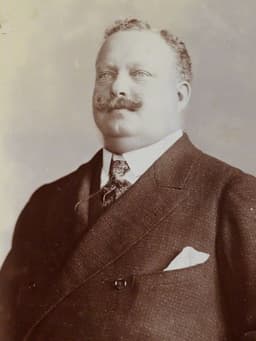
Carlos I of Portugal
Emperor · Modern
44.1Total

Charles I of England
Emperor · Modern
47.4Total
Basic Information
Born
1863
1600
Died
1908
1649
Era
Modern
Modern
Nationality
Portugal
England
Occupation
Emperor
Emperor
Civilization
Western
Western
Score Comparison
Military (10%)
10.8
50.0
Political (20%)
43.7
33.6
Influence (20%)
47.9
56.4
Legacy (20%)
36.7
50.0
Leadership (15%)
62.2
55.3
Strategy (15%)
60.0
25.0
TOTAL
44.1
47.4
Carlos I of Portugal — Complete Timeline
1890 AD
1890 British UltimatumPolitical Action
Britain issued an ultimatum demanding Portugal withdraw from territories in Africa (the Pink Map) that Britain claimed. Carlos I, under pressure, capitulated, causing a national humiliation and a wave of republican sentiment in Portugal, severely damaging the monarchy's prestige.
Colonial CrisisNational HumiliationRepublicanism
Impact: nationaldestructive
1906 AD
Dictatorship of João FrancoPolitical Action◆ Major
Carlos I appointed Jo
AuthoritarianismPolitical RepressionMonarchy Crisis
Impact: nationaldestructive
1908 AD
Lisbon RegicidePolitical Action
Carlos I and his heir, Prince Lu
AssassinationRegicideEnd of Monarchy
Impact: nationaltragic
Charles I of England — Complete Timeline
1628 AD
Petition of RightPolitical Action◆ Major
Charles I was forced to accept the Petition of Right, a parliamentary document that prohibited arbitrary imprisonment, taxation without consent, and martial law. He later ignored its provisions, deepening conflict with Parliament.
ParliamentCivil LibertiesConstitutional Crisis
Impact: national
1629 AD
Personal Rule (Eleven Years' Tyranny)Political Action◆ Major
Charles I dissolved Parliament and ruled without it for 11 years, relying on prerogative taxes like ship money. This period of personal rule alienated the gentry and merchants, fueling opposition to the monarchy.
Personal RuleTaxationParliamentary Conflict
Impact: nationaldestructive
1639 AD
Scottish Bishops' WarsWar◆ Major
Charles I attempted to impose Anglican liturgy on Scotland, sparking the Bishops' Wars. The Scots defeated English forces, forcing Charles to recall Parliament to raise funds, leading to the Long Parliament and the English Civil War.
ScotlandReligious ConflictParliament
Impact: nationaldestructive
1642 AD
English Civil War BeginsWar
Charles I raised his standard at Nottingham, marking the start of the English Civil War against Parliament. The war pitted Royalists against Parliamentarians, leading to years of conflict over governance and religion.
Civil WarRoyalistsParliamentarians
Impact: nationaldestructive
1649 AD
Execution of Charles IPolitical Action
Charles I was beheaded outside the Banqueting House in London after being convicted of treason by a parliamentary court. His execution abolished the monarchy and established the Commonwealth of England under Oliver Cromwell.
ExecutionRegicideCommonwealth
Impact: globaltragic
Expert Analysis
Origins
Carlos I of Portugal was born in Lisbon on September 28, 1863, to King Luís I and Queen Maria Pia of Savoy. He received a traditional aristocratic education, including military training, but was more interested in artistic and scientific pursuits. His father's reign was stable but marked by growing republican and socialist movements. Charles I of England was born in Dunfermline Palace on November 19, 1600, the second son of King James VI of Scotland (later James I of England) and Anne of Denmark. He was a shy, stammering child overshadowed by his elder brother Henry, who died in 1612, making Charles heir. He was educated in theology and statecraft, with a strong belief in the divine right of kings.
Rise to Power
Carlos I ascended the throne on October 19, 1889, following his father's death. He inherited a constitutional monarchy but faced immediate crisis. In January 1890, the British Ultimatum forced Portugal to abandon its African territorial claims (the Pink Map), causing national humiliation and a surge in republicanism. The monarchy's prestige never recovered. Carlos's reign saw the rise of João Franco, a strongman prime minister appointed in 1906. Charles I became king on March 27, 1625, upon his father's death. He quickly clashed with Parliament over money and religion. His marriage to the Catholic Henrietta Maria of France alienated Puritans. In 1628, he accepted the Petition of Right limiting royal powers, but then dissolved Parliament in 1629, beginning his Personal Rule (1629–1640).
Leadership & Governance
Carlos I governed as a constitutional monarch but increasingly relied on authoritarian measures. In 1906, he appointed João Franco as prime minister with dictatorial powers to suppress opposition. Franco censored the press, arrested opponents, and ruled by decree. Carlos supported this, hoping to strengthen the monarchy. This alienated moderates and fueled republicanism. Charles I's Personal Rule (the 'Eleven Years' Tyranny') saw him raise money without Parliament through ship money and fines, and enforce religious uniformity via Archbishop William Laud. His attempt to impose Anglican liturgy on Scotland triggered the Bishops' Wars (1639–1640), which he lost, forcing him to recall Parliament. His leadership scored 62.2 against Charles's 55.3, but his political score of 43.7 versus Charles's 33.6 reflects slightly better navigation of crises, though both failed.
Triumph & Tragedy
Carlos I's greatest success was his diplomatic navigation of colonial disputes, though the British Ultimatum was a deep humiliation. He also modernized Lisbon's infrastructure. His greatest failure was the dictatorial turn under Franco, which isolated the monarchy. The Lisbon Regicide on February 1, 1908, where he and his heir were killed by republican assassins, ended his reign in tragedy. Charles I's triumph was his patronage of the arts, notably collecting paintings by Van Dyck and Rubens. His failure was the English Civil War (1642–1651), which he lost. Captured in 1646, he escaped, forged an alliance with Scots, and was defeated again. He was executed on January 30, 1649, for treason. Charles's military score of 50.0 (versus Carlos's 10.8) reflects his actual command, but his strategy score of 25.0 (versus 60.0) shows poor decision-making.
Character & Destiny
Carlos I was intelligent and cultured but indecisive and prone to delegating to strongmen like Franco. He lacked the will to reform the monarchy or address republican grievances. His assassination was the direct result of his repressive policies. Charles I was stubborn, secretive, and convinced of his divine right. He broke promises, alienated allies, and repeatedly provoked conflict. His execution was the culmination of his inability to compromise. Historian J. H. Hexter called Charles 'a man of no political judgment.' Carlos's leadership score of 62.2 vs Charles's 55.3 suggests slightly better skills, but both were fatally flawed.
Legacy
Carlos I's legacy is the end of the Portuguese monarchy; the republic was declared in 1910, partly due to his failures. He is remembered as a weak king who accelerated the monarchy's fall. His scores: Military 10.8, Political 43.7, Influence 47.9, Legacy 36.7, Leadership 62.2, Strategy 60.0, Total 44.1. Charles I's legacy is the English Civil War and the temporary abolition of the monarchy. His execution established the principle that kings could be tried and deposed. He is seen as a martyr by some, a tyrant by others. His scores: Military 50.0, Political 33.6, Influence 56.4, Legacy 50.0, Leadership 55.3, Strategy 25.0, Total 47.4. Charles's overall score of 47.4 is 3.3 points higher than Carlos's 44.1, reflecting his more significant, albeit negative, impact on history.
Conclusion
Charles I of England had a greater historical impact than Carlos I of Portugal, despite both being failed monarchs. Charles's execution and the civil war reshaped English governance, leading to the Commonwealth and eventually constitutional monarchy. Carlos's assassination merely sped up Portugal's transition to a republic that was already inevitable. However, Charles's actions were more consequential: they established parliamentary supremacy and influenced democratic revolutions globally. While Carlos scored 62.2 in leadership to Charles's 55.3, and Charles's strategy of 25.0 was abysmal compared to Carlos's 60.0, the scale of events under Charles—a civil war, regicide, and republican experiment—was far more transformative. Charles's total score of 47.4 versus Carlos's 44.1 reflects this. Neither was a great king, but Charles's failures had a more profound and lasting effect on the world.
Rankings
🥇
Charles I of EnglandLeader
Mil: 50.0Pol: 33.6Inf: 56.4
47.4
🥈
Carlos I of Portugal
Mil: 10.8Pol: 43.7Inf: 47.9
44.1
+3.3 behind
How This Comparison Works
Algorithm
Each figure is scored on 6 dimensions (0—100 scale) based on structured historical data: Military (10%), Political (20%), Influence (20%), Legacy (20%), Leadership (15%), Strategy (15%). The weighted total produces the final ranking.
Data Sources
Scores are computed from structured sub-indicators in the database. Scale factors adjust for era (Ancient ×0.85, Modern ×1.0) and civilization size (Eastern ×1.05, Other ×0.80) to account for differences in population and military scale.
Maximum 3 Figures
Comparisons are limited to 2—3 figures to ensure readability and statistical meaningfulness.
Error Margins
±5 points per dimension — Sub-scores are derived from historical records with inherent uncertainty. Two figures within 5 points on a dimension should be considered roughly equivalent in that area.
Total Score Accuracy
±3 points overall — The weighted combination of 6 dimensions produces a total score with approximately ±3 points of uncertainty. Differences of less than 3 points are not statistically significant— the figures are effectively tied.
Known Limitations
- Historical records are incomplete and uneven across civilizations
- Figures from oral-tradition societies may be underrepresented
- Occupation labels can misclassify multi-role figures
- Scores measure capability and impact, not moral character
- Quantitative scoring is a comparison tool, not absolute truth
Capability Radar
Military (10%) — Battles & Warfare
Battles
38
25
Win Rate
39
20
Expansion
43
5
Political (20%) — Governance & Reform
Reform
30
20
Diplomacy
35
15
Economy
25
20
Influence (20%) — Cultural & Global Reach
Cultural
15
30
Global
10
40
Legacy (20%) — Historical Impact
Historical
20
55
Longevity
10
50
Leadership (15%) — Power & Stability
Tenure
40
40
Stability
20
10
Strategy (15%) — Tactics & Innovation
Strategy
46
10
Tactics
49
15
Reform
48
10
Similar Comparisons
Comments & Discussion
No comments yet. Be the first to share your thoughts!