Loading...
Carlos Lleras Restrepo vs Donald Tusk
Donald Tusk leads by 0.9 pts · 2 figures compared
…
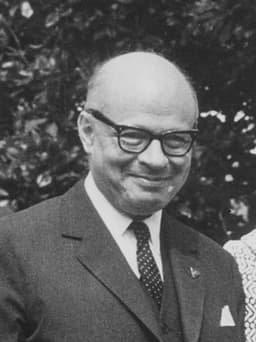
Carlos Lleras Restrepo
Politician · Modern
55.9Total

Donald Tusk
Politician · Modern
56.8Total
Basic Information
Born
1908
1957
Died
1994
—
Era
Modern
Modern
Nationality
Colombia
Poland
Occupation
Politician
Politician
Civilization
Western
Western
Score Comparison
Military (10%)
49.3
47.8
Political (20%)
70.0
62.7
Influence (20%)
56.4
55.0
Legacy (20%)
49.2
52.0
Leadership (15%)
66.0
78.0
Strategy (15%)
41.6
42.1
TOTAL
55.9
56.8
Carlos Lleras Restrepo — Complete Timeline
1966 AD
Presidency of ColombiaPolitical Action◆ Major
Carlos Lleras Restrepo served as President of Colombia from 1966 to 1970 under the National Front. His administration focused on economic modernization, fiscal reform, and strengthening state institutions.
PresidencyNational FrontEconomic Reform
Impact: nationalconstructive
1967 AD
Economic Stabilization ProgramReform◆ Major
Facing inflation and balance of payments problems, Lleras Restrepo implemented a stabilization program including a devaluation of the peso, fiscal austerity, and export promotion. The program stabilized the economy and boosted coffee exports.
Economic PolicyStabilizationExports
Impact: nationalconstructive
1968 AD
Constitutional Reform of 1968Reform◆ Major
Lleras Restrepo enacted a major constitutional reform that strengthened presidential powers, reorganized the state bureaucracy, and created new planning institutions. The reform aimed to modernize the Colombian state and improve economic management.
Constitutional ReformState ModernizationGovernance
Impact: nationalconstructive
Creation of the National Planning DepartmentReform◆ Major
Lleras Restrepo established the National Planning Department (DNP) to centralize economic planning and public investment. The DNP became a key institution for coordinating development policy and allocating resources across government sectors.
Economic PlanningInstitution BuildingDevelopment
Impact: nationalconstructive
Donald Tusk — Complete Timeline
2007 AD
Tusk becomes Prime Minister of PolandPolitical Action◆ Major
Donald Tusk became Prime Minister of Poland after his Civic Platform party won the parliamentary election. He formed a coalition government, succeeding Jaros
Polish PoliticsCivic Platform2007 Election
Impact: national
2008 AD
Tusk's government during the 2008 financial crisisPolitical Action◆ Major
Tusk's government managed Poland's economy through the global financial crisis, avoiding recession through stimulus measures and a flexible currency. Poland was the only EU country to post positive GDP growth in 2009.
Economic PolicyFinancial CrisisEU
Impact: nationalconstructive
2014 AD
Tusk elected President of the European CouncilPolitical Action◆ Major
Donald Tusk was elected President of the European Council, becoming the first Eastern European to hold the post. He served two terms until 2019, overseeing EU responses to the migration crisis and Brexit negotiations.
EU LeadershipEuropean CouncilInternational Politics
Impact: global
2023 AD
Tusk returns as Polish Prime MinisterPolitical Action◆ Major
After eight years in opposition, Tusk led the Civic Coalition to victory in the 2023 parliamentary election. He formed a pro-European coalition government, ending the rule of the Law and Justice party and restoring democratic norms.
Polish Politics2023 ElectionDemocracy
Impact: nationalconstructive
Expert Analysis
Origins
Carlos Lleras Restrepo was born on April 12, 1908, in Bogotá, Colombia, into a wealthy political family. His father, Federico Lleras Acosta, was a prominent physician and politician. Lleras studied law at the National University of Colombia, graduating in 1929. He was influenced by Keynesian economics and the New Deal, which shaped his reformist outlook. Donald Tusk was born on April 22, 1957, in Gdańsk, Poland, to a working-class family with Kashubian roots. His father was a carpenter, and his mother was a nurse. Tusk studied history at the University of Gdańsk, where he became involved in the anti-communist Solidarity movement. His early experiences under communist rule informed his pro-European and liberal views.
Rise to Power
Lleras Restrepo entered politics early, serving as a deputy in the Colombian Congress from 1931. He held key ministerial posts, including Minister of Finance (1941-1943) and Minister of the Interior (1943-1944). After the 1953 military coup, he went into exile but returned to help negotiate the 1957 National Front pact, which alternated power between Liberals and Conservatives. He became President in 1966, winning with 71.7% of the vote. Tusk co-founded the Liberal Democratic Congress party in 1990 and later merged it into the Civic Platform in 2001. He became Prime Minister in 2007 after his party won the parliamentary election with 41.5% of the vote. His rise was aided by dissatisfaction with the incumbent Law and Justice party.
Leadership & Governance
Lleras Restrepo governed with a technocratic, centralized style. He pushed the constitutional reform of 1968, which strengthened the presidency and created the National Planning Department (DNP). He implemented an economic stabilization program in 1966-1967, including a 40% devaluation of the peso, fiscal austerity, and tax reforms. This stabilized the economy, with GDP growth averaging 5.6% during his term. However, his reforms increased executive power and were criticized as authoritarian. Tusk led with a consensus-building, pragmatic approach. He managed Poland through the 2008 global financial crisis by allowing the zloty to float and implementing stimulus measures, resulting in Poland being the only EU country to avoid recession. He pushed for closer EU integration, but his domestic agenda included controversial pension and healthcare reforms. His leadership score of 78.0 reflects his effective crisis management.
Triumph & Tragedy
Lleras Restrepo's greatest success was the economic stabilization and modernization of Colombia, including the creation of the DNP and the 1968 constitution, which provided stability for decades. However, his presidency saw the rise of drug cartels and guerrilla violence, which he failed to contain. His policies also exacerbated rural inequality. Tusk's triumph was steering Poland through the 2008 crisis and becoming the first Eastern European President of the European Council (2014-2019), where he managed the EU's response to the migrant crisis and Brexit. His tragedy was his initial loss in 2015 to the Law and Justice party, which rolled back many of his reforms. His second term starting in 2023 faces challenges of deep national polarization.
Character & Destiny
Lleras Restrepo was intellectual, decisive, and aloof, earning the nickname "the Monk of the Palace." His technocratic approach alienated many, but his discipline drove reforms. His destiny was tied to the National Front, which he helped create but which also limited democratic competition. Tusk is pragmatic, resilient, and skilled at building coalitions. His ability to navigate crises stems from his Solidarity-era experience. His destiny has been shaped by Poland's EU membership and his role as a counterweight to populism. Both leaders scored high in political skills (70.0 and 62.7), but Tusk's leadership score (78.0) is significantly higher.
Legacy
Lleras Restrepo's legacy includes the institutional framework of modern Colombia: the DNP, the 1968 constitution (which lasted until 1991), and a tradition of economic planning. However, he is less remembered internationally. His legacy score is 49.2. Tusk's legacy is more visible: he is a symbol of Poland's successful transition to a stable democracy and its strong EU role. His two terms as PM and his EU presidency leave a lasting mark. His legacy score of 52.0 reflects this. Both have influence scores around 55-56, but Tusk's broader European impact gives him an edge.
Conclusion
Donald Tusk had a greater overall impact than Carlos Lleras Restrepo. While Lleras Restrepo modernized Colombia's economy and governance, his influence was largely domestic. Tusk not only reformed Poland but also shaped EU policy during critical times. Tusk's total score of 56.8 edges Lleras Restrepo's 55.9, and his leadership score of 78.0 is notably higher. Tusk's ability to manage crises and navigate both national and international politics gives him a stronger claim to lasting significance.
Rankings
🥇
Donald TuskLeader
Mil: 47.8Pol: 62.7Inf: 55.0
56.8
🥈
Carlos Lleras Restrepo
Mil: 49.3Pol: 70.0Inf: 56.4
55.9
+0.9 behind
How This Comparison Works
Algorithm
Each figure is scored on 6 dimensions (0—100 scale) based on structured historical data: Military (10%), Political (20%), Influence (20%), Legacy (20%), Leadership (15%), Strategy (15%). The weighted total produces the final ranking.
Data Sources
Scores are computed from structured sub-indicators in the database. Scale factors adjust for era (Ancient ×0.85, Modern ×1.0) and civilization size (Eastern ×1.05, Other ×0.80) to account for differences in population and military scale.
Maximum 3 Figures
Comparisons are limited to 2—3 figures to ensure readability and statistical meaningfulness.
Error Margins
±5 points per dimension — Sub-scores are derived from historical records with inherent uncertainty. Two figures within 5 points on a dimension should be considered roughly equivalent in that area.
Total Score Accuracy
±3 points overall — The weighted combination of 6 dimensions produces a total score with approximately ±3 points of uncertainty. Differences of less than 3 points are not statistically significant— the figures are effectively tied.
Known Limitations
- Historical records are incomplete and uneven across civilizations
- Figures from oral-tradition societies may be underrepresented
- Occupation labels can misclassify multi-role figures
- Scores measure capability and impact, not moral character
- Quantitative scoring is a comparison tool, not absolute truth
Capability Radar
Military (10%) — Battles & Warfare
Battles
28
29
Win Rate
32
34
Expansion
37
37
Political (20%) — Governance & Reform
Reform
75
70
Diplomacy
65
80
Economy
80
70
Influence (20%) — Cultural & Global Reach
Cultural
40
40
Global
40
65
Legacy (20%) — Historical Impact
Historical
50
55
Longevity
45
45
Leadership (15%) — Power & Stability
Tenure
60
75
Stability
55
65
Strategy (15%) — Tactics & Innovation
Strategy
36
37
Tactics
43
40
Reform
41
44
Similar Comparisons
Comments & Discussion
No comments yet. Be the first to share your thoughts!