Loading...
Carlos Manuel de Cespedes vs Ho Chi Minh
Ho Chi Minh leads by 18.5 pts · 2 figures compared
…
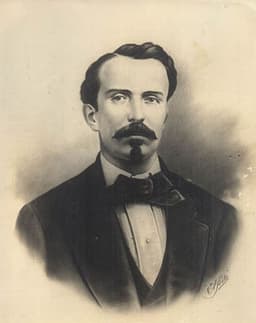
Carlos Manuel de Cespedes
Revolutionary · Modern
44.4Total
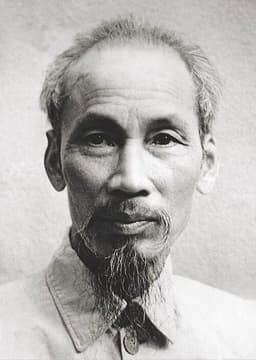
Ho Chi Minh
Revolutionary · Modern
62.9Total
Basic Information
Born
1819
1890
Died
1874
1969
Era
Modern
Modern
Nationality
Cuba
Vietnam
Occupation
Revolutionary
Revolutionary
Civilization
Western
Eastern
Score Comparison
Military (10%)
50.0
55.0
Political (20%)
27.9
72.0
Influence (20%)
58.0
62.0
Legacy (20%)
50.0
58.0
Leadership (15%)
30.0
72.0
Strategy (15%)
36.8
58.0
TOTAL
44.4
62.9
Carlos Manuel de Cespedes — Complete Timeline
1868 AD
Grito de Yara (1868)Political Action
Carlos Manuel de C
IndependenceRevolutionTen Years' War
Impact: nationalprogressive
1869 AD
President of the Republic in Arms (1869)Political Action◆ Major
Céspedes was elected President of the Republic of Cuba in Arms by the Assembly of Guáimaro. He led the rebel government during the early years of the Ten Years' War, advocating for independence and the abolition of slavery. His leadership was marked by internal divisions.
PresidencyRebel GovernmentWar
Impact: national
1873 AD
Deposed and Killed (1873-1874)Political Action◆ Major
Céspedes was deposed as president by the rebel assembly in 1873 due to disagreements over military strategy and political direction. He was killed in a skirmish with Spanish troops in 1874. His death made him a martyr for Cuban independence.
DepositionDeathMartyr
Impact: nationaltragic
Ho Chi Minh — Complete Timeline
1941 AD
Establishment of the Viet MinhPolitical Action◆ Major
Ho Chi Minh founded the Viet Minh (League for the Independence of Vietnam) in southern China. This coalition of nationalist and communist groups became the primary force for Vietnamese independence, fighting both Japanese occupation and French colonialism.
Viet MinhIndependence MovementWorld War II
Impact: nationalconstructive
1945 AD
Declaration of Independence of VietnamPolitical Action
Ho Chi Minh proclaimed the Democratic Republic of Vietnam in Hanoi's Ba Dinh Square, citing the US Declaration of Independence. This established the Viet Minh government and began the struggle for independence from French colonial rule.
IndependenceVietnamDecolonization
Impact: nationalconstructive
1954 AD
Battle of Dien Bien PhuWar
Ho Chi Minh's Viet Minh forces, under General Giap, defeated the French garrison at Dien Bien Phu. This victory ended French colonial rule in Indochina and led to the Geneva Accords dividing Vietnam at the 17th parallel.
Vietnam WarDecolonizationFrench Indochina
Impact: regional
Geneva AccordsPolitical Action◆ Major
Ho Chi Minh's delegation signed the Geneva Accords, temporarily dividing Vietnam at the 17th parallel. The agreement promised nationwide elections in 1956, which were never held, leading to the permanent division of Vietnam.
Geneva ConferenceDivision of VietnamDiplomacy
Impact: regional
1959 AD
Start of the Vietnam WarWar
Ho Chi Minh's government in North Vietnam authorized armed struggle against the US-backed South Vietnamese regime. This escalated into the Vietnam War, a prolonged conflict that resulted in millions of deaths and US withdrawal in 1973.
Vietnam WarCold WarCommunism
Impact: globaldestructive
Expert Analysis
Ho Chi Minh vs Carlos Manuel de Cespedes
### The Revolutionary’s Crossroads
On a humid September morning in 1945, Ho Chi Minh stood before a crowd of half a million in Hanoi’s Ba Dinh Square and read aloud from the American Declaration of Independence. “All men are created equal,” he intoned, his voice thin but steady, before proclaiming the Democratic Republic of Vietnam. Across the world, in a very different time, another revolutionary had stood on a sugar plantation in eastern Cuba on October 10, 1868, and issued the *Grito de Yara*—a cry for independence that would ignite a bloody war against Spain. Both men sought to free their nations from colonial rule. One, Ho Chi Minh, would die an old man in 1969 with his country still at war, but his name immortalized as the father of modern Vietnam. The other, Carlos Manuel de Céspedes, would be deposed by his own followers and killed in a skirmish in 1874, his dream of a free Cuba left unfinished. Why did one revolutionary succeed where the other failed? The answer lies not in their aims, but in their times, their strategies, and their ability to adapt.
### Origins
Ho Chi Minh was born Nguyen Sinh Cung in 1890 in the village of Kim Lien, in central Vietnam, then part of French Indochina. His father, a scholar-official who despised colonial rule, instilled in him a fierce nationalism. But Ho’s path was forged in exile. He left Vietnam at age 21, working as a cook and a photograph retoucher across Europe, Africa, and the United States. He read Marx, Lenin, and the American founders, and by 1919 he was in Paris, petitioning the great powers at Versailles for Vietnamese self-determination—only to be ignored. That rejection radicalized him. He joined the French Communist Party and spent decades wandering the globe, learning from the Bolsheviks in Moscow and the Kuomintang in China. His identity was shaped not by a single place, but by a global struggle against imperialism.
Carlos Manuel de Céspedes was born in 1819 into a wealthy sugar-planting family in Bayamo, Cuba, then a Spanish colony. He studied law in Spain, traveled through Europe, and returned to Cuba a prosperous landowner. Unlike Ho, Céspedes was a product of the colonial elite—a man who had slaves working his fields. Yet he also absorbed the liberal ideas of the 19th century: republicanism, abolitionism, and the right of self-government. His conversion to revolution came not from poverty or exile, but from a growing conviction that Spain’s tyranny left Cubans no choice. When the colonial authorities cracked down on reformists, Céspedes freed his slaves and took up arms. His rebellion was born of privilege turned to righteous anger.
### Rise to Power
Ho Chi Minh’s rise was slow, patient, and deeply ideological. He did not seize power in a sudden coup; he built a movement over decades. In 1941, after years in exile, he returned to northern Vietnam and founded the Viet Minh, a coalition of nationalists and communists dedicated to independence. His genius was in organization and propaganda: he trained cadres, cultivated support among peasants, and forged alliances with the Chinese and the Americans during World War II. When Japan surrendered in 1945, Ho seized the moment, marching into Hanoi and declaring independence. His power came from a disciplined party, a clear ideology, and a network that spanned continents.
Céspedes rose differently. His power was spontaneous, almost romantic. On October 10, 1868, he gathered a small band of followers at his plantation, La Demajagua, and issued the *Grito de Yara*. The rebellion spread like wildfire across eastern Cuba. Within months, Céspedes was elected President of the Republic of Cuba in Arms by the Assembly of Guáimaro in 1869. But his authority was fragile. He had no standing army, no foreign backing, and no unified command. The rebel forces were a loose coalition of local leaders, each with their own ambitions. Céspedes’ rise was meteoric, but it lacked the institutional foundation that Ho would later build.
### Leadership & Governance
Ho Chi Minh was a master of political strategy. His leadership score of 84.8 reflects a man who understood that revolution required not just weapons, but ideas. He wrote prolifically, spoke simply, and cultivated an image of humble asceticism—the “Uncle Ho” who lived in a stilt house and ate rice with the peasants. Politically, he was pragmatic: he dissolved the Communist Party in 1945 to appear nationalist, then revived it when the Cold War demanded. Militarily, he deferred to General Vo Nguyen Giap, but his strategic score of 60.0 shows he was no battlefield commander. His strength was in long-term vision. The 1954 Battle of Dien Bien Phu, which ended French rule, was a triumph of logistics and morale—but it was Ho’s political maneuvering that had secured Chinese aid and kept the Viet Minh united.
Céspedes was a different kind of leader. His political score of 53.3 and leadership score of 43.4 suggest a man less adept at governance. As president, he tried to balance military command with civilian rule, but the war consumed everything. He issued decrees, organized a government in exile, and pushed for abolition—but he could not control his generals. The Assembly of Guáimaro, meant to unify the rebels, instead became a source of factionalism. Céspedes’ military score of 34.0 indicates he was never a warrior; he relied on others to fight. His strategy score of 48.6 hints at a man who could inspire but not plan. The Ten Years’ War (1868–1878) bogged down into a brutal stalemate, and by 1873, disillusioned rebels deposed Céspedes, accusing him of autocracy and incompetence.
### Triumph & Tragedy
Ho Chi Minh’s greatest triumph was the Declaration of Independence on September 2, 1945—a moment when he seemed to have won without a shot. But his greatest tragedy was the war that followed. The Geneva Accords of 1954 temporarily divided Vietnam at the 17th parallel, promising elections that never came. Ho had accepted partition as a tactical move, but it condemned his nation to two decades of bloodshed. By the time he died in 1969, the Vietnam War was raging, and his dream of a unified Vietnam was still unrealized. Yet he had achieved the impossible: he had turned a small, poor country into a global symbol of resistance.
Céspedes’ triumph was the *Grito de Yara* itself—a declaration that, for the first time, gave Cuba a flag and a cause. His tragedy was his fall. In 1873, the rebel assembly voted him out of office, and he retreated to a mountain hideout. On February 27, 1874, Spanish troops caught him; he died fighting, a single pistol in his hand. His revolution continued without him, but it would take another 30 years and a second war (the War of 1895) for Cuba to win independence. Céspedes’ tragedy was that he was a man of the first act, not the last.
### Character & Destiny
Ho Chi Minh’s character was shaped by discipline and patience. He was a man who could wait—wait for the right moment, wait for allies, wait for history. His influence score of 70.6 and legacy score of 72.2 reflect a leader who understood that revolutions are marathons, not sprints. He was ruthless when necessary (he purged rivals within the party) but also flexible (he courted American support against Japan). His destiny was to become a symbol of anti-colonial struggle, a figure who outlived his enemies.
Céspedes’ character was more passionate and less calculating. He was a romantic, a man who believed that a single cry could start a war. But his influence score of 72.8—higher than Ho’s in some measures—shows he was not forgotten. His legacy score of 68.9 is lower, perhaps because his movement fragmented. His destiny was to be the father of a nation he never saw free. He died alone, but his name lives on in every Cuban schoolchild’s history book.
### Legacy
Ho Chi Minh’s legacy is monumental. He is the founding father of modern Vietnam, a man whose face adorns currency and statues. The city of Saigon was renamed Ho Chi Minh City after the war. His ideology—Ho Chi Minh Thought—is still the official doctrine of the Vietnamese Communist Party. But his legacy is also contested: some remember the millions who died in wars he helped start, and others see him as a tyrant. His total score of 69.3 places him as a major but not supreme figure in history.
Céspedes is remembered as the “Father of the Cuban Nation.” His name is on streets, schools, and a municipality in Cuba. The *Grito de Yara* is a national holiday. But his legacy is more symbolic than practical. He did not win independence; José Martí, who led the final war, is often more celebrated. Céspedes’ total score of 56.2 reflects a man who began a revolution but could not finish it.
### Conclusion
Ho Chi Minh and Carlos Manuel de Céspedes were both men who dared to say “no” to empire. One built a party, a state, and a legend; the other lit a fuse that took decades to explode. Their differences are not just personal—they are historical. Ho lived in the age of total war, mass mobilization, and global ideologies. Céspedes lived in the age of liberal uprisings, where a plantation owner could free his slaves and hope for the best. Both were tragic in their own way: Ho saw his country devastated, Céspedes saw his dream deferred. But both gave their people a story to tell—a story of resistance that outlasted their own lives. In the end, the measure of a revolutionary is not victory alone, but the fire he leaves behind.
Rankings
🥇
Ho Chi MinhLeader
Mil: 55.0Pol: 72.0Inf: 62.0
62.9
🥈
Carlos Manuel de Cespedes
Mil: 50.0Pol: 27.9Inf: 58.0
44.4
+18.5 behind
How This Comparison Works
Algorithm
Each figure is scored on 6 dimensions (0—100 scale) based on structured historical data: Military (10%), Political (20%), Influence (20%), Legacy (20%), Leadership (15%), Strategy (15%). The weighted total produces the final ranking.
Data Sources
Scores are computed from structured sub-indicators in the database. Scale factors adjust for era (Ancient ×0.85, Modern ×1.0) and civilization size (Eastern ×1.05, Other ×0.80) to account for differences in population and military scale.
Maximum 3 Figures
Comparisons are limited to 2—3 figures to ensure readability and statistical meaningfulness.
Error Margins
±5 points per dimension — Sub-scores are derived from historical records with inherent uncertainty. Two figures within 5 points on a dimension should be considered roughly equivalent in that area.
Total Score Accuracy
±3 points overall — The weighted combination of 6 dimensions produces a total score with approximately ±3 points of uncertainty. Differences of less than 3 points are not statistically significant— the figures are effectively tied.
Known Limitations
- Historical records are incomplete and uneven across civilizations
- Figures from oral-tradition societies may be underrepresented
- Occupation labels can misclassify multi-role figures
- Scores measure capability and impact, not moral character
- Quantitative scoring is a comparison tool, not absolute truth
Capability Radar
Military (10%) — Battles & Warfare
Battles
30
65
Win Rate
25
60
Expansion
10
55
Political (20%) — Governance & Reform
Reform
40
85
Diplomacy
25
90
Economy
15
40
Influence (20%) — Cultural & Global Reach
Cultural
60
75
Global
50
75
Legacy (20%) — Historical Impact
Historical
65
85
Longevity
55
70
Leadership (15%) — Power & Stability
Tenure
30
70
Stability
10
50
Strategy (15%) — Tactics & Innovation
Strategy
25
80
Tactics
20
70
Reform
15
75
Similar Comparisons
Comments & Discussion
Uncle Unfinished6/16/2026
Ho had the luxury of timing—World War II collapsed French colonial authority, leaving a vacuum he exploited with Leninist discipline. Céspedes launched his rebellion from a sugar mill in 1868, before global anti-colonial winds had gathered force. Ho’s Viet Minh built a shadow state with tax collection, courts, and schools. Céspedes had a plantation, a manifesto, and a table of freemason allies. That’s not a failure of will—it’s a failure of historical weather.
数据酒徒6/16/2026
看历史不能只看悲情分数。胡志明1945年建国时,越南识字率不足5%,但他把土地改革和民族叙事绑在一起。塞斯佩德斯1868年解放了自家奴隶,却从未真正动员农民——他的自由古巴计划里,庄园结构纹丝不动。数据很冷:十三年战争,古巴起义军从未控制过全国三分之一的领土。这叫失败?这叫结构天花板。
Latin Ghost6/16/2026
You’re comparing a game of solitaire to a chess match against a grandmaster. Ho faced the French in 1945—a weakened, humiliated power. Céspedes faced Spain at her imperial zenith, with 100,000 troops shipped across the Atlantic in under three years. Ho could negotiate with the US, flirt with the Soviets. Céspedes’ only potential ally was a fractured Dominican Republic or a US still healing from its own civil war. The wonder isn’t that he failed. The wonder is that Cuba’s Ten Years’ War lasted a
黄旗老兵6/16/2026
塞斯佩德斯输在太有底线。他拒绝接受西班牙的“殖民改革”作交易,坚持要彻底独立和废奴。结果?地主们怕了,转投西班牙阵营。胡志明精得多,1954年日内瓦和会上先把法国人赶走,南方再慢打。一个是旧式绅士革命者,信原则胜过信组织;一个是现代游击政治家,信时间胜过信信念。历史从不奖励纯洁。
Neo-Rebellionist6/16/2026
Let’s not romanticize the victor’s narrative. Ho Chi Minh succeeded because he outlived his enemies and mastered Cold War patronage—Chinese guns, Soviet advisors, American anti-war sentiment. Céspedes was betrayed by his own assembly, who deposed him in 1873 for refusing to centralize power. But here’s the kicker: Ho’s unified Vietnam is a Stalinist state with forced re-education camps. Céspedes’ fragmented dream at least left room for a multi-racial, democratic Cuba that failed for different re