Loading...
Catherine the Great vs Mao Zedong
Mao Zedong leads by 3.3 pts · 2 figures compared
…
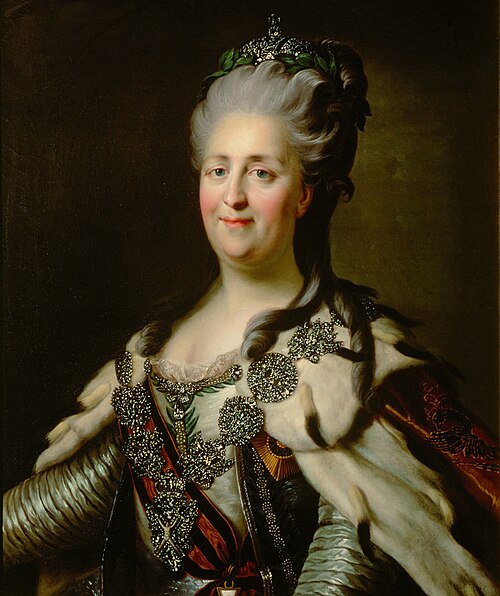
Catherine the Great
Emperor · Modern
73.1Total
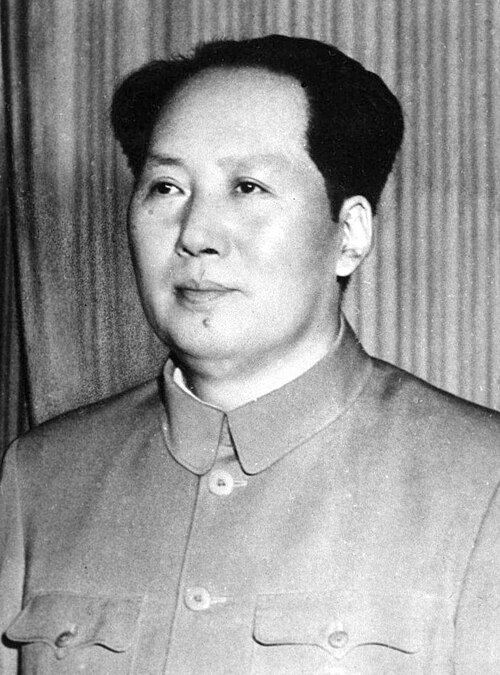
Mao Zedong
Politician · Modern
76.4Total
Basic Information
Born
1729
1893
Died
1796
1976
Era
Modern
Modern
Nationality
Russia
China
Occupation
Emperor
Politician
Civilization
Western
Eastern
Score Comparison
Military (10%)
65.0
65.0
Political (20%)
82.0
82.0
Influence (20%)
70.0
79.7
Legacy (20%)
72.0
69.9
Leadership (15%)
80.0
80.6
Strategy (15%)
65.0
76.5
TOTAL
73.1
76.4
Rankings
🥇
Mao ZedongLeader
Mil: 65.0Pol: 82.0Inf: 79.7
76.4
🥈
Catherine the Great
Mil: 65.0Pol: 82.0Inf: 70.0
73.1
+3.3 behind
How This Comparison Works
Algorithm
Each figure is scored on 6 dimensions (0—100 scale) based on structured historical data: Military (10%), Political (20%), Influence (20%), Legacy (20%), Leadership (15%), Strategy (15%). The weighted total produces the final ranking.
Data Sources
Scores are computed from structured sub-indicators in the database. Scale factors adjust for era (Ancient ×0.85, Modern ×1.0) and civilization size (Eastern ×1.05, Other ×0.80) to account for differences in population and military scale.
Maximum 3 Figures
Comparisons are limited to 2—3 figures to ensure readability and statistical meaningfulness.
Error Margins
±5 points per dimension — Sub-scores are derived from historical records with inherent uncertainty. Two figures within 5 points on a dimension should be considered roughly equivalent in that area.
Total Score Accuracy
±3 points overall — The weighted combination of 6 dimensions produces a total score with approximately ±3 points of uncertainty. Differences of less than 3 points are not statistically significant— the figures are effectively tied.
Known Limitations
- Historical records are incomplete and uneven across civilizations
- Figures from oral-tradition societies may be underrepresented
- Occupation labels can misclassify multi-role figures
- Scores measure capability and impact, not moral character
- Quantitative scoring is a comparison tool, not absolute truth
Capability Radar
Military (10%) — Battles & Warfare
Battles
85
85
Win Rate
80
80
Expansion
90
85
Political (20%) — Governance & Reform
Reform
90
95
Diplomacy
85
80
Economy
85
70
Influence (20%) — Cultural & Global Reach
Cultural
85
90
Global
80
90
Legacy (20%) — Historical Impact
Historical
85
95
Longevity
80
85
Leadership (15%) — Power & Stability
Tenure
95
95
Stability
80
60
Strategy (15%) — Tactics & Innovation
Strategy
85
85
Tactics
75
75
Reform
90
90
Expert Analysis
# The Empress and the Chairman: Two Titans Who Reshaped Their Worlds
In the winter of 1796, as Catherine the Great lay dying in her gilded bedchamber at the Winter Palace, she could look back on a reign that had transformed Russia from a peripheral power into a European colossus. One hundred and eighty years later, in September 1976, as Mao Zedong’s embalmed body lay in state at the Great Hall of the People, China was emerging from a decade of chaos, its ancient civilization reborn as a nuclear-armed communist state. These two figures—a German princess who became Russia’s longest-ruling female monarch, and a peasant’s son who became the founding father of modern China—never met, never corresponded, and inhabited worlds that seemed galaxies apart. Yet their lives trace a strange parallel: both seized power in moments of crisis, both wielded ideology as a weapon, and both left legacies so vast and contradictory that historians still argue over their meaning.
The Unlikely Inheritors
Catherine was born Sophia Augusta Frederica, a minor German princess from the impoverished House of Anhalt-Zerbst. Her childhood was provincial and dull—she later recalled it as "neither beautiful nor ugly, neither clever nor stupid." But she was hungry. At fifteen, she was summoned to Russia to marry the Grand Duke Peter, the nephew of Empress Elizabeth. She arrived in St. Petersburg knowing almost no Russian, and immediately set to work: she studied the language obsessively, converted to Orthodoxy, and learned to charm the court. When her husband became Tsar Peter III in 1762, he was already despised—erratic, pro-Prussian, and openly contemptuous of Russian traditions. Within six months, Catherine led a coup with the help of the Imperial Guard. Peter was arrested and, days later, murdered. Catherine wept publicly, then began her reign.
Mao Zedong was born in 1893 in Shaoshan, a village in Hunan province, to a wealthy peasant father who beat him and a devout Buddhist mother who taught him compassion. He grew up reading Chinese classics and, later, revolutionary pamphlets. He watched as China was carved up by foreign powers, its emperor deposed, its people humiliated. By his twenties, he was a librarian at Peking University, devouring Marxist theory, organizing strikes, and learning the brutal realities of guerrilla warfare. Unlike Catherine, Mao did not inherit a throne—he destroyed one. The Qing dynasty fell in 1912, and for decades, China was torn apart by warlords, Japanese invasion, and civil war. Mao’s rise was not a palace coup but a long march—literally. In 1934–35, he led the Communists on a 6,000-mile retreat through some of the most unforgiving terrain on earth. Only about 8,000 of the original 100,000 survived. But Mao emerged as the undisputed leader of the Chinese Communist Party.
The Art of Rule
Catherine ruled Russia for 34 years. She called herself an "enlightened despot," and she meant it. She corresponded with Voltaire and Diderot, bought their libraries, and invited them to St. Petersburg. She founded the Hermitage Museum, which began as her private art collection and today houses one of the world’s greatest treasures. She reformed education, established the first state-funded school system for girls, and tried—though largely failed—to codify Russian law along Enlightenment principles. She expanded Russia’s borders dramatically, annexing Crimea, partitioning Poland, and pushing into the Caucasus. Under her, Russia became a great power.
But Catherine’s enlightenment had sharp limits. She never abolished serfdom—in fact, she extended it, giving nobles even more power over their peasants. When the Pugachev Rebellion (1773–75) threatened her rule, she crushed it with savage brutality. She believed in reason and progress—but only so long as they did not threaten her throne. She was, above all, a pragmatist.
Mao ruled China for 27 years after the founding of the People’s Republic in 1949. His vision was far more radical. Where Catherine sought to modernize within the existing social order, Mao sought to smash it entirely. He launched the Great Leap Forward (1958–1962), a crash industrialization program that led to the deadliest famine in human history—estimates range from 15 to 45 million deaths. Then came the Cultural Revolution (1966–1976), a decade-long purge of intellectuals, bureaucrats, and anyone suspected of "bourgeois tendencies." Mao mobilized millions of young Red Guards to destroy the "Four Olds"—old customs, old culture, old habits, old ideas. Temples were ransacked, books burned, teachers beaten. Mao believed that revolution must be permanent, that only constant struggle could prevent the return of class oppression.
The Price of Power
Both leaders understood that power required ruthlessness. Catherine’s husband died under suspicious circumstances; her son Paul lived in fear of her for decades. Mao purged his rivals—Liu Shaoqi, Lin Biao, Deng Xiaoping—with cold efficiency. But their personalities were profoundly different. Catherine was a voracious reader, a lover of opera and theater, and a woman who enjoyed the company of brilliant men—she had a series of famous lovers, including Grigory Potemkin, who became her co-ruler in all but name. She wrote memoirs, plays, and letters by the thousands. She was, by all accounts, charming, witty, and emotionally intelligent.
Mao was more solitary, more mystical. He wrote poetry—some of it beautiful—but his personal life was marked by tragedy: three of his ten children died young, and his wives suffered greatly. He was suspicious, mercurial, and increasingly isolated in his later years. He once said, "Political power grows out of the barrel of a gun." Catherine never said anything like that—but she knew it to be true.
Echoes in History
Today, Catherine’s Russia is remembered with ambivalence. She is celebrated as a patron of the arts and a modernizer, but also criticized for expanding serfdom and autocracy. Her name adorns streets, palaces, and even a brand of vodka. In China, Mao’s legacy is officially revered—his portrait still hangs in Tiananmen Square—but privately debated. The economic reforms that lifted hundreds of millions out of poverty after his death were a direct repudiation of his policies. Yet his role as the unifier of modern China is undisputed.
What unites them is this: both were outsiders who remade their nations in their own image. Catherine, the German princess who became more Russian than the Russians. Mao, the peasant’s son who became the father of a new China. They wielded power with absolute authority, for better and for worse. And they remind us that history is not made by systems or classes or economic forces alone—it is made by individuals, flawed and brilliant, who seize the moment and bend the world to their will.
Frequently Asked Questions
Who ranks highest among Catherine the Great, Mao Zedong?
Based on our six-dimension data-driven analysis, the ranking is determined by comparing Military, Political, Influence, Legacy, Leadership, and Strategy scores derived from quantifiable historical metrics. See the full analysis for the detailed comparison.
How accurate is this comparison?
The scoring system has a ±3 point error margin per dimension and ±3 points overall. Figures within 3 points are considered statistically tied. The analysis uses structured historical data but cannot capture every nuance of historical context.
Similar Comparisons
Comments & Discussion
SteppeFire6/15/2026
我质疑评分的公正性。毛领导的中国从农业国迈向工业国,牺牲了一代人,叶卡捷琳娜扩张领土却维持农奴制,她的“开明”不过是镀金马车,底层痛苦被粉饰。
OceanPetal6/15/2026
两人都重塑了国家边界,但一个视角被忽略:叶卡捷琳娜通过与欧洲文化联姻来巩固合法性,毛则用“自力更生”切断外援依赖,这种文化战略的对比才是关键。