Loading...
Chadli Bendjedid vs Levy Mwanawasa
Levy Mwanawasa leads by 2.9 pts · 2 figures compared
…
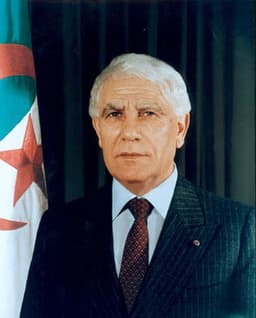
Chadli Bendjedid
Politician · Modern
50.3Total
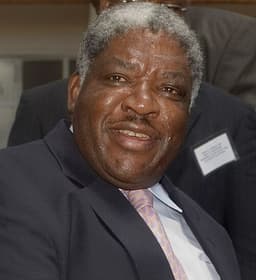
Levy Mwanawasa
Politician · Modern
53.2Total
Basic Information
Born
1929
1948
Died
—
—
Era
Modern
Modern
Nationality
Algeria
Zambia
Occupation
Politician
Politician
Civilization
Middle Eastern
Other
Score Comparison
Military (10%)
41.3
28.8
Political (20%)
68.0
72.0
Influence (20%)
52.5
55.7
Legacy (20%)
41.7
45.0
Leadership (15%)
53.2
66.0
Strategy (15%)
44.3
44.7
TOTAL
50.3
53.2
Chadli Bendjedid — Complete Timeline
1979 AD
Elected President of AlgeriaPolitical Action◆ Major
Bendjedid was elected president after the death of Houari Boumediene. His election marked a shift from the revolutionary era to a period of political and economic liberalization in Algeria.
Algerian PoliticsSuccessionLiberalization
Impact: national
1988 AD
Introduced Political and Economic ReformsReform◆ Major
After the October 1988 riots, Bendjedid introduced a new constitution that ended the one-party system and allowed for multiparty elections. He also implemented economic liberalization measures, moving away from state socialism.
Constitutional ReformMultiparty SystemEconomic Liberalization
Impact: nationalprogressive
1992 AD
Resigned Under Military Pressure Amid Civil WarPolitical Action
Facing a likely victory by the Islamic Salvation Front (FIS) in the second round of parliamentary elections, Bendjedid resigned under pressure from the military. His resignation triggered the Algerian Civil War, a decade-long conflict between the government and Islamist insurgents.
Algerian Civil WarMilitary InterventionIslamist Conflict
Impact: nationaltragic
Levy Mwanawasa — Complete Timeline
2002 AD
Elected President of ZambiaPolitical Action◆ Major
Mwanawasa won the presidential election as the candidate of the Movement for Multiparty Democracy, succeeding Frederick Chiluba. His victory was initially disputed but later confirmed by the Supreme Court.
ElectionZambiaMMD
Impact: national
Launched Anti-Corruption CampaignPolitical Action◆ Major
Mwanawasa initiated a high-profile anti-corruption drive, including the prosecution of former president Frederick Chiluba for corruption. This marked a significant break from his predecessor and earned him international praise.
Anti-CorruptionChilubaZambia
Impact: nationalconstructive
2006 AD
Re-elected President of ZambiaPolitical Action◆ Major
Mwanawasa won a second term with 43% of the vote in a multi-candidate election. The election was deemed largely free and fair by observers, though opposition parties alleged irregularities.
ElectionZambiaRe-election
Impact: national
2008 AD
Suffered Stroke and Died in OfficeOther◆ Major
Mwanawasa suffered a stroke at the African Union summit in Egypt. He was flown to France for treatment but died in Paris on August 19, 2008. His death triggered a presidential by-election.
DeathStrokeZambia
Impact: nationaltragic
Expert Analysis
Origins
Chadli Bendjedid was born on April 14, 1929, in Bouteldja, Algeria, into a peasant family. He joined the French army in the 1950s but later defected to the National Liberation Front (FLN) during the Algerian War of Independence. Bendjedid rose through the military ranks, becoming a colonel by 1964. His early career was shaped by loyalty to the FLN and President Houari Boumediene, under whom he served as a military commander.
Levy Mwanawasa was born on September 3, 1948, in Mufulira, Northern Rhodesia (now Zambia). He studied law at the University of Zambia and later practiced as a lawyer, specializing in civil rights. Mwanawasa gained prominence as a defense lawyer for former president Kenneth Kaunda during a treason trial in the 1990s. His legal background and commitment to justice defined his early career.
Rise to Power
Bendjedid was elected president of Algeria on February 7, 1979, after Boumediene's death. He was the compromise candidate of the FLN and military establishment. His rise was marked by a shift from Boumediene's socialist policies to gradual economic liberalization. Bendjedid's political score of 68.0 reflects his ability to navigate factional politics, but his military score of 41.3 indicates limited military control.
Mwanawasa won the Zambian presidency on December 27, 2001, as the candidate of the Movement for Multiparty Democracy (MMD), succeeding Frederick Chiluba. His victory was initially disputed due to irregularities, but he took office on January 2, 2002. Mwanawasa's political score of 72.0 underscores his skill in coalition-building, while his military score of 28.8 is low due to Zambia's civilian-led government.
Leadership & Governance
Bendjedid's governance was characterized by reform and crisis. After the October 1988 riots, he introduced a new constitution in 1989 that ended the one-party system and allowed multiparty elections. However, his economic reforms were slow, and he struggled to control the military. In 1991, the Islamic Salvation Front (FIS) won the first round of parliamentary elections, leading to a military coup in January 1992. Bendjedid resigned under pressure, scoring 53.2 in leadership.
Mwanawasa's leadership focused on anti-corruption and economic recovery. He launched a high-profile anti-corruption campaign in 2002, prosecuting former president Chiluba and recovering millions of dollars. His economic policies stabilized Zambia's economy, achieving debt relief under the HIPC initiative. Mwanawasa's leadership score of 66.0 reflects his decisive actions, but his strategy score of 44.7 indicates challenges in implementing structural reforms.
Triumph & Tragedy
Bendjedid's greatest success was introducing political reforms that ended the one-party state, a significant step for Algeria. His tragedy was the descent into civil war after his resignation. The military's cancellation of the 1992 elections led to a decade-long conflict with Islamist insurgents, resulting in over 100,000 deaths. Bendjedid's legacy score of 41.7 is marred by this catastrophe.
Mwanawasa's triumph was his anti-corruption drive, which reduced graft and improved Zambia's international standing. He also oversaw economic growth averaging 5% annually. His tragedy was his sudden death from a stroke on August 19, 2008, while in office. His legacy score of 45.0 reflects the unfinished nature of his reforms.
Character & Destiny
Bendjedid was cautious and consensus-seeking, but his indecisiveness during the 1991 crisis proved fatal. He underestimated the military's opposition to Islamist electoral victory. His character score aligns with his leadership score of 53.2, indicating a moderate but ultimately overwhelmed leader.
Mwanawasa was principled and determined, known as the 'Teflon Man' for his integrity. His anti-corruption stance created enemies within his own party. His death in office cut short his agenda, but his character contributed to Zambia's democratic consolidation.
Legacy
Bendjedid is remembered as the president who tried to reform Algeria but unleashed chaos. His constitution of 1989 remains the basis of Algeria's political system, but the civil war overshadows his tenure. His influence score of 52.5 reflects mixed perceptions.
Mwanawasa's legacy is more positive: he is credited with restoring economic discipline and fighting corruption. His anti-corruption campaign set a precedent in Africa. His influence score of 55.7 is slightly higher, and his total score of 53.2 exceeds Bendjedid's 50.3.
Conclusion
Levy Mwanawasa had a greater impact than Chadli Bendjedid. Despite a narrow score gap of 2.9 points, Mwanawasa's focused anti-corruption drive and economic stabilization produced tangible results without triggering conflict. Bendjedid's reforms, while bold, led to a devastating civil war that undermined his achievements. Mwanawasa's leadership score of 66.0 against Bendjedid's 53.2 demonstrates superior governance, and his legacy score of 45.0 vs 41.7 confirms a more enduring positive impact. In the contest of reform versus stability, Mwanawasa's principled approach proved more effective.
Rankings
🥇
Levy MwanawasaLeader
Mil: 28.8Pol: 72.0Inf: 55.7
53.2
🥈
Chadli Bendjedid
Mil: 41.3Pol: 68.0Inf: 52.5
50.3
+2.9 behind
How This Comparison Works
Algorithm
Each figure is scored on 6 dimensions (0—100 scale) based on structured historical data: Military (10%), Political (20%), Influence (20%), Legacy (20%), Leadership (15%), Strategy (15%). The weighted total produces the final ranking.
Data Sources
Scores are computed from structured sub-indicators in the database. Scale factors adjust for era (Ancient ×0.85, Modern ×1.0) and civilization size (Eastern ×1.05, Other ×0.80) to account for differences in population and military scale.
Maximum 3 Figures
Comparisons are limited to 2—3 figures to ensure readability and statistical meaningfulness.
Error Margins
±5 points per dimension — Sub-scores are derived from historical records with inherent uncertainty. Two figures within 5 points on a dimension should be considered roughly equivalent in that area.
Total Score Accuracy
±3 points overall — The weighted combination of 6 dimensions produces a total score with approximately ±3 points of uncertainty. Differences of less than 3 points are not statistically significant— the figures are effectively tied.
Known Limitations
- Historical records are incomplete and uneven across civilizations
- Figures from oral-tradition societies may be underrepresented
- Occupation labels can misclassify multi-role figures
- Scores measure capability and impact, not moral character
- Quantitative scoring is a comparison tool, not absolute truth
Capability Radar
Military (10%) — Battles & Warfare
Battles
20
19
Win Rate
24
25
Expansion
29
26
Political (20%) — Governance & Reform
Reform
55
70
Diplomacy
50
60
Economy
40
55
Influence (20%) — Cultural & Global Reach
Cultural
30
30
Global
25
35
Legacy (20%) — Historical Impact
Historical
30
40
Longevity
20
30
Leadership (15%) — Power & Stability
Tenure
65
65
Stability
35
50
Strategy (15%) — Tactics & Innovation
Strategy
30
30
Tactics
31
35
Reform
37
35
Similar Comparisons
Comments & Discussion
No comments yet. Be the first to share your thoughts!