Loading...
Chandragupta Maurya vs Julian the Apostate
Chandragupta Maurya leads by 12.1 pts · 2 figures compared
…
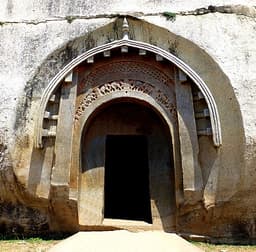
Chandragupta Maurya
Emperor · Ancient
71.0Total

Julian the Apostate
Emperor · Ancient
58.9Total
Basic Information
Born
-340
331
Died
-297
363
Era
Ancient
Ancient
Nationality
India
Roman Empire
Occupation
Emperor
Emperor
Civilization
Indian
Western
Score Comparison
Military (10%)
76.0
70.0
Political (20%)
74.9
68.0
Influence (20%)
68.0
62.0
Legacy (20%)
65.0
58.0
Leadership (15%)
78.0
41.5
Strategy (15%)
72.0
55.0
TOTAL
71.0
58.9
Chandragupta Maurya — Complete Timeline
321 BC
Overthrow of the Nanda DynastyPolitical Action
Chandragupta Maurya, with guidance from Chanakya, led a rebellion against the Nanda Empire in Magadha. He defeated the Nanda forces and established the Maurya Empire, marking the beginning of a unified Indian state.
Maurya EmpireNandaChanakya
Impact: regional
320 BC
Unification of Northern IndiaWar◆ Major
Chandragupta Maurya conquered the kingdoms of northern India, including the Punjab and the Gangetic plain. He consolidated these territories into a centralized empire with its capital at Pataliputra, controlling most of the Indian subcontinent.
UnificationNorthern IndiaMaurya Empire
Impact: regional
Establishment of the Mauryan AdministrationReform◆ Major
Chandragupta Maurya implemented a centralized administrative system based on the Arthashastra, with a bureaucracy, taxation, and a standing army. This system enabled effective governance of the vast empire and influenced later Indian states.
AdministrationArthashastraCentralization
Impact: regionalconstructive
305 BC
Conquest of the Indus ValleyWar◆ Major
Chandragupta Maurya fought against Seleucus I Nicator, a successor of Alexander the Great, in the Indus Valley. The war ended with a treaty in which Seleucus ceded territories including Arachosia and Gedrosia, and gave his daughter in marriage.
Seleucid EmpireIndus ValleyTreaty
Impact: regional
298 BC
Conversion to JainismCultural
Chandragupta Maurya converted to Jainism and abdicated his throne. He spent his final years as an ascetic at Shravana Belgola, following Jain practices of fasting and meditation until his death.
JainismAsceticismAbdication
Impact: regional
Julian the Apostate — Complete Timeline
360 AD
Proclamation as AugustusPolitical Action◆ Major
While campaigning in Gaul, Julian was proclaimed Augustus by his troops in Paris, rejecting the authority of Emperor Constantius II. This act led to a civil war, but Constantius's death in 361 allowed Julian to become sole emperor without battle.
Civil WarProclamationConstantius II
Impact: national
362 AD
Edict of Religious TolerationPolitical Action◆ Major
Julian issued an edict granting freedom of worship to all religions, effectively ending the official persecution of pagans and allowing the restoration of pagan temples. He also recalled Christian bishops exiled by Constantius, aiming to weaken Christianity through internal division.
Religious PolicyPagan RestorationToleration
Impact: global
363 AD
Battle of SamarraWar
Julian led a massive invasion of the Sassanid Persian Empire but was mortally wounded during a skirmish near Samarra. His death ended the campaign and led to a humiliating peace treaty with the Persians, ceding territory and marking the failure of his military ambitions.
Roman-Persian WarsDeath in BattleCampaign Failure
Impact: regionaltragic
Attempt to Rebuild the Temple in JerusalemPolitical Action
Julian ordered the rebuilding of the Jewish Temple in Jerusalem, reversing the earlier Roman ban. The project was abandoned after a series of earthquakes and fires, which Christian sources attributed to divine intervention. This event highlighted Julian's anti-Christian agenda.
Jewish TempleReligious PolicyPaganism
Impact: regional
Expert Analysis
Origins
Chandragupta Maurya was born around 340 BCE, likely in the Magadha region of eastern India. His early life is shrouded in obscurity; some accounts suggest he was of humble origin, possibly from a Kshatriya clan. He was exiled from Magadha and met the Brahmin philosopher Chanakya (also known as Kautilya) in Taxila. Chanakya recognized his potential and became his mentor, guiding him in statecraft and military strategy. Chandragupta's formative years were shaped by the conquests of Alexander the Great in the Indus Valley (327–325 BCE), which created political fragmentation that he would later exploit.
Julian was born in 331 CE in Constantinople, into the Constantinian dynasty. His father was Julius Constantius, a half-brother of Constantine the Great. Julian's early life was marked by trauma: in 337 CE, after Constantine's death, his father and most of his family were murdered in a purge to secure the succession of Constantine's sons. Julian and his half-brother Gallus were spared but kept under close watch. He received a Christian education but was secretly drawn to Neoplatonism and traditional Roman religion. His studies in Athens and Asia Minor deepened his philosophical and religious interests.
Rise to Power
Chandragupta's rise began with his alliance with Chanakya, who helped him raise an army and challenge the Nanda Empire. Around 322 BCE, Chandragupta overthrew the Nanda king Dhana Nanda, capturing Pataliputra. This victory, achieved through a combination of military force and political maneuvering, established the Maurya Empire. Chandragupta then turned west: in 305 BCE, he confronted Seleucus I Nicator, a successor of Alexander, who controlled the Indus Valley. The war ended with a treaty in 303 BCE, where Seleucus ceded territories (including Arachosia, Gedrosia, and Paropamisadae) and gave his daughter in marriage in exchange for 500 war elephants. This treaty secured Chandragupta's western borders and brought him prestige.
Julian's path to power was more complex. He was appointed Caesar (junior emperor) in 355 CE by his cousin Constantius II and sent to Gaul to defend the frontier. Julian proved an able commander, defeating Germanic tribes at the Battle of Strasbourg in 357 CE. His popularity with the troops grew, and in 360 CE, when Constantius ordered him to send legions to the east, the soldiers proclaimed Julian Augustus in Paris. Julian accepted, leading to a civil war. Constantius died in 361 CE before a final confrontation, leaving Julian as sole emperor.
Leadership & Governance
Chandragupta, guided by Chanakya's Arthashastra, established a highly centralized and bureaucratic administration. The empire was divided into provinces, each governed by a prince or appointed official. A sophisticated tax system, a standing army, and a network of spies ensured control. Chandragupta's governance was pragmatic: he promoted trade, built roads, and standardized weights and measures. His conversion to Jainism later in life reflected a shift toward non-violence, but his rule remained authoritarian.
Julian, as emperor, sought to reverse the Christianization of the Roman Empire. He issued an Edict of Toleration in 362 CE, ending persecution of pagans and allowing the restoration of temples. He also attempted to reform the pagan priesthood, modeling it on Christian charity. However, his religious policies were divisive and alienated Christians. Julian's administration was marked by a return to classical ideals, but his short reign (361–363 CE) limited his impact. He scored 68.0 in political skill, but his leadership score of 41.5 reflects his inability to unite the empire.
Triumph & Tragedy
Chandragupta's greatest triumph was the unification of most of the Indian subcontinent under one rule, creating an empire that stretched from the Bay of Bengal to the Hindu Kush. His defeat of Seleucus and the subsequent treaty was a diplomatic victory that secured India's northwestern frontier for decades. His tragedy came later: he abdicated his throne to become a Jain ascetic, reportedly fasting to death at Shravana Belgola. This act, while spiritually significant, left his empire to his son Bindusara, who maintained it.
Julian's triumph was his successful campaign in Gaul, where he stabilized the Rhine frontier. His military score of 70.0 reflects his competence. However, his invasion of the Sassanid Persian Empire in 363 CE ended in disaster. He advanced to Ctesiphon but was forced to retreat. At the Battle of Samarra, Julian was mortally wounded by a javelin. His death, at age 31, ended his pagan revival and led to a Christian succession. The failure of his religious reforms and the abandonment of the Jewish Temple rebuilding project after earthquakes were further tragedies.
Character & Destiny
Chandragupta was ambitious and pragmatic, guided by Chanakya's realpolitik. He was capable of ruthless conquest but also of spiritual transformation. His decision to abdicate suggests a complex character who sought meaning beyond power. Historical assessments, such as those in the Mudrarakshasa, portray him as a decisive leader.
Julian was an intellectual and idealist, deeply influenced by Neoplatonic philosophy. He wrote prolifically, defending paganism and criticizing Christianity. His character was marked by a sense of mission, but his stubbornness and lack of political flexibility contributed to his downfall. The historian Ammianus Marcellinus, a contemporary, described him as a capable ruler but overly fond of religious controversy.
Legacy
Chandragupta's legacy is immense: he founded the Maurya Empire, which under his grandson Ashoka became the largest in Indian history. His administrative system influenced subsequent Indian empires. The Arthashastra, attributed to Chanakya, remains a classic work on statecraft. Chandragupta's total score of 71.0 reflects his enduring impact.
Julian's legacy is mixed. He is remembered as the last pagan emperor, and his writings provide insight into fourth-century paganism. However, his reign was brief and his reforms reversed. His legacy score of 58.0 is the lowest among his metrics. He is often called "the Apostate" by Christian historians, while some modern scholars view him as a tragic figure.
Conclusion
Chandragupta Maurya had a significantly greater impact than Julian the Apostate. With a total score of 71.0 compared to Julian's 58.9, the 12.1-point gap reflects Chandragupta's lasting contributions to Indian unity and governance. Julian's efforts to revive paganism failed, and his military campaign ended in death. While Julian was a capable commander, his leadership score of 41.5 indicates his inability to sustain his vision. Chandragupta's empire endured for over a century and set the stage for Ashoka's golden age. Thus, Chandragupta stands as the more influential figure in world history.
Rankings
🥇
Chandragupta MauryaLeader
Mil: 76.0Pol: 74.9Inf: 68.0
71.0
🥈
Julian the Apostate
Mil: 70.0Pol: 68.0Inf: 62.0
58.9
+12.1 behind
How This Comparison Works
Algorithm
Each figure is scored on 6 dimensions (0—100 scale) based on structured historical data: Military (10%), Political (20%), Influence (20%), Legacy (20%), Leadership (15%), Strategy (15%). The weighted total produces the final ranking.
Data Sources
Scores are computed from structured sub-indicators in the database. Scale factors adjust for era (Ancient ×0.85, Modern ×1.0) and civilization size (Eastern ×1.05, Other ×0.80) to account for differences in population and military scale.
Maximum 3 Figures
Comparisons are limited to 2—3 figures to ensure readability and statistical meaningfulness.
Error Margins
±5 points per dimension — Sub-scores are derived from historical records with inherent uncertainty. Two figures within 5 points on a dimension should be considered roughly equivalent in that area.
Total Score Accuracy
±3 points overall — The weighted combination of 6 dimensions produces a total score with approximately ±3 points of uncertainty. Differences of less than 3 points are not statistically significant— the figures are effectively tied.
Known Limitations
- Historical records are incomplete and uneven across civilizations
- Figures from oral-tradition societies may be underrepresented
- Occupation labels can misclassify multi-role figures
- Scores measure capability and impact, not moral character
- Quantitative scoring is a comparison tool, not absolute truth
Capability Radar
Military (10%) — Battles & Warfare
Battles
85
65
Win Rate
90
60
Expansion
92
40
Political (20%) — Governance & Reform
Reform
85
70
Diplomacy
80
45
Economy
78
40
Influence (20%) — Cultural & Global Reach
Cultural
75
60
Global
70
50
Legacy (20%) — Historical Impact
Historical
85
70
Longevity
80
55
Leadership (15%) — Power & Stability
Tenure
75
30
Stability
70
20
Strategy (15%) — Tactics & Innovation
Strategy
88
65
Tactics
80
70
Reform
82
55
Similar Comparisons
Comments & Discussion
No comments yet. Be the first to share your thoughts!