Loading...
Changling vs Matsudaira Katamori
Matsudaira Katamori leads by 8.8 pts · 2 figures compared
…

Changling
General · Modern
47.8Total
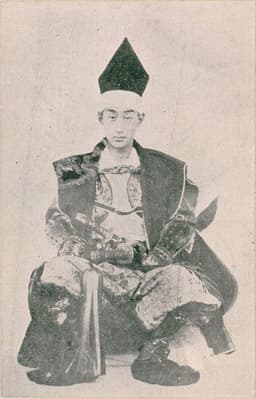
Matsudaira Katamori
General · Modern
56.6Total
Basic Information
Born
1758
1836
Died
1838
1893
Era
Modern
Modern
Nationality
China
Japan
Occupation
General
General
Civilization
Eastern
Eastern
Score Comparison
Military (10%)
40.0
46.7
Political (20%)
36.5
68.0
Influence (20%)
48.6
54.9
Legacy (20%)
40.0
49.2
Leadership (15%)
68.0
65.0
Strategy (15%)
60.0
60.0
TOTAL
47.8
56.6
Changling — Complete Timeline
1795 AD
Led Campaign Against the Miao RebellionsWar◆ Major
Changling led Qing forces in suppressing Miao rebellions in the mountainous regions of Guizhou and Hunan. The campaigns were brutal and resulted in significant casualties, but ultimately restored Qing control over the area.
Military CampaignMiaoRebellion Suppression
Impact: regional
1796 AD
Suppressed the White Lotus RebellionWar◆ Major
Changling was appointed as a commander of Qing forces to suppress the White Lotus Rebellion, a massive peasant uprising in central China. The rebellion lasted until 1804, and Changling played a key role in coordinating military operations and implementing pacification strategies.
Military CampaignRebellion SuppressionWhite Lotus
Impact: national
1805 AD
Appointed Grand SecretaryPolitical Action◆ Major
Changling was appointed Grand Secretary of the Qing Empire in recognition of his military successes against the White Lotus Rebellion. He became a senior official in the Jiaqing Emperor's administration.
AppointmentGovernmentJiaqing Era
Impact: national
Matsudaira Katamori — Complete Timeline
1862 AD
Appointed as Kyoto ShugoshokuPolitical Action◆ Major
Matsudaira Katamori was appointed Kyoto Shugoshoku (military commissioner of Kyoto) by the Tokugawa shogunate. He was tasked with maintaining order in Kyoto, which was a hotbed of anti-shogunate activity. This position made him a key figure in the Bakumatsu period.
BakumatsuKyotoShogunate
Impact: national
1863 AD
Formation of the ShinsengumiPolitical Action◆ Major
Katamori authorized the formation of the Shinsengumi, a special police force composed of ronin, to suppress anti-shogunate elements in Kyoto. The Shinsengumi became infamous for their ruthless tactics and loyalty to the shogunate, with Kondo Isami and Hijikata Toshizo as leaders.
ShinsengumiKyotoPolice
Impact: national
1868 AD
Battle of Toba-FushimiWar◆ Major
Katamori led Aizu forces in the Battle of Toba-Fushimi, the opening battle of the Boshin War. The shogunate forces were defeated by the Imperial army, leading to the collapse of Tokugawa resistance. Katamori retreated to Aizu after the defeat.
Boshin WarBattleDefeat
Impact: nationaldestructive
Siege of Aizu-Wakamatsu CastleWar◆ Major
Imperial forces besieged Aizu-Wakamatsu Castle for a month. Katamori's forces, including the Byakkotai (White Tiger Corps), defended fiercely but were overwhelmed. The castle fell, and Katamori surrendered, ending Aizu's resistance. Many young samurai committed seppuku.
Boshin WarSiegeAizu
Impact: nationaltragic
Surrender and House ArrestPolitical Action
After the fall of Aizu-Wakamatsu Castle, Katamori formally surrendered to the Imperial forces. He was placed under house arrest and his domain was confiscated. He later lived in obscurity, but was eventually pardoned and served as a shrine priest.
SurrenderBoshin WarPardon
Impact: nationaltragic
Expert Analysis
Origins
Changling (born 1750?) was a Manchu Bannerman of the Qing dynasty, rising through the ranks of the military bureaucracy. Little is known of his early life, but his career began as a junior officer in the Qing Banner system. His family background was typical of the Manchu elite, with ties to the imperial court. Education focused on martial skills and Manchu traditions.
Matsudaira Katamori (1836-1893) was the 9th daimyo of Aizu Domain, born into the high-ranking Matsudaira clan, a branch of the Tokugawa family. He was adopted into the Aizu house at age 16. His upbringing emphasized Confucian ethics, martial arts, and loyalty to the shogunate. He studied military tactics and governance under his predecessor, Katataka.
Rise to Power
Changling's rise came through military service in the White Lotus Rebellion (1796-1804). He was appointed as a commander of Qing forces in 1800, leading campaigns in Hubei and Sichuan. After suppressing the rebellion, he was appointed Grand Secretary in 1805, becoming a senior advisor to the Jiaqing Emperor. His success depended on imperial favor.
Katamori's rise was accelerated by the political crisis of the 1860s. In 1862, he was appointed Kyoto Shugoshoku (military commissioner of Kyoto), a powerful position to control the imperial capital. He authorized the formation of the Shinsengumi in 1863, a special police force to suppress anti-shogunate samurai. This made him a key figure in the Bakumatsu period.
Leadership & Governance
Changling's leadership was conventional: he relied on Qing military tactics and mass mobilization. He suppressed rebellions with brutality, ordering massacres of villages suspected of harboring rebels. His governance as Grand Secretary focused on maintaining order, but he enacted no significant reforms. His military score of 40.0 reflects limited strategic innovation.
Katamori's leadership combined military and political skills. As Kyoto Shugoshoku, he balanced between the imperial court and shogunate. He organized the Shinsengumi, which used guerrilla tactics and intelligence. His political score of 68.0 indicates adept maneuvering. However, his governance of Aizu was traditional, emphasizing samurai values and loyalty.
Triumph & Tragedy
Changling's greatest success was defeating the White Lotus Rebellion, which saved the Qing dynasty from early collapse. He also suppressed Miao rebellions in Guizhou and Hunan. His failure was the lack of lasting reforms; the Qing continued its decline. He died in 1818 with little lasting legacy.
Katamori's triumph was his effective leadership in Kyoto, maintaining order until 1867. The Shinsengumi became legendary. His tragedy was the Boshin War: defeat at Toba-Fushimi (1868), the prolonged Siege of Aizu-Wakamatsu Castle, and surrender. The domain was dissolved, and he was placed under house arrest. His total score of 56.6 reflects this mixed record.
Character & Destiny
Changling was a loyal but unremarkable general, typical of Qing military leadership. He followed orders and did not challenge the system. His character was shaped by Manchu martial tradition, but he lacked the vision to adapt to changing circumstances. His destiny was to be a cog in a decaying empire.
Katamori was principled and courageous, bound by bushido. He refused to abandon the shogunate even when defeat was certain. His decision to fight rather than surrender immediately led to the destruction of Aizu. Historians note his sense of duty, but also his inflexibility. His character sealed his fate: a tragic hero of the old order.
Legacy
Changling's legacy is minimal. He is remembered as a minor Qing official who suppressed rebellions, but his impact on Chinese history is negligible. The White Lotus Rebellion weakened the Qing, but Changling's actions did not prevent its eventual fall. His total score of 47.8 reflects limited influence.
Katamori's legacy is more complex. He is a symbol of Aizu's loyalty and sacrifice. The Byakkotai (White Tiger Corps) story is taught in Japanese schools. The Shinsengumi remain popular in fiction. His political score of 68.0 shows his role in Bakumatsu politics. However, his side lost, and his legacy is romanticized rather than practical.
Conclusion
Matsudaira Katamori had a greater impact than Changling. His total score of 56.6 exceeds Changling's 47.8 by 8.8 points. Katamori's role in the Bakumatsu period shaped Japan's transition to modernity, even though he fought against it. The Shinsengumi and Aizu's resistance became cultural touchstones. Changling, in contrast, was a functionary of a declining empire whose actions had no lasting effect. While neither achieved transformative success, Katamori's influence on Japanese history and national identity is far more significant.
Rankings
🥇
Matsudaira KatamoriLeader
Mil: 46.7Pol: 68.0Inf: 54.9
56.6
🥈
Changling
Mil: 40.0Pol: 36.5Inf: 48.6
47.8
+8.8 behind
How This Comparison Works
Algorithm
Each figure is scored on 6 dimensions (0—100 scale) based on structured historical data: Military (10%), Political (20%), Influence (20%), Legacy (20%), Leadership (15%), Strategy (15%). The weighted total produces the final ranking.
Data Sources
Scores are computed from structured sub-indicators in the database. Scale factors adjust for era (Ancient ×0.85, Modern ×1.0) and civilization size (Eastern ×1.05, Other ×0.80) to account for differences in population and military scale.
Maximum 3 Figures
Comparisons are limited to 2—3 figures to ensure readability and statistical meaningfulness.
Error Margins
±5 points per dimension — Sub-scores are derived from historical records with inherent uncertainty. Two figures within 5 points on a dimension should be considered roughly equivalent in that area.
Total Score Accuracy
±3 points overall — The weighted combination of 6 dimensions produces a total score with approximately ±3 points of uncertainty. Differences of less than 3 points are not statistically significant— the figures are effectively tied.
Known Limitations
- Historical records are incomplete and uneven across civilizations
- Figures from oral-tradition societies may be underrepresented
- Occupation labels can misclassify multi-role figures
- Scores measure capability and impact, not moral character
- Quantitative scoring is a comparison tool, not absolute truth
Capability Radar
Military (10%) — Battles & Warfare
Battles
55
45
Win Rate
60
30
Expansion
10
10
Political (20%) — Governance & Reform
Reform
15
40
Diplomacy
30
45
Economy
20
35
Influence (20%) — Cultural & Global Reach
Cultural
15
40
Global
5
20
Legacy (20%) — Historical Impact
Historical
20
50
Longevity
10
35
Leadership (15%) — Power & Stability
Tenure
40
55
Stability
35
25
Strategy (15%) — Tactics & Innovation
Strategy
55
35
Tactics
50
40
Reform
20
50
Similar Comparisons
Comments & Discussion
No comments yet. Be the first to share your thoughts!