Loading...
Charan Singh vs John McEwen
Charan Singh leads by 7.7 pts · 2 figures compared
…

Charan Singh
Politician · Modern
46.8Total
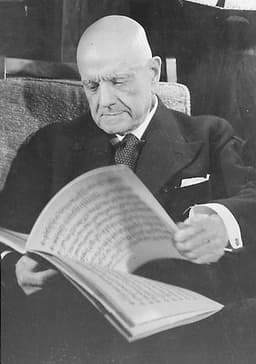
John McEwen
Politician · Modern
39.1Total
Basic Information
Born
1902
1900
Died
1987
1980
Era
Modern
Modern
Nationality
India
Australia
Occupation
Politician
Politician
Civilization
Indian
Western
Score Comparison
Military (10%)
37.0
49.0
Political (20%)
45.1
26.4
Influence (20%)
51.0
45.5
Legacy (20%)
43.3
35.8
Leadership (15%)
45.0
38.1
Strategy (15%)
60.0
42.0
TOTAL
46.8
39.1
Charan Singh — Complete Timeline
1967 AD
Championed Farmers' Rights as Chief Minister of Uttar PradeshReform◆ Major
As Chief Minister of Uttar Pradesh, Charan Singh implemented land reforms and debt relief measures for farmers. He introduced policies to reduce the power of landlords and improve the economic condition of small farmers.
Land ReformFarmers RightsUttar Pradesh
Impact: regionalconstructive
Formed the Bharatiya Kranti DalPolitical Action
Charan Singh founded the Bharatiya Kranti Dal, a political party focused on agrarian issues and farmers' interests. The party later merged into the Janata Party and influenced Indian agricultural policy.
Political PartyAgrarian MovementFarmers
Impact: nationalconstructive
1979 AD
Appointed Prime Minister of IndiaPolitical Action◆ Major
Charan Singh became the fifth Prime Minister of India, leading a short-lived coalition government with support from the Indian National Congress. His tenure lasted only 170 days, making it one of the shortest in Indian history.
Indian PoliticsCoalition GovernmentShort Tenure
Impact: national
1980 AD
Resigned as Prime MinisterPolitical Action◆ Major
Charan Singh resigned as Prime Minister after the Indian National Congress withdrew its support, leading to the collapse of his government. He remained as caretaker Prime Minister until fresh elections were held.
Indian PoliticsGovernment CollapseCaretaker
Impact: nationaldestructive
John McEwen — Complete Timeline
1949 AD
Appointed Minister for Trade and IndustryPolitical Action◆ Major
McEwen was appointed Minister for Trade and Industry in the Menzies government. He held this position for over two decades, shaping Australia's trade policies and protectionist economic strategies.
Trade PolicyEconomic Protectionism
Impact: nationalconstructive
1958 AD
Leader of the Country PartyPolitical Action◆ Major
McEwen became leader of the Country Party in 1958. He led the party for 13 years, maintaining its influence in coalition governments and advocating for rural and agricultural interests.
Party LeadershipRural Advocacy
Impact: national
1967 AD
Became Prime Minister of AustraliaPolitical Action◆ Major
McEwen became Prime Minister on 19 December 1967 after the disappearance of Harold Holt. He served as interim leader for 23 days until John Gorton was elected Liberal Party leader.
Prime MinisterInterim Government
Impact: national
Expert Analysis
Origins
**Charan Singh** was born on 23 December 1902 in Noorpur, Uttar Pradesh, India, into a middle-class peasant family. He earned degrees in science and law, practicing as a lawyer in Ghaziabad. His rural background deeply influenced his political focus on agrarian issues. He entered politics in the 1930s as a member of the Indian National Congress, but his commitment to farmers' rights often put him at odds with the party's urban-centric leadership.
**John McEwen** was born on 29 March 1900 in Chiltern, Victoria, Australia, into a farming family. He left school at 13 to work on the family farm, later becoming a farmer and grazier. His early life in rural Australia shaped his advocacy for agricultural interests. He entered politics in 1934 as a member of the Australian Country Party, representing the rural electorate of Indi.
Rise to Power
Charan Singh's rise was gradual and rooted in state politics. He served as a minister in Uttar Pradesh's government in the 1950s, focusing on land reforms. As Chief Minister of Uttar Pradesh from 1967 to 1968, he introduced the Zamindari Abolition Act and debt relief for farmers, earning him the title 'Champion of Farmers.' He broke from Congress in 1967 to form the Bharatiya Kranti Dal, a party dedicated to rural interests. His national breakthrough came in 1979 when he became Prime Minister of India, leading a coalition government with Congress support. However, his tenure lasted only 170 days from 28 July 1979 to 14 January 1980, as Congress withdrew support.
John McEwen's rise was through coalition politics. He was elected to the House of Representatives in 1934 and became Minister for the Interior in 1937. His key role was as Minister for Trade and Industry from 1949 to 1971, where he shaped Australia's trade policies, particularly in agriculture. He became leader of the Country Party in 1958, a position he held for 13 years. McEwen became Prime Minister on 19 December 1967 after Harold Holt's disappearance, serving for 23 days until John Gorton was elected. His brief premiership was largely caretaker.
Leadership & Governance
Charan Singh's leadership was defined by his single-minded focus on farmers. As Chief Minister, he implemented land ceilings and abolished intermediaries, but his policies faced implementation challenges. As Prime Minister, he attempted to address rural debt but was constrained by a weak coalition. His governance style was confrontational, often clashing with Congress and within his own coalition. He scored 45.0 in leadership, reflecting his inability to build lasting alliances.
John McEwen's governance was pragmatic and coalition-oriented. As Trade Minister, he protected Australian agriculture through tariffs and subsidies, notably the 'McEwen Doctrine' of supporting rural industries. As Prime Minister, his brief tenure saw no major initiatives. His leadership score of 38.1 reflects his limited executive role, but his influence in trade policy was significant, scoring 45.5 in influence.
Triumph & Tragedy
**Charan Singh's triumphs**: His land reforms in Uttar Pradesh reduced the power of absentee landlords and gave land to tenants. He successfully championed farmers' rights at the national level, influencing policies like loan waivers. His score of 60.0 in strategy shows his effective use of agrarian issues to build a political base.
**Charan Singh's tragedies**: His prime ministership was a failure, lasting only 170 days. He could not pass significant legislation due to political instability. His party never gained national traction, and his influence waned after 1980. His legacy score of 43.3 reflects this mixed record.
**John McEwen's triumphs**: He successfully protected Australian agriculture through trade policies, securing markets for wool, wheat, and dairy. He maintained the Country Party's influence in coalition governments for over a decade.
**John McEwen's tragedies**: His prime ministership was too brief to make an impact. He is often overshadowed by Menzies and Holt. His protectionist policies sometimes hindered economic efficiency. His political score of 26.4 is the lowest, indicating limited independent political power.
Character & Destiny
Charan Singh was stubborn and uncompromising, which helped him champion farmers but also isolated him politically. He was a principled ideologue, but his inability to form broad coalitions limited his national impact. His destiny was to be a regional hero rather than a national leader.
John McEwen was a skilled negotiator and strategist, adept at coalition politics. He prioritized stability and the interests of his party. His destiny was to be a key figure in Australia's post-war economic development, but not a transformative prime minister.
Legacy
Charan Singh's legacy is strongest in Indian agrarian politics. His ideas influenced later farmer movements and policies like the 2020 farm laws (though controversial). He remains a symbol for farmers' rights in India. His legacy score is 43.3.
John McEwen's legacy is in Australian trade policy. The 'McEwen Doctrine' shaped agricultural protectionism for decades. His role as interim PM is a footnote, but his trade policies had lasting economic effects. His legacy score is 35.8.
Conclusion
Charan Singh had a greater impact than John McEwen. Despite his failed prime ministership, his advocacy for farmers' rights left a lasting imprint on Indian politics and policy. His total score of 46.8 exceeds McEwen's 39.1 by 7.7 points. McEwen's influence was significant in trade but limited to a single sector and a brief premiership. Singh's political and strategy scores (45.1 and 60.0) contrast with McEwen's lower political score (26.4), highlighting Singh's more substantial long-term influence on his nation's development.
Rankings
🥇
Charan SinghLeader
Mil: 37.0Pol: 45.1Inf: 51.0
46.8
🥈
John McEwen
Mil: 49.0Pol: 26.4Inf: 45.5
39.1
+7.7 behind
How This Comparison Works
Algorithm
Each figure is scored on 6 dimensions (0—100 scale) based on structured historical data: Military (10%), Political (20%), Influence (20%), Legacy (20%), Leadership (15%), Strategy (15%). The weighted total produces the final ranking.
Data Sources
Scores are computed from structured sub-indicators in the database. Scale factors adjust for era (Ancient ×0.85, Modern ×1.0) and civilization size (Eastern ×1.05, Other ×0.80) to account for differences in population and military scale.
Maximum 3 Figures
Comparisons are limited to 2—3 figures to ensure readability and statistical meaningfulness.
Error Margins
±5 points per dimension — Sub-scores are derived from historical records with inherent uncertainty. Two figures within 5 points on a dimension should be considered roughly equivalent in that area.
Total Score Accuracy
±3 points overall — The weighted combination of 6 dimensions produces a total score with approximately ±3 points of uncertainty. Differences of less than 3 points are not statistically significant— the figures are effectively tied.
Known Limitations
- Historical records are incomplete and uneven across civilizations
- Figures from oral-tradition societies may be underrepresented
- Occupation labels can misclassify multi-role figures
- Scores measure capability and impact, not moral character
- Quantitative scoring is a comparison tool, not absolute truth
Capability Radar
Military (10%) — Battles & Warfare
Battles
45
30
Win Rate
49
33
Expansion
47
34
Political (20%) — Governance & Reform
Reform
40
10
Diplomacy
30
15
Economy
25
10
Influence (20%) — Cultural & Global Reach
Cultural
20
5
Global
15
5
Legacy (20%) — Historical Impact
Historical
30
10
Longevity
20
5
Leadership (15%) — Power & Stability
Tenure
15
10
Stability
20
15
Strategy (15%) — Tactics & Innovation
Strategy
53
37
Tactics
56
40
Reform
56
44
Similar Comparisons
Comments & Discussion
No comments yet. Be the first to share your thoughts!