Loading...
This comparison has not been analyzed yet.
One-time AI generation (~1 minute). Scores and timeline are already available below.
Charles George Gordon vs Hojo Ujimasa
Hojo Ujimasa leads by 1.6 pts · 2 figures compared
…

Charles George Gordon
General · Modern
54.0Total
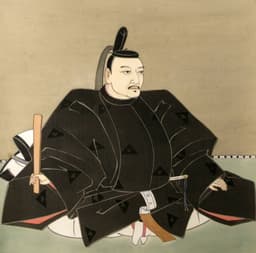
Hojo Ujimasa
General · Modern
55.6Total
Basic Information
Born
1833
1538
Died
1885
1590
Era
Modern
Modern
Nationality
Great Britain
Japan
Occupation
General
General
Civilization
Western
Eastern
Score Comparison
Military (10%)
45.0
70.0
Political (20%)
45.1
45.0
Influence (20%)
58.3
54.9
Legacy (20%)
56.0
47.5
Leadership (15%)
61.1
68.0
Strategy (15%)
50.0
60.7
TOTAL
54.0
55.6
Charles George Gordon — Complete Timeline
1863 AD
Led the Ever Victorious Army in ChinaWar◆ Major
Gordon commanded the 'Ever Victorious Army,' a Chinese imperial force, during the Taiping Rebellion. He led successful campaigns that helped suppress the rebellion, earning the nickname 'Chinese Gordon' and international fame.
Military CampaignTaiping RebellionChina
Impact: regional
1877 AD
Appointed Governor-General of SudanPolitical Action◆ Major
Gordon was appointed Governor-General of Sudan by the Khedive of Egypt. He worked to suppress the slave trade and improve administration, but his efforts were hampered by limited resources and local resistance.
Colonial AdministrationSudanAnti-Slavery
Impact: regionalconstructive
1885 AD
Killed at the Siege of KhartoumWar◆ Major
Gordon was killed when Mahdist forces stormed Khartoum after a 10-month siege. His death occurred two days before a British relief force arrived, becoming a symbol of imperial failure and prompting public outrage in Britain.
SiegeKhartoumMahdist War
Impact: globaltragic
Hojo Ujimasa — Complete Timeline
1590 AD
Resisted Toyotomi HideyoshiWar◆ Major
Ujimasa led the Hojo clan in resisting Toyotomi Hideyoshi's campaign to unify Japan. He fortified Odawara Castle and refused to submit, leading to a prolonged siege.
ResistanceHojoHideyoshi
Impact: national
Siege of Odawara CastleWar◆ Major
Ujimasa was besieged at Odawara Castle by Toyotomi Hideyoshi's massive army. After a three-month siege, he surrendered, ending the Hojo clan's independence.
SiegeSurrenderHojo
Impact: nationaldestructive
Death by seppukuOther◆ Major
After surrendering Odawara Castle, Ujimasa was forced to commit seppuku by Toyotomi Hideyoshi. His death marked the end of the Hojo clan's rule in the Kanto region.
SeppukuHojoHideyoshi
Impact: regionaltragic
This comparison has not been analyzed yet.
One-time AI generation (~1 minute). Scores and timeline are already available below.
Rankings
🥇
Hojo UjimasaLeader
Mil: 70.0Pol: 45.0Inf: 54.9
55.6
🥈
Charles George Gordon
Mil: 45.0Pol: 45.1Inf: 58.3
54.0
+1.6 behind
How This Comparison Works
Algorithm
Each figure is scored on 6 dimensions (0—100 scale) based on structured historical data: Military (10%), Political (20%), Influence (20%), Legacy (20%), Leadership (15%), Strategy (15%). The weighted total produces the final ranking.
Data Sources
Scores are computed from structured sub-indicators in the database. Scale factors adjust for era (Ancient ×0.85, Modern ×1.0) and civilization size (Eastern ×1.05, Other ×0.80) to account for differences in population and military scale.
Maximum 3 Figures
Comparisons are limited to 2—3 figures to ensure readability and statistical meaningfulness.
Error Margins
±5 points per dimension — Sub-scores are derived from historical records with inherent uncertainty. Two figures within 5 points on a dimension should be considered roughly equivalent in that area.
Total Score Accuracy
±3 points overall — The weighted combination of 6 dimensions produces a total score with approximately ±3 points of uncertainty. Differences of less than 3 points are not statistically significant— the figures are effectively tied.
Known Limitations
- Historical records are incomplete and uneven across civilizations
- Figures from oral-tradition societies may be underrepresented
- Occupation labels can misclassify multi-role figures
- Scores measure capability and impact, not moral character
- Quantitative scoring is a comparison tool, not absolute truth
Capability Radar
Military (10%) — Battles & Warfare
Battles
55
55
Win Rate
50
50
Expansion
35
60
Political (20%) — Governance & Reform
Reform
30
55
Diplomacy
40
50
Economy
25
60
Influence (20%) — Cultural & Global Reach
Cultural
55
40
Global
55
20
Legacy (20%) — Historical Impact
Historical
60
45
Longevity
50
30
Leadership (15%) — Power & Stability
Tenure
45
65
Stability
20
55
Strategy (15%) — Tactics & Innovation
Strategy
60
65
Tactics
65
60
Reform
40
55
Similar Comparisons
Comments & Discussion
No comments yet. Be the first to share your thoughts!