Loading...
Charles IV vs Tarmashirin
Charles IV leads by 11.3 pts · 2 figures compared
…

Charles IV
Emperor · Medieval
59.7Total
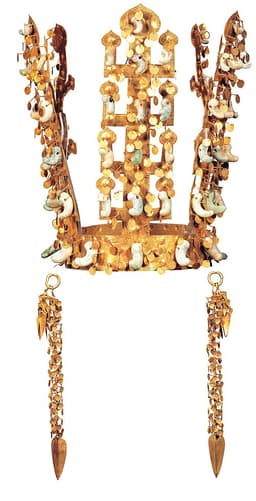
Tarmashirin
Emperor · Medieval
48.4Total
Basic Information
Born
1316
1280
Died
1378
1334
Era
Medieval
Medieval
Nationality
Holy Roman Empire
Chagatai Khanate
Occupation
Emperor
Emperor
Civilization
Western
Eastern
Score Comparison
Military (10%)
50.0
55.0
Political (20%)
78.0
40.8
Influence (20%)
55.0
54.9
Legacy (20%)
52.0
41.7
Leadership (15%)
78.0
55.3
Strategy (15%)
45.0
43.3
TOTAL
59.7
48.4
Charles IV — Complete Timeline
1344 AD
Made Prague the Imperial CapitalPolitical Action◆ Major
Charles IV, as King of Bohemia and Holy Roman Emperor, established Prague as the permanent imperial capital. He initiated extensive building projects including the Charles Bridge and St. Vitus Cathedral, transforming Prague into a major European cultural and political center.
Urban DevelopmentImperial CapitalPrague
Impact: regionalconstructive
1348 AD
Founded Charles UniversityCultural◆ Major
Charles IV founded the University of Prague, later named Charles University, as the first university in Central Europe. It became a leading center for learning and attracted scholars from across the continent, strengthening Prague's intellectual reputation.
EducationUniversityCultural Development
Impact: regionalconstructive
1356 AD
Issued the Golden Bull of 1356Reform
Charles IV issued the Golden Bull, a constitutional document that regulated the election of the Holy Roman Emperor by seven prince-electors. This law stabilized imperial succession and defined the electoral process for centuries, reducing papal influence.
Constitutional LawImperial ReformElectoral System
Impact: regionalconstructive
1373 AD
Acquired BrandenburgPolitical Action
Charles IV secured the Margraviate of Brandenburg for the Luxembourg dynasty through a treaty with the Wittelsbachs. This territorial acquisition expanded his family's holdings in northern Germany and strengthened imperial authority.
Territorial ExpansionLuxembourg DynastyBrandenburg
Impact: regional
Tarmashirin — Complete Timeline
1326 AD
Conversion to IslamCultural◆ Major
Tarmashirin converted to Islam, becoming the first Chagatai khan to adopt the religion. This conversion influenced the religious orientation of the Chagatai Khanate and led to tensions with traditionalist Mongol factions who opposed Islamic influence.
Religious ConversionIslamizationChagatai Khanate
Impact: regional
1334 AD
Deposition and DeathPolitical Action◆ Major
Tarmashirin was deposed and killed by a rebellion led by traditionalist Mongol nobles who opposed his Islamic policies and perceived abandonment of Mongol customs. His death ended his reign and marked a period of instability in the Chagatai Khanate.
DepositionRebellionChagatai Khanate
Impact: regionaltragic
Expert Analysis
Origins
Charles IV was born in 1316 in Prague, son of John of Luxembourg, King of Bohemia. He was educated at the French court and gained diplomatic experience early. His family, the House of Luxembourg, controlled Bohemia and sought to expand their influence within the Holy Roman Empire. Charles inherited the Kingdom of Bohemia in 1346 and became Holy Roman Emperor in 1355.
Tarmashirin was born around 1290 into the Chagatai Khanate, a Mongol successor state. As a grandson of Duwa Khan, he belonged to the ruling house. Little is known of his early life, but he rose through military ranks in a steppe society where succession was often contested. His upbringing was rooted in Mongol traditions, though exposure to Islamic influences was growing in the khanate.
Rise to Power
Charles IV secured his position through careful diplomacy and the support of the papacy. In 1346, he was elected King of the Romans with the backing of Pope Clement VI, who sought a counterweight to the Wittelsbachs. His coronation as Holy Roman Emperor in 1355 solidified his authority. Charles used his reign to centralize power in Bohemia, making Prague the imperial capital in 1348.
Tarmashirin became Chagatai khan around 1331 after the death of his brother, Khan Changshi. His rise was facilitated by his reputation as a capable military commander, but he faced opposition from traditionalist Mongol nobles. His reign was marked by internal strife as he attempted to impose Islamic law and centralize authority, alienating the nomadic elite.
Leadership & Governance
Charles IV is known for his administrative reforms, most notably the Golden Bull of 1356, which regulated the election of the Holy Roman Emperor by seven prince-electors and reduced papal influence. He also founded Charles University in 1348, the first university in Central Europe, which became a center of learning. His governance focused on legal codification and economic development, including the construction of Prague's New Town and the Charles Bridge. His political score of 78.0 reflects his effective statecraft.
Tarmashirin's leadership score of 55.3 indicates moderate capability. He converted to Islam and attempted to implement sharia law, but his policies provoked a rebellion by traditionalist Mongols who valued the Yassa code. His deposition in 1334 and subsequent execution highlight his failure to balance religious and cultural shifts. Unlike Charles, Tarmashirin lacked the diplomatic skill to manage factionalism.
Triumph & Tragedy
Charles IV's greatest success was the Golden Bull, which stabilized imperial elections for centuries. He also expanded the Luxembourg dynasty's holdings, acquiring Brandenburg in 1373. His patronage of arts and architecture transformed Prague into a cultural hub. However, his military score of 50.0 is modest; he avoided large-scale wars and focused on diplomacy, which some saw as weakness.
Tarmashirin's conversion to Islam was a major religious shift, but it led to his downfall. He succeeded in establishing Islam among some Mongols, but his inability to placate traditionalists resulted in his deposition. His military score of 55.0 is slightly higher than Charles's, but his political score of 40.8 shows poor governance. His legacy is limited to being the first Chagatai khan to convert, but his reign was brief and chaotic.
Character & Destiny
Charles IV was pragmatic and visionary. He prioritized stability and cultural advancement over military conquest. His decision to issue the Golden Bull was a masterstroke of constitutional law, ensuring peace in the empire. His character shaped a destiny of lasting influence, as his reforms outlived him.
Tarmashirin was idealistic but inflexible. His conversion to Islam was genuine, but he underestimated the resistance of Mongol traditionalists. His failure to compromise led to his violent death. His character, marked by religious zeal and political naivety, sealed his fate.
Legacy
Charles IV's legacy is immense: the Golden Bull remained the imperial constitution until 1806. Charles University endures as a major academic institution. Prague's architectural heritage, including St. Vitus Cathedral and the Charles Bridge, attracts millions. His total score of 59.7 reflects his broad impact.
Tarmashirin's legacy is more obscure. He is remembered as the first Islamic Chagatai khan, but his reign did not establish lasting Islamic rule; later khans reverted to Mongol traditions. His influence score of 54.9 is comparable to Charles's 55.0, but his legacy score of 41.7 is lower due to the brevity of his impact.
Conclusion
Charles IV had a greater impact than Tarmashirin. His political and leadership scores (78.0 and 78.0) far exceed Tarmashirin's (40.8 and 55.3). While Tarmashirin's conversion was notable, it did not lead to sustained change, whereas Charles's constitutional and cultural contributions shaped Europe for centuries. The 11.3-point score gap is justified: Charles's pragmatic statecraft outshines Tarmashirin's failed centralization.
Rankings
🥇
Charles IVLeader
Mil: 50.0Pol: 78.0Inf: 55.0
59.7
🥈
Tarmashirin
Mil: 55.0Pol: 40.8Inf: 54.9
48.4
+11.3 behind
How This Comparison Works
Algorithm
Each figure is scored on 6 dimensions (0—100 scale) based on structured historical data: Military (10%), Political (20%), Influence (20%), Legacy (20%), Leadership (15%), Strategy (15%). The weighted total produces the final ranking.
Data Sources
Scores are computed from structured sub-indicators in the database. Scale factors adjust for era (Ancient ×0.85, Modern ×1.0) and civilization size (Eastern ×1.05, Other ×0.80) to account for differences in population and military scale.
Maximum 3 Figures
Comparisons are limited to 2—3 figures to ensure readability and statistical meaningfulness.
Error Margins
±5 points per dimension — Sub-scores are derived from historical records with inherent uncertainty. Two figures within 5 points on a dimension should be considered roughly equivalent in that area.
Total Score Accuracy
±3 points overall — The weighted combination of 6 dimensions produces a total score with approximately ±3 points of uncertainty. Differences of less than 3 points are not statistically significant— the figures are effectively tied.
Known Limitations
- Historical records are incomplete and uneven across civilizations
- Figures from oral-tradition societies may be underrepresented
- Occupation labels can misclassify multi-role figures
- Scores measure capability and impact, not moral character
- Quantitative scoring is a comparison tool, not absolute truth
Capability Radar
Military (10%) — Battles & Warfare
Battles
25
30
Win Rate
20
30
Expansion
15
30
Political (20%) — Governance & Reform
Reform
80
40
Diplomacy
85
40
Economy
80
30
Influence (20%) — Cultural & Global Reach
Cultural
75
40
Global
55
20
Legacy (20%) — Historical Impact
Historical
70
30
Longevity
65
20
Leadership (15%) — Power & Stability
Tenure
85
40
Stability
75
30
Strategy (15%) — Tactics & Innovation
Strategy
35
30
Tactics
30
30
Reform
20
20
Similar Comparisons
Comments & Discussion
No comments yet. Be the first to share your thoughts!