Loading...
Charles Martel vs Conrad of Montferrat
Charles Martel leads by 11.3 pts · 2 figures compared
…

Charles Martel
General · Medieval
60.9Total
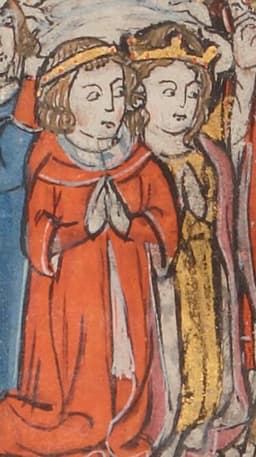
Conrad of Montferrat
General · Medieval
49.6Total
Basic Information
Born
688
1146
Died
741
1192
Era
Medieval
Medieval
Nationality
Frankish Empire
Jerusalem
Occupation
General
General
Civilization
Western
Western
Score Comparison
Military (10%)
82.0
60.0
Political (20%)
68.0
35.1
Influence (20%)
58.3
48.6
Legacy (20%)
52.0
41.7
Leadership (15%)
48.8
61.1
Strategy (15%)
76.0
66.3
TOTAL
60.9
49.6
Charles Martel — Complete Timeline
720 AD
Consolidation of Frankish PowerPolitical Action◆ Major
Charles Martel unified the Frankish kingdoms under his rule, defeating rival nobles and suppressing rebellions. He established himself as the de facto ruler of the Franks, laying the foundation for the Carolingian dynasty.
Carolingian DynastyFrankish KingdomPolitical Unification
Impact: regional
722 AD
Support for Boniface's MissionCultural◆ Major
Charles Martel provided military protection and political support to the Anglo-Saxon missionary Boniface in his efforts to Christianize the Germanic tribes. This strengthened the Frankish Church and ties with the Papacy.
ChristianizationPapacyMissionary
Impact: regionalconstructive
732 AD
Battle of ToursWar
Charles Martel led Frankish forces to defeat an invading Umayyad army near Tours. The battle halted the Muslim advance into Western Europe. Martel's victory is considered a turning point in European history.
Umayyad CaliphateFrankish KingdomIslamic Expansion
Impact: global
737 AD
Battle of the River BerreWar◆ Major
Charles Martel defeated a Muslim army near Narbonne, preventing a second invasion of Gaul. He also destroyed the Muslim fleet at the mouth of the Berre River. This secured Frankish control of southern Gaul.
Umayyad CaliphateFrankish KingdomNaval Battle
Impact: regional
Conrad of Montferrat — Complete Timeline
1187 AD
Defense of TyreWar
Conrad of Montferrat arrived at Tyre just before Saladin's forces besieged it. He organized the city's defenses and successfully repelled Saladin's attacks, preventing the fall of the last major Crusader port in the region.
Crusader StatesSiegeSaladin
Impact: regional
1189 AD
Siege of AcreWar◆ Major
Conrad participated in the Siege of Acre, where he played a key role in the Crusader efforts. He was a rival to Guy of Lusignan for leadership of the Crusader states.
CrusadeSiege
Impact: regional
1192 AD
Election as King of JerusalemPolitical Action◆ Major
Conrad was elected King of Jerusalem by the Crusader nobility in April 1192, after the death of Queen Sibylla. His election was supported by Richard the Lionheart and Philip Augustus.
Crusader StatesSuccession
Impact: regional
Assassination of Conrad of MontferratPolitical Action◆ Major
Conrad was assassinated by two Hashshashin (Assassins) in Tyre just days after his election. His death was a major blow to the Crusader states and led to the rise of Henry II of Champagne.
Crusader StatesAssassination
Impact: regionaltragic
Expert Analysis
Origins
Charles Martel (c. 688-741) was born into the Frankish nobility as the illegitimate son of Pepin of Herstal, mayor of the palace of Austrasia. His early life was marked by political turmoil; after Pepin's death in 714, Martel was imprisoned by his stepmother Plectrude but escaped to rally support among the Austrasian nobles. He lacked formal education but gained military experience through constant warfare.
Conrad of Montferrat (c. 1145-1192) was born into the Italian marquisate of Montferrat, a noble family with Crusader connections. His father, William V, was a prominent figure in the Kingdom of Jerusalem. Conrad likely received knightly training and participated in the Second Crusade. He was known for his cunning and ambition, traits that would define his career.
Rise to Power
Charles Martel rose to power through military prowess and political maneuvering. After defeating Neustrian nobles at the Battle of Amblève (716) and the Battle of Vincy (717), he consolidated control over the Frankish realms. In 732, he faced the Umayyad army under Abdul Rahman Al Ghafiqi near Tours. Martel's victory, using a defensive infantry formation, halted the Muslim advance into Western Europe and cemented his authority. He later expanded Frankish influence in Aquitaine and Burgundy.
Conrad of Montferrat rose to prominence during the Third Crusade. After a failed rebellion in Constantinople, he sailed to the Holy Land in 1187, arriving at Tyre just before Saladin's siege. Conrad organized the city's defenses, using his strategic skills to repel Saladin's attacks from July to December 1187. This defense made him a leader among the Crusaders. He then became a rival to Guy of Lusignan for the throne of Jerusalem, leveraging his military success and noble connections.
Leadership & Governance
Charles Martel ruled as mayor of the palace, not king, but effectively governed the Frankish realms. He implemented military reforms, including the use of heavy cavalry and land grants (precaria) to secure loyalty. His governance focused on centralizing power, suppressing rebellions, and expanding Christian influence. He supported missionary Boniface in converting Germanic tribes, blending military force with religious policy. His leadership was authoritarian but effective, with a total score of 48.8 in leadership.
Conrad of Montferrat's leadership was charismatic but divisive. He defended Tyre with limited resources, inspiring loyalty among defenders. However, his ambition led to conflict with other Crusader leaders, including Richard the Lionheart and Guy of Lusignan. His governance style was pragmatic, focusing on fortifications and diplomacy. He was elected King of Jerusalem in April 1192 but was assassinated days later, never fully exercising royal authority. His leadership score is 61.1, reflecting his tactical competence but short tenure.
Triumph & Tragedy
Charles Martel's greatest triumph was the Battle of Tours (732), where his forces defeated the Umayyads, a feat with lasting historical significance. He also crushed Muslim raids at the River Berre (737) and unified Frankish realms. His tragedy lies in his legacy: he never claimed the throne, and his son Pepin the Short eventually deposed the Merovingians. His brutal suppression of rivals created instability.
Conrad's triumph was the defense of Tyre (1187), a rare Crusader success against Saladin. He also played a key role in the Siege of Acre (1189-1191). His tragedy was his assassination by the Assassins in 1192, just after being elected king. This death fractured Crusader leadership and contributed to the eventual loss of Jerusalem.
Character & Destiny
Charles Martel was pragmatic, ruthless, and strategic. His epithet "the Hammer" reflects his decisive military actions. He prioritized unity and expansion of Frankish power, often at the expense of rivals. Historians credit him with shaping medieval Europe, but his methods were harsh. His destiny was to lay the foundation for the Carolingian Empire, though he never wore a crown.
Conrad of Montferrat was ambitious, cunning, and opportunistic. His actions in Tyre and Acre show tactical brilliance, but his rivalry with Guy and Richard alienated allies. His assassination was likely due to political enemies, highlighting the volatile nature of Crusader politics. His destiny was cut short, preventing him from realizing his ambitions.
Legacy
Charles Martel's legacy is immense: he is remembered as a defender of Christendom, with his victory at Tours symbolizing the halt of Muslim expansion. His military reforms influenced medieval warfare. His dynasty, the Carolingians, produced Charlemagne. He scores 52.0 in legacy, reflecting his long-term impact.
Conrad of Montferrat's legacy is more limited. He is remembered as a key figure in the Third Crusade, but his assassination prevented lasting achievements. His defense of Tyre is a notable episode, but his rivalry and death contributed to Crusader disunity. He scores 41.7 in legacy.
Conclusion
Charles Martel had a greater impact on history than Conrad of Montferrat. With a total score of 60.9 versus 49.6, Martel's military and political actions shaped the course of medieval Europe. His victory at Tours was a turning point, while Conrad's defense of Tyre, though impressive, was a local success in a failing Crusade. Martel's legacy endured through the Carolingian Empire, while Conrad's was cut short. Thus, Charles Martel emerges as the more consequential figure.
Rankings
🥇
Charles MartelLeader
Mil: 82.0Pol: 68.0Inf: 58.3
60.9
🥈
Conrad of Montferrat
Mil: 60.0Pol: 35.1Inf: 48.6
49.6
+11.3 behind
How This Comparison Works
Algorithm
Each figure is scored on 6 dimensions (0—100 scale) based on structured historical data: Military (10%), Political (20%), Influence (20%), Legacy (20%), Leadership (15%), Strategy (15%). The weighted total produces the final ranking.
Data Sources
Scores are computed from structured sub-indicators in the database. Scale factors adjust for era (Ancient ×0.85, Modern ×1.0) and civilization size (Eastern ×1.05, Other ×0.80) to account for differences in population and military scale.
Maximum 3 Figures
Comparisons are limited to 2—3 figures to ensure readability and statistical meaningfulness.
Error Margins
±5 points per dimension — Sub-scores are derived from historical records with inherent uncertainty. Two figures within 5 points on a dimension should be considered roughly equivalent in that area.
Total Score Accuracy
±3 points overall — The weighted combination of 6 dimensions produces a total score with approximately ±3 points of uncertainty. Differences of less than 3 points are not statistically significant— the figures are effectively tied.
Known Limitations
- Historical records are incomplete and uneven across civilizations
- Figures from oral-tradition societies may be underrepresented
- Occupation labels can misclassify multi-role figures
- Scores measure capability and impact, not moral character
- Quantitative scoring is a comparison tool, not absolute truth
Capability Radar
Military (10%) — Battles & Warfare
Battles
75
55
Win Rate
80
60
Expansion
75
25
Political (20%) — Governance & Reform
Reform
70
20
Diplomacy
60
55
Economy
55
30
Influence (20%) — Cultural & Global Reach
Cultural
70
30
Global
70
30
Legacy (20%) — Historical Impact
Historical
80
45
Longevity
75
35
Leadership (15%) — Power & Stability
Tenure
65
45
Stability
60
40
Strategy (15%) — Tactics & Innovation
Strategy
80
60
Tactics
85
65
Reform
70
20
Similar Comparisons
Comments & Discussion
No comments yet. Be the first to share your thoughts!