Loading...
Charles the Bold vs Zhao Kuangyin
Zhao Kuangyin leads by 13.6 pts · 2 figures compared
…
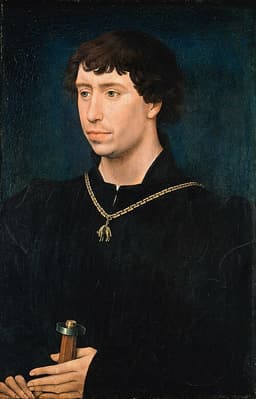
Charles the Bold
Emperor · Medieval
57.9Total
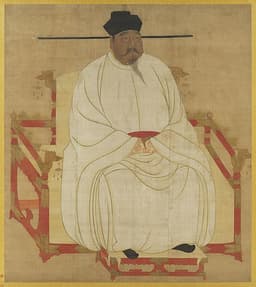
Zhao Kuangyin
Emperor · Medieval
71.5Total
Basic Information
Born
1433
927
Died
1477
976
Era
Medieval
Medieval
Nationality
Burgundy
China
Occupation
Emperor
Emperor
Civilization
Western
Eastern
Score Comparison
Military (10%)
52.5
78.0
Political (20%)
68.0
84.0
Influence (20%)
59.0
68.0
Legacy (20%)
49.2
65.0
Leadership (15%)
65.7
74.0
Strategy (15%)
55.0
68.0
TOTAL
57.9
71.5
Charles the Bold — Complete Timeline
1467 AD
Inherited the Burgundian LandsPolitical Action◆ Major
Charles succeeded his father Philip the Good as Duke of Burgundy. He inherited a wealthy and powerful state comprising the Burgundian Netherlands, Franche-Comt
SuccessionBurgundian State
Impact: regionalconstructive
1468 AD
War with France and the Treaty of PéronneWar◆ Major
Charles forced King Louis XI of France to sign the Treaty of P
TreatyFranco-Burgundian ConflictDiplomacy
Impact: regional
1474 AD
Siege of NeussWar◆ Major
Charles besieged the imperial city of Neuss for nearly a year, defying the Holy Roman Emperor Frederick III. The siege ended inconclusively when an imperial army approached. This conflict alienated the German princes and weakened Charles's political position.
SiegeImperial ConflictBurgundian Wars
Impact: regionaldestructive
1476 AD
Battle of GrandsonWar◆ Major
Charles's army was defeated by the Swiss Confederacy at Grandson. The Burgundians abandoned their camp, which was looted. The defeat was a major setback, shattering the myth of Burgundian invincibility and encouraging further Swiss resistance.
BattleSwiss ConfederacyDefeat
Impact: regionaltragic
Battle of MoratWar◆ Major
Charles suffered a second devastating defeat by the Swiss at Morat. His army was routed, and he lost much of his artillery and baggage. The defeat effectively ended Burgundian ambitions in Switzerland and left Charles's state vulnerable.
BattleSwiss ConfederacyDefeat
Impact: regionaltragic
1477 AD
Battle of Nancy and DeathWar
Charles was killed in battle at Nancy while fighting the Swiss and the Duke of Lorraine. His body was found mutilated. His death ended the Burgundian state as an independent power, and his lands were divided between France and the Habsburgs through his daughter Mary.
BattleDeathEnd of Burgundy
Impact: regionaltragic
Zhao Kuangyin — Complete Timeline
960 AD
Founded Song dynastyPolitical Action
Zhao Kuangyin, a general of Later Zhou, was proclaimed emperor by his troops at Chenqiao. He established the Song dynasty, ending the Five Dynasties period and beginning a new era of Chinese history.
Song dynastyFoundingChenqiao
Impact: globalconstructive
961 AD
Removed military power from generalsPolitical Action◆ Major
Zhao Kuangyin invited senior generals to a banquet and persuaded them to retire peacefully. This 'removal of military power over wine' prevented military coups and centralized control.
Song dynastyMilitary reformCentralization
Impact: nationalconstructive
963 AD
Unified southern ChinaWar◆ Major
Zhao Kuangyin launched campaigns to conquer the southern kingdoms, including Jingnan, Later Shu, and Southern Tang. By his death, most of China was reunified under Song rule.
Song unificationConquestSouthern kingdoms
Impact: national
Expert Analysis
Origins
Charles the Bold was born in 1433 in Dijon, Burgundy, as the son of Philip the Good and Isabella of Portugal. He inherited a wealthy and powerful state comprising the Burgundian Netherlands, Franche-Comté, and the Duchy of Burgundy. His upbringing emphasized chivalric ideals and military prowess. In contrast, Zhao Kuangyin was born in 927 in Luoyang, China, during the chaotic Five Dynasties period. His father was a military officer, and Zhao himself rose through the ranks as a skilled cavalry commander. He received a pragmatic education focused on military strategy and statecraft.
Rise to Power
Charles became Duke of Burgundy in 1467 after his father's death. He immediately pursued an aggressive expansionist policy, aiming to create a middle kingdom between France and the Holy Roman Empire. He forced King Louis XI of France to sign the Treaty of Péronne in 1468, which recognized Burgundian independence. Zhao Kuangyin, by contrast, rose to power as a general under the Later Zhou dynasty. In 960, his troops proclaimed him emperor at Chenqiao, leading to the peaceful founding of the Song dynasty. He then launched campaigns to unify China, conquering Jingnan (963), Later Shu (965), and Southern Tang (975).
Leadership & Governance
Charles the Bold ruled as an autocratic duke, centralizing administration and building a professional army. He imposed heavy taxes to fund his wars and was known for his stubbornness. In contrast, Zhao Kuangyin institutionalized civilian control over the military. In 961, he famously removed the power of senior generals over wine, persuading them to retire peacefully. He established the Song bureaucracy based on merit, expanded the examination system, and promoted economic growth through trade and innovation. While Charles scored 68.0 in political skill, Zhao scored 84.0.
Triumph & Tragedy
Charles's greatest triumph was the Treaty of Péronne (1468), which forced Louis XI to recognize Burgundian independence. He also expanded Burgundian territory through the acquisition of Guelders (1473). However, his greatest failure was his death at the Battle of Nancy in 1477, where his army was routed by Swiss and Lorraine forces. His body was found mutilated, and his lands were divided between France and the Habsburgs. Zhao's triumph was the unification of most of China under the Song dynasty, bringing peace after decades of war. His tragedy was the inability to fully reclaim the Sixteen Prefectures from the Liao dynasty, leaving a territorial dispute that plagued later Song rulers.
Character & Destiny
Charles was impulsive, ambitious, and ruthless. He ignored diplomatic solutions and relied on military force, leading to overextension. His stubbornness at the Siege of Neuss (1474-1475) wasted resources and alienated allies. Zhao was pragmatic, cautious, and strategic. He understood the dangers of military power and acted decisively to prevent rebellion. His character is reflected in his scores: leadership 74.0 versus Charles's 65.7, and strategy 68.0 versus 55.0. Zhao's destiny was to found a long-lasting dynasty, while Charles's ended in disaster.
Legacy
Charles's legacy is mixed. He is remembered as the last Valois Duke of Burgundy, whose death ended Burgundian independence. His territories formed the core of the Habsburg Netherlands, influencing European politics for centuries. Zhao's legacy is profound: he founded the Song dynasty, which ruled for over 300 years, and his policies of civilian supremacy and economic development shaped Chinese governance. His removal of military power from generals set a precedent for stability. Zhao scored 65.0 in legacy versus Charles's 49.2.
Conclusion
While Charles the Bold was a formidable medieval prince, Zhao Kuangyin had a far greater impact. Zhao's unification of China and institutional reforms created a stable dynasty that fostered economic and cultural flourishing. Charles's aggressive ambitions led to his own demise and the dissolution of his state. With a total score of 71.5 compared to Charles's 57.9, Zhao clearly emerges as the more effective and influential leader. His example of peaceful consolidation of power remains a model in Chinese history.
Rankings
🥇
Zhao KuangyinLeader
Mil: 78.0Pol: 84.0Inf: 68.0
71.5
🥈
Charles the Bold
Mil: 52.5Pol: 68.0Inf: 59.0
57.9
+13.6 behind
How This Comparison Works
Algorithm
Each figure is scored on 6 dimensions (0—100 scale) based on structured historical data: Military (10%), Political (20%), Influence (20%), Legacy (20%), Leadership (15%), Strategy (15%). The weighted total produces the final ranking.
Data Sources
Scores are computed from structured sub-indicators in the database. Scale factors adjust for era (Ancient ×0.85, Modern ×1.0) and civilization size (Eastern ×1.05, Other ×0.80) to account for differences in population and military scale.
Maximum 3 Figures
Comparisons are limited to 2—3 figures to ensure readability and statistical meaningfulness.
Error Margins
±5 points per dimension — Sub-scores are derived from historical records with inherent uncertainty. Two figures within 5 points on a dimension should be considered roughly equivalent in that area.
Total Score Accuracy
±3 points overall — The weighted combination of 6 dimensions produces a total score with approximately ±3 points of uncertainty. Differences of less than 3 points are not statistically significant— the figures are effectively tied.
Known Limitations
- Historical records are incomplete and uneven across civilizations
- Figures from oral-tradition societies may be underrepresented
- Occupation labels can misclassify multi-role figures
- Scores measure capability and impact, not moral character
- Quantitative scoring is a comparison tool, not absolute truth
Capability Radar
Military (10%) — Battles & Warfare
Battles
65
75
Win Rate
40
85
Expansion
60
75
Political (20%) — Governance & Reform
Reform
65
90
Diplomacy
45
85
Economy
60
80
Influence (20%) — Cultural & Global Reach
Cultural
50
70
Global
35
60
Legacy (20%) — Historical Impact
Historical
55
80
Longevity
40
75
Leadership (15%) — Power & Stability
Tenure
55
65
Stability
30
85
Strategy (15%) — Tactics & Innovation
Strategy
55
80
Tactics
60
70
Reform
70
90
Similar Comparisons
Comments & Discussion
No comments yet. Be the first to share your thoughts!