Loading...
Charles Theodore of Bavaria vs Juan Carlos I of Spain
Juan Carlos I of Spain leads by 16.6 pts · 2 figures compared
…

Charles Theodore of Bavaria
Emperor · Modern
40.5Total
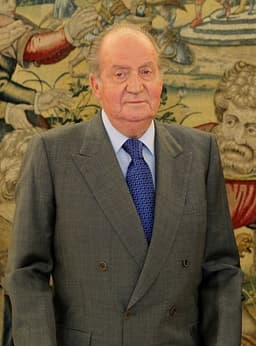
Juan Carlos I of Spain
Emperor · Modern
57.1Total
Basic Information
Born
1724
1938
Died
1799
—
Era
Modern
Modern
Nationality
Bavaria
Spain
Occupation
Emperor
Emperor
Civilization
Western
Western
Score Comparison
Military (10%)
20.0
27.1
Political (20%)
36.5
75.0
Influence (20%)
47.1
55.0
Legacy (20%)
35.8
52.0
Leadership (15%)
51.9
72.0
Strategy (15%)
45.0
56.0
TOTAL
40.5
57.1
Charles Theodore of Bavaria — Complete Timeline
1742 AD
Patronage of the Arts in MannheimCultural
As Elector Palatine, Charles Theodore was a major patron of the arts in Mannheim. He supported the Mannheim school of music, including composers like Johann Stamitz, and expanded the court orchestra, making it one of Europe's finest.
PatronageMannheim SchoolMusic
constructive
1777 AD
Inheritance of the Palatinate and BavariaPolitical Action◆ Major
Upon the death of Maximilian III Joseph, Charles Theodore inherited the Electorate of Bavaria, uniting it with the Palatinate. This created a large Wittelsbach state but sparked the War of the Bavarian Succession.
InheritanceWar of the Bavarian SuccessionWittelsbach
Impact: regional
1778 AD
War of the Bavarian SuccessionWar◆ Major
Charles Theodore's inheritance of Bavaria led to the War of the Bavarian Succession (1778-1779) against Austria, which claimed parts of Bavaria. The conflict ended with the Treaty of Teschen, which ceded the Innviertel to Austria.
War of the Bavarian SuccessionTreaty of TeschenAustrian Claims
Impact: regional
1785 AD
Proposal to Exchange Bavaria for the Austrian NetherlandsPolitical Action
Charles Theodore proposed exchanging Bavaria for the Austrian Netherlands, a plan supported by Emperor Joseph II. The proposal was abandoned due to opposition from Prussia and the F
Territorial ExchangeFürstenbundPrussian Opposition
Impact: regional
Juan Carlos I of Spain — Complete Timeline
1969 AD
Appointment as Franco's successorPolitical Action
Francisco Franco designated Juan Carlos as his successor, with the title of Prince of Spain. This decision was made to ensure the continuation of the regime after Franco's death, but Juan Carlos secretly worked to transition Spain to democracy.
SuccessionFrancoTransition
Impact: national
1975 AD
Proclamation as King of SpainPolitical Action
Juan Carlos I was proclaimed king two days after Franco's death. He inherited a dictatorial regime but quickly moved to dismantle it, initiating a process of political reform that would lead to democracy.
ProclamationMonarchyReform
Impact: nationalconstructive
1977 AD
Legalization of political partiesReform◆ Major
Under Juan Carlos I's guidance, the Spanish government legalized political parties, including the Communist Party. This was a key step in the transition to democracy, allowing for free elections and the establishment of a pluralistic political system.
DemocracyPolitical ReformLegalization
Impact: nationalprogressive
1978 AD
Approval of the 1978 ConstitutionReform
Juan Carlos I oversaw the drafting and approval of a new democratic constitution. The constitution established a parliamentary monarchy, guaranteed civil rights, and decentralized the state through autonomous communities, ending the Francoist centralization.
ConstitutionDemocracyDecentralization
Impact: nationalconstructive
1981 AD
Role in thwarting the 1981 coup attemptPolitical Action
During an attempted military coup, Juan Carlos I went on national television to denounce the coup and order the military to remain loyal to the democratic government. His decisive action helped defeat the coup and consolidate Spanish democracy.
CoupDemocracyLeadership
Impact: nationalconstructive
2014 AD
Abdication in favor of Felipe VIPolitical Action◆ Major
Juan Carlos I abdicated the throne, citing personal reasons and a desire to rejuvenate the monarchy. His abdication followed a series of scandals that had damaged the monarchy's reputation, and he handed over the crown to his son Felipe VI.
AbdicationSuccessionFelipe VI
Impact: national
Expert Analysis
Origins
Charles Theodore of Bavaria was born on December 11, 1724, in Düsseldorf, as the son of Count Palatine John Christian Joseph and Maria Anna of Salm-Salm. He belonged to the House of Wittelsbach, a dynasty that had ruled the Palatinate for centuries. His early education was shaped by Jesuit tutors, emphasizing Catholic orthodoxy and princely duties. Charles Theodore became Elector Palatine at age 18 in 1742 after his father's death, inheriting a fragmented territory. His formative years were marked by the War of Austrian Succession, which taught him the perils of great power politics.
Juan Carlos I was born on January 5, 1938, in Rome, Italy, during his family's exile from the Spanish Republic. He was the grandson of King Alfonso XIII, who had fled Spain in 1931. His father, Juan de Borbón, was the heir to the throne. Juan Carlos spent his early years in Italy, Switzerland, and Portugal, receiving a military education in Spain from 1948 onward under the watchful eye of Francisco Franco. He studied at the General Military Academy in Zaragoza, the Naval Military School, and the General Air Academy, gaining a comprehensive military background that would later prove crucial.
Rise to Power
Charles Theodore's rise was largely dynastic. In 1777, upon the death of Maximilian III Joseph, the Elector of Bavaria, Charles Theodore inherited the Electorate of Bavaria, uniting it with the Palatinate. This created a large Wittelsbach state but also triggered the War of the Bavarian Succession (1778–1779) against Austria, which claimed parts of Bavaria. The conflict, known as the 'Potato War' for its lack of major battles, ended with the Treaty of Teschen, which ceded the Innviertel to Austria. Charles Theodore's subsequent proposal to exchange Bavaria for the Austrian Netherlands was met with opposition from Prussia and other German states, and he eventually abandoned it.
Juan Carlos I's rise was orchestrated by Franco. In 1969, Franco designated him as his successor with the title Prince of Spain, bypassing his father. After Franco's death on November 20, 1975, Juan Carlos was proclaimed king two days later. He inherited a dictatorial regime but quickly moved to dismantle it, initiating a transition to democracy. He appointed Adolfo Suárez as Prime Minister in 1976, who legalized political parties, including the Communist Party, and oversaw the drafting of a new constitution. The 1978 Constitution was approved by referendum, establishing a parliamentary monarchy and guaranteeing civil liberties.
Leadership & Governance
Charles Theodore's leadership style was passive and indecisive. He focused on cultural patronage rather than governance, supporting the Mannheim school of music and the arts. His political decisions were often swayed by his advisors and his desire to avoid conflict. He attempted to exchange Bavaria for the Austrian Netherlands, a plan that, if executed, would have reshaped German politics but was abandoned due to lack of support. His governance scored a Political score of 36.5, reflecting his inability to assert Bavarian interests effectively.
In contrast, Juan Carlos I's leadership was active and strategic. He used his position to steer Spain toward democracy, often behind the scenes. His Political score of 75.0 reflects his skillful navigation of the transition. During the 1981 coup attempt, he donned his military uniform and went on national television to denounce the coup, ordering the military to remain loyal. This decisive action thwarted the coup and solidified his role as the guarantor of democracy. His Leadership score of 72.0 underscores his ability to command loyalty and manage crises.
Triumph & Tragedy
Charles Theodore's greatest success was his patronage of the arts, particularly music. The Mannheim school, under his support, developed orchestral techniques that influenced composers like Mozart and Haydn. His greatest failure was his inability to secure his dynasty's future: he died without a legitimate heir in 1799, leading to the extinction of his line and the War of the Bavarian Succession's aftermath. His Legacy score of 35.8 reflects the ephemeral nature of his political achievements.
Juan Carlos I's triumph was the successful transition to democracy. He legalized political parties, oversaw the 1978 Constitution, and faced down the 1981 coup. His influence extended to international relations, as he helped integrate Spain into NATO and the European Community. However, his later years were marred by scandals, including a controversial elephant-hunting trip in Botswana in 2012 and corruption allegations involving his son-in-law. He abdicated in 2014 in favor of his son Felipe VI, and his reputation suffered, though his role in the transition remains respected.
Character & Destiny
Charles Theodore was cultured but cautious, often prioritizing personal comfort over political ambition. His decisions were driven by a desire to avoid conflict, which ultimately led to his dynasty's extinction. Historians describe him as a well-meaning but weak ruler, unable to adapt to the shifting power dynamics of 18th-century Europe.
Juan Carlos I was pragmatic and resilient, with a deep understanding of military and political realities. He was willing to take risks, such as legalizing the Communist Party, to secure democracy. His character was shaped by his exile and his grandfather's legacy, driving him to restore the monarchy's legitimacy. His destiny was to serve as a bridge between dictatorship and democracy, a role he fulfilled with notable success.
Legacy
Charles Theodore's legacy is primarily cultural. The Mannheim school of music and the art collections in Mannheim and Munich remain testaments to his patronage. Politically, his failure to produce an heir led to the Palatinate passing to the Zweibrücken line, altering the balance of power in Germany. His Legacy score of 35.8 reflects his limited political impact.
Juan Carlos I's legacy is monumental. He is credited with overseeing Spain's peaceful transition to democracy, a model for other nations. The 1978 Constitution and Spain's democratic institutions are his enduring achievements. However, his later scandals have tarnished his image, leading to a more nuanced assessment. His total score of 57.1 reflects his significant but imperfect legacy.
Conclusion
Juan Carlos I had a greater impact than Charles Theodore of Bavaria. Juan Carlos's Political score of 75.0, Leadership of 72.0, and total of 57.1 far exceed Charles Theodore's 36.5, 51.9, and 40.5 respectively. While Charles Theodore contributed to culture, his political failures and lack of heir left little lasting influence. Juan Carlos I, despite personal flaws, transformed Spain from a dictatorship to a democracy, a change that endures. The score gap of 16.6 points underscores this disparity. Juan Carlos I is the more consequential figure.
Rankings
🥇
Juan Carlos I of SpainLeader
Mil: 27.1Pol: 75.0Inf: 55.0
57.1
🥈
Charles Theodore of Bavaria
Mil: 20.0Pol: 36.5Inf: 47.1
40.5
+16.6 behind
How This Comparison Works
Algorithm
Each figure is scored on 6 dimensions (0—100 scale) based on structured historical data: Military (10%), Political (20%), Influence (20%), Legacy (20%), Leadership (15%), Strategy (15%). The weighted total produces the final ranking.
Data Sources
Scores are computed from structured sub-indicators in the database. Scale factors adjust for era (Ancient ×0.85, Modern ×1.0) and civilization size (Eastern ×1.05, Other ×0.80) to account for differences in population and military scale.
Maximum 3 Figures
Comparisons are limited to 2—3 figures to ensure readability and statistical meaningfulness.
Error Margins
±5 points per dimension — Sub-scores are derived from historical records with inherent uncertainty. Two figures within 5 points on a dimension should be considered roughly equivalent in that area.
Total Score Accuracy
±3 points overall — The weighted combination of 6 dimensions produces a total score with approximately ±3 points of uncertainty. Differences of less than 3 points are not statistically significant— the figures are effectively tied.
Known Limitations
- Historical records are incomplete and uneven across civilizations
- Figures from oral-tradition societies may be underrepresented
- Occupation labels can misclassify multi-role figures
- Scores measure capability and impact, not moral character
- Quantitative scoring is a comparison tool, not absolute truth
Capability Radar
Military (10%) — Battles & Warfare
Battles
5
35
Win Rate
5
37
Expansion
5
42
Political (20%) — Governance & Reform
Reform
20
85
Diplomacy
25
80
Economy
20
60
Influence (20%) — Cultural & Global Reach
Cultural
10
55
Global
10
65
Legacy (20%) — Historical Impact
Historical
15
70
Longevity
10
60
Leadership (15%) — Power & Stability
Tenure
30
65
Stability
15
75
Strategy (15%) — Tactics & Innovation
Strategy
5
48
Tactics
5
49
Reform
5
51
Similar Comparisons
Comments & Discussion
No comments yet. Be the first to share your thoughts!