Loading...
Charles VII of France vs Yelu Longxu
Charles VII of France leads by 9.7 pts · 2 figures compared
…
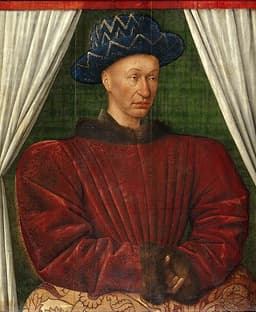
Charles VII of France
Emperor · Medieval
61.7Total

Yelu Longxu
Emperor · Medieval
52.0Total
Basic Information
Born
1403
971
Died
1461
1031
Era
Medieval
Medieval
Nationality
France
Khitan Empire
Occupation
Emperor
Emperor
Civilization
Western
Eastern
Score Comparison
Military (10%)
67.5
55.0
Political (20%)
70.0
48.0
Influence (20%)
56.7
51.8
Legacy (20%)
55.0
44.2
Leadership (15%)
66.0
72.0
Strategy (15%)
66.3
45.0
TOTAL
61.7
52.0
Charles VII of France — Complete Timeline
1429 AD
Siege of OrléansWar◆ Major
Joan of Arc, acting under Charles VII's authority, led French forces to lift the English siege of Orl
Hundred Years' WarSiegeJoan of Arc
Impact: regional
Coronation at ReimsPolitical Action
Charles VII was crowned King of France at Reims Cathedral, a traditional site for French coronations, following the military successes of Joan of Arc. This coronation legitimized his claim against the English-backed Henry VI and boosted French morale.
CoronationHundred Years' WarJoan of Arc
Impact: nationalconstructive
1435 AD
Treaty of ArrasPolitical Action◆ Major
Charles VII signed the Treaty of Arras with Philip the Good of Burgundy, ending the Burgundian alliance with England. This diplomatic victory isolated the English and paved the way for French reconquest of English-held territories.
TreatyBurgundyDiplomacy
Impact: regionalconstructive
1438 AD
Pragmatic Sanction of BourgesReform◆ Major
Charles VII issued the Pragmatic Sanction of Bourges, asserting the authority of the French crown over the Catholic Church in France. It limited papal interference in ecclesiastical appointments and revenues, strengthening royal control.
Church ReformRoyal AuthorityGallicanism
Impact: nationalconstructive
1453 AD
Battle of CastillonWar
French forces under Charles VII's command defeated the English at Castillon, the final battle of the Hundred Years' War. The English lost Gascony, ending their territorial presence in France except for Calais.
Hundred Years' WarBattleEnd of War
Impact: regional
Yelu Longxu — Complete Timeline
982 AD
Accession as Sixth Liao EmperorPolitical Action◆ Major
Yelu Longxu became the sixth Liao emperor at a young age, with his mother, Empress Dowager Xiao, serving as regent. His reign, the longest in Liao history, lasted until 1031 and saw the consolidation of Liao power.
Liao dynastySuccessionLong reign
Impact: regional
1009 AD
End of Regency and Personal RulePolitical Action◆ Major
After the death of Empress Dowager Xiao, Yelu Longxu assumed full personal rule. He continued her policies, maintaining peace with the Song dynasty and focusing on internal development and cultural patronage.
Liao dynastyPersonal ruleTransition
Impact: regional
1020 AD
Patronage of Buddhism and CultureCultural
Yelu Longxu was a patron of Buddhism, commissioning the construction of temples and the translation of Buddhist texts. His reign saw a flourishing of Khitan culture, including the development of the Khitan script and literature.
Liao dynastyBuddhismCultural patronage
Impact: regionalconstructive
Expert Analysis
Origins
Charles VII of France was born in 1403, the fifth son of King Charles VI and Isabeau of Bavaria. His early years were marked by the chaos of the Hundred Years' War and his father's intermittent madness. With the Treaty of Troyes (1420) disinheriting him, Charles's claim to the throne was tenuous. He grew up in the shadow of English domination and Burgundian betrayal, receiving a modest education but showing early signs of resilience.
Yelu Longxu was born in 972 AD as the son of Emperor Yelu Xian and Empress Dowager Xiao. He belonged to the Khitan Liao dynasty, which ruled over parts of northern China and the steppes. His mother, a shrewd regent, oversaw his upbringing. He ascended the throne at age 12, but real power remained with his mother until her death in 1009. He was educated in Confucian classics and Buddhist scriptures, preparing him for a rule that would span over four decades.
Rise to Power
Charles VII's path to power was fraught. After the death of his father in 1422, he was recognized only as regent by his supporters, while the English crowned Henry VI of England as king of France. His turning point came in 1429 with the arrival of Joan of Arc, who inspired victories at Orléans and led to his coronation at Reims on July 17, 1429. This ceremony cemented his legitimacy and rallied French morale.
Yelu Longxu's rise was more straightforward due to his mother's regency. Empress Dowager Xiao effectively ruled from 982 until her death in 1009, maintaining peace with the Song dynasty and strengthening the Liao state. When Longxu assumed full power in 1009, he inherited a stable realm. His long reign, the longest in Liao history (982–1031), was marked by continuity rather than dramatic ascent.
Leadership & Governance
Charles VII's leadership was pragmatic and reformist. He reorganized the French army, creating the first permanent standing army (compagnies d'ordonnance) in 1445, which improved discipline and loyalty. He also reformed taxation, establishing the taille as a direct tax to fund his military. The Pragmatic Sanction of Bourges (1438) asserted royal authority over the Church, limiting papal interference. His diplomatic triumph, the Treaty of Arras (1435), isolated England by reconciling Burgundy.
Yelu Longxu governed as a Confucian monarch, promoting culture and Buddhism. He continued his mother's policy of peaceful coexistence with the Song, avoiding major wars. He commissioned Buddhist temples and translations, and his reign saw cultural flourishing. However, his political score of 48.0 reflects a lack of major institutional reforms or expansion. He maintained the status quo, scoring lower in strategy (45.0) and legacy (44.2).
Triumph & Tragedy
Charles VII's greatest triumph was ending the Hundred Years' War in 1453 after the Battle of Castillon, which expelled the English from all of France except Calais. His military score of 67.5 reflects this success. However, his tragedy lies in his abandonment of Joan of Arc, who was captured in 1430 and executed in 1431 while Charles did little to save her. This stain on his reign contrasts with his later achievements.
Yelu Longxu's triumph was his long, stable reign that preserved Liao power and fostered cultural growth. His leadership score of 72.0 indicates effective administration. Yet his failure to expand Liao territory or innovate militarily (military score 55.0) left his dynasty vulnerable. After his death, the Liao declined, eventually falling to the Jin.
Character & Destiny
Charles VII was cautious and calculating, often indecisive but capable of decisive action when necessary. His character was shaped by his disinheritance and early struggles, leading to a reliance on capable advisors. His destiny was to be the "Victorious" king, but his legacy is forever tied to Joan of Arc.
Yelu Longxu was a devout Buddhist and a patron of the arts, but his long regency may have made him overly dependent on his mother's policies. He was not a warrior emperor, and his reign lacked dramatic events. His character led to a peaceful but ultimately weaker dynasty.
Legacy
Charles VII's legacy is profound: he consolidated royal power, ended the Hundred Years' War, and laid foundations for French absolutism. His military and administrative reforms influenced later French kings. He scored 55.0 in legacy, reflecting his role in shaping modern France.
Yelu Longxu's legacy is more modest. His patronage of Buddhism left cultural monuments, but his reign is often overshadowed by his mother's. The Liao dynasty continued but did not thrive after him. His legacy score of 44.2 reflects limited long-term impact.
Conclusion
Charles VII had a greater impact on history. His total score of 61.7 vs. Yelu Longxu's 52.0 reflects his decisive role in ending a century-long war and centralizing France. Yelu Longxu maintained peace but did not transform his realm. Charles VII's reforms and victory reshaped Europe, while Longxu's reign, though long, was ultimately static. The score gap of 9.7 points underscores Charles's superior influence and achievements.
Rankings
🥇
Charles VII of FranceLeader
Mil: 67.5Pol: 70.0Inf: 56.7
61.7
🥈
Yelu Longxu
Mil: 55.0Pol: 48.0Inf: 51.8
52.0
+9.7 behind
How This Comparison Works
Algorithm
Each figure is scored on 6 dimensions (0—100 scale) based on structured historical data: Military (10%), Political (20%), Influence (20%), Legacy (20%), Leadership (15%), Strategy (15%). The weighted total produces the final ranking.
Data Sources
Scores are computed from structured sub-indicators in the database. Scale factors adjust for era (Ancient ×0.85, Modern ×1.0) and civilization size (Eastern ×1.05, Other ×0.80) to account for differences in population and military scale.
Maximum 3 Figures
Comparisons are limited to 2—3 figures to ensure readability and statistical meaningfulness.
Error Margins
±5 points per dimension — Sub-scores are derived from historical records with inherent uncertainty. Two figures within 5 points on a dimension should be considered roughly equivalent in that area.
Total Score Accuracy
±3 points overall — The weighted combination of 6 dimensions produces a total score with approximately ±3 points of uncertainty. Differences of less than 3 points are not statistically significant— the figures are effectively tied.
Known Limitations
- Historical records are incomplete and uneven across civilizations
- Figures from oral-tradition societies may be underrepresented
- Occupation labels can misclassify multi-role figures
- Scores measure capability and impact, not moral character
- Quantitative scoring is a comparison tool, not absolute truth
Capability Radar
Military (10%) — Battles & Warfare
Battles
65
35
Win Rate
70
40
Expansion
55
30
Political (20%) — Governance & Reform
Reform
85
40
Diplomacy
75
50
Economy
70
45
Influence (20%) — Cultural & Global Reach
Cultural
60
30
Global
55
20
Legacy (20%) — Historical Impact
Historical
75
35
Longevity
70
30
Leadership (15%) — Power & Stability
Tenure
70
85
Stability
65
60
Strategy (15%) — Tactics & Innovation
Strategy
75
35
Tactics
60
30
Reform
80
25
Similar Comparisons
Comments & Discussion
No comments yet. Be the first to share your thoughts!