Loading...
Analysis will be generated on first visit.
Scores and timeline are available below. The page will refresh automatically when ready.
Cheddi Jagan vs Julius Caesar
Julius Caesar leads by 20.4 pts · 2 figures compared
…

Cheddi Jagan
Politician · Modern
62.9Total
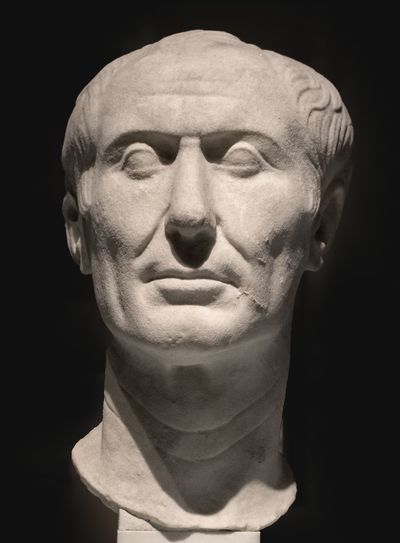
Julius Caesar
General · Ancient
83.3Total
Basic Information
Born
1918
-100
Died
1997
-44
Era
Modern
Ancient
Nationality
Guyana
Roman Republic
Occupation
Politician
General
Civilization
Western
Western
Score Comparison
Military (10%)
30.9
88.0
Political (20%)
73.6
78.0
Influence (20%)
72.5
85.0
Legacy (20%)
67.7
82.0
Leadership (15%)
78.4
82.0
Strategy (15%)
35.3
88.0
TOTAL
62.9
83.3
Rankings
🥇
Julius CaesarLeader
Mil: 88.0Pol: 78.0Inf: 85.0
83.3
🥈
Cheddi Jagan
Mil: 30.9Pol: 73.6Inf: 72.5
62.9
+20.4 behind
How This Comparison Works
Algorithm
Each figure is scored on 6 dimensions (0—100 scale) based on structured historical data: Military (10%), Political (20%), Influence (20%), Legacy (20%), Leadership (15%), Strategy (15%). The weighted total produces the final ranking.
Data Sources
Scores are computed from structured sub-indicators in the database. Scale factors adjust for era (Ancient ×0.85, Modern ×1.0) and civilization size (Eastern ×1.05, Other ×0.80) to account for differences in population and military scale.
Maximum 3 Figures
Comparisons are limited to 2—3 figures to ensure readability and statistical meaningfulness.
Error Margins
±5 points per dimension — Sub-scores are derived from historical records with inherent uncertainty. Two figures within 5 points on a dimension should be considered roughly equivalent in that area.
Total Score Accuracy
±3 points overall — The weighted combination of 6 dimensions produces a total score with approximately ±3 points of uncertainty. Differences of less than 3 points are not statistically significant— the figures are effectively tied.
Known Limitations
- Historical records are incomplete and uneven across civilizations
- Figures from oral-tradition societies may be underrepresented
- Occupation labels can misclassify multi-role figures
- Scores measure capability and impact, not moral character
- Quantitative scoring is a comparison tool, not absolute truth
Capability Radar
Military (10%) — Battles & Warfare
Battles
22
95
Win Rate
25
92
Expansion
29
97
Political (20%) — Governance & Reform
Reform
60
90
Diplomacy
55
85
Economy
50
82
Influence (20%) — Cultural & Global Reach
Cultural
45
88
Global
45
94
Legacy (20%) — Historical Impact
Historical
55
95
Longevity
40
96
Leadership (15%) — Power & Stability
Tenure
65
75
Stability
40
60
Strategy (15%) — Tactics & Innovation
Strategy
31
94
Tactics
37
96
Reform
39
88
Analysis will be generated on first visit.
Scores and timeline are available below. The page will refresh automatically when ready.
Cheddi Jagan — Complete Timeline
1947 AD
Elected to the Legislative Council of British GuianaPolitical Action◆ Major
Jagan was elected to the Legislative Council in 1947 as a candidate of the Labour Party. He quickly became a leading voice for independence and workers' rights.
ElectionPolitical Career
Impact: national
1950 AD
Co-founded the People's Progressive Party (PPP)Political Action◆ Major
Jagan co-founded the PPP with his wife Janet Jagan and others in 1950. The party became the main vehicle for the independence movement, advocating for socialism and self-rule.
Political PartyIndependence Movement
Impact: nationalconstructive
1953 AD
Became Chief Minister of British GuianaPolitical Action◆ Major
Jagan became Chief Minister after the PPP won the 1953 general election. His government was suspended by the British after 133 days due to fears of communist influence, leading to a constitutional crisis.
ElectionConstitutional Crisis
Impact: national
1957 AD
Won Elections but Denied PowerPolitical Action◆ Major
Jagan's PPP won the 1957 elections, and he became Chief Minister again. However, the British and US governments continued to oppose his Marxist policies, leading to political instability.
ElectionCold War
Impact: national
1964 AD
Lost Power to Forbes BurnhamPolitical Action◆ Major
Jagan's PPP won the most votes in the 1964 election but was denied power due to a change in the electoral system. Forbes Burnham formed a coalition government, ending Jagan's tenure as Premier.
ElectionPolitical Defeat
Impact: nationaltragic
1992 AD
Elected President of GuyanaPolitical Action
Jagan was elected President of Guyana in 1992, ending 28 years of Burnham's PNC rule. His victory was seen as a return to democracy and a vindication of his long struggle.
ElectionDemocracy
Impact: nationalconstructive
1997 AD
Died in OfficeOther◆ Major
Jagan died in office on March 6, 1997, from a heart attack. He was succeeded by his wife Janet Jagan, who became President. His death marked the end of an era in Guyanese politics.
DeathEnd of Era
Impact: nationaltragic
Similar Comparisons
Comments & Discussion
No comments yet. Be the first to share your thoughts!