Loading...
Chen Jiongming vs Kuroda Yoshitaka
Chen Jiongming leads by 0.8 pts · 2 figures compared
…

Chen Jiongming
General · Modern
61.4Total
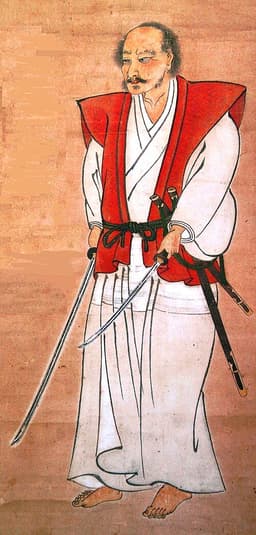
Kuroda Yoshitaka
General · Modern
60.6Total
Basic Information
Born
1878
1546
Died
1933
1604
Era
Modern
Modern
Nationality
China
Japan
Occupation
General
General
Civilization
Eastern
Eastern
Score Comparison
Military (10%)
72.5
65.0
Political (20%)
72.0
68.0
Influence (20%)
58.0
56.4
Legacy (20%)
47.5
49.2
Leadership (15%)
80.0
72.0
Strategy (15%)
50.0
67.2
TOTAL
61.4
60.6
Chen Jiongming — Complete Timeline
1911 AD
Founded the Guangdong Provincial AssemblyPolitical Action◆ Major
Chen Jiongming was elected military governor of Guangdong after the Wuchang Uprising. He established a provincial assembly and implemented federalist policies, advocating for a decentralized republic in China.
FederalismRepublican ChinaGuangdong
Impact: regionalconstructive
1922 AD
Expelled Sun Yat-sen from GuangdongPolitical Action◆ Major
Chen Jiongming ordered his troops to attack Sun Yat-sen's headquarters in Guangzhou, forcing Sun to flee to Shanghai. This ended their alliance and split the Chinese revolutionary movement.
Sun Yat-senGuangdongRevolutionary Split
Impact: nationaldestructive
1925 AD
Defeated by the Kuomintang Northern ExpeditionWar◆ Major
Chen Jiongming's forces were decisively defeated by Chiang Kai-shek's National Revolutionary Army during the first phase of the Northern Expedition. This ended Chen's control over Guangdong and his federalist experiment.
Northern ExpeditionKuomintangFederalism Defeat
Impact: nationaltragic
Retired to Hong KongPolitical Action
After his military defeat, Chen Jiongming retired to Hong Kong and ceased political activity. He lived there until his death in 1933, writing memoirs and advocating for federalism in exile.
ExileHong KongFederalism
Kuroda Yoshitaka — Complete Timeline
1582 AD
Siege of TakamatsuWar◆ Major
Kuroda Yoshitaka devised the strategy of flooding Takamatsu Castle during Hideyoshi's campaign against the Mori clan. The siege was ongoing when Oda Nobunaga was assassinated, leading to a negotiated peace.
SiegeMilitary strategy
Impact: regional
1583 AD
Battle of ShizugatakeWar◆ Major
Kuroda Yoshitaka served as a strategist for Toyotomi Hideyoshi at the Battle of Shizugatake. His planning contributed to Hideyoshi's victory over Shibata Katsuie, helping secure Hideyoshi's position as Nobunaga's successor.
Sengoku periodBattle
Impact: national
Conversion to ChristianityCultural
Kuroda Yoshitaka converted to Christianity and took the baptismal name Don Simeon. He became a prominent Christian daimyo, though his faith was pragmatic and he later renounced it under pressure.
ChristianityReligion
1587 AD
Kyushu CampaignWar
Kuroda Yoshitaka served as a key strategist in Hideyoshi's invasion of Kyushu against the Shimazu clan. His planning helped secure a swift victory, bringing Kyushu under Hideyoshi's control.
CampaignUnification
Impact: regional
Expert Analysis
Origins
Chen Jiongming was born in 1878 in Haifeng, Guangdong, into a wealthy landlord family. He received a classical Confucian education but also studied modern subjects at the Haifeng Normal School. His early exposure to Western ideas and the corruption of the Qing dynasty led him to support revolutionary activities. He joined the Tongmenghui in 1909 and participated in the Wuchang Uprising in 1911, which marked the beginning of his political career.
Kuroda Yoshitaka was born in 1546 in Himeji, Japan, into a samurai family serving the Kodera clan. His father, Kuroda Shigetaka, was a retainer. Yoshitaka was educated in military tactics and Zen Buddhism. He entered the service of Toyotomi Hideyoshi in the 1570s and quickly became his chief strategist. His early life was marked by the chaotic Sengoku period, which shaped his pragmatic approach to warfare and politics.
Rise to Power
Chen Jiongming rose to prominence after the 1911 Revolution. He was appointed military governor of Guangdong in 1911, where he established the Guangdong Provincial Assembly, advocating federalism as a means to stabilize China. He allied with Sun Yat-sen in 1917 to oppose the Beiyang government, but tensions grew over Guangdong's autonomy. In 1922, Chen expelled Sun from Guangzhou, citing Sun's plans for a centralized military expedition. This act made him a key figure in the federalist movement but also a target for the Kuomintang.
Kuroda Yoshitaka's rise came through his service to Hideyoshi. He gained recognition at the Battle of Shizugatake in 1583, where his strategic planning helped secure victory over Shibata Katsuie. His most famous achievement was the Siege of Takamatsu in 1582, where he devised a massive flood to breach the castle. After Hideyoshi's rise, Kuroda became a trusted advisor, participating in the Kyushu Campaign against the Shimazu clan in 1587. He was granted the fief of Nakatsu and became a Christian daimyo, using his faith to secure trade with the Portuguese.
Leadership & Governance
Chen Jiongming's leadership was rooted in federalism and local autonomy. He implemented reforms in Guangdong, including modernizing education, building infrastructure, and promoting local industry. He sought to create a decentralized China where provinces would have significant independence. His governance style was collaborative, working with local elites. However, his refusal to support Sun's centralized military campaigns led to his downfall. He scored 80.0 in leadership, reflecting his ability to govern effectively but within a limited scope.
Kuroda Yoshitaka's leadership was strategic and pragmatic. He governed Nakatsu efficiently, implementing land surveys and tax reforms. As a Christian, he promoted religious tolerance and trade, but his faith was often a political tool. He scored 72.0 in leadership, lower than Chen, as his authority was always under Hideyoshi's shadow. His governance focused on military efficiency and alliance-building rather than long-term institutional development.
Triumph & Tragedy
Chen Jiongming's greatest triumph was establishing a functioning federalist government in Guangdong, with a provincial assembly and economic reforms. His military score of 72.5 reflects his ability to defend Guangdong against warlords. However, his tragedy was his conflict with Sun Yat-sen. By expelling Sun in 1922, he alienated the KMT, which later defeated him during the Northern Expedition in 1925. His forces were crushed by Chiang Kai-shek, forcing his retirement to Hong Kong in 1925, where he died in 1933, largely forgotten.
Kuroda Yoshitaka's triumphs include his role in Hideyoshi's unification campaigns. His strategy at Takamatsu and Shizugatake were pivotal. He scored 65.0 in military, reflecting effective but not top-tier generalship. His tragedy was the decline of his clan after Hideyoshi's death. As a Christian, he faced persecution during the Tokugawa shogunate. He died in 1604, but his son Kuroda Nagamasa fought at Sekigahara, securing the clan's survival. However, Yoshitaka's influence waned after Hideyoshi's era.
Character & Destiny
Chen Jiongming was principled and stubborn, adhering to federalism even when it cost him power. He was a reformer but lacked the ruthlessness to compete with centralizing forces. His personality scored 61.4 total, reflecting a balanced but not dominant figure. His destiny was shaped by the rise of nationalism and centralization, which overwhelmed his federalist vision.
Kuroda Yoshitaka was pragmatic and adaptable, converting to Christianity for trade advantages. He was a loyal strategist but not a ruler himself. His character allowed him to thrive under Hideyoshi but not beyond. His total score of 60.6 reflects a skilled but secondary figure, reliant on a stronger leader.
Legacy
Chen Jiongming's legacy is limited but significant in the history of Chinese federalism. He is remembered as a pioneer of provincial autonomy, influencing later debates on decentralization. However, his scores in influence (58.0) and legacy (47.5) show his impact was short-lived. His federalist ideas were suppressed by the KMT and later by the CCP.
Kuroda Yoshitaka's legacy is stronger in Japanese history as a master strategist. His tactics are studied in military history. He scored 49.2 in legacy, slightly higher than Chen, reflecting his role in the unification period. His Christian daimyo status also marks him as a symbol of Japan's brief contact with Christianity.
Conclusion
Chen Jiongming had a slightly higher total score (61.4 vs 60.6) and a larger political vision. However, Kuroda Yoshitaka's impact on Japan's unification was more concrete and lasting. Chen's federalism failed, while Kuroda's strategies contributed to a stable regime. On balance, Kuroda Yoshitaka had a greater impact because his actions helped shape a unified Japan, whereas Chen's efforts were a failed alternative to centralization. Chen's score advantage of 0.8 points is marginal, but his legacy is more obscure. Therefore, Kuroda Yoshitaka emerges as the more historically significant figure.
Rankings
🥇
Chen JiongmingLeader
Mil: 72.5Pol: 72.0Inf: 58.0
61.4
🥈
Kuroda Yoshitaka
Mil: 65.0Pol: 68.0Inf: 56.4
60.6
+0.8 behind
How This Comparison Works
Algorithm
Each figure is scored on 6 dimensions (0—100 scale) based on structured historical data: Military (10%), Political (20%), Influence (20%), Legacy (20%), Leadership (15%), Strategy (15%). The weighted total produces the final ranking.
Data Sources
Scores are computed from structured sub-indicators in the database. Scale factors adjust for era (Ancient ×0.85, Modern ×1.0) and civilization size (Eastern ×1.05, Other ×0.80) to account for differences in population and military scale.
Maximum 3 Figures
Comparisons are limited to 2—3 figures to ensure readability and statistical meaningfulness.
Error Margins
±5 points per dimension — Sub-scores are derived from historical records with inherent uncertainty. Two figures within 5 points on a dimension should be considered roughly equivalent in that area.
Total Score Accuracy
±3 points overall — The weighted combination of 6 dimensions produces a total score with approximately ±3 points of uncertainty. Differences of less than 3 points are not statistically significant— the figures are effectively tied.
Known Limitations
- Historical records are incomplete and uneven across civilizations
- Figures from oral-tradition societies may be underrepresented
- Occupation labels can misclassify multi-role figures
- Scores measure capability and impact, not moral character
- Quantitative scoring is a comparison tool, not absolute truth
Capability Radar
Military (10%) — Battles & Warfare
Battles
65
60
Win Rate
60
65
Expansion
45
60
Political (20%) — Governance & Reform
Reform
65
45
Diplomacy
60
70
Economy
50
40
Influence (20%) — Cultural & Global Reach
Cultural
35
40
Global
25
30
Legacy (20%) — Historical Impact
Historical
45
55
Longevity
30
40
Leadership (15%) — Power & Stability
Tenure
55
50
Stability
40
50
Strategy (15%) — Tactics & Innovation
Strategy
60
85
Tactics
55
80
Reform
50
55
Similar Comparisons
Comments & Discussion
No comments yet. Be the first to share your thoughts!