Loading...
Chen Tai vs Drusus the Elder
Drusus the Elder leads by 14.7 pts · 2 figures compared
…
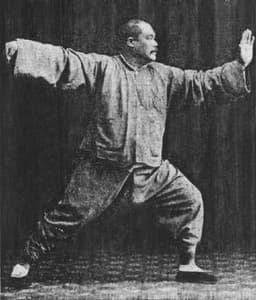
Chen Tai
General · Ancient
42.0Total

Drusus the Elder
General · Ancient
56.7Total
Basic Information
Born
200
-38
Died
260
-9
Era
Ancient
Ancient
Nationality
China
Roman Empire
Occupation
General
General
Civilization
Eastern
Western
Score Comparison
Military (10%)
20.0
90.0
Political (20%)
35.0
29.3
Influence (20%)
44.8
60.0
Legacy (20%)
35.8
56.0
Leadership (15%)
57.1
47.3
Strategy (15%)
60.0
72.0
TOTAL
42.0
56.7
Chen Tai — Complete Timeline
255 AD
Defended Against Jiang Wei's Northern ExpeditionsWar◆ Major
Chen Tai led Wei forces to repel Jiang Wei's invasions from Shu. He successfully defended the border, preventing Shu from gaining territory.
DefenseShu-Wei WarThree Kingdoms
Impact: regional
260 AD
Opposed Sima Zhao's UsurpationPolitical Action◆ Major
Chen Tai openly criticized Sima Zhao's execution of Emperor Cao Mao, arguing it was a crime. His protest was noted but did not prevent the Sima clan's rise.
ProtestLoyaltyWei Dynasty
Impact: nationalconstructive
Died of GriefOther◆ Major
Chen Tai died shortly after the execution of Cao Mao, reportedly from grief and despair over the fall of Wei. His death symbolized the end of loyalist resistance.
DeathLoyaltyWei Dynasty
Impact: nationaltragic
Drusus the Elder — Complete Timeline
12 BC
First German Campaign (Drusus)War◆ Major
Drusus launched a campaign against the Germanic tribes across the Rhine. He defeated the Usipetes and Sugambri, and built a fleet on the Rhine to conduct operations. This campaign established Roman presence east of the Rhine.
Germanic WarsRhine FrontierMilitary Campaign
Impact: regional
Construction of the Fossa DrusianaCultural
Drusus ordered the construction of a canal connecting the Rhine River to the IJsselmeer, known as the Fossa Drusiana. This canal allowed Roman ships to bypass the North Sea coast and reach the German coast more safely, facilitating logistics.
CanalInfrastructureLogistics
constructive
9 BC
Campaign to the Elbe RiverWar◆ Major
Drusus led a campaign that reached the Elbe River, the furthest east any Roman army had penetrated into Germania. He defeated the Chatti and Cherusci tribes, but was forced to turn back due to supply issues and the onset of winter.
Germanic WarsExplorationElbe River
Impact: regional
Death from a Riding AccidentOther◆ Major
Drusus died from injuries sustained when he fell from his horse while returning from the Elbe campaign. His death at age 29 shocked Rome. Augustus mourned deeply, and Drusus was given a state funeral and posthumous honors.
DeathAccidentAugustus
Impact: nationaltragic
Expert Analysis
Origins
Chen Tai (c. 200–260 AD) was born into the elite Chen family of Yingchuan, a prominent Han dynasty clan. His father, Chen Qun, served as a high-ranking minister under Cao Cao and Cao Pi, shaping the early Wei bureaucracy. Chen Tai received a classical Confucian education, emphasizing loyalty and statecraft. His early career was marked by administrative posts, reflecting his family's political connections.
Drusus the Elder (38–9 BC), born Nero Claudius Drusus, was the stepson of Augustus, the first Roman emperor. His mother, Livia Drusilla, married Augustus when Drusus was an infant. Drusus grew up in the imperial household, receiving a military-focused education. His brother, Tiberius, later became emperor. Unlike Chen Tai, Drusus's path was shaped by his proximity to supreme power.
Rise to Power
Chen Tai rose through the Wei bureaucracy, serving as a provincial governor and later as a general in the western theater. His key breakthrough came when he was appointed Inspector of Yong Province, tasked with defending against Shu Han's northern expeditions led by Jiang Wei. In 255, Chen Tai successfully repelled Jiang Wei's invasion at Didao, a turning point that solidified his reputation as a capable defensive commander. However, his political ascent was limited by his opposition to the Sima clan's growing power.
Drusus the Elder rose to prominence through military commands granted by Augustus. In 15 BC, he and Tiberius campaigned against the Raetian tribes. By 12 BC, Drusus was given command of Gaul and launched his first German campaign. His swift victories over the Usipetes and Sugambri earned him the title of imperator. Augustus appointed him to govern the three Gauls, and he became a popular figure in Rome. Drusus's rise was accelerated by his stepfather's trust and his own military prowess.
Leadership & Governance
Chen Tai's leadership style was cautious and defensive, suited to the strategic realities of Wei. He focused on fortifying borders and using limited resources effectively. In governance, he was known for integrity and opposition to corruption. His protest against Sima Zhao's execution of Emperor Cao Mao in 260 demonstrated his commitment to constitutional propriety. However, his political naivety left him isolated; he scored only 35.0 in political acumen, compared to Drusus's 29.3.
Drusus the Elder was an aggressive, innovative commander. He built the Fossa Drusiana canal to facilitate riverine logistics and used fleets to project power. His leadership style emphasized speed and surprise, as seen in his campaigns that reached the Elbe. In governance, Drusus administered Gaul effectively, establishing the altar of Lugdunum as a focal point for imperial cult. He scored 47.3 in leadership, reflecting his ability to inspire troops, but his early death prevented a full display of administrative skills.
Triumph & Tragedy
Chen Tai's greatest success was his defense against Jiang Wei's expeditions. In 255, at Didao, he defeated Jiang Wei's numerically superior force, securing Wei's western frontier. His tragedy was his inability to prevent the Sima clan's usurpation. His open criticism of Sima Zhao led to his marginalization. He died of grief in 260, reportedly from despair over the fall of the Wei dynasty. His total score of 42.0 reflects a competent but limited figure.
Drusus the Elder's triumphs include reaching the Elbe River in 9 BC, the deepest Roman penetration into Germania. He subdued the Chatti and Cherusci tribes and established Roman dominance. His tragedy was his sudden death at age 29 from a riding accident, cutting short his career. Augustus mourned him deeply, and his death left Germania unconquered. Drusus scored 90.0 in military, the highest among the two, and 56.7 overall.
Character & Destiny
Chen Tai was principled and loyal, but his rigid adherence to Confucian ethics made him politically inflexible. His decision to oppose Sima Zhao publicly, while morally commendable, was strategically unwise. His character sealed his fate: he died a martyr to a lost cause, scoring 44.8 in influence but failing to alter events.
Drusus was ambitious and ruthless, embodying Roman martial virtues. His early death suggests a man of action whose destiny was cut short. Ancient sources praise his charisma and military skill. He scored 60.0 in influence, higher than Chen Tai, reflecting his lasting impact on Roman strategy and the imperial family's military tradition.
Legacy
Chen Tai is remembered in Chinese history as a symbol of loyalty to the Han dynasty and its political order. His resistance to the Sima usurpation is noted in the Records of the Three Kingdoms. However, his legacy is minor: he scored 35.8 in legacy, with no lasting institutions or ideas. He is a footnote in the fall of Wei.
Drusus the Elder's legacy is more substantial. The Fossa Drusiana canal remained in use for centuries. His campaigns established the Rhine as a permanent frontier and set a precedent for Roman expansion into Germania. His son, Claudius, became emperor, and his grandson, Caligula, continued his legacy. Drusus scored 56.0 in legacy, reflecting his enduring impact on Roman military history and imperial ideology.
Conclusion
Drusus the Elder had a greater impact than Chen Tai. His military achievements (90.0 vs 20.0) and strategic innovations shaped Roman frontier policy for generations. Chen Tai's defensive victories were significant but localized, and his political opposition was futile. Drusus's total score of 56.7 versus Chen Tai's 42.0 quantifies this disparity. While Chen Tai was a competent defender, Drusus was a transformative conqueror whose death left an unfinished legacy of potential greatness.
Rankings
🥇
Drusus the ElderLeader
Mil: 90.0Pol: 29.3Inf: 60.0
56.7
🥈
Chen Tai
Mil: 20.0Pol: 35.0Inf: 44.8
42.0
+14.7 behind
How This Comparison Works
Algorithm
Each figure is scored on 6 dimensions (0—100 scale) based on structured historical data: Military (10%), Political (20%), Influence (20%), Legacy (20%), Leadership (15%), Strategy (15%). The weighted total produces the final ranking.
Data Sources
Scores are computed from structured sub-indicators in the database. Scale factors adjust for era (Ancient ×0.85, Modern ×1.0) and civilization size (Eastern ×1.05, Other ×0.80) to account for differences in population and military scale.
Maximum 3 Figures
Comparisons are limited to 2—3 figures to ensure readability and statistical meaningfulness.
Error Margins
±5 points per dimension — Sub-scores are derived from historical records with inherent uncertainty. Two figures within 5 points on a dimension should be considered roughly equivalent in that area.
Total Score Accuracy
±3 points overall — The weighted combination of 6 dimensions produces a total score with approximately ±3 points of uncertainty. Differences of less than 3 points are not statistically significant— the figures are effectively tied.
Known Limitations
- Historical records are incomplete and uneven across civilizations
- Figures from oral-tradition societies may be underrepresented
- Occupation labels can misclassify multi-role figures
- Scores measure capability and impact, not moral character
- Quantitative scoring is a comparison tool, not absolute truth
Capability Radar
Military (10%) — Battles & Warfare
Battles
30
75
Win Rate
35
80
Expansion
10
85
Political (20%) — Governance & Reform
Reform
10
30
Diplomacy
15
50
Economy
10
35
Influence (20%) — Cultural & Global Reach
Cultural
10
55
Global
5
55
Legacy (20%) — Historical Impact
Historical
15
70
Longevity
10
60
Leadership (15%) — Power & Stability
Tenure
20
40
Stability
15
45
Strategy (15%) — Tactics & Innovation
Strategy
35
82
Tactics
40
78
Reform
10
60
Similar Comparisons
Comments & Discussion
No comments yet. Be the first to share your thoughts!