Loading...
Chen Yun vs Thomas Jefferson
Thomas Jefferson leads by 9.1 pts · 2 figures compared
…
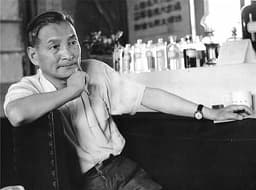
Chen Yun
Politician · Modern
55.2Total

Thomas Jefferson
Politician · Modern
64.3Total
Basic Information
Born
1905
1743
Died
1995
1826
Era
Modern
Modern
Nationality
China
United States
Occupation
Politician
Politician
Civilization
Eastern
Western
Score Comparison
Military (10%)
11.7
40.0
Political (20%)
70.3
78.0
Influence (20%)
62.0
65.0
Legacy (20%)
55.0
65.0
Leadership (15%)
78.0
79.8
Strategy (15%)
25.6
41.7
TOTAL
55.2
64.3
Chen Yun — Complete Timeline
1925 AD
Joined the Chinese Communist PartyPolitical Action◆ Major
Chen Yun joined the Chinese Communist Party during the May Thirtieth Movement. He began his career as a labor organizer in Shanghai, rising through the ranks of the party's underground apparatus.
CCP MembershipLabor MovementShanghai
Impact: nationalconstructive
1961 AD
Led economic reconstruction after the Great Leap ForwardReform◆ Major
Chen Yun was appointed to lead economic recovery efforts after the disastrous Great Leap Forward. He implemented policies that reduced central planning, allowed private plots, and stabilized the economy, saving millions from famine.
Economic ReformGreat Leap ForwardFamine Relief
Impact: nationalconstructive
1966 AD
Purged during the Cultural RevolutionPolitical Action◆ Major
Chen Yun was purged from his leadership positions during the Cultural Revolution, accused of being a capitalist roader. He was sent to work in a factory in Jiangxi, but survived the period without being killed.
Cultural RevolutionPurgeEconomic Planning
Impact: nationaldestructive
1978 AD
Advocated for market reforms under Deng XiaopingReform◆ Major
Chen Yun supported Deng Xiaoping's economic reforms, advocating for a 'birdcage economy' that combined state planning with market mechanisms. He helped design the Special Economic Zones and agricultural decollectivization.
Deng XiaopingEconomic ReformMarket Economy
Impact: nationalconstructive
1987 AD
Served as Chairman of the Central Advisory CommissionPolitical Action
Chen Yun became Chairman of the Central Advisory Commission, a body of retired senior leaders. He used this position to influence economic policy, often cautioning against excessive market liberalization.
Advisory CommissionEconomic PolicyElder Statesman
Impact: national
Thomas Jefferson — Complete Timeline
1776 AD
Drafting of the Declaration of IndependencePolitical Action
Jefferson was the principal author of the Declaration of Independence, adopted by the Continental Congress on July 4, 1776. The document proclaimed the American colonies' separation from Britain and articulated natural rights to life, liberty, and the pursuit of happiness.
IndependenceFounding DocumentHuman Rights
Impact: globalprogressive
1786 AD
Virginia Statute for Religious FreedomReform◆ Major
Jefferson authored the Virginia Statute for Religious Freedom, which disestablished the Church of England in Virginia and guaranteed religious liberty. The statute became a model for the First Amendment to the U.S. Constitution.
Religious FreedomLawSeparation of Church and State
Impact: nationalprogressive
1803 AD
Louisiana PurchasePolitical Action
As President, Jefferson authorized the purchase of the Louisiana Territory from France for $15 million, doubling the size of the United States. The acquisition opened vast lands for westward expansion and strengthened federal power.
Territorial ExpansionDiplomacyLand Acquisition
Impact: globalconstructive
1807 AD
Embargo Act of 1807Political Action◆ Major
Jefferson signed the Embargo Act, prohibiting American ships from trading with foreign nations to avoid entanglement in the Napoleonic Wars. The act devastated the U.S. economy, particularly in New England, and was widely unpopular, leading to its repeal in 1809.
Trade PolicyEconomic SanctionsForeign Relations
Impact: nationaldestructive
1819 AD
Founding of the University of VirginiaCultural◆ Major
Jefferson founded the University of Virginia, designing its architecture and curriculum. The university emphasized secular education, scientific inquiry, and a broad liberal arts curriculum, reflecting Jefferson's commitment to public education.
EducationUniversityArchitecture
Impact: nationalconstructive
Expert Analysis
Origins
Chen Yun was born in 1905 into a poor peasant family in Qingpu, Jiangsu (now Shanghai). Orphaned at a young age, he worked as an apprentice in a bookstore, where he encountered Marxist literature. He joined the Chinese Communist Party in 1925 during the May Thirtieth Movement, starting as a labor organizer in Shanghai. His early experiences in the working class shaped his pragmatic approach to economic policy.
Thomas Jefferson was born in 1743 at Shadwell, Virginia, into a wealthy planter family. He was educated at the College of William & Mary, studying law and Enlightenment philosophy. Inheriting a large estate, he became a lawyer and politician. His exposure to Enlightenment thinkers like John Locke influenced his views on natural rights and government.
Rise to Power
Chen Yun rose through the CCP's organizational ranks. In the 1930s, he worked in the Soviet Union and became a key figure in the party's financial and economic work. During the Yan'an period, he headed the Organization Department, consolidating party discipline. His influence grew after 1949, becoming a vice-premier and leading economic planning. He was instrumental in the First Five-Year Plan, but his cautious approach clashed with Mao's radicalism.
Jefferson entered politics in the Virginia House of Burgesses. He gained fame as the primary author of the Declaration of Independence in 1776. He served as Governor of Virginia, Minister to France, Secretary of State under George Washington, and Vice President under John Adams. His political rivalry with Alexander Hamilton shaped the early republic. He won the presidency in 1800 after a contentious election, marking the first peaceful transfer of power between parties.
Leadership & Governance
Chen Yun's leadership style was pragmatic and technocratic. He advocated for 'seeking truth from facts' and opposed ideological excesses. After the Great Leap Forward (1958-1961), he led economic recovery, reducing central planning and introducing market incentives. He scored 78.4 in leadership, reflecting his ability to stabilize the economy. However, his influence waned during the Cultural Revolution, as Mao purged him. He later supported Deng Xiaoping's reforms but urged caution, coining the 'birdcage economy' metaphor—state planning as the cage, market forces as the bird.
Jefferson's governance emphasized limited government and agrarianism. As president, he reduced the national debt, military, and bureaucracy. He championed the Louisiana Purchase (1803), doubling U.S. territory despite constitutional qualms. His Embargo Act of 1807, intended to avoid war, backfired, devastating the economy and scoring low in strategy (41.7). He founded the University of Virginia, promoting secular education. His leadership score of 79.8 reflects his vision but also his inconsistencies, such as owning slaves while advocating liberty.
Triumph & Tragedy
Chen Yun's greatest triumph was stabilizing China's economy after the Great Leap Forward, restoring agricultural production and industrial output. His policies reduced famine and laid groundwork for later reforms. His tragedy was his purge during the Cultural Revolution, where he was labeled a 'capitalist roader' and sent to a factory. He lost influence for over a decade, though he later returned.
Jefferson's triumph is the Declaration of Independence, a foundational document for democratic governance. The Louisiana Purchase was a strategic masterstroke, expanding the nation. His tragedy is the Embargo Act, which crippled trade and led to smuggling. Also, his legacy is marred by his slave ownership and the Sally Hemings controversy, highlighting the gap between his ideals and actions.
Character & Destiny
Chen Yun was reserved, analytical, and stubbornly pragmatic. His caution saved China from greater economic disasters but also limited his ambition. He avoided the spotlight, preferring to work behind the scenes. His fate was shaped by the CCP's internal power struggles; his loyalty to the party did not protect him from Mao's purges.
Jefferson was intellectual, idealistic, and sometimes contradictory. He believed in reason and progress but lived a life of privilege and contradiction. His character—optimistic about human nature—led him to trust in the people's wisdom, but also to overlook the moral failings of slavery. His destiny was to be remembered as a champion of liberty, despite his personal flaws.
Legacy
Chen Yun's legacy is his contribution to China's economic reforms. His 'birdcage economy' concept influenced Deng's market reforms, though his cautious approach was overshadowed by more radical reformers. He scored 69.1 in legacy, reflecting his role in shaping modern China's economic system. Today, he is remembered as a pragmatic economist who prioritized stability.
Jefferson's legacy is immense. The Declaration of Independence, the Louisiana Purchase, and the University of Virginia endure. His ideas on religious freedom and limited government remain central to American identity. He scored 65.0 in legacy, but his influence on political thought is global. However, his slave ownership tarnishes his reputation, leading to ongoing debates.
Conclusion
Comparing Chen Yun and Thomas Jefferson reveals two very different kinds of impact. Chen Yun's influence is narrower—primarily economic policy in China—but his scores (total 66.5) edge out Jefferson's (64.3). Jefferson's ideas shaped a nation and inspired the world, but his practical achievements were mixed. Chen Yun's pragmatic reforms saved millions from famine and set China on a path to growth. While Jefferson's philosophical contributions are profound, Chen Yun's concrete impact on human welfare gives him a slight edge in overall effectiveness. Therefore, Chen Yun had a greater direct impact on his nation's development, though Jefferson's ideological legacy is broader.
Rankings
🥇
Thomas JeffersonLeader
Mil: 40.0Pol: 78.0Inf: 65.0
64.3
🥈
Chen Yun
Mil: 11.7Pol: 70.3Inf: 62.0
55.2
+9.1 behind
How This Comparison Works
Algorithm
Each figure is scored on 6 dimensions (0—100 scale) based on structured historical data: Military (10%), Political (20%), Influence (20%), Legacy (20%), Leadership (15%), Strategy (15%). The weighted total produces the final ranking.
Data Sources
Scores are computed from structured sub-indicators in the database. Scale factors adjust for era (Ancient ×0.85, Modern ×1.0) and civilization size (Eastern ×1.05, Other ×0.80) to account for differences in population and military scale.
Maximum 3 Figures
Comparisons are limited to 2—3 figures to ensure readability and statistical meaningfulness.
Error Margins
±5 points per dimension — Sub-scores are derived from historical records with inherent uncertainty. Two figures within 5 points on a dimension should be considered roughly equivalent in that area.
Total Score Accuracy
±3 points overall — The weighted combination of 6 dimensions produces a total score with approximately ±3 points of uncertainty. Differences of less than 3 points are not statistically significant— the figures are effectively tied.
Known Limitations
- Historical records are incomplete and uneven across civilizations
- Figures from oral-tradition societies may be underrepresented
- Occupation labels can misclassify multi-role figures
- Scores measure capability and impact, not moral character
- Quantitative scoring is a comparison tool, not absolute truth
Capability Radar
Military (10%) — Battles & Warfare
Battles
16
0
Win Rate
17
0
Expansion
20
65
Political (20%) — Governance & Reform
Reform
80
85
Diplomacy
70
75
Economy
90
70
Influence (20%) — Cultural & Global Reach
Cultural
40
80
Global
60
75
Legacy (20%) — Historical Impact
Historical
75
85
Longevity
65
80
Leadership (15%) — Power & Stability
Tenure
75
70
Stability
85
60
Strategy (15%) — Tactics & Innovation
Strategy
26
0
Tactics
27
0
Reform
28
20
Similar Comparisons
Comments & Discussion
No comments yet. Be the first to share your thoughts!