Loading...
Cheng Pu vs Sima Shi
Sima Shi leads by 12.0 pts · 2 figures compared
…

Cheng Pu
General · Ancient
49.1Total
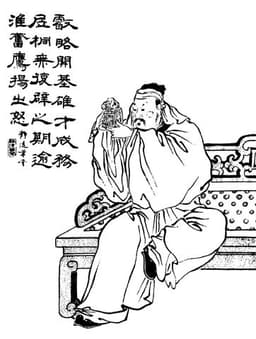
Sima Shi
General · Ancient
61.1Total
Basic Information
Born
160
208
Died
215
255
Era
Ancient
Ancient
Nationality
China
China
Occupation
General
General
Civilization
Eastern
Eastern
Score Comparison
Military (10%)
70.0
72.0
Political (20%)
35.0
68.0
Influence (20%)
50.2
53.3
Legacy (20%)
40.8
48.3
Leadership (15%)
54.2
72.0
Strategy (15%)
60.0
75.0
TOTAL
49.1
61.1
Cheng Pu — Complete Timeline
190 AD
Service under Sun JianWar
Cheng Pu began his military career serving Sun Jian, the founder of the Eastern Wu dynasty. He participated in Sun Jian's campaigns against Dong Zhuo during the campaign against the tyrant, establishing his reputation as a capable commander.
ServiceSun JianThree Kingdoms
Impact: regional
195 AD
Service under Sun CeWar◆ Major
After Sun Jian's death, Cheng Pu transferred his loyalty to Sun Ce. He played a key role in Sun Ce's conquest of the Jiangdong region, helping to establish the foundation of the Wu kingdom through numerous battles.
ServiceSun CeJiangdong
Impact: regionalconstructive
200 AD
Service under Sun QuanWar◆ Major
Following Sun Ce's death, Cheng Pu served Sun Quan as a senior general. He provided crucial military advice and leadership during the early years of Sun Quan's rule, helping to stabilize the Wu regime.
ServiceSun QuanStability
Impact: regionalconstructive
208 AD
Battle of Red CliffsWar
Cheng Pu served as a senior commander under Zhou Yu in the allied forces of Sun Quan and Liu Bei against Cao Cao. The victory at Red Cliffs prevented Cao Cao's southern conquest and solidified the tripartite division of China.
BattleRed CliffsThree Kingdoms
Impact: global
215 AD
Death of Cheng PuOther
Cheng Pu died of natural causes at an advanced age, having served three generations of the Sun family. His long service and loyalty were highly respected, and he was posthumously honored by Sun Quan.
DeathLoyaltyEastern Wu
Impact: regional
Sima Shi — Complete Timeline
249 AD
Coup Against Cao ShuangPolitical Action
Sima Shi participated in his father Sima Yi's coup at Gaoping Tombs, which removed the regent Cao Shuang from power. This event marked the beginning of the Sima family's dominance over the Cao Wei state.
Three KingdomsWeiCoupSima Yi
Impact: nationaldestructive
251 AD
Suppression of Wang Ling's RebellionWar◆ Major
Sima Shi led a campaign to suppress the rebellion of Wang Ling, a Wei general who opposed the Sima family's control. Wang Ling was defeated and committed suicide, solidifying Sima Shi's authority in the Wei court.
Three KingdomsWeiRebellionSima Family
Impact: nationaldestructive
255 AD
Death from IllnessOther◆ Major
Sima Shi died from an illness while on campaign against the rebellion of Guanqiu Jian and Wen Qin. His brother Sima Zhao succeeded him as regent of Wei, continuing the Sima family's path to founding the Jin Dynasty.
Three KingdomsWeiSima ZhaoSuccession
Impact: national
Expert Analysis
Origins
Cheng Pu (c. 160-220s) was born in a turbulent era as the Han dynasty crumbled. Little is known of his early life, but he emerged as a military retainer under Sun Jian, the founder of the Eastern Wu dynasty. His loyalty to the Sun family began in his youth, fighting alongside Sun Jian against Dong Zhuo in 190 AD. Cheng Pu's formative years were shaped by constant warfare and the need for steadfast loyalty in a fragmented China.
Sima Shi (208-255) was born into the powerful Sima clan, the eldest son of Sima Yi, a prominent Wei strategist. His family background placed him at the center of Wei politics from an early age. Sima Shi received a thorough education in Confucian classics and military strategy, preparing him for a life of political maneuvering. His father's influence and his own ambition set him on a path to seize power.
Rise to Power
Cheng Pu rose through consistent service. After Sun Jian's death in 191, he transferred his allegiance to Sun Ce and played a crucial role in the conquest of Jiangdong (199-200). His experience made him a senior commander under Zhou Yu at the Battle of Red Cliffs (208), where his score of 60.0 in strategy contributed to the allied victory. Following Sun Ce's death, he served Sun Quan as a trusted general, providing military advice during the early years of Sun Quan's reign. His rise was based on reliability and longevity, not political intrigue.
Sima Shi's rise was more calculated. In 249, he participated in his father Sima Yi's coup at Gaoping Tombs, overthrowing the regent Cao Shuang. This event marked the beginning of the Sima family's control over Wei. Sima Shi's political score of 68.0 reflects his role in this coup. After Sima Yi's death in 251, Sima Shi inherited the regency and swiftly suppressed Wang Ling's rebellion (251), consolidating power. His leadership score of 72.0 enabled him to command loyalty from Wei's military.
Leadership & Governance
Cheng Pu led by example on the battlefield, earning respect from soldiers through personal courage. His governance approach was minimal; he focused on military campaigns rather than administration. He served under Sun Quan's overall strategy, never seeking political power. His leadership score of 54.2 reflects his limitations as a commander rather than a ruler.
Sima Shi governed through a combination of military force and political manipulation. He appointed loyalists to key positions and crushed dissent ruthlessly. His suppression of Wang Ling's rebellion demonstrated his willingness to eliminate rivals. Sima Shi's political score of 68.0 and leadership score of 72.0 allowed him to maintain control over Wei's bureaucracy. He centralized power in his own hands, paving the way for his brother Sima Zhao to ultimately usurp the throne.
Triumph & Tragedy
Cheng Pu's greatest triumph was his role in the Battle of Red Cliffs, where his experience helped secure a victory that preserved Sun Quan's independence. He also successfully served three generations of Sun rulers without incident, a rare feat in the Three Kingdoms. His tragedy was his lack of political ambition; he died as a loyal general without shaping the broader destiny of Wu. His influence score of 50.2 indicates moderate impact.
Sima Shi's triumph was the successful suppression of Wang Ling's rebellion and the consolidation of Sima family power. He also crushed the rebellions of Guanqiu Jian and Wen Qin in 255, though he died during that campaign. His failure was his early death at age 47, which prevented him from completing the usurpation. His legacy score of 48.3 reflects that his brother Sima Zhao and son Sima Yan (who founded the Jin dynasty) overshadowed his achievements.
Character & Destiny
Cheng Pu was known for his loyalty, humility, and steadfastness. He never sought personal glory, which limited his historical footprint but earned him respect among contemporaries. His character as a faithful servant meant his destiny was tied to the Sun family's fortunes; he rose and fell with them. His total score of 49.1 reflects a competent but unremarkable career.
Sima Shi was ambitious, ruthless, and politically astute. His decision to participate in the Gaoping Tombs coup set him on a path to power. His character drove him to eliminate rivals without mercy, but his illness cut short his ambitions. Historians note that Sima Shi's cruelty, such as executing Wang Ling and his associates, created enemies and contributed to rebellions. His total score of 61.1 indicates a more impactful but morally ambiguous figure.
Legacy
Cheng Pu's legacy is as a model of loyalty in Chinese history. He is remembered in the novel "Romance of the Three Kingdoms" as a brave but secondary figure. His long service helped stabilize Sun Quan's early reign, but he had no lasting institutional impact. His legacy score of 40.8 is among the lowest.
Sima Shi's legacy is more significant. He laid the groundwork for the Jin dynasty's establishment in 266. His political maneuvers and military campaigns destroyed the Cao family's power and centralized authority in the Sima clan. However, his methods set a precedent for ruthless power struggles that plagued the Jin dynasty. His legacy score of 48.3 reflects his role as a transitional figure.
Conclusion
Sima Shi had greater impact on Chinese history than Cheng Pu. With a total score of 61.1 versus 49.1, Sima Shi's actions directly led to the end of the Three Kingdoms and the unification under the Jin dynasty. Cheng Pu, while a loyal and capable general, was a supporting character in the broader narrative. Sima Shi's political and military acumen reshaped the power structure of Wei, whereas Cheng Pu's influence was limited to the battlefield. Therefore, Sima Shi's impact was more transformative, despite his shorter life.
Rankings
🥇
Sima ShiLeader
Mil: 72.0Pol: 68.0Inf: 53.3
61.1
🥈
Cheng Pu
Mil: 70.0Pol: 35.0Inf: 50.2
49.1
+12.0 behind
How This Comparison Works
Algorithm
Each figure is scored on 6 dimensions (0—100 scale) based on structured historical data: Military (10%), Political (20%), Influence (20%), Legacy (20%), Leadership (15%), Strategy (15%). The weighted total produces the final ranking.
Data Sources
Scores are computed from structured sub-indicators in the database. Scale factors adjust for era (Ancient ×0.85, Modern ×1.0) and civilization size (Eastern ×1.05, Other ×0.80) to account for differences in population and military scale.
Maximum 3 Figures
Comparisons are limited to 2—3 figures to ensure readability and statistical meaningfulness.
Error Margins
±5 points per dimension — Sub-scores are derived from historical records with inherent uncertainty. Two figures within 5 points on a dimension should be considered roughly equivalent in that area.
Total Score Accuracy
±3 points overall — The weighted combination of 6 dimensions produces a total score with approximately ±3 points of uncertainty. Differences of less than 3 points are not statistically significant— the figures are effectively tied.
Known Limitations
- Historical records are incomplete and uneven across civilizations
- Figures from oral-tradition societies may be underrepresented
- Occupation labels can misclassify multi-role figures
- Scores measure capability and impact, not moral character
- Quantitative scoring is a comparison tool, not absolute truth
Capability Radar
Military (10%) — Battles & Warfare
Battles
45
65
Win Rate
50
70
Expansion
30
65
Political (20%) — Governance & Reform
Reform
10
65
Diplomacy
30
75
Economy
15
60
Influence (20%) — Cultural & Global Reach
Cultural
25
40
Global
15
30
Legacy (20%) — Historical Impact
Historical
30
55
Longevity
25
45
Leadership (15%) — Power & Stability
Tenure
55
70
Stability
40
70
Strategy (15%) — Tactics & Innovation
Strategy
35
80
Tactics
40
75
Reform
10
60
Similar Comparisons
Comments & Discussion
No comments yet. Be the first to share your thoughts!