Loading...
Chiang Ching-kuo vs Lazarus Chakwera
Chiang Ching-kuo leads by 13.0 pts · 2 figures compared
…
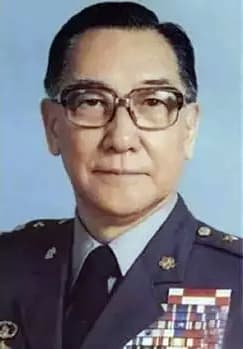
Chiang Ching-kuo
Politician · Modern
58.9Total

Lazarus Chakwera
Politician · Modern
45.9Total
Basic Information
Born
1910
1955
Died
1988
—
Era
Modern
Modern
Nationality
China
Malawi
Occupation
Politician
Politician
Civilization
Eastern
Other
Score Comparison
Military (10%)
36.6
50.0
Political (20%)
72.0
40.8
Influence (20%)
56.7
49.4
Legacy (20%)
52.0
37.5
Leadership (15%)
80.0
58.8
Strategy (15%)
52.8
41.9
TOTAL
58.9
45.9
Chiang Ching-kuo — Complete Timeline
1972 AD
Formation of the Kuomintang ReformPolitical Action
Chiang Ching-kuo initiated reforms within the Kuomintang to reduce corruption and increase Taiwanese representation. He promoted younger, technocratic leaders and implemented policies to integrate native Taiwanese into the party and government, strengthening the KMT's legitimacy.
KMTPolitical ReformTaiwan
Impact: nationalconstructive
1973 AD
Ten Major Construction ProjectsReform◆ Major
As Premier, Chiang Ching-kuo launched the Ten Major Construction Projects, including highways, railways, airports, and a steel mill. These infrastructure investments modernized Taiwan's economy, improved transportation, and laid the foundation for its export-oriented industrialization.
InfrastructureEconomic DevelopmentTaiwan
Impact: nationalconstructive
1987 AD
Lifting of Martial LawPolitical Action
Chiang Ching-kuo lifted martial law in Taiwan, ending 38 years of military rule. This decision allowed the formation of new political parties, restored civil liberties, and initiated a democratic transition, including the legalization of the Democratic Progressive Party.
DemocratizationMartial LawTaiwan
Impact: nationalprogressive
Opening of Family Visits to Mainland ChinaPolitical Action◆ Major
Chiang Ching-kuo allowed Taiwanese civilians to visit relatives in mainland China for the first time since 1949. This policy ended decades of separation for many families and initiated a gradual thaw in cross-strait relations, though official contacts remained limited.
Cross-Strait RelationsFamily ReunificationTaiwan
Impact: regionalconstructive
Lazarus Chakwera — Complete Timeline
2020 AD
Elected President of MalawiPolitical Action◆ Major
Lazarus Chakwera won the presidential election with 59% of the vote, defeating incumbent Peter Mutharika. The election was a rerun after the Constitutional Court annulled the 2019 result due to irregularities. Chakwera became Malawi's first opposition candidate to win a rerun.
ElectionDemocracyMalawi
Impact: nationalconstructive
Appointed Vice President Saulos ChilimaPolitical Action
Chakwera appointed Saulos Chilima as Vice President, his running mate from the Tonse Alliance. Chilima had previously served as Mutharika's VP but broke away. The alliance brought together nine opposition parties.
Government FormationTonse Alliance
Impact: national
2021 AD
Launched Malawi 2063 VisionReform◆ Major
Chakwera launched the Malawi 2063 long-term development plan, aiming to transform Malawi into a wealthy, self-reliant, industrialized nation. The plan focused on agriculture, tourism, and mining. It replaced the earlier Vision 2020.
Development PlanEconomyVision 2063
Impact: nationalconstructive
Anti-Corruption Campaign and ArrestsPolitical Action
Chakwera launched an anti-corruption drive, leading to the arrest of several officials, including former ministers. However, critics accused him of selective targeting. The campaign had mixed results in reducing systemic corruption.
Anti-CorruptionArrestsGovernance
Impact: national
2022 AD
Faced Economic Crisis and Austerity MeasuresOther◆ Major
Under Chakwera, Malawi experienced severe foreign exchange shortages, fuel queues, and rising inflation. His government implemented austerity measures, including cutting public spending and seeking IMF support. The crisis eroded public confidence.
Economic CrisisAusterityIMF
Impact: nationaldestructive
2023 AD
Survived Cyclone Freddy Response CriticismOther◆ Major
Cyclone Freddy struck Malawi, causing over 1,000 deaths and massive destruction. Chakwera's government faced criticism for slow response and inadequate preparedness. The disaster highlighted infrastructure and climate vulnerabilities.
Cyclone FreddyDisaster ResponseClimate
Impact: nationaltragic
Expert Analysis
Origins
Chiang Ching-kuo was born on March 18, 1910, in Fenghua, Zhejiang, China, as the eldest son of Chiang Kai-shek. He spent his early years in China and later studied in the Soviet Union from 1925 to 1937, where he was exposed to Marxist ideology and even worked in a factory. This experience shaped his pragmatic approach. Upon returning to China, he gradually took on administrative roles in the Nationalist government.
Lazarus Chakwera was born on April 5, 1955, in Lilongwe, Malawi. He studied theology at the University of Malawi and later earned a PhD in theology from the University of the North in South Africa. Before entering politics, he served as a pastor and later as the president of the Malawi Assemblies of God. His background in religious leadership heavily influenced his political style.
Rise to Power
Chiang Ching-kuo's rise was tied to his father's regime. He held various positions, including mayor of Taipei and governor of Taiwan Province. In 1972, he became Premier and implemented the Ten Major Construction Projects, which modernized Taiwan's infrastructure. He succeeded his father as President in 1978, consolidating power within the Kuomintang (KMT) and gradually promoting Taiwanese-born technocrats.
Lazarus Chakwera entered politics in 2013, becoming vice president under President Peter Mutharika. He broke away in 2018 to form the Tonse Alliance. In the 2019 presidential election, Chakwera lost but successfully challenged the results in court, leading to a rerun in 2020. He won with 59% of the vote, becoming Malawi's first opposition candidate to unseat an incumbent through legal means.
Leadership & Governance
Chiang Ching-kuo's leadership was characterized by pragmatic authoritarianism. He maintained one-party rule but allowed gradual political liberalization. His governance focused on economic development: the Ten Major Construction Projects (1974-1979) included highways, railways, airports, and steel mills, laying the foundation for Taiwan's economic miracle. He also lifted martial law in 1987, legalized new political parties, and allowed family visits to mainland China, reducing tensions.
Lazarus Chakwera, a Pentecostal pastor, emphasized moral leadership and anti-corruption. He launched the Malawi 2063 Vision, aiming for industrialization and self-reliance. However, his governance has been hampered by economic crises: foreign exchange shortages, fuel queues, and inflation. His response to Cyclone Freddy in 2023 was criticized as slow, and his austerity measures faced public backlash.
Triumph & Tragedy
Chiang Ching-kuo's triumphs include the successful industrialization of Taiwan, raising GDP per capita from $2,000 in 1970 to over $10,000 by 1990. His decision to lift martial law peacefully transitioned Taiwan toward democracy without violence. His tragedies include the suppression of political dissent in the early years, such as the Kaohsiung Incident in 1979, where pro-democracy activists were arrested. Also, his policies favored mainlanders over Taiwanese, creating ethnic tensions.
Lazarus Chakwera's triumph was his legal victory and election, restoring faith in democratic processes. He also appointed a diverse cabinet. His tragedies include the economic downturn under his watch: inflation rose to over 30% in 2023, and the currency devalued. Cyclone Freddy exposed weaknesses in disaster preparedness, with over 1,000 deaths. His approval ratings dropped from 60% in 2020 to around 30% in 2024.
Character & Destiny
Chiang Ching-kuo was known for his pragmatic, hands-on style. He often visited rural areas and factories, earning the nickname "the common man's president." His Soviet experience made him distrustful of both communism and democracy, but he evolved to embrace reform. His character of cautious reform allowed Taiwan to democratize without chaos.
Lazarus Chakwera is a consensus-builder, often seeking input from religious leaders and civil society. However, his deliberative style sometimes leads to indecisiveness. His background as a pastor influences his rhetoric but not always his policies. He faces the destiny of leading a poor, landlocked country with limited resources.
Legacy
Chiang Ching-kuo's legacy is immense: he is credited with transforming Taiwan from a poor, authoritarian state into a prosperous, democratic society. His infrastructure projects remain the backbone of Taiwan's economy. The political reforms he initiated led to the first direct presidential election in 1996. He scored 52.0 in Legacy, reflecting his enduring impact.
Lazarus Chakwera's legacy is still forming. His Malawi 2063 Vision may shape long-term development, but current challenges overshadow it. He scored 37.5 in Legacy, the lowest among the two. His tenure may be remembered for the economic crisis and the cyclone response rather than his achievements.
Conclusion
Chiang Ching-kuo had a greater impact than Lazarus Chakwera. With a total score of 58.9 compared to Chakwera's 45.9, the gap is 13.0 points. Chiang's leadership in economic development and democratic transition reshaped Taiwan and influenced the region. Chakwera, while symbolizing democratic resilience, has struggled to deliver tangible improvements. Chiang's pragmatic reforms created lasting change; Chakwera's vision remains unfulfilled.
Rankings
🥇
Chiang Ching-kuoLeader
Mil: 36.6Pol: 72.0Inf: 56.7
58.9
🥈
Lazarus Chakwera
Mil: 50.0Pol: 40.8Inf: 49.4
45.9
+13.0 behind
How This Comparison Works
Algorithm
Each figure is scored on 6 dimensions (0—100 scale) based on structured historical data: Military (10%), Political (20%), Influence (20%), Legacy (20%), Leadership (15%), Strategy (15%). The weighted total produces the final ranking.
Data Sources
Scores are computed from structured sub-indicators in the database. Scale factors adjust for era (Ancient ×0.85, Modern ×1.0) and civilization size (Eastern ×1.05, Other ×0.80) to account for differences in population and military scale.
Maximum 3 Figures
Comparisons are limited to 2—3 figures to ensure readability and statistical meaningfulness.
Error Margins
±5 points per dimension — Sub-scores are derived from historical records with inherent uncertainty. Two figures within 5 points on a dimension should be considered roughly equivalent in that area.
Total Score Accuracy
±3 points overall — The weighted combination of 6 dimensions produces a total score with approximately ±3 points of uncertainty. Differences of less than 3 points are not statistically significant— the figures are effectively tied.
Known Limitations
- Historical records are incomplete and uneven across civilizations
- Figures from oral-tradition societies may be underrepresented
- Occupation labels can misclassify multi-role figures
- Scores measure capability and impact, not moral character
- Quantitative scoring is a comparison tool, not absolute truth
Capability Radar
Military (10%) — Battles & Warfare
Battles
5
24
Win Rate
5
26
Expansion
5
29
Political (20%) — Governance & Reform
Reform
85
30
Diplomacy
70
40
Economy
90
25
Influence (20%) — Cultural & Global Reach
Cultural
60
20
Global
55
15
Legacy (20%) — Historical Impact
Historical
70
15
Longevity
60
10
Leadership (15%) — Power & Stability
Tenure
75
35
Stability
80
20
Strategy (15%) — Tactics & Innovation
Strategy
5
31
Tactics
5
34
Reform
5
37
Similar Comparisons
Comments & Discussion
No comments yet. Be the first to share your thoughts!