Loading...
Chiang Kai-shek vs George Washington
George Washington leads by 16.2 pts · 2 figures compared
…
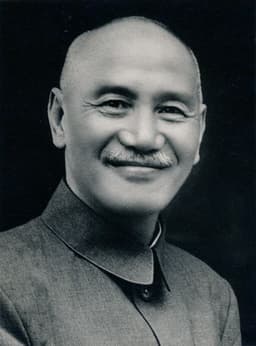
Chiang Kai-shek
Politician · Modern
60.6Total
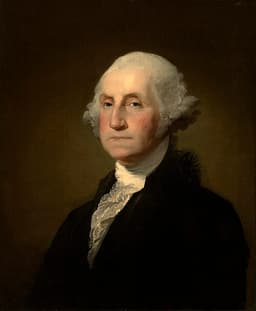
George Washington
Politician · Modern
76.8Total
Basic Information
Born
1887
1732
Died
1975
1799
Era
Modern
Modern
Nationality
China
United States
Occupation
Politician
Politician
Civilization
Eastern
Western
Score Comparison
Military (10%)
70.0
75.0
Political (20%)
62.7
82.0
Influence (20%)
65.0
75.0
Legacy (20%)
52.0
80.0
Leadership (15%)
66.0
85.0
Strategy (15%)
50.0
55.0
TOTAL
60.6
76.8
Chiang Kai-shek — Complete Timeline
1926 AD
Northern ExpeditionWar◆ Major
Chiang Kai-shek led the National Revolutionary Army in the Northern Expedition to defeat warlords and unify China. The campaign succeeded in capturing Beijing and establishing Kuomintang control over most of the country.
UnificationMilitary campaign
Impact: national
1927 AD
Shanghai Massacre of 1927Political Action◆ Major
Chiang Kai-shek ordered the purge of communists and leftists in Shanghai, resulting in thousands of deaths. This event broke the First United Front between the Kuomintang and the Communist Party, leading to civil war.
PurgeCivil war
Impact: nationaldestructive
1937 AD
Leadership during the Second Sino-Japanese WarWar
Chiang Kai-shek, as leader of the Kuomintang, commanded Chinese forces during the Second Sino-Japanese War. He directed the defense of Shanghai and the relocation of the capital to Chongqing, maintaining resistance against Japan.
World War IIChinese resistance
Impact: global
1945 AD
Signing of the Sino-Soviet Treaty of 1945Political Action◆ Major
Chiang Kai-shek signed the Sino-Soviet Treaty of Friendship and Alliance, which recognized Soviet interests in Manchuria in exchange for Soviet support against Japan. The treaty later facilitated Communist gains in the civil war.
DiplomacySoviet Union
Impact: global
1949 AD
Retreat to TaiwanPolitical Action
After losing the Chinese Civil War to the Communists, Chiang Kai-shek retreated to Taiwan with the remnants of the Kuomintang government and military. He established the Republic of China on Taiwan, claiming legitimacy over all of China.
TaiwanExileCold War
Impact: globaltragic
George Washington — Complete Timeline
1775 AD
Appointed Commander-in-Chief of the Continental ArmyOther◆ Major
The Second Continental Congress appointed Washington as commander-in-chief of the Continental Army on June 15, 1775. He accepted the position without pay, taking command of the forces besieging Boston at the start of the American Revolutionary War.
American RevolutionMilitary Leadership
Impact: national
1776 AD
Crossed the Delaware RiverOther◆ Major
On the night of December 25-26, 1776, Washington led 2,400 troops across the ice-choked Delaware River. The surprise attack on Hessian forces at Trenton resulted in a decisive American victory, capturing nearly 1,000 prisoners and reviving Patriot morale after a series of defeats.
American RevolutionBattleTurning Point
Impact: nationalconstructive
1787 AD
Presided over the Constitutional ConventionPolitical Action◆ Major
Washington served as president of the Constitutional Convention in Philadelphia from May to September 1787. His presence lent legitimacy to the proceedings, and he formally signed the final draft of the U.S. Constitution, though he contributed little to the debates.
ConstitutionFounding Father
Impact: national
1789 AD
Inaugurated as First President of the United StatesPolitical Action◆ Major
Washington was unanimously elected by the Electoral College and inaugurated on April 30, 1789, at Federal Hall in New York City. He established numerous executive branch precedents, including the cabinet system, the inaugural address, and the title 'Mr. President'.
PresidencyFounding Father
Impact: national
1793 AD
Issued the Proclamation of NeutralityOther◆ Major
Washington issued the Proclamation of Neutrality on April 22, 1793, declaring the United States neutral in the conflict between France and Great Britain. This decision established the precedent of American isolationism and avoided entanglement in European wars.
Foreign PolicyNeutrality
Impact: national
1796 AD
Delivered the Farewell AddressOther◆ Major
Washington published his Farewell Address on September 19, 1796, announcing his decision not to seek a third term. The address warned against political factionalism, permanent foreign alliances, and the influence of the military in government, shaping American political culture.
PresidencyLegacy
Impact: national
Expert Analysis
George Washington vs Chiang Kai-shek
### The Reluctant Founder and the General Who Lost China
In the winter of 1796, George Washington, the most powerful man in the United States, did something almost unheard of: he gave power back. He insisted on retiring after two terms, setting a precedent that would hold for 144 years. Less than a century and a half later, on the other side of the world, another man who had once been the most powerful in China, Chiang Kai-shek, clung to a crumbling island, insisting he was the rightful ruler of a nation he could no longer even visit. One man built a system designed to outlast him; the other saw his system collapse around him. Why did the paths of these two modern nation-builders diverge so dramatically?
### Origins
George Washington was born into the Virginia gentry in 1732, a world of tobacco plantations and cautious ambition. His formal education was modest, but he learned the hard lessons of the frontier as a surveyor and soldier. The American colonies were a patchwork of self-governing assemblies, suspicious of central authority. Washington’s era was shaped by Enlightenment ideas of natural rights and a deep distrust of monarchy. He was a man of his time: practical, reserved, and acutely aware of his public image.
Chiang Kai-shek was born in 1887, at the twilight of the Qing Dynasty. China was a crumbling empire, humiliated by foreign powers and wracked by internal rebellion. His early life was marked by chaos—banditry, warlord violence, and a deep sense of national shame. Where Washington grew up in a society with established, if imperfect, legal traditions, Chiang grew up in a world where power was often simply a matter of who had the most guns. He was forged in the crucible of revolution, his worldview shaped by Sun Yat-sen’s nationalist ideals but also by the brutal pragmatism of a world where loyalty was fleeting.
### Rise to Power
Washington’s rise was a story of careful, almost reluctant, accumulation of trust. His military reputation was forged in the disastrous French and Indian War, where he learned the limits of raw courage and the value of retreat. By 1775, when the Second Continental Congress needed a commander-in-chief, he was chosen not because he was the most brilliant general, but because he was a Virginian who could bind the colonies together. His path to power was through service, not seizure.
Chiang Kai-shek’s rise was a violent, opportunistic scramble. After Sun Yat-sen’s death in 1925, Chiang maneuvered through the chaos of the Kuomintang, using his position as commandant of the Whampoa Military Academy to build a loyal base. In 1926, he launched the Northern Expedition, a brilliant military campaign that defeated the warlords and nominally unified China. This was his greatest triumph, a moment of genuine national leadership. But unlike Washington, who consolidated power by building consensus, Chiang consolidated it by eliminating rivals—most notoriously in the 1927 Shanghai Massacre, where he purged his communist allies in a bloodbath that would haunt him for decades.
### Leadership & Governance
As a leader, Washington was a master of restraint. As president, he deliberately avoided the trappings of monarchy, insisted on being called “Mr. President,” and walked the streets of New York unguarded. He understood that the greatest threat to the new republic was not foreign invasion but the ambition of its own leaders. His executive style was to listen, to deliberate, and to let his cabinet—including the brilliant rivals Hamilton and Jefferson—debate policy. He governed by moral authority, not by force.
Chiang Kai-shek governed by control. His leadership style was paternalistic and authoritarian. He saw himself as the indispensable man, the “Generalissimo” who alone could save China. During the Second Sino-Japanese War (1937-1945), he directed a desperate, grinding defense, but his military strategy was often compromised by his deep suspicion of his own communist allies. He spent almost as much energy blockading Mao’s forces as he did fighting the Japanese. His political wisdom was tactical, not strategic; he could win battles and manipulate factions, but he could never build the broad, popular legitimacy that Washington achieved.
### Triumph & Tragedy
Washington’s greatest moment was his surrender of power. After the Revolutionary War, he resigned his commission to Congress, an act that astonished the world. King George III reportedly said that if Washington did that, he would be “the greatest man in the world.” His tragedy, if it can be called that, was personal: he died childless (in the biological sense), his greatest legacy being an idea rather than a dynasty.
Chiang’s greatest moment was leading China through eight brutal years of war against Japan, keeping a shattered nation in the fight. But his tragedy was immense. In 1945, he signed the Sino-Soviet Treaty, trading away Manchurian interests for Soviet non-interference—a desperate gamble that failed. By 1949, his armies had disintegrated, his government was corrupt, and he fled to Taiwan. He won the war against Japan but lost the peace, and ultimately, his country.
### Character & Destiny
Washington’s personality was defined by a fierce, almost obsessive self-control. He was not a warm man; he was distant, formal, and acutely aware of his own flaws. He had a volcanic temper that he learned to master. This discipline allowed him to make the ultimate sacrifice of power. His destiny was to be the father of a nation because he refused to be its king.
Chiang’s personality was defined by a brittle pride and a deep, unyielding stubbornness. He was a devout Christian who believed in his own divine mission, yet he was also a ruthless pragmatist. He could not forgive, and he could not delegate. His destiny was to be the man who lost China, because he could not see that his own authority was the very thing that was destroying it.
### Legacy
Washington’s legacy is a living constitution, a peaceful transfer of power, and the very idea of a president who is not a monarch. He is the marble face on the dollar bill, but also the man who chose to be mortal.
Chiang Kai-shek’s legacy is deeply contested. In mainland China, he is a villain. In Taiwan, he is a complex figure—the author of martial law but also the defender of the island against communism. His rule left a legacy of authoritarianism and corruption, but also of modernization and anti-communist resistance. He is remembered not as a founder, but as a general who fought a long war and lost the final battle.
### Conclusion
Standing on the deck of a ship fleeing to Taiwan in 1949, Chiang Kai-shek might have thought of Washington, who had faced his own dark winter at Valley Forge. The difference was not in courage, but in vision. Washington knew that a nation is built on laws and trust, not on the will of a single man. Chiang, for all his brilliance, could never quite believe that. The tragedy of his life is that he fought to unify China, but in the end, he could not unify his own soul. One man built a republic; the other built a fortress around himself. History, as always, was watching.
Rankings
🥇
George WashingtonLeader
Mil: 75.0Pol: 82.0Inf: 75.0
76.8
🥈
Chiang Kai-shek
Mil: 70.0Pol: 62.7Inf: 65.0
60.6
+16.2 behind
How This Comparison Works
Algorithm
Each figure is scored on 6 dimensions (0—100 scale) based on structured historical data: Military (10%), Political (20%), Influence (20%), Legacy (20%), Leadership (15%), Strategy (15%). The weighted total produces the final ranking.
Data Sources
Scores are computed from structured sub-indicators in the database. Scale factors adjust for era (Ancient ×0.85, Modern ×1.0) and civilization size (Eastern ×1.05, Other ×0.80) to account for differences in population and military scale.
Maximum 3 Figures
Comparisons are limited to 2—3 figures to ensure readability and statistical meaningfulness.
Error Margins
±5 points per dimension — Sub-scores are derived from historical records with inherent uncertainty. Two figures within 5 points on a dimension should be considered roughly equivalent in that area.
Total Score Accuracy
±3 points overall — The weighted combination of 6 dimensions produces a total score with approximately ±3 points of uncertainty. Differences of less than 3 points are not statistically significant— the figures are effectively tied.
Known Limitations
- Historical records are incomplete and uneven across civilizations
- Figures from oral-tradition societies may be underrepresented
- Occupation labels can misclassify multi-role figures
- Scores measure capability and impact, not moral character
- Quantitative scoring is a comparison tool, not absolute truth
Capability Radar
Military (10%) — Battles & Warfare
Battles
75
75
Win Rate
35
70
Expansion
65
60
Political (20%) — Governance & Reform
Reform
55
90
Diplomacy
60
85
Economy
40
65
Influence (20%) — Cultural & Global Reach
Cultural
60
85
Global
65
85
Legacy (20%) — Historical Impact
Historical
70
95
Longevity
55
90
Leadership (15%) — Power & Stability
Tenure
85
70
Stability
30
85
Strategy (15%) — Tactics & Innovation
Strategy
60
80
Tactics
55
65
Reform
50
85
Similar Comparisons
Comments & Discussion
LordTerminus6/16/2026
Washington was a genuine constitutionalist, not just a reluctant dictator—Chiang was an authoritarian who never understood legitimacy comes from institutions, not guns. When Washington resigned his commission in 1783, he actually meant it. When Chiang "retired" in 1949, he just moved the capital to Taipei and kept ruling. Washington walked away from power twice; Chiang never walked away from anything except mainland China. That's the difference between a founder and a fugitive.