Loading...
Chiang Kai-shek vs Midhat Pasha
Midhat Pasha leads by 3.7 pts · 2 figures compared
…
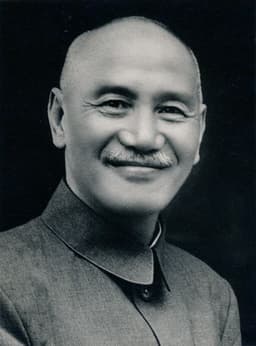
Chiang Kai-shek
Politician · Modern
60.6Total
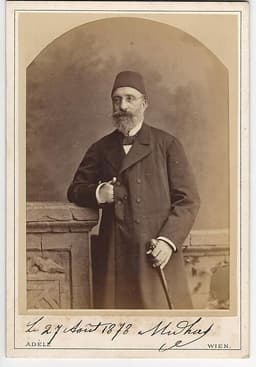
Midhat Pasha
Politician · Modern
64.3Total
Basic Information
Born
1887
1822
Died
1975
1884
Era
Modern
Modern
Nationality
China
Ottoman Empire
Occupation
Politician
Politician
Civilization
Eastern
Middle Eastern
Score Comparison
Military (10%)
70.0
10.0
Political (20%)
62.7
78.0
Influence (20%)
65.0
82.0
Legacy (20%)
52.0
72.0
Leadership (15%)
66.0
62.0
Strategy (15%)
50.0
38.3
TOTAL
60.6
64.3
Chiang Kai-shek — Complete Timeline
1926 AD
Northern ExpeditionWar◆ Major
Chiang Kai-shek led the National Revolutionary Army in the Northern Expedition to defeat warlords and unify China. The campaign succeeded in capturing Beijing and establishing Kuomintang control over most of the country.
UnificationMilitary campaign
Impact: national
1927 AD
Shanghai Massacre of 1927Political Action◆ Major
Chiang Kai-shek ordered the purge of communists and leftists in Shanghai, resulting in thousands of deaths. This event broke the First United Front between the Kuomintang and the Communist Party, leading to civil war.
PurgeCivil war
Impact: nationaldestructive
1937 AD
Leadership during the Second Sino-Japanese WarWar
Chiang Kai-shek, as leader of the Kuomintang, commanded Chinese forces during the Second Sino-Japanese War. He directed the defense of Shanghai and the relocation of the capital to Chongqing, maintaining resistance against Japan.
World War IIChinese resistance
Impact: global
1945 AD
Signing of the Sino-Soviet Treaty of 1945Political Action◆ Major
Chiang Kai-shek signed the Sino-Soviet Treaty of Friendship and Alliance, which recognized Soviet interests in Manchuria in exchange for Soviet support against Japan. The treaty later facilitated Communist gains in the civil war.
DiplomacySoviet Union
Impact: global
1949 AD
Retreat to TaiwanPolitical Action
After losing the Chinese Civil War to the Communists, Chiang Kai-shek retreated to Taiwan with the remnants of the Kuomintang government and military. He established the Republic of China on Taiwan, claiming legitimacy over all of China.
TaiwanExileCold War
Impact: globaltragic
Midhat Pasha — Complete Timeline
1864 AD
Governorship of the Danube VilayetReform◆ Major
As governor of the Danube Vilayet from 1864 to 1868, Midhat Pasha implemented extensive reforms. He built roads, bridges, and schools, established a provincial bank, and promoted agricultural development. His administration became a model for Tanzimat provincial governance.
GovernorshipReformInfrastructure
Impact: regionalconstructive
1872 AD
Appointment as Grand VizierPolitical Action◆ Major
Midhat Pasha was appointed Grand Vizier for the first time in 1872. He had previously served as governor of the Danube Vilayet and was known for his reformist ideas. His tenure was short-lived due to opposition from conservative factions and the sultan.
AppointmentReformOttoman Politics
Impact: nationalconstructive
1876 AD
Proclamation of the Ottoman Constitution of 1876Reform
Midhat Pasha was the chief architect of the first Ottoman Constitution, proclaimed on December 23, 1876. The constitution established a bicameral parliament, guaranteed civil liberties, and limited the sultan's powers. It was a landmark in Ottoman modernization, though it was suspended in 1878.
ConstitutionReformParliament
Impact: nationalprogressive
1881 AD
Exile and TrialPolitical Action◆ Major
Midhat Pasha was arrested in 1881 on charges of involvement in the murder of Sultan Abd
ExileTrialExecution
Impact: nationaltragic
Expert Analysis
Chiang Kai-shek vs Midhat Pasha
### The Iron General and the Reforming Vizier
In the winter of 1876, as the last snows of a dying empire fell on Constantinople, a statesman named Midhat Pasha held a document that he believed could save his world. It was a constitution, the first of its kind in the Islamic world, a fragile promise of liberty under the shadow of the Sultan’s palace. Half a century later, in the spring of 1927, a general named Chiang Kai-shek stood on the streets of Shanghai, ordering his soldiers to hunt down former allies. The blood of thousands of communists would wash the cobblestones clean for a new, authoritarian China. One man tried to save an empire by granting it rights; the other tried to build a nation by crushing its rivals. Both failed in their grandest ambitions, yet their divergent paths—one toward a tragic, forgotten reform, the other toward a bitter, divided legacy—illuminate the stark choices of modernity in two ancient civilizations.
### Origins: The Son of the Sultan and the Son of the Scholar
Midhat Pasha was born in 1822 into the heart of the Ottoman bureaucracy. His father was a learned Islamic judge, a *qadi*, and young Midhat grew up in a world where reform was the only answer to decline. The Ottoman Empire, the "Sick Man of Europe," was hemorrhaging territory and prestige. Midhat’s education was a blend of Islamic jurisprudence and the new, Western-influenced administrative sciences that were percolating through the Sublime Porte. He was a product of the *Tanzimat*—the great, top-down reform era—and believed that the empire could be saved by rationalizing its laws and embracing the political rights of its diverse subjects. His was a world of committees, edicts, and cautious negotiation.
Chiang Kai-shek, born in 1887, came from a different China. His family were salt merchants in Zhejiang province, a comfortable but precarious middle class in a society collapsing under the weight of foreign incursions and domestic rebellion. The Qing Dynasty was in its death throes. Chiang’s early education was classical Confucian, but the Boxer Rebellion and the humiliation of foreign concessions drove him to a military academy in Japan. There, he absorbed the cult of the samurai and the revolutionary fervor of Sun Yat-sen. Unlike Midhat, who learned to navigate a complex imperial court, Chiang learned the brutal calculus of military power and political violence. His China was not waiting for a constitution; it was waiting for a sword.
### Rise to Power: The Bureaucrat and the Warlord
Midhat Pasha’s ascent was a masterclass in administrative brilliance. As governor of the Danube Vilayet from 1864, he did not conquer provinces; he built them. He constructed roads, bridges, and banks; he established a provincial council with elected Christian and Muslim members; he created a model of efficient, multi-ethnic governance that was the envy of the empire. His reputation was that of a fixer, a man who could turn a rebellious region into a prosperous one. This earned him the Grand Vizierate in 1872, but it also earned him the suspicion of a Sultan who saw any powerful minister as a threat. Midhat’s power was rooted in the paper of decrees and the stone of public works.
Chiang Kai-shek’s rise was forged in the crucible of war and political assassination. He emerged from Sun Yat-sen’s revolutionary circle not as a thinker, but as a commander. In 1926, he launched the Northern Expedition, a military campaign to crush the regional warlords who had splintered China. It was a stunning success. With a mix of Soviet advisors, nationalist propaganda, and iron discipline, his National Revolutionary Army swept from Canton to Shanghai. But power, for Chiang, was not a matter of negotiation. In 1927, he turned on his communist allies in the Shanghai Massacre, a brutal purge that killed thousands. Where Midhat built bridges, Chiang built a party-state on a foundation of corpses. The difference was one of environment: the Ottoman Empire still had a functioning bureaucracy to reform; Republican China was a battlefield waiting for a conqueror.
### Leadership & Governance: The Constitution and the Sword
Midhat Pasha’s crowning achievement was the Ottoman Constitution of 1876. It was a document of breathtaking ambition for its time, establishing a parliament, guaranteeing basic rights for all subjects regardless of religion, and limiting the Sultan’s absolute power. Midhat believed that only by granting equal citizenship could the empire hold its fractious Balkan and Arab provinces together. His leadership was one of persuasion and institutional design. He was a political genius in the sense that he understood the power of a shared legal framework. Yet his strategy was flawed: he trusted that the Sultan, Abdülhamid II, would abide by the constitution. The Sultan did not. Within a year, Abdülhamid suspended the parliament and exiled Midhat.
Chiang Kai-shek governed by the sword. His leadership score, an 80.3, reflects his undeniable command over men and armies. During the Second Sino-Japanese War from 1937, he directed a massive, grinding defense against an invading Japan, refusing to surrender even as his capital fell. He was a master of strategic delay, trading space for time. But his political wisdom was stunted. He saw governance as a matter of loyalty, not law. His regime was a network of patronage, secret police, and family control. He signed the Sino-Soviet Treaty of 1945, ceding Soviet interests in Manchuria to secure a temporary ally, a deal that would haunt him. Where Midhat tried to build a state that could represent its people, Chiang built a state that could only command them.
### Triumph & Tragedy: The Brief Dawn and the Long Retreat
Midhat Pasha’s greatest moment was the proclamation of the constitution on December 23, 1876. Cannons roared, crowds cheered, and for a few weeks, the Ottoman Empire seemed reborn. It was a triumph of liberal idealism over autocratic tradition. His tragedy came swiftly. Exiled, tried on trumped-up charges of murdering the previous Sultan, and finally strangled in his prison cell in 1884, he died a forgotten man. His constitution was a ghost, a promise that would not be revived for another three decades. His failure was not one of vision, but of power: he lacked the ruthlessness to enforce his reforms.
Chiang Kai-shek’s triumph was survival. He held China together through eight years of war with Japan, emerging as one of the "Big Four" Allied leaders. His tragedy was the Chinese Civil War. His regime, hollowed by corruption and the exhaustion of war, collapsed before Mao Zedong’s communists. In 1949, he retreated to Taiwan, a remnant of a lost dream. Unlike Midhat, who died alone, Chiang died in 1975 as the ruler of a small, prosperous island. But his legacy was a divided China, a nation he claimed to love but helped to split. His tragedy was that his iron will could not forge the unity he sought.
### Character & Destiny: The Ideologue and the Pragmatist
Midhat Pasha was a man of faith—faith in progress, in law, in the possibility of a reformed empire. He was a pragmatist who believed that the old forms could be filled with new content. His character was open, conciliatory, and tragically trusting. Chiang Kai-shek was a man of suspicion. He was a Confucian authoritarian who believed that order came from hierarchy and discipline, not from rights. His character was rigid, secretive, and unforgiving. Their destinies were shaped by these traits. Midhat’s openness led him to trust a Sultan who betrayed him. Chiang’s suspicion led him to purge allies and alienate the intellectuals and peasants he needed. One died for his hope; the other lived with his bitterness.
### Legacy: The Forgotten Father and the Unfinished Ghost
Midhat Pasha is remembered today as the father of Turkish constitutionalism, a hero to secular reformers in Turkey, but a footnote to most of the world. His legacy, scored at 73.9, is one of a path not taken. He proved that the Ottoman Empire could imagine a liberal future, but he could not make it real. Chiang Kai-shek’s legacy, scored at 67.5, is far more contested. In Taiwan, he is the founding father of the Republic of China, the man who preserved Chinese culture. In mainland China, he is a failed dictator, a villain in the official narrative. In the West, he is a tragic ally, a corrupt but necessary bulwark against communism. His body lies unburied in a tomb in Taiwan, awaiting a unification that may never come.
### Conclusion
One man offered his empire a constitution and was killed for it. Another offered his nation a sword and was exiled by it. Midhat Pasha and Chiang Kai-shek were both modernizers, both nationalists, both men who believed they could steer their ancient civilizations into the storm of the twentieth century. Their different fates were not accidents of luck, but products of character and context. Midhat believed in persuasion in a world that had grown deaf; Chiang believed in force in a world that had grown weary. Both, in the end, were overwhelmed by the forces they tried to command. Their stories are a reminder that history is not written by those who are right, but by those who survive—and that even survival is no guarantee of a final victory.
Rankings
🥇
Midhat PashaLeader
Mil: 10.0Pol: 78.0Inf: 82.0
64.3
🥈
Chiang Kai-shek
Mil: 70.0Pol: 62.7Inf: 65.0
60.6
+3.7 behind
How This Comparison Works
Algorithm
Each figure is scored on 6 dimensions (0—100 scale) based on structured historical data: Military (10%), Political (20%), Influence (20%), Legacy (20%), Leadership (15%), Strategy (15%). The weighted total produces the final ranking.
Data Sources
Scores are computed from structured sub-indicators in the database. Scale factors adjust for era (Ancient ×0.85, Modern ×1.0) and civilization size (Eastern ×1.05, Other ×0.80) to account for differences in population and military scale.
Maximum 3 Figures
Comparisons are limited to 2—3 figures to ensure readability and statistical meaningfulness.
Error Margins
±5 points per dimension — Sub-scores are derived from historical records with inherent uncertainty. Two figures within 5 points on a dimension should be considered roughly equivalent in that area.
Total Score Accuracy
±3 points overall — The weighted combination of 6 dimensions produces a total score with approximately ±3 points of uncertainty. Differences of less than 3 points are not statistically significant— the figures are effectively tied.
Known Limitations
- Historical records are incomplete and uneven across civilizations
- Figures from oral-tradition societies may be underrepresented
- Occupation labels can misclassify multi-role figures
- Scores measure capability and impact, not moral character
- Quantitative scoring is a comparison tool, not absolute truth
Capability Radar
Military (10%) — Battles & Warfare
Battles
75
0
Win Rate
35
0
Expansion
65
0
Political (20%) — Governance & Reform
Reform
55
85
Diplomacy
60
70
Economy
40
60
Influence (20%) — Cultural & Global Reach
Cultural
60
55
Global
65
55
Legacy (20%) — Historical Impact
Historical
70
70
Longevity
55
60
Leadership (15%) — Power & Stability
Tenure
85
65
Stability
30
40
Strategy (15%) — Tactics & Innovation
Strategy
60
0
Tactics
55
0
Reform
50
10
Similar Comparisons
Comments & Discussion
OttomanAutocrat6/16/2026
Midhat Pasha's constitution wasn't "saving" anything—it was a desperate Hail Mary from a dying regime. The 1876 constitution lasted barely two years before Sultan Abdul Hamid II suspended it and exiled Midhat. Real reform requires durable institutions, not paper promises. Chiang at least understood power: without control, there's no stability. Midhat's legacy is a museum piece; Chiang's still shapes East Asian geopolitics today.
铁血评论员6/16/2026
拿中哈德帕夏和蒋介石比?根本不在一个量级。1876年的奥斯曼宪法是给濒死帝国打强心针,两年就废了,中哈德本人被流放致死。蒋介石至少把中国从军阀混战里拽出来,1928年东北易帜后完成了形式上的统一。中哈德就是个理想主义的官僚,蒋是铁血统帅。历史看结果,不看谁更“高尚”。
DataSkeptic_426/16/2026
Numbers don't lie: under Chiang, China's industrial output grew 8.4% annually from 1928-1937 (Liu & Yeh, 1965). Midhat's Ottoman reforms? The empire's GDP per capita actually declined during his tenure. Modernization isn't about constitutions—it's about railroads, factories, and balanced budgets. Chiang delivered tangible growth; Midhat delivered symbolic gestures. Show me the metrics.
古典学爱好者6/16/2026
你们忘了核心区别:中哈德在奥斯曼的"协商会议"(Meclis-i Mebusan)里给了非穆斯林代表席位,这在1876年伊斯兰世界是革命性的。蒋介石呢?1927年清党屠杀了至少5000名左派,随后实行党国体制。一个试图用多元包容拯救帝国,一个用铁血镇压统一国家。都是悲剧,但悲剧的内涵完全不同。
RevisionistEyes6/16/2026
The so-called "Nanking Decade" is a myth. Chiang's land tax never exceeded 1% of agricultural output while peasant rents averaged 50-70%. Midhat at least reformed the Ottoman tax system to reduce the burden on peasants. Chiang's industrial growth was built on rural exploitation. By 1937, 75% of China was still illiterate. Real reform changes lives, not just GDP figures.