Loading...
Chiang Kai-shek vs Robert Fico
Chiang Kai-shek leads by 12.3 pts · 2 figures compared
…
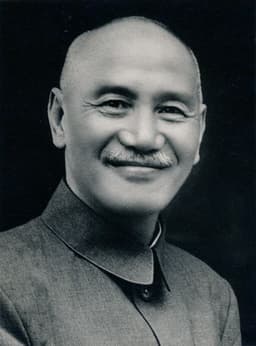
Chiang Kai-shek
Politician · Modern
60.6Total

Robert Fico
Politician · Modern
48.3Total
Basic Information
Born
1887
1964
Died
1975
—
Era
Modern
Modern
Nationality
China
Slovakia
Occupation
Politician
Politician
Civilization
Eastern
Western
Score Comparison
Military (10%)
70.0
11.5
Political (20%)
62.7
62.7
Influence (20%)
65.0
52.5
Legacy (20%)
52.0
42.5
Leadership (15%)
66.0
72.0
Strategy (15%)
50.0
32.4
TOTAL
60.6
48.3
Chiang Kai-shek — Complete Timeline
1926 AD
Northern ExpeditionWar◆ Major
Chiang Kai-shek led the National Revolutionary Army in the Northern Expedition to defeat warlords and unify China. The campaign succeeded in capturing Beijing and establishing Kuomintang control over most of the country.
UnificationMilitary campaign
Impact: national
1927 AD
Shanghai Massacre of 1927Political Action◆ Major
Chiang Kai-shek ordered the purge of communists and leftists in Shanghai, resulting in thousands of deaths. This event broke the First United Front between the Kuomintang and the Communist Party, leading to civil war.
PurgeCivil war
Impact: nationaldestructive
1937 AD
Leadership during the Second Sino-Japanese WarWar
Chiang Kai-shek, as leader of the Kuomintang, commanded Chinese forces during the Second Sino-Japanese War. He directed the defense of Shanghai and the relocation of the capital to Chongqing, maintaining resistance against Japan.
World War IIChinese resistance
Impact: global
1945 AD
Signing of the Sino-Soviet Treaty of 1945Political Action◆ Major
Chiang Kai-shek signed the Sino-Soviet Treaty of Friendship and Alliance, which recognized Soviet interests in Manchuria in exchange for Soviet support against Japan. The treaty later facilitated Communist gains in the civil war.
DiplomacySoviet Union
Impact: global
1949 AD
Retreat to TaiwanPolitical Action
After losing the Chinese Civil War to the Communists, Chiang Kai-shek retreated to Taiwan with the remnants of the Kuomintang government and military. He established the Republic of China on Taiwan, claiming legitimacy over all of China.
TaiwanExileCold War
Impact: globaltragic
Robert Fico — Complete Timeline
2006 AD
First Term as Prime MinisterPolitical Action◆ Major
Fico became Prime Minister of Slovakia after his party Smer-SD won the 2006 parliamentary election. He formed a coalition government and implemented left-wing economic policies.
Prime MinisterSlovakia
Impact: nationalconstructive
2012 AD
Second Term and Euro AdoptionPolitical Action◆ Major
Fico's second term saw Slovakia adopt the euro in 2009. His government pursued fiscal consolidation and social welfare programs, but also faced accusations of corruption.
Euro AdoptionEconomic Policy
Impact: nationalconstructive
2018 AD
Murder of Ján KuciakOther
The murder of investigative journalist J
CorruptionResignation
Impact: nationaltragic
Expert Analysis
Origins
Chiang Kai-shek was born on October 31, 1887, in Xikou, Zhejiang, China, to a moderately wealthy merchant family. He received a traditional Chinese education and later attended military academies in Baoding and Tokyo, where he was influenced by Japanese militarism and revolutionary ideas. His early career included service in the Qing army and later joining the Kuomintang (KMT) under Sun Yat-sen.
Robert Fico was born on September 15, 1964, in Topoľčany, Czechoslovakia (now Slovakia), to a working-class family. He studied law at Comenius University in Bratislava, earning a doctorate in 1992. After the Velvet Revolution, he joined the Communist Party of Czechoslovakia (later transformed into the Party of the Democratic Left). His early political work focused on legal and legislative issues within the party.
Rise to Power
Chiang Kai-shek rose to prominence after Sun Yat-sen's death in 1925. He led the Northern Expedition (1926-1928) to defeat regional warlords and unify China. By 1928, he became the leader of the Nationalist government in Nanjing. His consolidation of power was marked by the Shanghai Massacre of 1927, where he purged communists and leftists, breaking the First United Front and establishing his anti-communist stance.
Robert Fico's rise began with the founding of the Smer-SD (Direction – Social Democracy) party in 1999, splitting from the Party of the Democratic Left. He won the 2006 parliamentary election and became Prime Minister of Slovakia for the first time. His populist platform appealed to working-class voters, and he formed a coalition government that lasted until 2010. His second term began in 2012 after an early election, where his party won an absolute majority.
Leadership & Governance
Chiang Kai-shek governed China as a de facto dictator, combining authoritarian control with nationalist ideology. He implemented the New Life Movement to promote Confucian values and modernize society, but his regime was plagued by corruption and inefficiency. His military leadership during the Second Sino-Japanese War (1937-1945) scored 70.0 in military, but his strategic decisions, such as the defense of Shanghai and the use of scorched earth tactics, resulted in massive civilian casualties and territorial losses. His political score of 62.7 reflects his ability to maintain power but failure to build a sustainable state.
Robert Fico's governance style is pragmatic and populist. As prime minister, he oversaw Slovakia's adoption of the euro in 2009 and implemented social welfare programs, but his government faced accusations of corruption and undermining democratic institutions. His leadership score of 72.0 is high, reflecting his ability to maintain coalition governments, but his strategy score of 32.4 indicates a lack of long-term planning and reliance on short-term populism. The murder of journalist Ján Kuciak in 2018 exposed links between his government and organized crime, leading to mass protests and his resignation.
Triumph & Tragedy
Chiang Kai-shek's greatest triumph was leading China during the Second Sino-Japanese War, where his forces tied down millions of Japanese troops, contributing to the Allied victory. However, his greatest tragedy was the loss of the Chinese Civil War to the Communists in 1949, forcing his retreat to Taiwan. His legacy score of 52.0 reflects his mixed record: he unified China but failed to establish a stable government.
Robert Fico's triumph includes leading Slovakia into the European Union and the eurozone, integrating the country into Western institutions. His tragedy is the erosion of public trust due to corruption scandals and the Kuciak murder, which damaged Slovakia's democratic reputation. His influence score of 52.5 and legacy score of 42.5 indicate limited long-term impact compared to his peers.
Character & Destiny
Chiang Kai-shek was disciplined, authoritarian, and deeply anti-communist. His decision-making often prioritized personal power over national unity, as seen in his willingness to purge allies and his reliance on patronage networks. His leadership score of 66.0 reflects his steadfastness, but his stubbornness and poor strategic choices (score 50.0) led to his downfall.
Robert Fico is charismatic, populist, and pragmatic, but also secretive and confrontational. His ability to connect with voters contrasts with his authoritarian tendencies and lack of transparency. His leadership score of 72.0 is high, but his strategy score of 32.4 shows a focus on short-term gains over sustainable governance. His character ultimately led to his political isolation after the Kuciak protests.
Legacy
Chiang Kai-shek's legacy is polarized: in mainland China, he is condemned as a dictator and corrupt leader; in Taiwan, he is remembered as the founding father of the Republic of China and a defender of Chinese culture. His influence on East Asian geopolitics is significant, as his retreat to Taiwan set the stage for the ongoing cross-strait tensions. His total score of 60.6 reflects a substantial but flawed impact.
Robert Fico's legacy is more limited. He modernized Slovakia's economy and secured its place in the EU, but his tenure also saw democratic backsliding and corruption. His influence is primarily national, and his legacy score of 42.5 indicates that his long-term impact will likely be overshadowed by the controversies of his later years.
Conclusion
Chiang Kai-shek had a greater impact on world history than Robert Fico. With a total score of 60.6 compared to Fico's 48.3, Chiang shaped the course of China and East Asia through war and revolution, while Fico's influence is confined to a small European nation. Chiang's actions led to the division of China and the creation of modern Taiwan, consequences that persist today. Fico, despite his populist success, failed to leave a lasting institutional legacy. Therefore, Chiang Kai-shek is the more historically significant figure.
Rankings
🥇
Chiang Kai-shekLeader
Mil: 70.0Pol: 62.7Inf: 65.0
60.6
🥈
Robert Fico
Mil: 11.5Pol: 62.7Inf: 52.5
48.3
+12.3 behind
How This Comparison Works
Algorithm
Each figure is scored on 6 dimensions (0—100 scale) based on structured historical data: Military (10%), Political (20%), Influence (20%), Legacy (20%), Leadership (15%), Strategy (15%). The weighted total produces the final ranking.
Data Sources
Scores are computed from structured sub-indicators in the database. Scale factors adjust for era (Ancient ×0.85, Modern ×1.0) and civilization size (Eastern ×1.05, Other ×0.80) to account for differences in population and military scale.
Maximum 3 Figures
Comparisons are limited to 2—3 figures to ensure readability and statistical meaningfulness.
Error Margins
±5 points per dimension — Sub-scores are derived from historical records with inherent uncertainty. Two figures within 5 points on a dimension should be considered roughly equivalent in that area.
Total Score Accuracy
±3 points overall — The weighted combination of 6 dimensions produces a total score with approximately ±3 points of uncertainty. Differences of less than 3 points are not statistically significant— the figures are effectively tied.
Known Limitations
- Historical records are incomplete and uneven across civilizations
- Figures from oral-tradition societies may be underrepresented
- Occupation labels can misclassify multi-role figures
- Scores measure capability and impact, not moral character
- Quantitative scoring is a comparison tool, not absolute truth
Capability Radar
Military (10%) — Battles & Warfare
Battles
75
24
Win Rate
35
24
Expansion
65
26
Political (20%) — Governance & Reform
Reform
55
55
Diplomacy
60
60
Economy
40
55
Influence (20%) — Cultural & Global Reach
Cultural
60
30
Global
65
25
Legacy (20%) — Historical Impact
Historical
70
35
Longevity
55
30
Leadership (15%) — Power & Stability
Tenure
85
65
Stability
30
45
Strategy (15%) — Tactics & Innovation
Strategy
60
33
Tactics
55
35
Reform
50
35
Similar Comparisons
Comments & Discussion
No comments yet. Be the first to share your thoughts!