Loading...
Chiang Kai-shek vs Saddam Hussein
Chiang Kai-shek leads by 10.9 pts · 2 figures compared
…
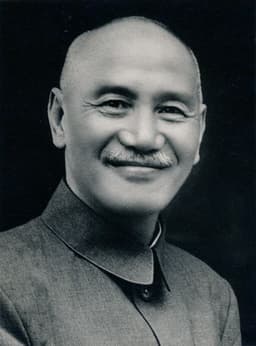
Chiang Kai-shek
Politician · Modern
60.6Total
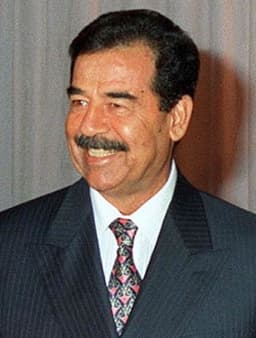
Saddam Hussein
Politician · Modern
49.7Total
Basic Information
Born
1887
1937
Died
1975
—
Era
Modern
Modern
Nationality
China
Iraq
Occupation
Politician
Politician
Civilization
Eastern
Middle Eastern
Score Comparison
Military (10%)
70.0
52.5
Political (20%)
62.7
43.7
Influence (20%)
65.0
58.0
Legacy (20%)
52.0
47.5
Leadership (15%)
66.0
40.0
Strategy (15%)
50.0
55.0
TOTAL
60.6
49.7
Chiang Kai-shek — Complete Timeline
1926 AD
Northern ExpeditionWar◆ Major
Chiang Kai-shek led the National Revolutionary Army in the Northern Expedition to defeat warlords and unify China. The campaign succeeded in capturing Beijing and establishing Kuomintang control over most of the country.
UnificationMilitary campaign
Impact: national
1927 AD
Shanghai Massacre of 1927Political Action◆ Major
Chiang Kai-shek ordered the purge of communists and leftists in Shanghai, resulting in thousands of deaths. This event broke the First United Front between the Kuomintang and the Communist Party, leading to civil war.
PurgeCivil war
Impact: nationaldestructive
1937 AD
Leadership during the Second Sino-Japanese WarWar
Chiang Kai-shek, as leader of the Kuomintang, commanded Chinese forces during the Second Sino-Japanese War. He directed the defense of Shanghai and the relocation of the capital to Chongqing, maintaining resistance against Japan.
World War IIChinese resistance
Impact: global
1945 AD
Signing of the Sino-Soviet Treaty of 1945Political Action◆ Major
Chiang Kai-shek signed the Sino-Soviet Treaty of Friendship and Alliance, which recognized Soviet interests in Manchuria in exchange for Soviet support against Japan. The treaty later facilitated Communist gains in the civil war.
DiplomacySoviet Union
Impact: global
1949 AD
Retreat to TaiwanPolitical Action
After losing the Chinese Civil War to the Communists, Chiang Kai-shek retreated to Taiwan with the remnants of the Kuomintang government and military. He established the Republic of China on Taiwan, claiming legitimacy over all of China.
TaiwanExileCold War
Impact: globaltragic
Saddam Hussein — Complete Timeline
1979 AD
Became President of IraqPolitical Action
Saddam Hussein forced President Ahmed Hassan al-Bakr to resign on July 16, 1979, and assumed the presidency. He immediately purged the Ba'ath Party, executing 68 senior members in a televised purge. This consolidated his absolute control over Iraq's government and security apparatus.
Power ConsolidationPurgeBa'ath Party
Impact: nationaldestructive
1980 AD
Invaded IranWar
Saddam launched a full-scale invasion of Iran on September 22, 1980, aiming to seize the oil-rich Khuzestan province and overthrow the new Islamic regime. The war lasted eight years, resulting in hundreds of thousands of casualties and massive economic destruction for both countries, ending in a stalemate.
Iran-Iraq WarInvasionStalemate
Impact: regionaldestructive
1988 AD
Used chemical weapons against Kurds at HalabjaWar◆ Major
During the Anfal campaign, Iraqi forces under Saddam's orders attacked the Kurdish town of Halabja with mustard gas and nerve agents on March 16, 1988. An estimated 5,000 civilians were killed instantly. The attack is considered one of the worst chemical weapons attacks against a civilian population.
Chemical WeaponsWar CrimeKurds
Impact: nationaldestructive
1990 AD
Invaded KuwaitWar
Saddam ordered the invasion and annexation of Kuwait on August 2, 1990, claiming it was historically part of Iraq. The invasion was condemned internationally and led to the Gulf War. A US-led coalition expelled Iraqi forces in February 1991, and Iraq faced severe UN sanctions.
Gulf WarInvasionSanctions
Impact: globaldestructive
2003 AD
Captured by US forces and executedPolitical Action
After the US-led invasion of Iraq in March 2003, Saddam went into hiding. He was captured by US forces on December 13, 2003, near Tikrit. Tried by the Iraqi Special Tribunal for crimes against humanity, he was sentenced to death and executed by hanging on December 30, 2006.
CaptureTrialExecution
Impact: globaltragic
Expert Analysis
Chiang Kai-shek vs Saddam Hussein
# The Iron Will and the Iron Fist
On a December morning in 2003, a bearded man with matted hair was pulled from a hole in the ground near Tikrit, his eyes hollow with defeat. Twenty-four years earlier, on the same date, another man had stood before a congress in Taipei, his back ramrod straight, his voice cracking with defiance as he declared his intent to retake the mainland. Chiang Kai-shek and Saddam Hussein never met, never fought, never shared a language. Yet both men rose from chaos, seized power through blood, and spent their lives trying to forge nations from the fires of war. One died in his bed, still ruling. The other died at the end of a rope. The difference between them is not merely a matter of fortune, but of how each man understood the nature of power itself.
Origins
Chiang Kai-shek was born in 1887 in a small village in Zhejiang Province, the son of a salt merchant who died when Chiang was eight. His mother raised him in poverty, scraping together money for his education. He entered a military academy in Baoding at eighteen, then traveled to Japan for further training, where he absorbed the samurai ethos of discipline and sacrifice. He was shaped by the collapse of the Qing Dynasty, the chaos of warlordism, and the humiliation of foreign domination. To Chiang, China was a wounded dragon, and he believed only a strong, centralized military could revive it.
Saddam Hussein was born in 1937 in a mud-brick hut near Tikrit, his father dead or vanished before his birth. His mother remarried a brutal stepfather who beat him and forced him to steal livestock. At ten, Saddam fled to Baghdad, where an uncle raised him and fed him stories of Arab glory and Western betrayal. He joined the Ba'ath Party at twenty, a revolutionary movement that promised unity, freedom, and socialism for the Arab world. To Saddam, Iraq was a prize to be seized, and he believed only fear and ruthlessness could hold it.
One was forged by imperial collapse, the other by colonial resentment. Both grew up fatherless, both learned early that the world was a violent place, and both decided they would never be victims again.
Rise to Power
Chiang's path was long and deliberate. He joined Sun Yat-sen's revolutionary movement, became commandant of the Whampoa Military Academy in 1924, and built a loyal officer corps. In 1926, he launched the Northern Expedition, leading the National Revolutionary Army against warlords who had carved China into fiefdoms. By 1928, he had unified much of the country under the Kuomintang flag. But his rise was not clean. In 1927, he ordered the Shanghai Massacre, purging thousands of communists and leftists who had been his allies. It was a calculated betrayal, and it split China for decades.
Saddam's rise was faster and more brutal. He climbed through the Ba'ath Party's shadowy ranks, organizing assassinations and coups. In 1979, he forced President Ahmed Hassan al-Bakr to resign and assumed the presidency. On his first day, he convened a party meeting, read out the names of sixty-eight "traitors," and had them dragged from the room. As they screamed, Saddam lit a cigar and wept. The performance was perfect: he had shown he could kill his closest friends and still feel human. No one ever doubted his will again.
The difference in their paths lies in timing. Chiang rose in an era of nationalist revolution, when China needed a unifier. Saddam rose in an era of Arab nationalism, when Iraq needed a strongman. Both men exploited their moments, but Chiang's ascent was a marathon of military campaigns and political maneuvering, while Saddam's was a sprint of purges and propaganda.
Leadership & Governance
Chiang governed China as a military dictator wrapped in Confucian robes. He centralized power, suppressed dissent, and relied on a network of secret police and loyal generals. His military strategy was cautious and defensive, shaped by his belief that China needed time to modernize before confronting Japan. When war came in 1937, he directed the defense of Shanghai and Wuhan, trading space for time, but his stubborn refusal to fully commit his best divisions cost him dearly. His political wisdom was flawed: he saw communists as a greater threat than Japanese invaders, and this obsession would destroy him.
Saddam governed Iraq as a cult of personality. His face was everywhere—on billboards, on watches, on children's lunchboxes. He built schools and hospitals, modernized the oil industry, and crushed all opposition. His military strategy was aggressive and reckless. In 1980, he invaded Iran, believing he could win a quick war. Instead, he dragged Iraq into an eight-year slaughter that killed hundreds of thousands. In 1990, he invaded Kuwait, miscalculating the world's response. He used chemical weapons on Kurdish civilians in 1988, a crime that marked him as a monster.
Chiang's leadership was about control; Saddam's was about domination. Chiang sought to build a state strong enough to resist foreign powers; Saddam sought to build a state strong enough to project his own power. One was a conservative who feared change; the other was a revolutionary who feared losing control.
Triumph & Tragedy
Chiang's greatest moment was leading China through the Second Sino-Japanese War. He refused to surrender despite staggering losses, and his government held on until the Allies turned the tide. His greatest tragedy came after: the Chinese Civil War. He lost to Mao Zedong's communists—not because he was weak, but because his regime had rotted from within. In 1949, he retreated to Taiwan, never to return. He died in 1975 at the age of eighty-seven, still dreaming of reconquest.
Saddam's greatest moment was surviving the Iran-Iraq War. He emerged battered but defiant, hailed as the defender of the Arab world. His greatest tragedy was the invasion of Kuwait, which triggered a coalition that destroyed his army and left him isolated. He survived the Gulf War, but the sanctions that followed crippled Iraq for a decade. In 2003, he was captured by U.S. forces, tried, and executed on December 30, 2006. He went to the gallows refusing to wear a hood.
One died in power; the other died powerless. But both ended their lives in exile—Chiang on an island, Saddam in a cage.
Character & Destiny
Chiang was a man of iron will but brittle judgment. He trusted his instincts too much and his advisors too little. He was a micromanager who insisted on directing battles from afar, a moralist who preached Confucian virtue while running a corrupt regime. His personality shaped his decisions: he was stubborn, proud, and incapable of compromise. This made him a resilient wartime leader but a disastrous peacetime ruler.
Saddam was a man of pure survival instinct. He trusted no one, killed anyone who threatened him, and believed violence was the only language the world understood. His personality shaped his decisions: he was paranoid, grandiose, and incapable of restraint. This made him a terrifying dictator but a catastrophic strategist.
Chiang's destiny was to be the man who held China together but lost it. Saddam's destiny was to be the man who built Iraq up and tore it down.
Legacy
Chiang Kai-shek is remembered differently in different places. In Taiwan, he is the father of the nation, the man who preserved Chinese culture and built a prosperous island. In mainland China, he is a footnote, a failed leader who fled in disgrace. His scores—Military 68.4, Political 65.8, Influence 69.5, Legacy 67.5—reflect a man who achieved much but lost more. He unified China, fought Japan, and created a state that survives today, but he also lost the mainland and left a legacy of division.
Saddam Hussein is remembered as a tyrant and a monster. His scores—Military 52.7, Political 59.2, Influence 74.3, Legacy 62.3—show a man who terrorized his region but left no lasting institutions. He invaded Iran, gassed Kurds, invaded Kuwait, and was hanged. His legacy is destruction, not creation.
Conclusion
Chiang Kai-shek and Saddam Hussein both dreamed of empire and drowned in blood. But Chiang's tragedy was that he could not adapt; Saddam's tragedy was that he could not stop. One lost his country because he was too rigid; the other lost his country because he was too reckless. In the end, both men remind us that power is not the same as wisdom, and that the will to rule is not enough to build a nation that outlasts its ruler. The iron will and the iron fist—both break, eventually. The question is what remains when they do.
Rankings
🥇
Chiang Kai-shekLeader
Mil: 70.0Pol: 62.7Inf: 65.0
60.6
🥈
Saddam Hussein
Mil: 52.5Pol: 43.7Inf: 58.0
49.7
+10.9 behind
How This Comparison Works
Algorithm
Each figure is scored on 6 dimensions (0—100 scale) based on structured historical data: Military (10%), Political (20%), Influence (20%), Legacy (20%), Leadership (15%), Strategy (15%). The weighted total produces the final ranking.
Data Sources
Scores are computed from structured sub-indicators in the database. Scale factors adjust for era (Ancient ×0.85, Modern ×1.0) and civilization size (Eastern ×1.05, Other ×0.80) to account for differences in population and military scale.
Maximum 3 Figures
Comparisons are limited to 2—3 figures to ensure readability and statistical meaningfulness.
Error Margins
±5 points per dimension — Sub-scores are derived from historical records with inherent uncertainty. Two figures within 5 points on a dimension should be considered roughly equivalent in that area.
Total Score Accuracy
±3 points overall — The weighted combination of 6 dimensions produces a total score with approximately ±3 points of uncertainty. Differences of less than 3 points are not statistically significant— the figures are effectively tied.
Known Limitations
- Historical records are incomplete and uneven across civilizations
- Figures from oral-tradition societies may be underrepresented
- Occupation labels can misclassify multi-role figures
- Scores measure capability and impact, not moral character
- Quantitative scoring is a comparison tool, not absolute truth
Capability Radar
Military (10%) — Battles & Warfare
Battles
75
65
Win Rate
35
40
Expansion
65
60
Political (20%) — Governance & Reform
Reform
55
40
Diplomacy
60
35
Economy
40
30
Influence (20%) — Cultural & Global Reach
Cultural
60
30
Global
65
50
Legacy (20%) — Historical Impact
Historical
70
55
Longevity
55
20
Leadership (15%) — Power & Stability
Tenure
85
75
Stability
30
20
Strategy (15%) — Tactics & Innovation
Strategy
60
50
Tactics
55
55
Reform
50
45
Similar Comparisons
Comments & Discussion
DesertTankTactician6/16/2026
As a military historian, the real edge here goes to Saddam—not in morality, but in strategic brutality. Chiang lost the mainland because he tried to fight a conventional war against Mao's guerrilla tactics while hoarding his best American-trained divisions for a future showdown with Japan. Saddam, whatever his crimes, understood that modern dictatorship requires total institutional control. He centralized security forces, built overlapping intelligence agencies, and learned from Stalin how to ma
数据炼金术士6/16/2026
别被情感叙事骗了。数据会说话:蒋介石治理台湾时,GDP年均增长9.2%,土地改革让90%佃农转为自耕农;萨达姆统治伊拉克三十年,人均GDP起起伏伏,最终停在战前的约2000美元。更关键的是,蒋的政权在台湾撑了五十年,萨达姆的复兴党统治伊拉克不到四十年就垮塌。经济增长持续性与制度韧性,这才是硬指标,不是谁死得更惨。
StoaPhilosopher6/16/2026
What separates them is their philosophical relationship to history. Chiang genuinely believed he was restoring a 5,000-year civilization. He wrote diaries, studied Confucian governance, and saw himself as a vessel for Chinese tradition in exile. Saddam was a modernist strongman with a thin ideological skin—he cobbled together Ba'athism, pseudo-Marxism, and pan-Arabism without deep roots. This isn't about who was nicer; it's about whether the ruler's vision outlives his corpse. Chiang's legacy ha
茶余饭后说书人6/16/2026
都是乱世枭雄,但档次差远了。蒋介石打倭寇八年没投降,这一点就比萨达姆强;萨达姆面对美军时,号称百万雄师,结果二十二天就土崩瓦解,手下的共和国卫队跑得比兔子还快。再看气度:蒋败退台湾,还天天喊着「一年准备、两年反攻」,那股不服输的劲头,哪个对手不忌惮?萨达姆被打进地洞抓出来,胡子拉碴像条丧家犬。历史从不宽恕虚假的强硬。
RevisionistScalpel6/16/2026
Let's not sugarcoat Chiang either. The White Terror killed tens of thousands, maybe more than Saddam's early purges. Chiang was propped up by American subsidies and Japanese colonial infrastructure in Taiwan; Saddam built his state from scratch after the British drew his borders. The real difference? Chiang's brutality was 'forgivable' because he lost to communists in the Cold War narrative. Saddam became a villain when he stopped being useful to the West. Moral hierarchies between these two are