Loading...
Chiang Kai-shek vs Winston Churchill
Winston Churchill leads by 11.2 pts · 2 figures compared
…
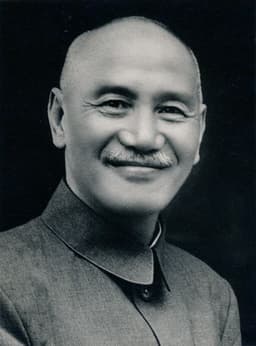
Chiang Kai-shek
Politician · Modern
60.6Total
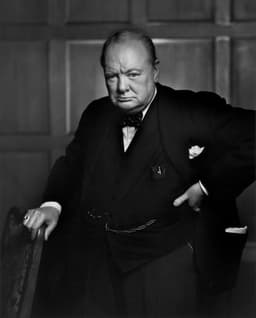
Winston Churchill
Politician · Modern
71.8Total
Basic Information
Born
1887
1874
Died
1975
1965
Era
Modern
Modern
Nationality
China
United Kingdom
Occupation
Politician
Politician
Civilization
Eastern
Western
Score Comparison
Military (10%)
70.0
55.0
Political (20%)
62.7
78.0
Influence (20%)
65.0
75.0
Legacy (20%)
52.0
68.0
Leadership (15%)
66.0
82.0
Strategy (15%)
50.0
65.0
TOTAL
60.6
71.8
Chiang Kai-shek — Complete Timeline
1926 AD
Northern ExpeditionWar◆ Major
Chiang Kai-shek led the National Revolutionary Army in the Northern Expedition to defeat warlords and unify China. The campaign succeeded in capturing Beijing and establishing Kuomintang control over most of the country.
UnificationMilitary campaign
Impact: national
1927 AD
Shanghai Massacre of 1927Political Action◆ Major
Chiang Kai-shek ordered the purge of communists and leftists in Shanghai, resulting in thousands of deaths. This event broke the First United Front between the Kuomintang and the Communist Party, leading to civil war.
PurgeCivil war
Impact: nationaldestructive
1937 AD
Leadership during the Second Sino-Japanese WarWar
Chiang Kai-shek, as leader of the Kuomintang, commanded Chinese forces during the Second Sino-Japanese War. He directed the defense of Shanghai and the relocation of the capital to Chongqing, maintaining resistance against Japan.
World War IIChinese resistance
Impact: global
1945 AD
Signing of the Sino-Soviet Treaty of 1945Political Action◆ Major
Chiang Kai-shek signed the Sino-Soviet Treaty of Friendship and Alliance, which recognized Soviet interests in Manchuria in exchange for Soviet support against Japan. The treaty later facilitated Communist gains in the civil war.
DiplomacySoviet Union
Impact: global
1949 AD
Retreat to TaiwanPolitical Action
After losing the Chinese Civil War to the Communists, Chiang Kai-shek retreated to Taiwan with the remnants of the Kuomintang government and military. He established the Republic of China on Taiwan, claiming legitimacy over all of China.
TaiwanExileCold War
Impact: globaltragic
Winston Churchill — Complete Timeline
1940 AD
Appointed Prime Minister of the United KingdomPolitical Action◆ Major
On May 10, 1940, Winston Churchill became Prime Minister of the United Kingdom, replacing Neville Chamberlain. His appointment came as Nazi Germany invaded France and the Low Countries, and Churchill formed a coalition government to lead Britain through World War II.
World War IILeadershipCoalition Government
Impact: globalconstructive
Delivered the 'We Shall Fight on the Beaches' SpeechOther◆ Major
On June 4, 1940, Churchill delivered a speech to the House of Commons following the evacuation of British forces from Dunkirk. He declared that Britain would fight on the beaches, landing grounds, fields, streets, and hills, and never surrender, rallying British morale during the darkest days of World War II.
World War IIOratoryMorale
Impact: nationalconstructive
1941 AD
Signed the Atlantic CharterOther◆ Major
On August 14, 1941, Churchill and U.S. President Franklin D. Roosevelt signed the Atlantic Charter aboard HMS Prince of Wales. This joint declaration outlined post-war goals including self-determination, disarmament, and free trade, and became a foundational document for the Allied war aims and the United Nations.
World War IIAllied CooperationPost-war Planning
Impact: globalconstructive
1945 AD
Attended the Yalta ConferenceOther◆ Major
In February 1945, Churchill attended the Yalta Conference with Roosevelt and Stalin to discuss the post-war reorganization of Europe. The conference agreed on the division of Germany, the establishment of the United Nations, and the fate of Eastern Europe, though Churchill later expressed regret over concessions to Stalin.
World War IIPost-war SettlementBig Three
Impact: global
1946 AD
Delivered the 'Iron Curtain' SpeechOther◆ Major
On March 5, 1946, Churchill delivered a speech at Westminster College in Fulton, Missouri, where he stated that an 'iron curtain' had descended across Europe from Stettin to Trieste. This speech is widely regarded as marking the beginning of the Cold War, as it highlighted the division between Soviet-controlled Eastern Europe and the West.
Cold WarSoviet UnionDivision of Europe
Impact: globaldestructive
1953 AD
Awarded the Nobel Prize in LiteratureOther◆ Major
In 1953, Churchill was awarded the Nobel Prize in Literature for his historical writings, particularly 'The Second World War' and 'A History of the English-Speaking Peoples'. The Nobel committee cited his mastery of historical and biographical description as well as his brilliant oratory in defending human values.
LiteratureNobel PrizeHistorical Writing
Impact: nationalconstructive
Expert Analysis
Winston Churchill vs Chiang Kai-shek
# The Lion and the Bamboo: Two Wartime Leaders, Two Tragic Fates
In the winter of 1941, as Japanese forces swept across Southeast Asia, two leaders faced the same existential threat from opposite sides of the world. Winston Churchill stood before a bombed-out House of Commons, defiantly declaring that Britain would "never surrender." Chiang Kai-shek, meanwhile, watched from his wartime capital in Chongqing as his nation bled, his armies crumbling under a Japanese onslaught that would ultimately kill over fifteen million Chinese. Both men commanded nations fighting for survival. One would be remembered as the savior of Western civilization. The other would die in exile, a footnote in the story of his country's revolution. Why did their paths diverge so dramatically?
Origins
Churchill was born into the British aristocracy in 1874, the grandson of a duke, raised in the gilded halls of Blenheim Palace. His father, Lord Randolph Churchill, was a brilliant but erratic politician; his mother, Jennie Jerome, an American socialite. Young Winston grew up with an unshakable belief in British imperial destiny, a conviction that would both inspire and limit him. He was a poor student at Harrow, but voraciously read history and poetry. The British Empire was the unquestioned center of his universe—a world order he would spend his life defending.
Chiang Kai-shek was born in 1887 in a small village in Zhejiang province, the son of a salt merchant who died when Chiang was nine. His mother, Wang Caiyu, a devout Buddhist, scrimped and saved to send him to a traditional Chinese school. But the world of Confucian classics was already crumbling. The Qing Dynasty was in its death throes, foreign powers carved up China like a feast, and young Chiang grew up in a land of humiliation and chaos. Where Churchill saw a stable empire to protect, Chiang saw a broken civilization to rebuild. He would later write, "The weakness of China is my shame; the strength of China is my pride." This burning nationalism drove him—but also blinded him to the social forces that would ultimately destroy him.
Rise to Power
Churchill's path was almost preordained. After a brief military career in India and Sudan, he entered Parliament at twenty-six, a Conservative MP who soon switched to the Liberals over free trade. His rise was meteoric but erratic: he served as Home Secretary, First Lord of the Admiralty, and Chancellor of the Exchequer. But his support for the disastrous Gallipoli campaign in 1915 nearly ended him. He spent the 1920s and 1930s in the political wilderness, dismissed as a warmonger for his warnings about Nazi Germany. When he finally became Prime Minister in May 1940, he was sixty-five years old, his reputation hanging by a thread.
Chiang's rise was harder and bloodier. He studied at a Japanese military academy, then joined the Chinese Revolutionary Alliance under Sun Yat-sen. When Sun died in 1925, Chiang maneuvered himself into leadership of the Kuomintang. In 1926, he launched the Northern Expedition, a military campaign to unify China under KMT rule. It was a stunning success—by 1928, Chiang had defeated or co-opted most of the warlords. But his path was paved with betrayal. In April 1927, he ordered the Shanghai Massacre, purging thousands of communists and leftists. "To suppress the communists," he declared, "is to save the nation." That decision would haunt him for the rest of his life.
Leadership & Governance
In governance, Churchill was a parliamentary lion and a master of rhetoric. His leadership during World War II was a triumph of will over circumstance. He inspired a nation with words like "blood, toil, tears, and sweat" and "their finest hour." He forged the Grand Alliance with Roosevelt and Stalin, understanding that Britain could not survive alone. Yet his military judgment was often flawed—he championed disastrous campaigns in Norway, Greece, and Singapore. His true genius lay in morale and strategy, not tactics. As his doctor Lord Moran noted, "Winston would rather have a good story than a good dinner."
Chiang's leadership was more complex. He commanded Chinese forces during the Second Sino-Japanese War from 1937 to 1945, directing a desperate resistance that tied down millions of Japanese troops. His strategy of "trading space for time" preserved his army but devastated his people. The Nationalist government grew corrupt, its generals incompetent, its currency worthless. Chiang was a master of political maneuvering but a poor administrator. He micromanaged military campaigns from afar, issuing orders that ignored local realities. American General Joseph Stilwell, his chief of staff, called him "a vacillating, tricky, undependable old scoundrel." But Stilwell missed the deeper tragedy: Chiang was trying to fight a modern war with a medieval state, and he knew it.
Triumph & Tragedy
Churchill's greatest moment came in June 1944, when he stood on the beaches of Normandy after D-Day, watching the liberation of Europe begin. His finest hour, however, was the dark year of 1940, when he alone seemed to believe Britain could survive. His tragedy was the postwar world: voted out of office in July 1945, even as he negotiated at Potsdam. He returned to power in 1951, but his second premiership was a sad coda, marked by declining health and imperial retreat.
Chiang's greatest triumph was China's survival as an independent nation. Against all odds, he kept China in the war, refusing to surrender even when Japan controlled the coast. His tragedy was total. In 1945, he signed the Sino-Soviet Treaty with Stalin, trading away Manchurian sovereignty for Soviet support—a desperate gamble that failed. By 1949, his armies had collapsed, his government had disintegrated, and he fled to Taiwan, where he would rule a rump state until his death in 1975. "The communists," he admitted, "have defeated us not because they are stronger, but because we are weaker."
Character & Destiny
Churchill was a man of immense ego and immense courage. He drank heavily, smoked constantly, and suffered from what he called his "black dog" of depression. But he possessed a core of unshakeable optimism. "Success is not final," he said. "Failure is not fatal: it is the courage to continue that counts." That courage was his gift to history.
Chiang was a man of iron discipline and brittle pride. He was a devout Christian convert, a stern Confucian moralist, and a ruthless realist. He believed in order, hierarchy, and national unity—but he never understood the hunger of China's peasants for land and dignity. He saw communism as a foreign conspiracy, not a response to genuine injustice. In the end, his character was his fate: too rigid to adapt, too proud to compromise, too isolated to see the storm coming.
Legacy
Churchill is remembered as the greatest Briton, his statue standing in Parliament Square, his speeches still recited in schools. His legacy is the preservation of European democracy against fascism. But it is a complicated legacy—his views on empire and race are now rightly criticized.
Chiang's legacy is contested. In Taiwan, he is revered as a founding father. In mainland China, he is vilified as a traitor and a reactionary. His scores—Military 68.4, Political 65.8, Legacy 67.5—reflect a life of near-greatness that ended in failure. He unified China but could not keep it; he fought Japan but could not win; he led a revolution but could not complete it.
Conclusion
Perhaps the deepest difference between these two men lies in the nature of the worlds they defended. Churchill fought for an empire that was already dying, but he gave it a glorious sunset. Chiang fought for a nation that was being born, but he could not midwife its birth. One man faced a clear enemy and rallied a united people; the other faced a fractured nation and a civil war within a world war. Churchill's success was a triumph of will; Chiang's failure was a tragedy of circumstance. Both were flawed, both were brave, and both remind us that history's judgment depends less on what leaders do than on what history allows them to become.
Rankings
🥇
Winston ChurchillLeader
Mil: 55.0Pol: 78.0Inf: 75.0
71.8
🥈
Chiang Kai-shek
Mil: 70.0Pol: 62.7Inf: 65.0
60.6
+11.2 behind
How This Comparison Works
Algorithm
Each figure is scored on 6 dimensions (0—100 scale) based on structured historical data: Military (10%), Political (20%), Influence (20%), Legacy (20%), Leadership (15%), Strategy (15%). The weighted total produces the final ranking.
Data Sources
Scores are computed from structured sub-indicators in the database. Scale factors adjust for era (Ancient ×0.85, Modern ×1.0) and civilization size (Eastern ×1.05, Other ×0.80) to account for differences in population and military scale.
Maximum 3 Figures
Comparisons are limited to 2—3 figures to ensure readability and statistical meaningfulness.
Error Margins
±5 points per dimension — Sub-scores are derived from historical records with inherent uncertainty. Two figures within 5 points on a dimension should be considered roughly equivalent in that area.
Total Score Accuracy
±3 points overall — The weighted combination of 6 dimensions produces a total score with approximately ±3 points of uncertainty. Differences of less than 3 points are not statistically significant— the figures are effectively tied.
Known Limitations
- Historical records are incomplete and uneven across civilizations
- Figures from oral-tradition societies may be underrepresented
- Occupation labels can misclassify multi-role figures
- Scores measure capability and impact, not moral character
- Quantitative scoring is a comparison tool, not absolute truth
Capability Radar
Military (10%) — Battles & Warfare
Battles
75
55
Win Rate
35
60
Expansion
65
40
Political (20%) — Governance & Reform
Reform
55
70
Diplomacy
60
85
Economy
40
60
Influence (20%) — Cultural & Global Reach
Cultural
60
85
Global
65
85
Legacy (20%) — Historical Impact
Historical
70
90
Longevity
55
80
Leadership (15%) — Power & Stability
Tenure
85
75
Stability
30
70
Strategy (15%) — Tactics & Innovation
Strategy
60
85
Tactics
55
65
Reform
50
70
Similar Comparisons
Comments & Discussion
THE_EMPIRE_DEFENDER6/16/2026
Churchill had the luxury of fighting a total war with a functioning state apparatus; Chiang was trying to build a modern military while fighting both Japan and a communist insurgency. The comparison ignores that China had been fractured by warlords for decades before Japan invaded. Churchill inherited a navy, an empire, and centuries of institutional stability. Chiang inherited chaos.
数据屠夫6/16/2026
别把数据当圣旨。说丘吉尔赢在“伟大领导”纯属事后马后炮,英国有皇家海军、有殖民地人力,中国连把像样的步枪都造不齐。你让丘吉尔换到重庆的山洞里试试?他早跑加拿大流亡了。这图表不是比历史,是比谁爹更硬。
THE_FORGOTTEN_GENERAL6/16/2026
Chiang's fatal flaw wasn't incompetence—it was trusting his German-trained generals like Chen Cheng over the American-trained ones. He micro-managed the Burma campaign while Stilwell openly mocked him. Meanwhile, his best division was wasted defending Shanghai in 1937. A half-decent strategic reserve could have changed the war in the Pacific. Instead, he got tunnel vision on containing Mao.
竹之沉思者6/16/2026
丘吉尔为帝国而战,蒋介石为民国而战,可后者根本不是一个统一的实体。江浙财阀不买他的账,云南军阀骑墙,四川土皇帝根本不理他。你让他怎么像丘吉尔那样发表“热血、汗水、眼泪”的演讲?台下坐的都是想他死的人。两人起点不同,输赢已是定局。
THE_MEMOIR_MAN6/16/2026
They both wrote their own legends for posterity. Churchill won the Nobel in Literature partly because he crafted his own myth so well. Chiang's diary, now fully published, reveals a paranoid, indecisive man who thought he was the reincarnation of a Confucian sage. One man turned his failures into tragedy; the other turned them into melodrama. The difference isn't strategy—it's storytelling.