Loading...
This comparison has not been analyzed yet.
One-time AI generation (~1 minute). Scores and timeline are already available below.
Chilperic I vs Rajendra Chola III
Rajendra Chola III leads by 0.4 pts · 2 figures compared
…
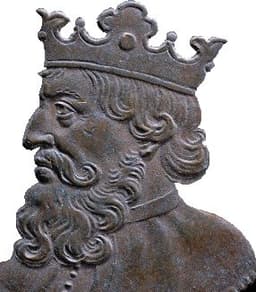
Chilperic I
Emperor · Medieval
39.6Total

Rajendra Chola III
Emperor · Medieval
40.0Total
Basic Information
Born
539
1230
Died
584
1279
Era
Medieval
Medieval
Nationality
Frankish Empire
India
Occupation
Emperor
Emperor
Civilization
Western
Indian
Score Comparison
Military (10%)
45.0
50.0
Political (20%)
26.4
33.6
Influence (20%)
47.1
46.3
Legacy (20%)
38.3
37.5
Leadership (15%)
41.5
34.6
Strategy (15%)
35.7
38.3
TOTAL
39.6
40.0
Chilperic I — Complete Timeline
573 AD
War with Sigebert IWar◆ Major
Chilperic I invaded Austrasia, triggering a civil war with his brother Sigebert I. The conflict involved shifting alliances and battles across Neustria and Austrasia, including the siege of Tournai. It ended inconclusively with Sigebert's assassination.
MerovingianCivil WarNeustria
Impact: regionaldestructive
575 AD
Assassination of Sigebert IPolitical Action◆ Major
Chilperic I's wife Fredegund is believed to have orchestrated the assassination of Sigebert I, king of Austrasia and Chilperic's brother. Sigebert was stabbed with poisoned daggers at Vitry-en-Artois, ending the conflict between Neustria and Austrasia temporarily.
MerovingianAssassinationFredegund
Impact: regionaldestructive
579 AD
Tax Reforms and Conflicts with the ChurchReform
Chilperic I attempted to impose new taxes on church lands and property, leading to conflict with bishops, particularly Gregory of Tours. The reforms were resisted and eventually abandoned after widespread opposition and ecclesiastical condemnation.
MerovingianTaxationChurch Conflict
Impact: nationaldestructive
580 AD
Construction of the Circus at SoissonsCultural
Chilperic I ordered the construction of a circus (hippodrome) in Soissons, imitating Roman spectacles. This project reflected his interest in Roman culture and his desire to project imperial authority, though it was criticized by contemporaries like Gregory of Tours.
MerovingianArchitectureRoman Influence
Rajendra Chola III — Complete Timeline
1246 AD
Accession as the last Chola emperorPolitical Action◆ Major
Rajendra Chola III ascended the Chola throne during a period of decline. His reign was marked by continuous conflict with the Pandya kingdom and internal rebellions, as Chola power waned.
Chola DynastySuccessionDecline
Impact: regionaltragic
1258 AD
Defeat by Jatavarman Sundara PandyaWar◆ Major
Rajendra Chola III was defeated by the Pandya king Jatavarman Sundara Pandya. The Chola army was routed, and Rajendra was forced to acknowledge Pandya suzerainty, effectively ending Chola independence.
PandyaDefeatSuzerainty
Impact: regionaldestructive
1279 AD
End of the Chola dynastyPolitical Action
Rajendra Chola III died without a clear successor, and the Chola kingdom was fully absorbed by the Pandya empire. This marked the end of the Chola dynasty, which had ruled for over four centuries.
Chola DynastyEnd of DynastyPandya
Impact: regionaltragic
This comparison has not been analyzed yet.
One-time AI generation (~1 minute). Scores and timeline are already available below.
Rankings
🥇
Rajendra Chola IIILeader
Mil: 50.0Pol: 33.6Inf: 46.3
40.0
🥈
Chilperic I
Mil: 45.0Pol: 26.4Inf: 47.1
39.6
+0.4 behind
How This Comparison Works
Algorithm
Each figure is scored on 6 dimensions (0—100 scale) based on structured historical data: Military (10%), Political (20%), Influence (20%), Legacy (20%), Leadership (15%), Strategy (15%). The weighted total produces the final ranking.
Data Sources
Scores are computed from structured sub-indicators in the database. Scale factors adjust for era (Ancient ×0.85, Modern ×1.0) and civilization size (Eastern ×1.05, Other ×0.80) to account for differences in population and military scale.
Maximum 3 Figures
Comparisons are limited to 2—3 figures to ensure readability and statistical meaningfulness.
Error Margins
±5 points per dimension — Sub-scores are derived from historical records with inherent uncertainty. Two figures within 5 points on a dimension should be considered roughly equivalent in that area.
Total Score Accuracy
±3 points overall — The weighted combination of 6 dimensions produces a total score with approximately ±3 points of uncertainty. Differences of less than 3 points are not statistically significant— the figures are effectively tied.
Known Limitations
- Historical records are incomplete and uneven across civilizations
- Figures from oral-tradition societies may be underrepresented
- Occupation labels can misclassify multi-role figures
- Scores measure capability and impact, not moral character
- Quantitative scoring is a comparison tool, not absolute truth
Capability Radar
Military (10%) — Battles & Warfare
Battles
30
10
Win Rate
25
5
Expansion
20
0
Political (20%) — Governance & Reform
Reform
20
5
Diplomacy
25
10
Economy
15
10
Influence (20%) — Cultural & Global Reach
Cultural
15
10
Global
5
5
Legacy (20%) — Historical Impact
Historical
20
15
Longevity
10
10
Leadership (15%) — Power & Stability
Tenure
40
30
Stability
10
10
Strategy (15%) — Tactics & Innovation
Strategy
15
5
Tactics
20
10
Reform
10
0
Similar Comparisons
Comments & Discussion
No comments yet. Be the first to share your thoughts!