Loading...
Chlothar I vs Pachacuti
Pachacuti leads by 21.4 pts · 2 figures compared
…
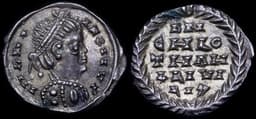
Chlothar I
Emperor · Ancient
48.0Total
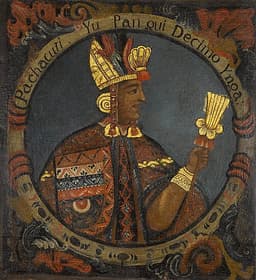
Pachacuti
Emperor · Medieval
69.4Total
Basic Information
Born
497
1418
Died
561
1472
Era
Ancient
Medieval
Nationality
Frankish Empire
Inca Empire
Occupation
Emperor
Emperor
Civilization
Western
Other
Score Comparison
Military (10%)
55.0
78.5
Political (20%)
40.8
58.1
Influence (20%)
49.4
65.0
Legacy (20%)
43.3
72.0
Leadership (15%)
65.0
78.0
Strategy (15%)
35.0
69.2
TOTAL
48.0
69.4
Chlothar I — Complete Timeline
531 AD
Conquest of the ThuringiansWar◆ Major
Chlothar I, alongside his brothers Theuderic I and Childebert I, led a campaign against the Thuringian kingdom. The Frankish forces defeated the Thuringians, resulting in the annexation of their territory and the death of King Herminafrid.
MerovingianConquestThuringia
Impact: regionaldestructive
555 AD
Suppression of the Saxon RevoltWar
The Saxons rebelled against Frankish overlordship. Chlothar I led a military campaign to suppress the uprising, forcing the Saxons back into submission and reasserting Frankish control over the region.
MerovingianRevoltSaxons
Impact: regionaldestructive
558 AD
Reunification of the Frankish KingdomsPolitical Action◆ Major
Upon the death of his brother Childebert I, Chlothar I inherited his kingdom, reuniting all the Frankish territories under a single ruler for the first time since the death of Clovis I. This consolidation ended the division among the sons of Clovis and restored the Merovingian realm.
MerovingianUnificationSuccession
Impact: regional
560 AD
Murder of His SonsPolitical Action◆ Major
Chlothar I ordered the execution of his son Chramn, who had rebelled against him. Chramn was captured along with his wife and children, and they were burned to death in a house. This act eliminated a rival and secured Chlothar's sole rule.
MerovingianDynastic ConflictExecution
Impact: nationaltragic
Pachacuti — Complete Timeline
1438 AD
Conquest of the Chanka KingdomWar
Pachacuti led the Inca army to defeat the Chanka, a powerful rival, in a decisive battle near Cusco. This victory secured his position as Sapa Inca and initiated a period of rapid expansion, transforming the Inca from a small kingdom into a vast empire.
ConquestInca ExpansionChanka
Impact: regional
1440 AD
Reconstruction of CuscoCultural◆ Major
Pachacuti rebuilt Cusco as the imperial capital, designing it in the shape of a puma and constructing massive stone structures like Sacsayhuam
Urban PlanningArchitectureInca Empire
Impact: regionalconstructive
1450 AD
Initiation of Machu Picchu's ConstructionCultural◆ Major
Pachacuti ordered the construction of Machu Picchu, a royal estate and ceremonial site high in the Andes. The complex featured sophisticated dry-stone masonry and terraced agriculture, serving as a symbol of Inca engineering and a retreat for the emperor.
ArchitectureRoyal EstateInca Engineering
Impact: regionalconstructive
Expert Analysis
Pachacuti vs Chlothar I
### The Unlikely Emperor and the Bloody King
History often presents us with figures who, despite wielding absolute power, seem to have been shaped by forces far greater than themselves. One man, Pachacuti, rose from a near-disastrous defeat to forge an empire of stone and sky. Another, Chlothar I, inherited a kingdom of blood and iron, only to reunite it through a lifetime of brutal pragmatism. Both were rulers; both left indelible marks on their worlds. Yet one is remembered as a visionary architect of civilization, the other as a shadowy figure of Frankish consolidation. What drove these two men, born centuries and continents apart, to such different outcomes? The answer lies not just in their actions, but in the very nature of the worlds they inherited and the choices they made in the crucible of power.
### Origins: The Mountain and the Plain
Pachacuti was born in 1418 into the Inca kingdom of Cusco, a small, warring state high in the Andes. His father, Viracocha Inca, was a capable ruler, but the kingdom was surrounded by hostile neighbors, most notably the powerful Chanka confederation. Pachacuti’s world was one of rugged terrain, fierce independence, and a belief that the gods spoke through the land itself. He was not the designated heir; that honor belonged to his brother, Urco. The young prince’s early life was likely one of training, observation, and a growing awareness of his kingdom’s vulnerability.
Chlothar I, born in 497, was a Merovingian Frank, a son of the legendary Clovis I. His world was the post-Roman chaos of Gaul, a patchwork of decaying Roman institutions, Germanic warrior codes, and a newly adopted Christianity. Unlike Pachacuti, Chlothar was born into a dynasty that already practiced a brutal game of thrones. His father, Clovis, had united the Frankish tribes through a combination of war, diplomacy, and savage treachery. Chlothar’s inheritance was not a unified kingdom but a divided one, split among his four sons upon Clovis’s death in 511. His origins were not of a threatened kingdom but of a fractured legacy.
The core difference is foundational. Pachacuti’s challenge was external—the survival of his people against a powerful enemy. Chlothar’s challenge was internal—the consolidation of a divided family inheritance through relentless political maneuvering.
### Rise to Power: The Battlefield and the Bedchamber
Pachacuti’s rise is a story of a single, defining moment. In 1438, the Chanka attacked Cusco. King Viracocha and the designated heir, Urco, fled the city, abandoning their people. In this moment of crisis, the younger prince, Yupanqui, refused to retreat. He rallied the remaining warriors and, in a desperate battle near Cusco, defeated the Chanka. The victory was total, and it was miraculous. The chronicles say the very stones of the battlefield rose to fight for him. He was proclaimed Sapa Inca, taking the name Pachacuti, meaning “He Who Shakes the Earth.” His rise was forged in fire and faith, a testament to personal courage and the power of a single, decisive action.
Chlothar I’s rise was a slow, grinding process of attrition. He did not win his kingdom in a single battle. Instead, he inherited the kingdom of Soissons in 511. For the next four decades, he maneuvered among his brothers—Theuderic I, Childebert I, and Chlodomer—alternately allying with them and betraying them. He participated in the conquest of the Thuringians in 531, but the glory was shared. He watched as his brother Chlodomer died in battle, and then participated in the murder of Chlodomer’s young sons to seize their lands. His rise was not a dramatic triumph but a long, patient, and often bloody accumulation of power through family feuds, strategic marriages, and calculated betrayals.
Pachacuti’s path was one of charismatic leadership in a moment of existential crisis. Chlothar’s path was one of cold, patient calculation in a world where the only law was the sword.
### Leadership & Governance: The Builder and the Broker
As Sapa Inca, Pachacuti was not just a conqueror; he was a revolutionary administrator. He reorganized the empire into a highly centralized state, with a system of roads, storehouses, and a census that allowed him to control every aspect of life. He rebuilt Cusco in the shape of a puma, a sacred animal, and initiated the construction of Machu Picchu around 1450, a breathtaking royal estate and ceremonial center that was both a symbol of his power and a retreat from the world. His military strategy was brilliant, but his true genius lay in integrating conquered peoples through a system of forced resettlement (mitmaq) and a shared cult of the sun god, Inti. He was a builder of a civilization, a man who saw empire as a divine order.
Chlothar I’s governance was far more pragmatic and personal. He was a typical Merovingian king: a warlord who ruled through personal loyalty, gift-giving, and the constant threat of violence. His major political act was the reunification of the Frankish kingdoms in 558 upon the death of his last brother, Childebert I. This was not a grand vision of unity but the final outcome of a long family feud. His suppression of the Saxon revolt in 555 was brutal but effective. His most revealing act was the murder of his own son, Chramn, in 560, who had rebelled against him. Chlothar ordered Chramn, his wife, and his children burned alive in a hut. This was not just cruelty; it was a calculated message to any who would challenge his authority. His leadership was about survival, not vision.
Pachacuti ruled through a divine mandate, building a new world. Chlothar ruled through fear and family ties, maintaining an old one.
### Triumph & Tragedy: The Peak and the Pit
Pachacuti’s greatest triumph was the transformation of a small kingdom into the vast, unified Tawantinsuyu. His conquest of the Chanka was a turning point that set the stage for everything that followed. His greatest tragedy is that his empire, for all its sophistication, was built on a fragile foundation of personal loyalty and divine kingship. It would collapse within a generation of the Spanish arrival, a testament to the vulnerability of his system to external shock.
Chlothar’s greatest triumph was the reunification of the Frankish kingdoms under a single ruler, a feat his father had achieved and his brothers had failed to maintain. His greatest tragedy was that this unity died with him. Upon his death in 561, his four sons immediately divided the kingdom again, plunging Gaul into another generation of civil war. His life’s work, built on blood and patience, was undone in a single moment.
### Character & Destiny: The Visionary and the Survivor
Pachacuti’s character was defined by a profound sense of destiny. He believed he was chosen by the sun god Inti to bring order to the world. This gave him the confidence to rebuild a capital, plan a mountain sanctuary, and impose a new system on millions of people. He was a visionary, and his vision shaped his destiny.
Chlothar’s character was defined by a brutal realism. He saw the world as a contest of wills, where trust was a weakness and family was a threat. His actions, including the murder of his own son, were not born of madness but of a cold calculation that any challenge to his authority must be extinguished without mercy. He was a survivor, and his survival shaped his destiny.
### Legacy: The Mountain and the Grave
Pachacuti’s legacy is monumental. He is the father of the Inca Empire, the man whose name is synonymous with its golden age. Machu Picchu, his mountain retreat, has become one of the most famous archaeological sites in the world, a symbol of human ingenuity and ambition. His administrative system, though destroyed, influenced later colonial structures. He is remembered as a founder, a builder, and a god-king.
Chlothar I’s legacy is far more ambiguous. He is a footnote in the Merovingian dynasty, a king who briefly held the whole but is best remembered for the brutal murder of his son. His reunification was ephemeral, and his name is not one that inspires awe. He is a reminder that not all power leaves a lasting mark, and that the most successful rulers are often those who build, not just survive.
### Conclusion: The Emperor and the King
Pachacuti and Chlothar I stand as two poles of human ambition. One looked to the heavens and built a world of stone and order. The other looked to the earth and fought a lifelong battle for a crown that would soon be shattered. Their differences are not just of culture or time, but of character. Pachacuti’s story is one of creation, a man who shook the earth and shaped it to his will. Chlothar’s story is one of preservation, a man who held a broken world together with the only tools he knew: fear and blood. In the end, we remember the builder who dreamed of mountains, not the king who burned his own son. That, perhaps, is history’s most profound judgment.
Rankings
🥇
PachacutiLeader
Mil: 78.5Pol: 58.1Inf: 65.0
69.4
🥈
Chlothar I
Mil: 55.0Pol: 40.8Inf: 49.4
48.0
+21.4 behind
How This Comparison Works
Algorithm
Each figure is scored on 6 dimensions (0—100 scale) based on structured historical data: Military (10%), Political (20%), Influence (20%), Legacy (20%), Leadership (15%), Strategy (15%). The weighted total produces the final ranking.
Data Sources
Scores are computed from structured sub-indicators in the database. Scale factors adjust for era (Ancient ×0.85, Modern ×1.0) and civilization size (Eastern ×1.05, Other ×0.80) to account for differences in population and military scale.
Maximum 3 Figures
Comparisons are limited to 2—3 figures to ensure readability and statistical meaningfulness.
Error Margins
±5 points per dimension — Sub-scores are derived from historical records with inherent uncertainty. Two figures within 5 points on a dimension should be considered roughly equivalent in that area.
Total Score Accuracy
±3 points overall — The weighted combination of 6 dimensions produces a total score with approximately ±3 points of uncertainty. Differences of less than 3 points are not statistically significant— the figures are effectively tied.
Known Limitations
- Historical records are incomplete and uneven across civilizations
- Figures from oral-tradition societies may be underrepresented
- Occupation labels can misclassify multi-role figures
- Scores measure capability and impact, not moral character
- Quantitative scoring is a comparison tool, not absolute truth
Capability Radar
Military (10%) — Battles & Warfare
Battles
40
85
Win Rate
55
90
Expansion
50
90
Political (20%) — Governance & Reform
Reform
30
92
Diplomacy
45
75
Economy
35
80
Influence (20%) — Cultural & Global Reach
Cultural
20
85
Global
15
65
Legacy (20%) — Historical Impact
Historical
35
80
Longevity
25
70
Leadership (15%) — Power & Stability
Tenure
60
85
Stability
40
82
Strategy (15%) — Tactics & Innovation
Strategy
45
88
Tactics
35
80
Reform
20
85
Similar Comparisons
Comments & Discussion
PachacutiStan6/16/2026
Comparing Pachacuti to Chlothar is like comparing a cathedral to a butcher block. Pachacuti literally remade Cusco from scratch, terraced mountains, and built Machu Picchu—a society that fed millions without horses or wheels. Chlothar just murdered his brothers and nephews to hoard Gaul like a miser's scrap heap. Give me the visionary who sculpted an empire from stone over the thug who only knew how to burn one down. Truly no contest.
BloodaxeReviser6/16/2026
拿克洛塔尔一世跟帕查库提比?简直可笑。这分析把帕查库提神化成和平建筑师,却忘了印加是靠强制迁徙和太阳神崇拜的宗教恐怖统治巩固的。克洛塔尔至少实在——他统一法兰克靠的是赤裸裸的权谋和战争,不装圣人。帕查库提的“帝国”不到百年就碎成渣了,克洛塔尔的子孙可是统治了欧洲几百年。谁更经得起时间考验?
数据叛徒6/16/2026
帕查库提粉丝吹的天花乱坠,但看看硬数据:他统治期间印加领土扩张了约400公里半径,而克洛塔尔通过继承和谋杀把法兰克从塞纳河推到易北河,面积几乎翻倍。印加人连文字都没有,克洛塔尔有萨利克法典记录法律。你们跪拜“石头和天空”的浪漫,我选择有文字、有法典、有实地战果的国王。
SkepticalHistorian6/16/2026
Before you canonize Pachacuti as some noble architect, remember he lived in a world without writing or currency—his "empire" was basically local chieftains strong-armed into obedience. Chlothar, meanwhile, navigated the complex post-Roman world, balancing bishops, aristocrats, and rival kings. One guy built terraces; the other managed the collapse of Mediterranean civilization. Give me the Frank who actually had to deal with diplomatic nuance over the Andean strongman any day.
Historian3946/16/2026
Pachacuti's claim to fame rests on Machu Picchu—a site barely known until Hiram Bingham stumbled upon it in 1911. Chlothar, by contrast, was described by Gregory of Tours as a man who "spared no one," yet he reunified Gaul and founded a dynasty that shaped medieval Europe. Let's stop conflating "exotic" with "great." Pachacuti left pretty ruins; Chlothar left political architecture that lasted centuries. I know which legacy I'd rather study.