Loading...
Chormaqan vs Li Keyong
Chormaqan leads by 6.2 pts · 2 figures compared
…

Chormaqan
General · Medieval
59.8Total
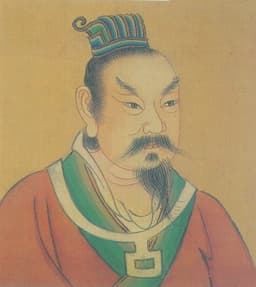
Li Keyong
General · Medieval
53.6Total
Basic Information
Born
1190
856
Died
1241
908
Era
Medieval
Medieval
Nationality
Mongol Empire
China
Occupation
General
General
Civilization
Eastern
Eastern
Score Comparison
Military (10%)
75.0
76.0
Political (20%)
61.3
39.4
Influence (20%)
58.0
51.0
Legacy (20%)
48.3
44.2
Leadership (15%)
62.0
65.0
Strategy (15%)
72.0
65.4
TOTAL
59.8
53.6
Chormaqan — Complete Timeline
1230 AD
Conquest of PersiaWar◆ Major
Chormaqan was appointed by
PersiaKhwarezmÖgedei Khan
Impact: regional
1235 AD
Campaign in the CaucasusWar
Chormaqan campaigned against the Cumans and other tribes in the Caucasus region. He defeated the Kipchak confederation and secured the passes through the Caucasus Mountains, opening the way for future Mongol invasions of Europe.
CaucasusCumansKipchaks
Impact: regional
Establishment of Mongol Administration in PersiaReform
Chormaqan established a permanent Mongol administrative and military presence in Persia, based in the Mughan plain. He implemented a system of taxation and conscription, integrating Persia into the Mongol Empire's imperial structure.
AdministrationPersiaMughan
Impact: regionalconstructive
1236 AD
Subjugation of GeorgiaWar◆ Major
Chormaqan led the Mongol invasion of the Kingdom of Georgia. After a series of campaigns, he forced Queen Rusudan to submit, making Georgia a vassal state of the Mongol Empire. The conquest devastated the Georgian economy and population.
GeorgiaRusudanVassal
Impact: regionaldestructive
Li Keyong — Complete Timeline
883 AD
Became Prince of JinPolitical Action◆ Major
Li Keyong was appointed Prince of Jin by the Tang court for his role in suppressing the Huang Chao rebellion. He established a power base in Shanxi and became a major warlord during the late Tang period.
AppointmentWarlordTang Dynasty
Impact: regionalconstructive
901 AD
Defeated by Zhu Wen at the Battle of the Yellow RiverWar◆ Major
Li Keyong was defeated by the forces of Zhu Wen (later Emperor Taizu of Later Liang) at the Yellow River. This defeat weakened his position and allowed Zhu Wen to dominate the Central Plains.
BattleDefeatZhu Wen
Impact: regionaldestructive
908 AD
Death from illnessOther◆ Major
Li Keyong died of illness. His son Li Cunxu succeeded him and later founded the Later Tang dynasty, fulfilling Li Keyong's ambition to restore Tang rule.
DeathSuccessionLater Tang
Impact: regionaltragic
Expert Analysis
Origins
Chormaqan, born around 1180, was a Mongol general from the Oirat tribe. He rose through the ranks of the Mongol army under Genghis Khan, likely participating in the early conquests in Central Asia. His background was typical of the Mongol military aristocracy: skilled in horsemanship, archery, and nomadic warfare. He was appointed by Ögedei Khan to lead the western campaign after the death of Jebe and Subutai. Li Keyong, born in 856, was a Shatuo Turk chieftain from the northern borderlands of Tang China. His father, Li Guochang, served the Tang dynasty as a military governor. Li Keyong inherited a loyal Shatuo cavalry force and was granted the imperial surname Li, integrating him into the Tang nobility. He grew up amidst the turmoil of the late Tang period, witnessing the erosion of central authority.
Rise to Power
Chormaqan's rise came in 1230 when Ögedei Khan tasked him with completing the conquest of Persia. He led a force of about 30,000 Mongols into Khorasan, quickly defeating the remnants of the Khwarezmian Empire. By 1231, he had captured the cities of Rayy and Isfahan. His key victory was the subjugation of the Kingdom of Georgia between 1236 and 1239, forcing Queen Rusudan to accept Mongol suzerainty. Li Keyong rose to prominence by suppressing the Huang Chao rebellion. In 883, his Shatuo cavalry played a decisive role in recapturing Chang'an from the rebels. As a reward, the Tang court appointed him Prince of Jin and governor of Hedong (modern Shanxi). He built a power base there, but his rivalry with Zhu Wen, another rebel-suppressor, led to conflict. In 901, Li Keyong was defeated by Zhu Wen at the Battle of the Yellow River, which curtailed his expansion.
Leadership & Governance
Chormaqan's leadership was characterized by ruthless efficiency and strategic adaptation. He established a permanent Mongol base in the Mughan plain (modern Azerbaijan), implementing a system of taxation and conscription. He used local Armenian and Georgian nobles as vassals, employing their troops in further campaigns. His governance score of 61.3 reflects his ability to administer conquered territories, though he relied heavily on terror to enforce submission. Li Keyong's leadership was more traditional for a Chinese warlord. He maintained a personal bond with his Shatuo warriors, rewarding loyalty with land and titles. He styled himself as a restorer of Tang legitimacy, but his political acumen was limited. His political score of 39.4 is low due to his inability to outmaneuver Zhu Wen. He failed to form lasting alliances and was often outwitted diplomatically.
Triumph & Tragedy
Chormaqan's greatest triumph was the conquest of Persia and the Caucasus, extending Mongol dominion to the borders of Anatolia. He secured the Silk Road routes and opened the way for later Mongol incursions into the Middle East. His tragedy was his sudden death in 1241, possibly from illness, which prevented him from consolidating his gains. The administration he set up later evolved into the Ilkhanate under Hulagu. Li Keyong's triumph was surviving the collapse of the Tang and establishing a viable state in Shanxi. His son Li Cunxu later founded the Later Tang dynasty, fulfilling his ambition. His tragedy was his defeat by Zhu Wen, which confined him to a secondary role. He died in 908 from an illness, never achieving his goal of restoring the Tang.
Character & Destiny
Chormaqan was a disciplined and methodical commander, scoring 72.0 in strategy. He preferred to systematically reduce fortresses and negotiate surrenders rather than engage in risky battles. His character was shaped by the Mongol ethos of total war, but he also showed pragmatism in co-opting local elites. Li Keyong was a charismatic warrior, scoring 65.4 in strategy. He was known for his personal bravery and his loyalty to the Tang cause, but his hot temper and pride sometimes clouded his judgment. He was a product of the Shatuo tribal tradition, which valued honor and kinship over political calculation. This ultimately limited his ability to compete with the more Machiavellian Zhu Wen.
Legacy
Chormaqan's legacy is significant though often overshadowed by later Mongol leaders. He demonstrated the effectiveness of Mongol military methods in the Middle East and established the administrative framework that lasted for decades. His campaigns killed hundreds of thousands, but also facilitated the transmission of ideas and goods across Eurasia. He scores 48.3 in legacy. Li Keyong's legacy is more localized but enduring in Chinese history. His Shatuo forces became the foundation of the Later Tang, Later Jin, and Later Han dynasties. He is remembered as a loyalist who fought to preserve the Tang, even as he built his own kingdom. His score of 44.2 reflects his lesser global impact.
Conclusion
While Li Keyong was a capable military leader (76.0 military score) who shaped the early Five Dynasties, Chormaqan had a greater impact on world history. Chormaqan's conquests integrated Persia into the Mongol Empire, altering the political landscape of the Middle East for centuries. His total score of 59.8 exceeds Li Keyong's 53.6, and his military and strategy scores are also higher. Chormaqan's actions contributed directly to the Mongol hegemony that connected East and West, whereas Li Keyong's influence was confined to the Chinese civil war. Therefore, Chormaqan is the more significant figure.
Rankings
🥇
ChormaqanLeader
Mil: 75.0Pol: 61.3Inf: 58.0
59.8
🥈
Li Keyong
Mil: 76.0Pol: 39.4Inf: 51.0
53.6
+6.2 behind
How This Comparison Works
Algorithm
Each figure is scored on 6 dimensions (0—100 scale) based on structured historical data: Military (10%), Political (20%), Influence (20%), Legacy (20%), Leadership (15%), Strategy (15%). The weighted total produces the final ranking.
Data Sources
Scores are computed from structured sub-indicators in the database. Scale factors adjust for era (Ancient ×0.85, Modern ×1.0) and civilization size (Eastern ×1.05, Other ×0.80) to account for differences in population and military scale.
Maximum 3 Figures
Comparisons are limited to 2—3 figures to ensure readability and statistical meaningfulness.
Error Margins
±5 points per dimension — Sub-scores are derived from historical records with inherent uncertainty. Two figures within 5 points on a dimension should be considered roughly equivalent in that area.
Total Score Accuracy
±3 points overall — The weighted combination of 6 dimensions produces a total score with approximately ±3 points of uncertainty. Differences of less than 3 points are not statistically significant— the figures are effectively tied.
Known Limitations
- Historical records are incomplete and uneven across civilizations
- Figures from oral-tradition societies may be underrepresented
- Occupation labels can misclassify multi-role figures
- Scores measure capability and impact, not moral character
- Quantitative scoring is a comparison tool, not absolute truth
Capability Radar
Military (10%) — Battles & Warfare
Battles
75
75
Win Rate
85
70
Expansion
82
65
Political (20%) — Governance & Reform
Reform
50
35
Diplomacy
65
55
Economy
45
30
Influence (20%) — Cultural & Global Reach
Cultural
40
45
Global
50
30
Legacy (20%) — Historical Impact
Historical
55
55
Longevity
45
40
Leadership (15%) — Power & Stability
Tenure
55
60
Stability
50
40
Strategy (15%) — Tactics & Innovation
Strategy
78
68
Tactics
80
72
Reform
60
40
Similar Comparisons
Comments & Discussion
No comments yet. Be the first to share your thoughts!