Loading...
Analysis will be generated on first visit.
Scores and timeline are available below. The page will refresh automatically when ready.
Christine Lagarde vs Napoleon Bonaparte
Napoleon Bonaparte leads by 17.1 pts · 2 figures compared
…

Christine Lagarde
Politician · Modern
65.3Total
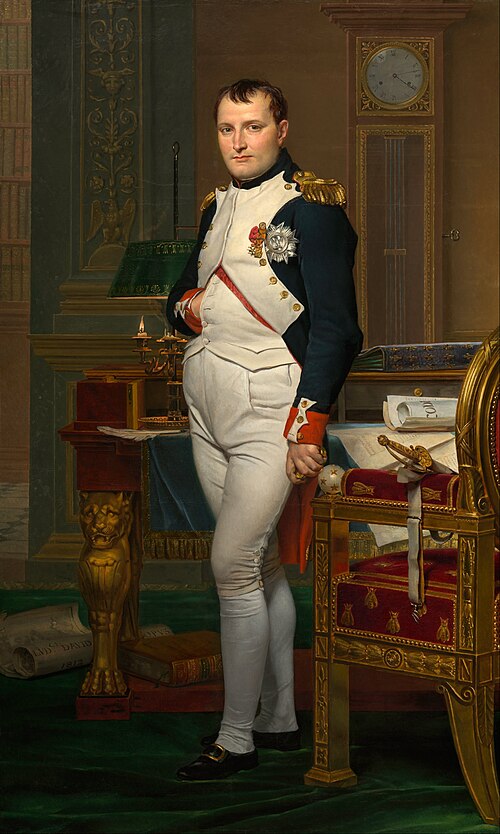
Napoleon Bonaparte
General · Modern
82.4Total
Basic Information
Born
1956
1769
Died
—
1821
Era
Modern
Modern
Nationality
France
France
Occupation
Politician
General
Civilization
Western
Western
Score Comparison
Military (10%)
37.5
94.0
Political (20%)
76.5
75.0
Influence (20%)
70.2
82.0
Legacy (20%)
70.0
78.0
Leadership (15%)
86.2
80.0
Strategy (15%)
35.3
93.0
TOTAL
65.3
82.4
Rankings
🥇
Napoleon BonaparteLeader
Mil: 94.0Pol: 75.0Inf: 82.0
82.4
🥈
Christine Lagarde
Mil: 37.5Pol: 76.5Inf: 70.2
65.3
+17.1 behind
How This Comparison Works
Algorithm
Each figure is scored on 6 dimensions (0—100 scale) based on structured historical data: Military (10%), Political (20%), Influence (20%), Legacy (20%), Leadership (15%), Strategy (15%). The weighted total produces the final ranking.
Data Sources
Scores are computed from structured sub-indicators in the database. Scale factors adjust for era (Ancient ×0.85, Modern ×1.0) and civilization size (Eastern ×1.05, Other ×0.80) to account for differences in population and military scale.
Maximum 3 Figures
Comparisons are limited to 2—3 figures to ensure readability and statistical meaningfulness.
Error Margins
±5 points per dimension — Sub-scores are derived from historical records with inherent uncertainty. Two figures within 5 points on a dimension should be considered roughly equivalent in that area.
Total Score Accuracy
±3 points overall — The weighted combination of 6 dimensions produces a total score with approximately ±3 points of uncertainty. Differences of less than 3 points are not statistically significant— the figures are effectively tied.
Known Limitations
- Historical records are incomplete and uneven across civilizations
- Figures from oral-tradition societies may be underrepresented
- Occupation labels can misclassify multi-role figures
- Scores measure capability and impact, not moral character
- Quantitative scoring is a comparison tool, not absolute truth
Capability Radar
Military (10%) — Battles & Warfare
Battles
29
95
Win Rate
29
90
Expansion
34
95
Political (20%) — Governance & Reform
Reform
70
95
Diplomacy
80
80
Economy
85
85
Influence (20%) — Cultural & Global Reach
Cultural
40
85
Global
70
90
Legacy (20%) — Historical Impact
Historical
55
95
Longevity
50
90
Leadership (15%) — Power & Stability
Tenure
75
85
Stability
75
70
Strategy (15%) — Tactics & Innovation
Strategy
36
95
Tactics
39
98
Reform
46
92
Analysis will be generated on first visit.
Scores and timeline are available below. The page will refresh automatically when ready.
Christine Lagarde — Complete Timeline
2011 AD
Appointed Managing Director of the IMFPolitical Action
Christine Lagarde became the first woman to lead the International Monetary Fund. She managed the IMF's response to the Eurozone debt crisis, including bailouts for Greece, Ireland, and Portugal, and advocated for global financial stability.
IMFFinancial CrisisGlobal Economy
Impact: globalconstructive
2016 AD
Convicted of Negligence in Tapie Arbitration CaseOther◆ Major
A French court found Lagarde guilty of negligence for her role in a
Legal CaseNegligenceFrench Politics
Impact: nationaldestructive
2019 AD
Elected President of the European Central BankPolitical Action
Lagarde became the first woman to lead the European Central Bank, succeeding Mario Draghi. She took office during a period of low inflation and economic slowdown, continuing accommodative monetary policy and launching a strategic review.
ECBMonetary PolicyFirst Woman
Impact: globalconstructive
2020 AD
Launched ECB Monetary Policy Strategy ReviewReform◆ Major
Lagarde initiated a review of the ECB's monetary policy strategy, the first since 2003. The review examined inflation targeting, climate change, and digital currencies, resulting in a new symmetric 2% inflation target adopted in 2021.
ECBMonetary PolicyStrategy Review
Impact: globalconstructive
Responded to COVID-19 Economic CrisisPolitical Action◆ Major
Lagarde oversaw the ECB's emergency response to the pandemic, including the
COVID-19ECBMonetary Policy
Impact: regionalconstructive
2022 AD
Raised Interest Rates to Combat InflationPolitical Action◆ Major
Lagarde led the ECB in raising interest rates for the first time in 11 years to combat surging inflation. The rate hikes continued through 2023, marking a shift from years of accommodative policy and impacting borrowing costs across the eurozone.
InflationInterest RatesECB
Impact: regional
Similar Comparisons
Comments & Discussion
No comments yet. Be the first to share your thoughts!