Loading...
Chulalongkorn vs Menelik II
Menelik II leads by 7.5 pts · 2 figures compared
…
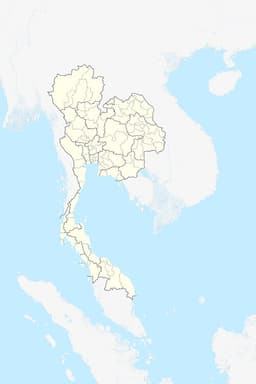
Chulalongkorn
Emperor · Modern
63.7Total

Menelik II
Emperor · Modern
71.2Total
Basic Information
Born
1853
1844
Died
1910
1913
Era
Modern
Modern
Nationality
Thailand
Ethiopia
Occupation
Emperor
Emperor
Civilization
Eastern
Other
Score Comparison
Military (10%)
21.2
80.0
Political (20%)
78.0
82.0
Influence (20%)
72.0
88.0
Legacy (20%)
55.0
40.0
Leadership (15%)
80.7
78.0
Strategy (15%)
60.0
72.0
TOTAL
63.7
71.2
Chulalongkorn — Complete Timeline
1892 AD
Established modern administrative system (Thesaphiban)Reform◆ Major
Chulalongkorn reorganized Siam's provincial administration into a centralized system called Thesaphiban, replacing traditional semi-autonomous lords with appointed governors. This strengthened central control and modernized governance.
Administrative ReformCentralizationModernization
Impact: nationalconstructive
Created the Ministry of EducationReform◆ Major
Chulalongkorn established the Ministry of Education to oversee a national school system, replacing traditional temple-based education. This laid the foundation for modern secular education in Siam.
Education ReformModernizationState Building
Impact: nationalprogressive
1893 AD
Negotiated treaties to preserve Siamese independencePolitical Action◆ Major
Following the Franco-Siamese crisis, Chulalongkorn ceded Laos to France to avoid war. He later negotiated treaties with Britain and France that preserved Siam's independence by ceding peripheral territories.
DiplomacyTerritorial LossIndependence
Impact: regional
Introduced the first railway in SiamInvention
Chulalongkorn inaugurated the first railway line in Siam, connecting Bangkok to Ayutthaya. This began the expansion of a national railway network that facilitated trade and administrative control.
InfrastructureRailwayModernization
Impact: nationalconstructive
1905 AD
Abolished slavery in SiamReform◆ Major
King Chulalongkorn issued a decree abolishing slavery in Siam, freeing all slaves gradually over time. This reform ended centuries of bondage and aligned Siam with modern international norms.
Slavery AbolitionSocial ReformModernization
Impact: nationalprogressive
Menelik II — Complete Timeline
1886 AD
Founding of Addis AbabaPolitical Action◆ Major
Menelik founded Addis Ababa as his capital, moving the imperial seat from Entoto. The city became the political and economic center of Ethiopia, and its location facilitated trade and administration.
CapitalAddis AbabaFoundation
Impact: nationalconstructive
1887 AD
Conquest of HararWar◆ Major
Menelik conquered the city of Harar, a major trade center, incorporating it into the Ethiopian Empire. This expansion secured control over key trade routes and strengthened his power base before becoming emperor.
ConquestHararTrade
Impact: regional
1889 AD
Signing of the Treaty of WuchalePolitical Action◆ Major
Menelik signed the Treaty of Wuchale with Italy, which ceded territory in exchange for recognition of his rule. A dispute over Article 17, which Italy claimed made Ethiopia a protectorate, later led to war.
TreatyItalyDispute
Impact: regional
1890 AD
Modernization ReformsReform◆ Major
Menelik II modernized Ethiopia by introducing railways, telegraph lines, and a postal system. He also established a modern army with imported firearms and centralized the administration, strengthening the state.
ModernizationRailwayArmy
Impact: nationalconstructive
1896 AD
Battle of AdwaWar
Menelik II led Ethiopian forces to a decisive victory over the Italian army at Adwa. The battle ensured Ethiopian independence and became a symbol of African resistance to colonialism, forcing Italy to recognize Ethiopian sovereignty.
BattleItalian ColonialismIndependence
Impact: globalconstructive
Expert Analysis
Origins
Chulalongkorn (Rama V) was born on September 20, 1853, in Bangkok, Siam (now Thailand), the son of King Mongkut (Rama IV). He received a traditional Buddhist education supplemented by Western tutors, including Anna Leonowens. His upbringing immersed him in both Siamese court traditions and modern Western ideas, preparing him for his future role as a reformer.
Menelik II was born as Sahle Maryam on August 17, 1844, in Ankober, Shewa, Ethiopia. He was the son of Negus Haile Melekot of Shewa. After his father's death, he was imprisoned by Emperor Tewodros II but later escaped and consolidated power in Shewa. His education was traditional Ethiopian Orthodox, but he also learned about European military technology and diplomacy from missionaries and traders.
Rise to Power
Chulalongkorn ascended the throne in 1868 at age 15 after his father's death, with regent Somdet Chaophraya Si Suriyawongse ruling until his coronation in 1873. His early reign focused on consolidating power and learning from foreign advisors. The Front Palace crisis of 1874–1875, where he faced a challenge from the vice-king, tested his authority; he ultimately prevailed and began centralizing power, establishing a privy council and council of state.
Menelik II's rise was more martial. He became Negus of Shewa in 1865 after escaping captivity and expanding his territory. He submitted to Emperor Yohannes IV in 1878 but retained autonomy. Following Yohannes's death in 1889, Menelik claimed the imperial throne, securing recognition from Italy via the Treaty of Wuchale. He then used Italian firearms to conquer neighboring kingdoms like Harar (1887) and Kaffa, uniting much of modern Ethiopia under his rule.
Leadership & Governance
Chulalongkorn's leadership was characterized by gradual, top-down modernization. He abolished slavery in 1905 through a phased emancipation, freeing around 200,000 slaves. He introduced the Thesaphiban administrative system in 1892, replacing semi-autonomous provinces with centrally appointed governors. He established the Ministry of Education in 1892 and built a national railway, starting with the Bangkok-Ayutthaya line in 1897. His governance scored 80.7 in leadership, reflecting effective reforms that preserved Siamese sovereignty.
Menelik II's governance combined military conquest with modernization. He founded Addis Ababa in 1886 as his capital, building a railway to Djibouti (completed 1917), introducing telegraph lines, and importing European firearms. He also established a postal system and a modern army. However, his leadership was more autocratic and expansionist, with scores of 82.0 in political and 72.0 in strategy. Unlike Chulalongkorn, Menelik's reforms were less systematic and more focused on military strength.
Triumph & Tragedy
Chulalongkorn's greatest triumph was preserving Siamese independence through diplomacy. After the Franco-Siamese crisis of 1893, he ceded Laos to France to avoid war, a pragmatic decision that maintained sovereignty. His abolition of slavery and educational reforms modernized Siam without colonial domination. His greatest failure was the loss of Cambodian and Lao territories to France; his policies also failed to prevent extraterritorial rights for Westerners, which persisted until the 1920s.
Menelik II's triumph was the Battle of Adwa (March 1, 1896), where his 100,000-strong army defeated 17,700 Italian troops, killing 7,000. This victory ensured Ethiopian independence and inspired anti-colonial movements. His tragedy was the Treaty of Wuchale (1889), which Italy exploited to claim a protectorate; the dispute led to war. Later, his expansionism caused famine in conquered regions, and his reliance on firearms created debt. His leadership score of 78.0 reflects these mixed outcomes.
Character & Destiny
Chulalongkorn was cautious, diplomatic, and pragmatic. He traveled to British Malaya and the Dutch East Indies in 1871 and to Europe in 1897 and 1907, studying Western administration. His character shaped Siam's destiny as a buffer state; his willingness to compromise preserved independence but cost territorial integrity. Historians note his patience and strategic concessions, scoring him 60.0 in strategy.
Menelik II was ambitious, shrewd, and ruthless. He exploited European rivalries, buying firearms from France and Russia while playing Italy against Britain. His character drove Ethiopian expansion and victory at Adwa, but his autocracy and military focus left a mixed legacy. Strategy score of 72.0 reflects his effective use of terrain and diplomacy. In contrast to Chulalongkorn's gradual reforms, Menelik's rapid militarization sowed seeds for future instability.
Legacy
Chulalongkorn's legacy is the survival of Siam as a sovereign state, the only Southeast Asian country never colonized. His administrative and educational systems remain the foundation of modern Thailand. The abolition of slavery and railway network are enduring achievements. However, his territorial concessions are criticized. His total score of 63.7 reflects a moderate but lasting impact.
Menelik II's legacy is the Battle of Adwa, a symbol of African resistance. He expanded Ethiopia's borders to roughly modern-day size and began modernization. Yet, his reign did not create lasting institutions; the monarchy declined after his death in 1913. His total score of 71.2 is higher, but his impact is more symbolic than structural. Adwa inspired pan-Africanism, but Ethiopia struggled with modernization and later faced Italian invasion in 1935.
Conclusion
Chulalongkorn had greater long-term impact because his reforms created stable institutions that preserved independence for over a century. Menelik's victory at Adwa was a monumental achievement, but his legacy is more inspirational than practical; Ethiopia was colonized by Italy in 1936, while Siam remained free. Chulalongkorn's political score of 78.0 and leadership of 80.7 underscore his effective governance, while Menelik's military score of 80.0 and influence of 88.0 highlight his symbolic power. Ultimately, Chulalongkorn's systemic modernization ensured Thailand's continuity, giving him a more enduring impact than Menelik's singular triumph.
Rankings
🥇
Menelik IILeader
Mil: 80.0Pol: 82.0Inf: 88.0
71.2
🥈
Chulalongkorn
Mil: 21.2Pol: 78.0Inf: 72.0
63.7
+7.5 behind
How This Comparison Works
Algorithm
Each figure is scored on 6 dimensions (0—100 scale) based on structured historical data: Military (10%), Political (20%), Influence (20%), Legacy (20%), Leadership (15%), Strategy (15%). The weighted total produces the final ranking.
Data Sources
Scores are computed from structured sub-indicators in the database. Scale factors adjust for era (Ancient ×0.85, Modern ×1.0) and civilization size (Eastern ×1.05, Other ×0.80) to account for differences in population and military scale.
Maximum 3 Figures
Comparisons are limited to 2—3 figures to ensure readability and statistical meaningfulness.
Error Margins
±5 points per dimension — Sub-scores are derived from historical records with inherent uncertainty. Two figures within 5 points on a dimension should be considered roughly equivalent in that area.
Total Score Accuracy
±3 points overall — The weighted combination of 6 dimensions produces a total score with approximately ±3 points of uncertainty. Differences of less than 3 points are not statistically significant— the figures are effectively tied.
Known Limitations
- Historical records are incomplete and uneven across civilizations
- Figures from oral-tradition societies may be underrepresented
- Occupation labels can misclassify multi-role figures
- Scores measure capability and impact, not moral character
- Quantitative scoring is a comparison tool, not absolute truth
Capability Radar
Military (10%) — Battles & Warfare
Battles
10
75
Win Rate
10
85
Expansion
10
70
Political (20%) — Governance & Reform
Reform
90
80
Diplomacy
95
85
Economy
80
70
Influence (20%) — Cultural & Global Reach
Cultural
70
70
Global
65
75
Legacy (20%) — Historical Impact
Historical
75
80
Longevity
70
65
Leadership (15%) — Power & Stability
Tenure
85
85
Stability
85
75
Strategy (15%) — Tactics & Innovation
Strategy
20
85
Tactics
15
80
Reform
60
90
Similar Comparisons
Comments & Discussion
No comments yet. Be the first to share your thoughts!