Loading...
Ciriaco De Mita vs Eleftherios Venizelos
Eleftherios Venizelos leads by 4.6 pts · 2 figures compared
…
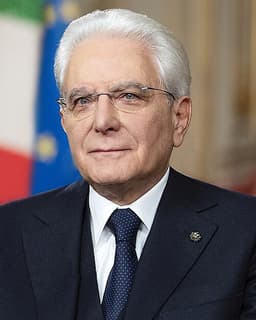
Ciriaco De Mita
Politician · Modern
55.7Total

Eleftherios Venizelos
Politician · Modern
60.3Total
Basic Information
Born
1928
1864
Died
—
1936
Era
Modern
Modern
Nationality
Italy
Greece
Occupation
Politician
Politician
Civilization
Western
Western
Score Comparison
Military (10%)
45.4
46.7
Political (20%)
68.0
78.0
Influence (20%)
54.1
65.0
Legacy (20%)
45.0
40.0
Leadership (15%)
68.0
78.0
Strategy (15%)
60.0
60.0
TOTAL
55.7
60.3
Ciriaco De Mita — Complete Timeline
1982 AD
Secretary of the Christian DemocracyPolitical Action◆ Major
De Mita was elected Secretary of the Christian Democracy (DC) party in 1982. He led the party through a period of internal reform, aiming to modernize its structure and reduce factionalism, but faced resistance from traditionalist wings.
Italian PoliticsChristian DemocracyParty Reform
Impact: nationalconstructive
1988 AD
Prime Minister of ItalyPolitical Action◆ Major
De Mita served as Prime Minister from April 1988 to July 1989. His government focused on economic reforms, including the reduction of public debt and the liberalization of markets, but was criticized for its slow pace and internal conflicts.
Italian PoliticsGovernmentEconomic Reform
Impact: national
1989 AD
Fall of the De Mita governmentPolitical Action◆ Major
De Mita's government fell in July 1989 after losing the support of the Socialist Party, led by Bettino Craxi. The collapse was due to personal and political rivalries, highlighting the instability of coalition governments in Italy.
Italian PoliticsCoalition CrisisGovernment Fall
Impact: nationaldestructive
1999 AD
European ParliamentPolitical Action
De Mita served as a Member of the European Parliament from 1999 to 2004. He focused on European integration and agricultural policies, representing Italy in the European People's Party group.
European PoliticsEuropean ParliamentIntegration
Impact: regional
Eleftherios Venizelos — Complete Timeline
1897 AD
Led the Cretan RevoltWar◆ Major
Venizelos organized and led the Cretan revolt against Ottoman rule, demanding union with Greece. The revolt led to the Greco-Turkish War of 1897, which ended in Greek defeat but resulted in Crete becoming an autonomous state under international protection.
RevoltCreteOttoman Empire
Impact: regional
1910 AD
Elected Prime Minister of GreecePolitical Action◆ Major
Venizelos was elected Prime Minister of Greece after a landslide victory. He initiated a comprehensive reform program, including constitutional amendments, land redistribution, and military modernization, transforming Greece into a modern state.
ElectionReformModernization
Impact: nationalconstructive
1912 AD
Led Greece in the Balkan WarsWar◆ Major
Venizelos orchestrated Greece's participation in the Balkan Wars, leading to the capture of Thessaloniki and the doubling of Greek territory. The wars ended Ottoman rule in the Balkans and established Greece as a regional power.
Balkan WarsTerritorial ExpansionMilitary Victory
Impact: regional
1915 AD
National Schism with King ConstantinePolitical Action◆ Major
Venizelos clashed with King Constantine I over Greece's entry into World War I on the Allied side. The dispute led to the National Schism, with Venizelos forming a rival government in Thessaloniki, dividing the country politically and militarily.
Political CrisisWorld War IDivision
Impact: nationaldestructive
1920 AD
Signed the Treaty of SèvresPolitical Action◆ Major
Venizelos signed the Treaty of S
TreatyTerritorial ExpansionAsia Minor
Impact: regional
Defeated in the 1920 ElectionsPolitical Action◆ Major
Venizelos lost the November 1920 elections to the royalist opposition, leading to his exile. The defeat resulted in the return of King Constantine and the continuation of the Asia Minor campaign, which ended in the Catastrophe of 1922.
Election DefeatExilePolitical Shift
Impact: nationaltragic
Expert Analysis
Origins
Ciriaco De Mita was born on 2 February 1928 in Nusco, a small town in the Campania region of Italy. His family were modest landowners. He studied law at the University of Naples, graduating in 1954. He joined the Christian Democracy (DC) party in his youth, influenced by Catholic social teachings. His early career included local politics in Avellino, where he served as mayor from 1956 to 1960.
Eleftherios Venizelos was born on 23 August 1864 in Mournies, Crete, then under Ottoman rule. His father, Kyriakos Venizelos, was a merchant and revolutionary. He studied law at the University of Athens, graduating in 1886. He became a lawyer and journalist, advocating for Crete's union with Greece. His early political activism included involvement in the Cretan revolts of 1889 and 1896.
Rise to Power
De Mita's rise was gradual within the DC. He was elected to the Italian Chamber of Deputies in 1963. He held various ministerial posts, including Minister of Industry and Minister of Foreign Trade. In 1982, he was elected Secretary of the DC, the party's top position. He modernized the party's structure and ideology, shifting it toward more centrist and reformist policies. He became Prime Minister in April 1988 after the fall of the Goria government, leading a coalition with the Socialists and others.
Venizelos rose to prominence through his leadership in the Cretan revolt of 1897, which forced the Great Powers to grant Crete autonomy. He became the leader of the Cretan government and later moved to Athens. In 1910, he was invited to lead the government after a political crisis. He won a landslide election and became Prime Minister in October 1910. He initiated a comprehensive reform program, including constitutional amendments, land reforms, and military modernization.
Leadership & Governance
De Mita's leadership style was consensus-oriented and technocratic. He focused on economic reforms to reduce public debt and control inflation. His government passed the Amato law on public finances and began privatizing state-owned enterprises. However, his coalition with the Socialists under Bettino Craxi was fraught with personal and political tensions. De Mita's approach was cautious, often seeking compromise, which some saw as indecisive. His governance score is 68.0, reflecting his moderate effectiveness.
Venizelos was a charismatic and decisive leader. He pushed through major constitutional changes, including the revision of the constitution to establish a more democratic system. He reorganized the military and education system, and he implemented land redistribution. His leadership during the Balkan Wars (1912-13) was instrumental in doubling Greek territory. He scored 78.0 in political leadership and 78.0 in overall leadership, reflecting his strong governance.
Triumph & Tragedy
De Mita's greatest success was his role in modernizing the DC and stabilizing the Italian economy during his tenure. He reduced inflation from 5% to 3% and lowered the budget deficit. However, his government fell after only 15 months due to the loss of Socialist support. His inability to maintain the coalition was a major failure. Later, he was implicated in corruption scandals during the Tangentopoli investigations, though he was acquitted. His legacy score is 45.0, indicating mixed long-term impact.
Venizelos's greatest triumph was the Treaty of Sèvres in 1920, which granted Greece Eastern Thrace and the region of Smyrna, fulfilling the Megali Idea. He also led Greece to victory in the Balkan Wars. However, his tragic failure was the National Schism with King Constantine I over Greece's entry into World War I, which split the country and led to civil strife. The subsequent Asia Minor Disaster in 1922, though after his time, was partly a consequence of the overreach. Venizelos's influence score is 65.0, reflecting his significant but controversial impact.
Character & Destiny
De Mita was known for his intellectual approach and cautious nature. He was a skilled party manager but lacked the charisma to dominate Italian politics. His character led to a short-lived premiership, as he was unable to navigate the fractious coalition system. He died on 26 May 2022 at age 94, leaving a mixed legacy as a reformer who failed to achieve lasting change.
Venizelos was bold, visionary, and sometimes autocratic. His determination to pursue the Megali Idea drove his policies. His clash with the king led to the National Schism, which weakened Greece. He was exiled after losing the 1920 election but returned to power later. He died in 1936 in Paris. Historians regard him as the greatest Greek statesman of the 20th century, but his overreach contributed to later disasters.
Legacy
De Mita's legacy is primarily as a reformer within the DC, but his party collapsed in the 1990s. His economic policies had modest success, but he is not widely remembered outside Italy. His score of 45.0 in legacy reflects this limited impact.
Venizelos's legacy is immense in Greece. He is credited with modernizing the state, expanding territory, and establishing democratic institutions. The Venizelos Museum and numerous statues commemorate him. However, his role in the National Schism and the Asia Minor Disaster is controversial. His legacy score of 40.0 is surprisingly low, possibly due to the ultimate failure of the Megali Idea.
Conclusion
Eleftherios Venizelos had a greater impact than Ciriaco De Mita. Despite a lower legacy score (40.0 vs 45.0), Venizelos's political score of 78.0 and leadership of 78.0 far exceed De Mita's 68.0 in both. Venizelos transformed Greece, doubling its territory and modernizing its institutions. De Mita's reforms were modest and his tenure brief. The total score gap of 4.6 points (Venizelos 60.3 vs De Mita 55.7) confirms this. Venizelos's influence on Greek history is profound, while De Mita's is largely forgotten outside Italy. Therefore, Venizelos is the greater figure.
Rankings
🥇
Eleftherios VenizelosLeader
Mil: 46.7Pol: 78.0Inf: 65.0
60.3
🥈
Ciriaco De Mita
Mil: 45.4Pol: 68.0Inf: 54.1
55.7
+4.6 behind
How This Comparison Works
Algorithm
Each figure is scored on 6 dimensions (0—100 scale) based on structured historical data: Military (10%), Political (20%), Influence (20%), Legacy (20%), Leadership (15%), Strategy (15%). The weighted total produces the final ranking.
Data Sources
Scores are computed from structured sub-indicators in the database. Scale factors adjust for era (Ancient ×0.85, Modern ×1.0) and civilization size (Eastern ×1.05, Other ×0.80) to account for differences in population and military scale.
Maximum 3 Figures
Comparisons are limited to 2—3 figures to ensure readability and statistical meaningfulness.
Error Margins
±5 points per dimension — Sub-scores are derived from historical records with inherent uncertainty. Two figures within 5 points on a dimension should be considered roughly equivalent in that area.
Total Score Accuracy
±3 points overall — The weighted combination of 6 dimensions produces a total score with approximately ±3 points of uncertainty. Differences of less than 3 points are not statistically significant— the figures are effectively tied.
Known Limitations
- Historical records are incomplete and uneven across civilizations
- Figures from oral-tradition societies may be underrepresented
- Occupation labels can misclassify multi-role figures
- Scores measure capability and impact, not moral character
- Quantitative scoring is a comparison tool, not absolute truth
Capability Radar
Military (10%) — Battles & Warfare
Battles
46
30
Win Rate
50
40
Expansion
52
55
Political (20%) — Governance & Reform
Reform
55
90
Diplomacy
60
85
Economy
50
70
Influence (20%) — Cultural & Global Reach
Cultural
30
70
Global
35
70
Legacy (20%) — Historical Impact
Historical
40
80
Longevity
30
65
Leadership (15%) — Power & Stability
Tenure
60
75
Stability
45
65
Strategy (15%) — Tactics & Innovation
Strategy
55
45
Tactics
57
35
Reform
61
60
Similar Comparisons
Comments & Discussion
No comments yet. Be the first to share your thoughts!