Loading...
Cleisthenes of Athens vs Julius Caesar
Julius Caesar leads by 10.1 pts · 2 figures compared
…
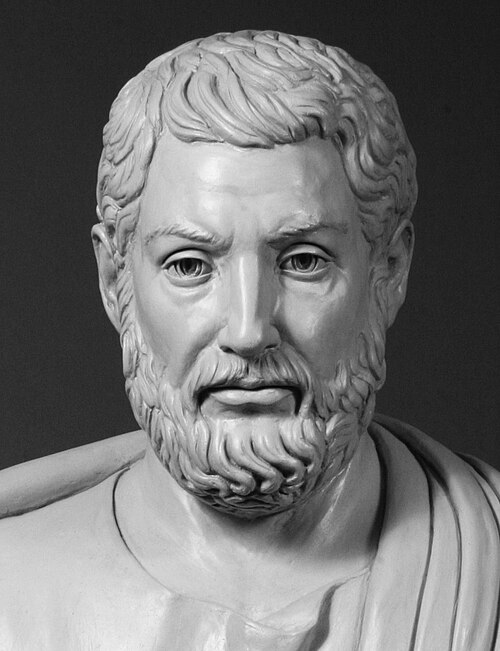
Cleisthenes of Athens
Politician · Ancient
73.2Total
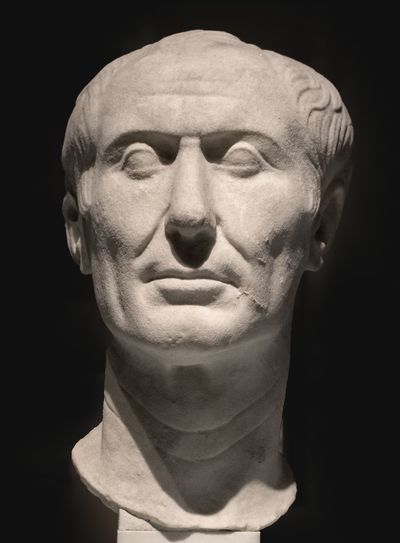
Julius Caesar
General · Ancient
83.3Total
Basic Information
Born
-570
-100
Died
-508
-44
Era
Ancient
Ancient
Nationality
Athens
Roman Republic
Occupation
Politician
General
Civilization
Western
Western
Score Comparison
Military (10%)
31.7
88.0
Political (20%)
66.6
78.0
Influence (20%)
83.5
85.0
Legacy (20%)
89.9
82.0
Leadership (15%)
82.7
82.0
Strategy (15%)
64.3
88.0
TOTAL
73.2
83.3
Rankings
🥇
Julius CaesarLeader
Mil: 88.0Pol: 78.0Inf: 85.0
83.3
🥈
Cleisthenes of Athens
Mil: 31.7Pol: 66.6Inf: 83.5
73.2
+10.1 behind
How This Comparison Works
Algorithm
Each figure is scored on 6 dimensions (0—100 scale) based on structured historical data: Military (10%), Political (20%), Influence (20%), Legacy (20%), Leadership (15%), Strategy (15%). The weighted total produces the final ranking.
Data Sources
Scores are computed from structured sub-indicators in the database. Scale factors adjust for era (Ancient ×0.85, Modern ×1.0) and civilization size (Eastern ×1.05, Other ×0.80) to account for differences in population and military scale.
Maximum 3 Figures
Comparisons are limited to 2—3 figures to ensure readability and statistical meaningfulness.
Error Margins
±5 points per dimension — Sub-scores are derived from historical records with inherent uncertainty. Two figures within 5 points on a dimension should be considered roughly equivalent in that area.
Total Score Accuracy
±3 points overall — The weighted combination of 6 dimensions produces a total score with approximately ±3 points of uncertainty. Differences of less than 3 points are not statistically significant— the figures are effectively tied.
Known Limitations
- Historical records are incomplete and uneven across civilizations
- Figures from oral-tradition societies may be underrepresented
- Occupation labels can misclassify multi-role figures
- Scores measure capability and impact, not moral character
- Quantitative scoring is a comparison tool, not absolute truth
Capability Radar
Military (10%) — Battles & Warfare
Battles
22
95
Win Rate
27
92
Expansion
28
97
Political (20%) — Governance & Reform
Reform
95
90
Diplomacy
70
85
Economy
40
82
Influence (20%) — Cultural & Global Reach
Cultural
85
88
Global
80
94
Legacy (20%) — Historical Impact
Historical
90
95
Longevity
95
96
Leadership (15%) — Power & Stability
Tenure
30
75
Stability
60
60
Strategy (15%) — Tactics & Innovation
Strategy
35
94
Tactics
34
96
Reform
40
88
Expert Analysis
cleisthenes-of-athens-vs-julius-caesar
### The Architect of Power and the Father of Democracy
On a spring morning in 508 BCE, an Athenian politician named Cleisthenes watched from exile as Spartan soldiers marched through the streets of his city. His rival Isagoras had called upon Sparta’s king to crush the democratic experiment Cleisthenes had just begun. On a winter day in 49 BCE, Julius Caesar stood at the banks of the Rubicon River in northern Italy, knowing that crossing it with his legions meant civil war—and that turning back meant ruin. These two moments, separated by nearly four centuries and by an ocean of political philosophy, capture the essence of two men who reshaped the Western world. One gave birth to democracy; the other gave it a funeral.
### Origins
Cleisthenes was born around 570 BCE into the aristocratic Alcmaeonid family of Athens, a clan with a complicated history of exile, power, and reform. His era was one of fragile transition: Athens had recently overthrown its tyrant Hippias, but the old noble factions still fought for control. Cleisthenes grew up watching his uncle Megacles and other aristocrats struggle for dominance, a world where personal loyalty to a clan meant more than loyalty to a city. This experience taught him that the only way to break the cycle of factional violence was to restructure society from the ground up—not by seizing power himself, but by giving power to the people.
Julius Caesar was born in 100 BCE into a patrician family that had long lost its political luster. His Rome was a dying republic, exhausted by civil wars between populists like Marius and aristocrats like Sulla. Caesar’s uncle by marriage was Marius, and his father-in-law was Cinna—both enemies of Sulla. When Sulla took power, he ordered young Caesar to divorce his wife; Caesar refused and fled, beginning a lifetime of gambling on his own survival. Where Cleisthenes saw democracy as a solution to aristocratic strife, Caesar saw it as a game to be mastered. The difference in their origins—a world of fragile reform versus a world of violent decay—shaped everything that followed.
### Rise to Power
Cleisthenes rose to power not through military conquest but through political maneuvering. In 508 BCE, with Sparta’s king Cleomenes I backing his rival Isagoras, Cleisthenes found himself outmaneuvered and exiled. But he had already planted the seeds of a revolution. He had proposed a radical reorganization of Athenian society: instead of the four old tribal divisions based on birth and wealth, he created ten new tribes based on local districts called *demes*. This single stroke broke the power of the aristocratic clans, because now every Athenian belonged to a tribe that crossed class and regional lines. When the Spartans expelled him, the Athenian people rose up in protest, besieging Isagoras and his Spartan allies on the Acropolis. Cleisthenes was recalled in triumph. His rise was a story of an idea whose time had come, and of a people who chose to fight for it.
Caesar’s rise was a story of ambition, debt, and blood. He climbed the political ladder as a populist, spending borrowed fortunes on games and bribes to win the favor of the Roman mob. In 60 BCE, he formed the First Triumvirate with Pompey and Crassus, an alliance that let him secure the governorship of Gaul. Over the next eight years, Caesar conquered all of Gaul—modern France and Belgium—fighting more than forty battles and slaughtering perhaps a million people. He wrote his own commentaries to shape his legend. By 49 BCE, his rivals in the Senate ordered him to disband his army and return to Rome as a private citizen. Instead, he crossed the Rubicon and marched on Rome. Where Cleisthenes had won power through reform, Caesar won it through war.
### Leadership & Governance
Cleisthenes governed through institutions. His greatest achievement was the Council of 500, or *Boule*, chosen by lot from the ten tribes. This body prepared legislation for the Assembly of all citizens, ensuring that no single faction could dominate. He also introduced ostracism, a mechanism by which citizens could vote annually to exile a dangerous politician for ten years. The goal was not to punish but to prevent tyranny before it began. Cleisthenes did not seek to be a leader in the traditional sense; he sought to create a system that could lead itself. His reforms were so thorough that they survived the Persian Wars and the Golden Age of Pericles. He gave Athens a framework that lasted nearly two centuries.
Caesar governed through will. As dictator, he reformed the calendar, granted citizenship to provincials, initiated public works projects, and planned to drain the Pontine Marshes. But his rule was a one-man show. He packed the Senate with his supporters, minted coins with his own image, and accepted the title “dictator for life.” He was a brilliant administrator, but he never built institutions that could outlast him. His reforms were acts of personal power, not civic foundations. Where Cleisthenes had dispersed authority, Caesar concentrated it. The difference was not just in their personalities but in their eras: Cleisthenes lived in a world where the *polis* was still the center of life; Caesar lived in a world where the Republic had already rotted from within.
### Triumph & Tragedy
Cleisthenes’ triumph was the establishment of Athenian democracy. His reforms gave ordinary citizens a voice, and that voice would later inspire the world. His tragedy is that we know so little of his personal story—no dramatic battlefield, no famous last words. He faded into history as an architect whose building outlived him.
Caesar’s triumph was the conquest of Gaul and the transformation of Rome. His tragedy was the Ides of March, 44 BCE, when sixty senators stabbed him to death in the Senate chamber. He bled out at the foot of a statue of Pompey, his old rival. But his assassination did not restore the Republic; it only sparked another round of civil wars that ended with his adopted heir, Octavian, becoming the first emperor. Caesar’s tragedy was that his own success made the Republic impossible to save.
### Character & Destiny
Cleisthenes seems to have been a man of patience and calculation. He did not seek personal glory; he sought a system that would make personal glory irrelevant. His exile and return show a man willing to wait for his moment, and to let the people fight for him. He was a reformer, not a revolutionary.
Caesar was the opposite: impulsive, charismatic, and ruthless. He pardoned his enemies, but only after defeating them. He slept with his allies’ wives, but only after securing their loyalty. He was a gambler who always doubled down. “The die is cast,” he reportedly said at the Rubicon, but the truth is that he had been casting dice his entire life. His character—a blend of genius and arrogance—made him unstoppable and then made him dead.
### Legacy
Cleisthenes is remembered as the Father of Athenian Democracy. His name appears in textbooks, but his face is unknown. His legacy is not a monument but a principle: that ordinary people can govern themselves. Every time a citizen votes, every time a legislature sits in committee, the ghost of Cleisthenes is in the room.
Caesar’s legacy is everywhere. His name became a title—*Kaiser* in German, *Tsar* in Russian. His calendar is still used, with July named after him. His military tactics are still studied. But his legacy is also a warning: that one man’s genius can destroy a republic faster than any foreign enemy. He gave the world empire, and with it, the loss of liberty.
### Conclusion
Standing at the Rubicon, Caesar chose himself over the Republic. Standing on the Acropolis, Cleisthenes chose the *demos* over the aristocrats. One man built a system that lasted for generations; the other built a career that ended in a pool of blood. Their differences are not just personal—they are historical. Cleisthenes lived in a time when democracy was still possible. Caesar lived in a time when it was already dead. The real question their stories leave us with is not which man was greater, but which kind of world we want to build.
Cleisthenes of Athens — Complete Timeline
508 BC
Reform of the Athenian Tribes (Cleisthenes' Reforms)Reform
Cleisthenes reorganized the Athenian citizen body into ten new tribes based on demes (local districts), replacing the old four Ionian tribes. This broke the power of aristocratic clans and created a new political structure that formed the basis of Athenian democracy.
DemocracyPolitical ReformAthens
Impact: globalprogressive
Introduction of OstracismReform◆ Major
Cleisthenes introduced the practice of ostracism, allowing citizens to vote annually to exile a prominent figure for ten years. This mechanism was designed to prevent tyranny and remove threats to democracy. The first ostracism occurred in 487 BC.
DemocracyPolitical ReformExile
Impact: globalprogressive
Creation of the Council of 500 (Boule)Reform◆ Major
Cleisthenes established the Boule, a council of 500 citizens (50 from each tribe) chosen by lot. This body prepared legislation for the Assembly and oversaw daily administration. It replaced the aristocratic Areopagus as the main governing body, expanding citizen participation.
DemocracyPolitical ReformGovernment
Impact: globalprogressive
Exile of Isagoras and Spartan InterventionPolitical Action◆ Major
Cleisthenes' rival Isagoras called on Spartan king Cleomenes I to intervene in Athens. The Spartans expelled Cleisthenes and attempted to dissolve the Boule, but the Athenian people revolted, besieging the Acropolis and forcing the Spartans to withdraw. Cleisthenes was recalled.
Spartan InterventionDemocracyAthens
Impact: nationalconstructive
Similar Comparisons
Comments & Discussion
No comments yet. Be the first to share your thoughts!